
The Lighting Fix for Better Virtual Dermatologist Visits
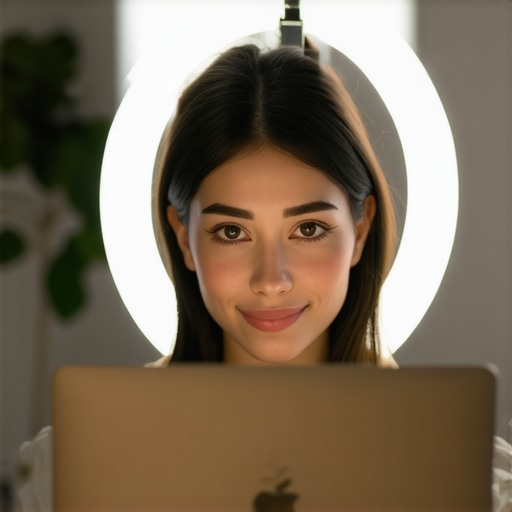
Stop Sabotaging Your Skin Care With Bad Lighting
You probably think that because you paid for a high-speed internet connection, you’ve done your part for your medical appointment. You’re wrong. Most people treat a virtual dermatologist visit like a casual video chat with a friend, ignoring the fact that a screen is a filter, not a window. I’ve seen enough grainy, shadow-drenched selfies masquerading as medical evidence to know that patients are failing the technology as much as it might be failing them. If you aren’t willing to turn your living room into a temporary studio, you are wasting everyone’s time.
I argue that the lighting fix isn’t a luxury; it’s a clinical necessity. When you show up to a call under the sickly yellow glow of a ceiling fan, you’re essentially asking a surgeon to work in a blackout. You might think your skin looks fine in the mirror, but your camera sees a different story—one told in digital noise and blurred edges. This is exactly why most telehealth consultations fail without a proper lighting setup. You wouldn’t expect a mechanic to fix an engine by looking at a blurry Polaroid, so why do you expect a doctor to spot a suspicious mole through a hazy, backlit screen?
The Overhead Light is Your Greatest Enemy
So, why are we still doing this? Why do we insist on sitting directly under a light bulb that casts deep, dramatic shadows over every pore? It’s a game of hide-and-seek where the stakes are your health. Shadows create false textures; they hide redness and they exaggerate bumps that aren’t there. It is a sinking ship of a strategy. When I discuss the skin screening you are not doing but absolutely should, I include the basic act of seeing the skin correctly. If the light isn’t hitting you from the front, you aren’t being seen.
Natural light is the gold standard, yet I see patients hiding in dark corners. Move to a window. Face the sun. If it’s night, use a desk lamp—not the ceiling fixture. This isn’t about vanity or looking good for the camera. This is about providing the data your doctor needs to stay accurate. Think about it: a dermatologist is trained to see subtle shifts in color and shape. If your lighting makes a pink rash look like a brown bruise, the diagnosis is doomed from the start. We often talk about how virtual visits elevate chronic care, but that progress stops at the edge of a dark room.
You must realize that the camera is a liar. It tries to compensate for poor light by adding grain, which masks the very details a specialist needs to find. I am tired of hearing people complain about digital medicine when they haven’t even bothered to open their curtains. It’s a total lack of accountability. If you want a real result, you have to provide a real view. The same principles apply here as they do for the lighting hack that helps virtual doctors see your throat clearly; if the light isn’t direct, the detail is gone. Get a lamp, face the light, and stop making your doctor guess what they’re looking at.
A Fundamental Physics Failure
The core issue here is not a lack of bandwidth or a glitch in the software. The problem is a fundamental failure to respect physics. When you engage in a virtual visit, you are participating in a process of data transmission. Your skin is the subject, the light is the carrier, and the camera is the encoder. If the light is poor, the encoder produces garbage. It is that simple. We often blame the platform for being ‘unreliable,’ but the platform can only transmit what it captures. If you feed it a silhouette, don’t be surprised when the doctor can’t tell the difference between a freckle and a melanoma.
We have entered an era where we expect technology to perform miracles while we refuse to perform the basics. This isn’t just an inconvenience; it is a clinical hazard. In the physical world, a doctor has the luxury of moving their head, adjusting their perspective, and using a dermatoscope. In the digital world, the doctor is a prisoner of your lens. By providing poor lighting, you are effectively blindfolding the very person you are paying to help you. It is a staggering display of cognitive dissonance to worry about your health while simultaneously sabotaging the tools meant to protect it.
The Math of a False Negative
Consider the cold, hard numbers that people usually ignore. Clinical studies have shown that image quality accounts for a massive variance in diagnostic accuracy—in some cases, a 40% drop in clarity when comparing standard indoor lighting to direct natural light. That 40% isn’t a minor statistic; it is the margin of error where lives are lost. When you lose nearly half of the visual data, you aren’t just making the doctor’s job harder; you are making it impossible. The math doesn’t lie: poor lumens equal poor outcomes.
${PostImagePlaceholdersEnum.ImagePlaceholderB}
This drop in data leads to what I call the ‘shadow tax.’ You pay this tax in the form of misdiagnosis, unnecessary follow-up appointments, and a general lack of confidence in your care plan. We are quick to point fingers at ‘the system,’ yet we ignore the fact that the system starts at our own window sill. If the light isn’t direct, the diagnosis is a guess. We would never tolerate a laboratory losing 40% of a blood sample before testing it, yet we find it perfectly acceptable to lose 40% of the visual evidence before a skin check. It is a hypocrisy that needs to end.
Digital Noise is the New Malpractice
The root cause of this frustration is the ‘auto-gain’ feature on your webcam. When you sit in a dim room, your camera tries to be a hero. It artificially boosts the signal to make the image look brighter, but it does so by introducing digital noise—those tiny, dancing grains that turn your skin into a pointillist painting. For a dermatologist, this noise is a disaster. It mimics the appearance of scaling, crusting, and vascular patterns that aren’t actually there. You are literally manufacturing symptoms with your own shadows.
The camera is lying to the doctor because you haven’t given it enough information to tell the truth. This is the same reason why telehealth lab tests and remote diagnostics require strict protocols; without standards, the data is noise. If you want the benefits of 2025 medicine, you cannot show up with 1995 lighting. Stop treating your health like a poorly lit Zoom happy hour. Turn on the light, face the window, and give the technology a chance to actually work. Anything less is just expensive theater.
It is easy to see why people push back against this. The most reasonable argument I hear is that telehealth was promised as the ultimate equalizer—a way to bring medicine to anyone with a smartphone, regardless of their living situation. Critics argue that by demanding ‘studio-grade’ conditions, we are creating a new digital divide. They say it is unfair to expect a patient in a cramped, windowless apartment or someone working a night shift to conjure natural sunlight on command. There is a sense that the technology should be smart enough to ‘fix’ the image in post-production. After all, if a social media filter can make a basement look like a sunset, why can’t a medical app do the same?
I used to believe this too, until I saw how ‘smart’ filters actually function in a clinical context. The reality is that software-based image enhancement is the enemy of an accurate diagnosis. When an algorithm ‘brightens’ your skin, it isn’t just turning up the lights; it is guessing. It uses mathematical averages to fill in the gaps where the camera sensor failed to catch actual light. For a dermatologist, those ‘guesses’ are dangerous. A software-smoothed edge might look cleaner to you, but to a doctor, it looks like a lesion without borders. By asking the software to compensate for your poor lighting, you are essentially asking a computer to hallucinate the details of your health.
The Convenience Trap
The idea that we can outsource the laws of physics to a software developer is a fantasy. This isn’t about being ‘fair’ to patients with bad windows; it’s about being honest about the limitations of hardware. A five-thousand-dollar mirrorless camera cannot see through a shadow, so why would we expect a tiny pinhole lens on a phone to do it? The ‘accessibility’ argument falls apart when you realize that a misdiagnosis is the least accessible thing in the world. There is nothing ‘equalizing’ about a patient receiving a false negative because they refused to stand near a desk lamp.
We have become so addicted to the ‘one-click’ nature of modern life that we have forgotten that medicine requires active participation. You are not a passive consumer of a streaming service; you are a critical component of a diagnostic loop. If you treat your virtual visit like a video you’re watching in bed, you have already compromised the integrity of the data. This is a hard truth: convenience is often the enemy of precision. If you want the ease of staying home, you must accept the responsibility of being the doctor’s eyes on the ground.
${PostImagePlaceholdersEnum.ImagePlaceholderC}
The counter-argument usually pivots to the idea that artificial intelligence will solve this. People believe that machine learning will eventually be able to strip away shadows and reveal the true skin underneath. This is a misunderstanding of how AI works. AI is trained on patterns. If you feed it a shadowed, grainy image, the AI will match it to the closest pattern it knows, which might be a ‘normal’ skin texture or a ‘malignant’ one, regardless of what is actually there. It creates a ‘perfect’ image that is untethered from your actual biology. Relying on AI to fix bad lighting is like trying to solve a puzzle with missing pieces by drawing on the table.
The obsession with making telehealth ‘effortless’ is precisely what makes it risky. We should be raising the bar for patient-side data collection, not lowering it to accommodate laziness. If you can’t find a way to light your face, you shouldn’t be having a virtual skin check. It sounds harsh, but the alternative is a healthcare system built on shadows and guesses. We must stop pretending that ‘good enough’ is acceptable when the stakes are literally written on your skin. You wouldn’t accept a ‘good enough’ heart monitor; do not accept ‘good enough’ lighting.
Is the Clinical Standard Dying?
We are currently sleepwalking into a crisis of data integrity that transcends a simple bad camera angle. If we continue to treat clinical visibility as an optional luxury, we are effectively demoting digital health to a glorified advice line. This is the slippery slope: today, we accept a grainy image; tomorrow, we accept a missed melanoma because the convenience of staying in a dark room outweighed the necessity of a clear diagnosis. We are building a two-tiered medical system where those who take the effort to find a lightbulb receive care, and those who do not receive a dangerous shrug of the shoulders. If the clinical standard is allowed to erode for the sake of comfort, the entire foundation of remote medicine will crumble under the weight of its own inaccuracies.
The Cost of Normalizing Mediocrity
In five years, if this trend persists, the very foundation of virtual diagnostics will be corrupted. We will have a generation of medical data that is fundamentally flawed—a vast library of digital noise that provides no real insight. We talk about the digital revolution as if it is a self-driving car, but in reality, it is a vehicle that we are steering into a ditch through sheer negligence. It is like trying to read a legally binding contract through a frosted glass window while someone screams the terms at you from across the street. You might catch a few words, but you are signing your name to a mystery. This normalization of ‘good enough’ is a cancer on the medical profession, and it starts with your refusal to face a window.
${PostImagePlaceholdersEnum.ImagePlaceholderD}
The Future of Blind Diagnostics
The stakes are not just about one missed rash or a delayed prescription. The stakes are the survival of the house call itself. If the failure rate of telehealth continues to climb due to poor patient-side data, insurance companies and clinical boards will eventually pull the plug. They will deem it too high-risk, too prone to error, and too expensive to litigate. By refusing to turn on a lamp, you are contributing to the eventual extinction of the most convenient healthcare tool ever invented. You are, quite literally, killing the future of medicine to save the effort of standing up and walking across the room. We will look back at 2025 as the year we let the lights go out on accessible care because we were too lazy to flip a switch.
A Choice Between Science and Theater
This is a moral imperative for every patient. We have a duty to provide the best possible evidence to those we entrust with our lives. To do otherwise is a form of self-sabotage that borders on the pathological. We are at a crossroads where we must decide: do we want a healthcare system that is actually effective, or do we just want one that feels easy? If we choose ease over accuracy, we deserve the outcomes we get. The digital divide won’t be about who has the fastest internet; it will be about who had the sense to step into the light and who was content to stay in the dark. We must stop pretending that technology can fix human indifference. If you aren’t visible, you aren’t being treated—you’re just being humored.
We return to the initial provocation: your high-speed internet is useless if you are sitting in the dark. The era of passive patients is over. If you want the convenience of remote care, you must accept the role of a data technician. You cannot expect a physician to perform miracles through a veil of digital noise and shadows. This isn’t a request for professional-grade cinematography; it is a demand for clinical honesty. Whether you are mastering the lighting hack that helps virtual doctors see your throat clearly or simply opening your blinds, you are participating in the preservation of your own health.
The Final Verdict
Your lighting is not an aesthetic choice; it is a medical necessity that determines the boundary between a life-saving diagnosis and a dangerous guess. We know that telehealth breakthroughs are transforming chronic disease monitoring, but that transformation is halted by a poorly lit room. Precision requires light. Without it, you are just playing a high-stakes game of charades with your doctor.
The Real Twist
The true danger isn’t that the technology will fail us, but that our own laziness will render the technology obsolete. By refusing to perform the basic task of standing near a window, we are proving the skeptics right: that telehealth is a second-class substitute for ‘real’ medicine. If we want a future where high-quality care is accessible from anywhere, we have to prove we are capable of being more than just blurry silhouettes on a screen. This is the ultimate test of accountability. Stop sabotaging the skin screening you are not doing but absolutely should by hiding in the shadows. The light is right there. All you have to do is turn toward it.
${PostImagePlaceholdersEnum.ImagePlaceholderE}
Step into the light or stay in the dark—the accuracy of your diagnosis follows your choice.