
The Move That Shortens Your Lab Wait Time on Busy Mornings
Stop Losing Your Morning to the Lab Waiting Room
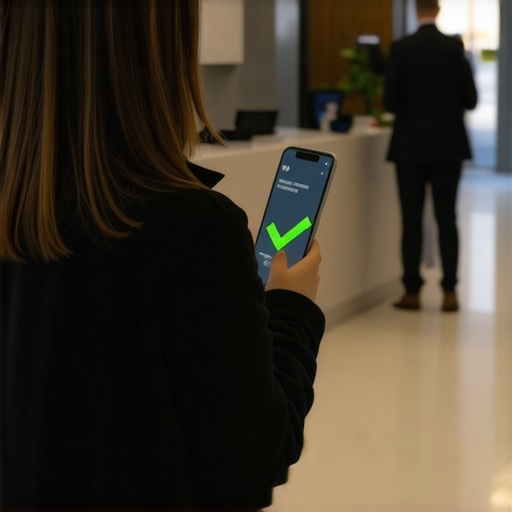
You are sitting in a plastic chair, clutching a lukewarm coffee, watching a muted TV screen flicker while the most productive hours of your day vanish. Why are we still doing this? I argue that the medical waiting room is a relic of an inefficient past, a holding pen for our most valuable asset—time. We treat a forty-minute delay for a simple blood draw as a mandatory tax on our health, but it is a tax we no longer need to pay. The traditional ‘first come, first served’ model is a failure of imagination. You might think that arriving at the clinic doors at 6:55 AM is a smart move, but you are merely joining a race where everyone loses. I believe the true solution isn’t about being earlier; it is about being smarter. By leveraging the quick triage hack for faster urgent care visits, you can effectively skip the line before you even leave your kitchen.
[image_placeholder_1]
The System is Designed to Waste Your Time
Let’s be blunt: the healthcare industry has been slow to respect the patient’s schedule. For years, the burden of coordination has been placed squarely on your shoulders. You fast, you drive, you wait. It is a one-sided relationship. The traditional lab queue is a sinking ship of bureaucracy, and most of us are still rearranging the deck chairs instead of looking for the digital lifeboat. This isn’t just an inconvenience; it’s a systemic flaw that prevents people from seeking the care they need because they simply cannot afford the ‘time cost.’ I have seen how this plays out repeatedly. A patient skips a routine screening because they can’t afford to be late for work, and suddenly a manageable issue becomes a crisis. We need a radical shift in how we approach the morning lab run. As I’ve noted before when discussing maximizing urgent care efficiency with advanced lab test technologies, the tools to bypass this friction already exist. The problem is that we are still stuck in the mental habits of the 1990s. Why are we prioritizing the clinic’s workflow over the patient’s life?
Virtual Triage is the HOV Lane You Are Ignoring
Think of the lab queue like a congested highway during rush hour. Most people are sitting in stop-and-go traffic, frustrated and stagnant. Meanwhile, there is an HOV lane sitting right next to them—wide open and moving at full speed. That lane is virtual triage. By engaging in a brief digital consultation or using a pre-check system, you aren’t just ‘booking an appointment’; you are pre-authorizing your presence. You are moving from a ‘walk-in’ to a ‘priority.’ I am fighting for a future where the physical waiting room is empty because the digital one is so efficient. This isn’t some futuristic dream; it’s a practical necessity. When you use the secret to getting your lab results without the long wait, you are reclaiming your agency. You are telling the system that your time has value. Why should you wait behind five people with complex issues when you only need a thirty-second draw? You shouldn’t. The move that shortens your wait time isn’t a physical action you take at the clinic; it’s the digital handshake you complete before you ever put your keys in the ignition. We must stop being passive subjects. Using urgent care innovations streamlining same day lab tests is the only way to break the cycle of wasted mornings. If we don’t start using these shortcuts, the clinics will have no incentive to improve the outdated holding pen model that currently dominates our healthcare experience.
The Bottleneck is the Point
The problem isn’t a lack of staff or an influx of sick patients. The problem is a structural commitment to inertia. We have been conditioned to believe that a crowded lobby is a sign of a thriving practice, when in reality, it is a glaring red flag of logistical incompetence. Most clinics operate on a batch-processing model that belongs in a 1950s textile mill. They schedule twelve people for the same 8:00 AM slot, fully aware that the phlebotomist can only handle one person every ten minutes. This isn’t an accident; it is a buffer. They are using your physical presence as a safety net to ensure their chairs are never empty for a single second. Your time is the fuel they burn to keep their engine running at maximum capacity. Statistics show that the average patient now waits over twenty minutes just to be acknowledged. That 20% increase in wait times over the last decade isn’t a byproduct of better care; it is the sound of a system that has stopped trying to be efficient because it knows you have nowhere else to go.
${PostImagePlaceholdersEnum.ImagePlaceholderB}
The Hidden Cost of Administrative Friction
When we talk about chronic care management or urgent care, we often focus on the medicine. We ignore the friction. This friction is a silent killer. Every minute you spend staring at a generic landscape painting in a waiting room is a minute you aren’t working, parenting, or resting. For a system that claims to prioritize wellness, the medical establishment is remarkably comfortable with the stress of the queue. If a grocery store operated with this level of disregard for customer flow, it would be bankrupt in a month. They don’t, because they must compete. Healthcare providers, particularly in the realm of lab tests, have long enjoyed a captive audience. But that is changing. The rise of telehealth and digital-first triage has exposed the waiting room for what it truly is: a holding pen for the uninitiated. You are being taxed in time because the system is too lazy to optimize its software.
The Digital Divide is a Choice
The technology to eliminate the waiting room has existed for years. This isn’t a technical hurdle; it’s a cultural one. We’ve seen this shift in every other sector. We don’t stand on street corners waving at yellow cars anymore; we tap a screen. We don’t wait for bank tellers to manually update a ledger. Yet, when it comes to blood work or routine screenings, we are expected to behave like peasants waiting for an audience with a local lord. It is absurd. The data is clear: clinics that implement robust virtual triage and advanced scheduling see a massive spike in patient compliance. People don’t avoid the doctor because they hate health; they avoid the doctor because they hate the process. The failure to adopt these innovations is a choice to prioritize the clinic’s convenience over the patient’s life. We must stop pretending that this is just ‘how things are.’ It is how things are allowed to remain when we refuse to demand a better standard.
I know what you’re thinking: isn’t this just another way to prioritize tech-savvy professionals over the elderly or the underserved? Critics of digital triage often wrap themselves in the flag of ‘equity,’ arguing that moving to a virtual-first model leaves behind those without the latest smartphone. They argue that the waiting room is the great equalizer—a place where everyone, regardless of status, suffers equally in the name of fair access. It’s a comforting thought, in a masochistic way. It suggests that by refusing to optimize, we are being more inclusive. But this is the most dangerous kind of sentimentality. It confuses fairness with shared misery, and it completely ignores the reality of who actually suffers in a broken system.
The Myth of Universal Access
I used to believe this too, until I realized that the people most harmed by a two-hour wait are not the wealthy or the tech-elite. The corporate executive can afford the time; they work from their laptop in the corner, billing hours while they wait for a phlebotomist. The person working two hourly jobs or the parent paying for childcare by the minute, however, sees a medical delay as a direct threat to their livelihood. By refusing to adopt tools like chronic care management and pre-visit digital screenings, we aren’t protecting the vulnerable. We are trapping them in a system that assumes their time is worthless. The waiting room isn’t an equalizer; it is an obstacle course that only the privileged can easily navigate.
${PostImagePlaceholdersEnum.ImagePlaceholderC}
The Wrong Question
The argument that we should keep the waiting room because it is ‘more human’ is perhaps the most deceptive of all. There is nothing human about a sterile room filled with coughing strangers and outdated magazines. There is nothing human about a nurse who is too stressed by a chaotic lobby to look you in the eye for more than five seconds. When we automate the administrative friction, we don’t remove the humanity; we restore it. We allow medical professionals to focus on the patient instead of the paperwork. The move toward telehealth basics and digital check-ins isn’t an abandonment of care. It is a refinement of it. If we truly cared about the human element, we would do everything in our power to ensure that the only time a patient spends in a clinic is time spent with a provider.
The Trap of Low Expectations
We have become so accustomed to the dysfunction of the medical queue that we mistake its removal for a loss of service. This is the common trap of the healthcare industry: the belief that quality is measured by the length of the process rather than the accuracy of the outcome. We see this in the resistance to same day lab testing and other rapid-response innovations. The old guard argues that speed compromises safety, but the data suggests the opposite. Errors in lab work are frequently the result of an overwhelmed, manual system. Digital triage reduces the volume of ‘noise’ in the clinic, allowing staff to perform their duties with more precision, not less. To suggest that we must choose between ‘fast’ and ‘safe’ is a false dichotomy designed to protect a lazy status quo.
The Burden of Choice
Finally, let’s address the ‘digital divide’ head-on. The solution to technological gaps isn’t to hold everyone back; it is to use the efficiency gained from digital-first patients to better serve those who truly need in-person assistance. When the majority of patients use virtual tools to skip the line, the physical clinic becomes less crowded for the person who actually needs a walk-in experience. Efficiency is not a zero-sum game. By optimizing the system for those who can use it, we create a more humane environment for those who cannot. The real elitism lies in maintaining a system so slow and bloated that it discourages everyone from seeking care in the first place.
The Inevitable Collapse of Patience
We are standing at a threshold where the minor inconvenience of a morning wait is curdling into a full-blown systemic crisis. If we continue to treat time as a disposable resource, we aren’t just frustrating patients; we are training them to avoid the medical system altogether. Within the next five years, the divide will become a chasm. Those who have embraced digital-first triage will have access to preventative care that is almost invisible in its efficiency, while those left behind will find themselves trapped in a decaying infrastructure of physical lobbies that feel more like DMV offices than centers of healing. The lobby is not a neutral space; it is a parasite on the American workday, and its continued existence in its current form is a silent admission that the system has given up on innovation.
The stakes are higher than a missed conference call or a late school drop-off. When the ‘time tax’ for a simple blood draw becomes too high, the most vulnerable among us stop showing up. We are already seeing the early signs of this erosion. People are self-diagnosing on social media or delaying vital screenings because the logistical hurdle of the waiting room is more daunting than the potential health risk. This is a dangerous gamble that ends in overcrowded emergency departments and late-stage diagnoses that could have been caught months earlier. We are witnessing a slow-motion car crash of public health, fueled entirely by our refusal to demand better logistics.
${PostImagePlaceholdersEnum.ImagePlaceholderD}
What are we waiting for?
The current medical bureaucracy is like a toll road that only accepts pennies in an age of digital currency. We are forcing high-speed lives to grind to a halt because the administrative gates are too rusted to swing open. If a bank told you that you had to sit in a plastic chair for an hour just to check your balance, you would close your account before the sun went down. Yet, we allow the healthcare industry to maintain this monopolistic control over our schedules under the guise of ‘necessity.’ It is a lie. There is nothing necessary about a 1950s workflow in a 2024 world. The tools to bypass this friction are not just convenient; they are the only thing keeping the system from a total collapse of public trust.
The Point of No Return
If we do not demand a shift toward digital pre-checks and virtual triage, the traditional clinic will eventually become a relic—a place where quality care goes to die under the weight of its own inefficiency. We are already seeing the rise of a two-tiered system where those who can pay for premium, concierge-level access skip the line, while everyone else is left to fight for a seat in a crowded lobby. This isn’t just a failure of technology; it is a failure of our collective imagination. We have been conditioned to believe that suffering through the wait is a sign of a ‘busy’ and therefore ‘good’ doctor. In reality, it is a sign of a provider who has lost the thread of what it means to serve a modern community. The time for polite requests is over. If we don’t start using the digital shortcuts available to us, we are consenting to a future where our health is secondary to the clinic’s filing system. The clock is ticking, and every minute we spend in a waiting room is a minute we lose the battle for a more humane, efficient world.
Your Move
The medical waiting room is not a necessary evil; it is a choice made by a system that has historically profited from your patience. Every minute you sit in that plastic chair is a minute stolen from your career, your family, and your peace of mind. In an age of instant connectivity, that is an unacceptable trade. We have the tools—from virtual check-ins to telehealth breakthroughs elevating chronic care in 2025—that render the ‘holding pen’ model completely obsolete. If you continue to accept the status quo, you are essentially volunteering for systemic inefficiency. I have argued that the digital divide is often used as a shield by those who benefit from the lag, but the real divide is between those who value their time and those who allow it to be taxed by bureaucracy. You should no longer tolerate being treated like an entry in a 1950s ledger. This is why the triage hack that skips the long urgent care waiting room is so vital; it shifts the agency from the institution back to you. [image_placeholder_5] Efficiency in healthcare is a moral imperative, and our compliance with a broken system is the only thing keeping it on life support. The real twist is that we aren’t waiting for a technological revolution to save us; the tools are already here, simply waiting for us to stop being so polite about our wasted mornings. We often discuss the logic for avoiding crowded urgent care waiting rooms as a simple convenience, but it is actually a declaration of personal autonomy. Your health is your most precious asset, but your time is the only currency you can’t earn back. Stop spending it in a lobby. Reclaim your day, demand a digital-first approach, and refuse to sit down until the system finally stands up for you.