
The Triage Move That Skips the Line for Minor Stitches
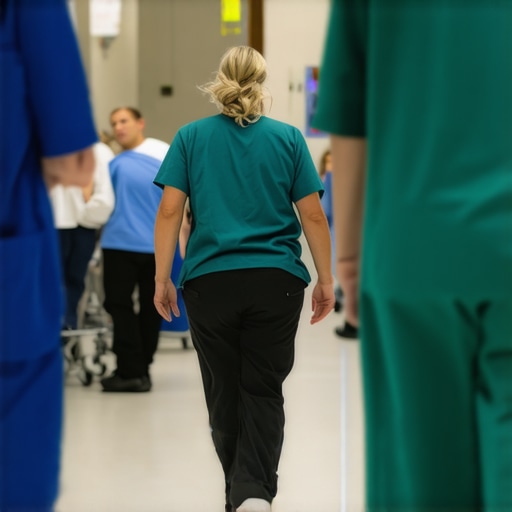
The Healthcare Purgatory Where Stitches and Strep Suffer Together
The modern urgent care waiting room is not a sanctuary of healing; it is a petri dish of poor planning. You sit there, holding a clean kitchen knife slip that just needs a few loops of nylon, and you are forced to breathe the same stagnant air as a toddler with a suspicious, wet cough. Why do we accept this? The current triage system is a relic that treats every walk-in like a mystery to be solved rather than a technical task to be completed. I argue that the failure to separate physical trauma from infectious disease is a systemic choice that prioritizes administrative ease over patient safety. If you have ever wondered about the real difference between urgent care and emergency room care, the most glaring distinction is often just the price tag, while the fundamental logic of the wait remains broken.
You might think the person at the front desk has a sophisticated algorithm to move you through the queue. You’re wrong. They have a clipboard and a mandate to minimize liability, not to save your afternoon. The “triage move” that actually works is not a secret handshake; it is a direct refusal to be categorized as a general patient. When you walk in with a laceration, you are not a sick person. You are an injured person. There is a massive clinical difference that the system ignores. By the time you finally get seen, you have spent two hours navigating the urgent care waiting room without picking up a new bug, a feat that is statistically unlikely in a room full of unmasked sneezers. This is exactly how that urgent care quick fix might lead to a rebound infection that is worse than the initial cut.
Stop Treating Broken Skin Like a Mystery Fever
Our healthcare system is currently a sinking ship where the captain is busy rearranging the deck chairs instead of plugging the holes. Imagine a mechanic who makes you wait four hours behind three people getting complex engine diagnostics just so he can tighten one loose bolt on your bumper. That is the absurdity of current triage logic. A stitch is a mechanical fix. A fever is a diagnostic hunt. Forcing them into the same queue is a logistical crime. We need a “fast-track” stream that recognizes the difference between trauma and viral shedding. I’ve argued before that why telehealth is the best choice for chronic migraine management is largely because it removes the patient from these dangerous waiting environments entirely. We should apply that same clinical segregation to physical injuries.
So, why are we still doing this? Is it because we lack the space? No. It is because we lack the will to challenge a “first come, first served” mentality that has no place in medicine. You are not waiting for a table at a bistro. You are waiting for a medical procedure. If you don’t speak up and demand a procedure-based triage, you will continue to be the person with the bleeding finger sitting next to the person who knows the real reason your toddlers cough sounds like a bark but brought them into a crowded room anyway. Stop being a passive participant in a failing system. Demand the triage move that skips the mystery and gets straight to the thread.
The Bureaucratic Inertia of the Waiting Room
The problem is not a lack of chairs or a shortage of stethoscopes; the problem is an obsession with administrative symmetry. The system treats a gash on your forearm the same way it treats a lingering flu because it is easier to bill a standard office visit than it is to acknowledge a technical procedure. This is the root cause: the homogenization of suffering. When every patient is funneled through the same intake pipeline, the facility can maintain a predictable cadence of paperwork, but they do so at the cost of your health. Efficiency for the ledger is almost always a hazard for the human. They tell us that triage is about severity, but in practice, it is about keeping the insurance billing codes tidy. It is a refusal to innovate that borders on clinical negligence.
The institutional refusal to adapt is not an accident. It is a calculated decision. By keeping everyone in the same room, clinics can minimize square footage and maximize billing codes under a single ‘urgent care’ umbrella. They want you to believe that the complexity of medicine requires this chaos. It does not. A car dealership doesn’t put people getting an oil change in the same waiting line as people whose engines have exploded. Even the most basic service industries understand the ‘express lane’ concept. Yet, in medicine—the one place where a ‘line’ can literally make you sicker—we are told that an express lane for trauma is impossible. It is not impossible; it is just less profitable.
Data That Masks a Clinical Crisis
Look at the numbers that clinics use to boast about their performance. They point to an average wait time of thirty minutes as a victory. That thirty-minute figure isn’t a victory; it’s a deceptive average that hides the truth. If two people wait five minutes and two people wait an hour while breathing in viral loads, the average looks great on a corporate spreadsheet, but it’s a clinical disaster for the fifty percent who were exposed unnecessarily. This isn’t healthcare; it’s a gambling hall where the house always wins, and the stakes are your immune system. While lab tests are essential for diagnosing the invisible, they should not be the gatekeeper for the visible trauma. Someone needing chronic care management has vastly different environmental needs than a person who simply needs a localized anesthetic and four stitches. The system refuses to see this because acknowledging the difference would require changing the staffing model. It is cheaper to hire one generalist to handle everything poorly than to have a dedicated technician for mechanical repairs.
${PostImagePlaceholdersEnum.ImagePlaceholderB}
The Triage Myth of Equality
We are sold the lie that every patient is equal in the eyes of the clinic. But equality in a waiting room is a death sentence for the vulnerable. Treating a patient with a laceration and a patient with a respiratory virus as ‘equal’ ignores the basic laws of biology. One is a closed-loop mechanical failure; the other is an active biological broadcast. By forcing these two worlds to collide, the clinic isn’t being fair; they are being lazy. They are prioritizing the ease of their internal workflow over the physiological reality of their patients. We have the technology for better telehealth screening, and we have the physical space to create separate trauma bays. The only thing missing is the clinical courage to stop treating humans like standardized units of production on an assembly line. This failure to segregate trauma from contagion is the most obvious, and most ignored, flaw in the American urgent care model.
It is easy to see why healthcare administrators cling to the universal triage model with the tenacity of a barnacle on a sinking hull. They argue that the single-queue system is the only way to ensure ‘patient safety.’ The logic goes like this: a patient walking in for a simple laceration might actually be experiencing a cardiovascular event that they’ve misidentified. If we separate the ‘injured’ from the ‘sick,’ we might miss a life-threatening symptom because the intake nurse was only looking at the bleeding finger. They claim that the homogenization of the waiting room is a protective measure, a universal net designed to catch the outliers before they collapse. On paper, this sounds responsible. In practice, it is a convenient lie used to justify a refusal to innovate.
The Safety Shield for Laziness
I used to believe this too, until I realized that ‘safety’ is the most effective gag order in the medical industry. Whenever a system becomes too rigid or too expensive to fix, administrators invoke the word safety to end the conversation. But let’s look at the actual safety data. Forcing a patient with an open wound—a literal breach in their primary biological defense—to sit for ninety minutes in a room with three people suffering from respiratory syncytial virus is not ‘safe.’ It is a calculated risk where the patient loses and the facility wins by saving on staffing costs. The argument that we can’t separate patients because of ‘hidden symptoms’ ignores the fact that a preliminary thirty-second screening could easily divert people into two different physical zones without sacrificing diagnostic integrity.
The current model assumes that the only way to screen a patient is to trap them in a shared air space for two hours. This is an archaic fallacy. We have the tools to do better. If you’ve ever looked into the real difference between urgent care and emergency room care, you know that the ER uses high-level triage to manage life-and-death stakes. Yet, the urgent care model uses the same rhetoric of ‘safety’ to justify a low-level, high-volume cattle call. They aren’t worried about your hidden heart condition; they are worried about the cost of building a separate entrance for trauma. They hide behind the complexity of lab tests and diagnostic protocols to mask a simple truth: it is cheaper to treat you like a number than a person with specific environmental needs.
${PostImagePlaceholdersEnum.ImagePlaceholderC}
The common trap in this debate is the idea that medical specialization is a luxury. It isn’t. In any other field, specialization is the prerequisite for efficiency. We don’t ask a plumber to fix the electrical wiring because we recognize that specialized tools and environments produce better outcomes. Why, then, do we accept a ‘generalist’ waiting room that actually increases our risk of infection? When you are managing chronic care, you are taught to avoid unnecessary stressors and pathogens. Yet, the moment that same patient needs an urgent procedure, the system tosses those protocols out the window and forces them into a viral gauntlet. It’s a glaring contradiction that the industry refuses to address because the solution—spatial and clinical segregation—would require a complete overhaul of the profitable status quo.
Even the push for telehealth is often framed by clinics as a way to ‘lighten the load’ rather than a way to protect the patient from the waiting room itself. They want you to stay home so they don’t have to deal with you, not because they are concerned about the cross-contamination inherent in their lobby. The reality is that the ‘universal triage’ model is a relic of 20th-century bureaucracy that has no place in a world of advanced diagnostics and highly contagious pathogens. We are told that the ‘first-come, first-served’ model is the fairest way to handle urgent care visits, but there is nothing fair about a system that makes you sicker in the process of trying to get you better. The intellectual defense of the unified waiting room is nothing more than an elaborate way to say they don’t want to pay for more walls.
The failure to evolve our triage models is not a mere logistical hiccup; it is a ticking biological clock. By continuing to treat physical trauma and infectious disease as interchangeable units in a waiting room, we are incurring a biological debt that will eventually come due in the form of public health erosion. We are training the public to view medical facilities not as centers of healing, but as necessary evils where the price of a few stitches might be a week of debilitating flu. If we do not demand a fundamental shift in how urgent care spaces are designed, we are essentially accepting a world where the healthcare system itself becomes a primary vector for community spread. This is the dark side of efficiency—a system so focused on the bottom line that it forgets the very biology it is meant to treat.
What Are We Waiting For?
If this trend continues for another five years, the result will be a two-tiered system of safety. We will see a world where those who can afford premium, segregated care receive it, while the rest of the population is funneled into ‘viral pits’ where every minor injury carries the threat of a secondary infection. Imagine a world-class library that decides to store its rarest, most fragile hand-inked manuscripts in the same bin as wet umbrellas and leaking coffee cups. The librarian might argue that it is ‘fair’ because every item is treated equally under the same roof, but in reality, it is a recipe for the destruction of the very assets they are sworn to protect. This is exactly what we are doing when we force an open wound to share oxygen with a respiratory virus. We are treating the human body with less care than a used bookstore treats a paperback.
${PostImagePlaceholdersEnum.ImagePlaceholderD}
A Future of Avoidable Contagion
The stakes extend far beyond the individual patient. When we force people to weigh the risk of infection against the need for treatment, they start making dangerous choices. They delay lab tests for strange lumps or persistent pains because they don’t want to sit in a room full of coughs. They ignore the warning signs that require chronic care management because the environment of the clinic feels more hazardous than the disease itself. This hesitation leads to late-stage diagnoses and preventable complications. We aren’t just making people wait; we are actively discouraging them from seeking the care that keeps a society functional. The ‘waiting room flu’ isn’t just an annoyance; it is a barrier to entry that disproportionately affects the most vulnerable.
The Biological Debt We Cannot Pay
By ignoring the need for spatial and clinical segregation, we are also fueling the rise of more resilient pathogens. Every time a patient with a weakened immune system or an open wound is exposed to a viral load in a waiting room, we are providing a playground for cross-contamination. While telehealth offers a partial escape, it cannot suture a wound or set a bone. The physical infrastructure must change. If it doesn’t, we will find ourselves in a permanent cycle of rebound infections that strain our resources and diminish our collective quality of life. The refusal to innovate is a choice to let our medical standards decay. We are standing at the edge of a precipice, and the administrative convenience of the status quo is a very poor parachute.
The Final Verdict
The urgent care waiting room is currently a biological hazard masquerading as a convenience, and until we demand the structural separation of trauma from contagion, every ‘quick fix’ remains a dangerous gamble. This isn’t just about administrative efficiency; it is about basic biological common sense. While we wait for the industry to catch up to reality, your best defense is knowing the Tuesday morning trick for zero urgent care wait times to minimize your time in the viral pit. We have allowed the homogenization of suffering to become the industry standard, and it is time to call it what it is: clinical laziness.
The Twist in the Triage Trap
The real twist here is that the system isn’t failing by accident—it is succeeding at its true goal of volume over value. By funneling every patient into a single intake stream, clinics can maintain a high-throughput model for urgent care innovations and same-day lab tests that look impressive on a corporate balance sheet but ignore the viral load in the lobby. They aren’t interested in your specific environmental safety; they are interested in the cadence of the billing cycle. If you want a different result, you must know the one thing you should never tell an urgent care receptionist if you want to avoid being labeled as just another number in the queue.
${PostImagePlaceholdersEnum.ImagePlaceholderE}
The Challenge for the Patient
Stop accepting the ‘cattle call’ as an inevitability. If you have a physical injury, demand to know where the trauma-only zone is. If a clinic refuses to acknowledge the difference between a laceration and a lung infection, they are telling you exactly how much they value your long-term health. Learn how to get an urgent care doctor to take your pain seriously without forcing you to endure a three-hour exposure to a respiratory gauntlet. The moment we stop being polite about the logistical negligence of the current system is the moment administrators will be forced to invest in the walls and the workflows that actually protect us. The era of the one-size-fits-all waiting room must end, or we will continue to pay for our stitches with our respiratory health.