
The Urgent Care Fix for a Deep Cut Without Stitches
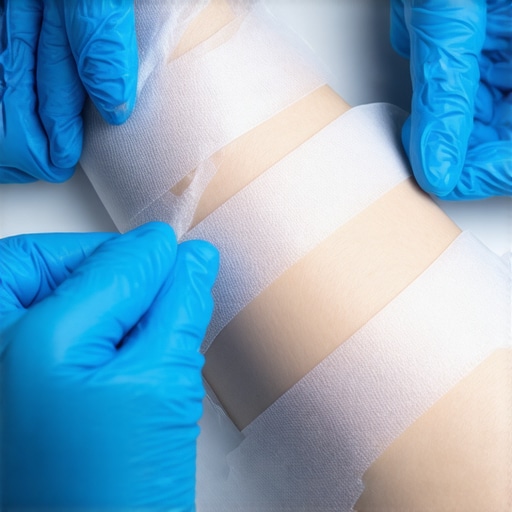
You see blood, you see a bit of depth, and you immediately assume you are destined for the Emergency Room. Stop. That panic-driven reflex is exactly how you end up with a $3,000 bill for what amounts to fifteen minutes of work and a few strips of adhesive. I argue that our collective obsession with traditional stitches is a relic of a pre-modern medical era, and it is costing you both time and sanity. You might think every ‘deep’ cut requires a surgeon’s needle, but you are wrong. In reality, the vast majority of household lacerations can be managed more efficiently, more cheaply, and with less scarring if you stop treating a minor flesh wound like a structural collapse.
The ER Is a Sinking Ship for Minor Trauma
Going to the hospital for a cut that isn’t spurting like a geyser is like trying to fix a flat tire by replacing the entire chassis. It is overkill, and it is inefficient. I have long maintained that your local urgent care is better than the ER for stitches—or for avoiding them entirely. When you walk into an ER, you are at the bottom of a very grim totem pole. You will sit in a waiting room filled with actual catastrophes while your blood dries and your frustration boils. Why are we still doing this to ourselves? The medical industrial complex thrives on your uncertainty, but the truth is that urgent care facilities are now equipped with the same medical-grade cyanoacrylates and tension-reducing strips that the high-priced hospitals use.
Modern Medicine Is Not Just Needle and Thread
We need to kill the myth that ‘real’ medicine requires being sewn back together like a tattered quilt. Modern skin glues and advanced steristrips are not just ‘band-aids’; they are sophisticated tools that often provide better cosmetic results than traditional sutures. When you force a needle through skin that is already traumatized, you are creating new puncture wounds. Is that really progress? I believe the fix for a deep cut is often found in better triage, not more hardware. If you know the triage move that skips the line for minor stitches, you can be in and out of a clinic before the ER even processes your insurance card. We have to stop equating the intensity of the treatment with the quality of the care. A deep cut needs closure, yes, but it does not need the drama of a surgical suite.
Your Fear Is Their Profit Margin
The hard truth is that we have been conditioned to fear the sight of our own interior. A little bit of fat tissue showing in a cut feels like an existential threat. It isn’t. It’s a mechanical problem. I am tired of seeing people waste their savings on ER co-pays because they didn’t realize that urgent care centers have evolved. These clinics are the pragmatic middle ground we’ve been ignoring. They offer the same sterility and the same expertise without the bureaucratic bloat. When you choose the ‘big hospital’ for a simple gash, you aren’t paying for better doctors; you’re paying for the helicopter on the roof and the neon sign out front. Use your head before you let them stitch your wallet shut.
The Billing Blueprint of a Crisis
The financial reality of a deep cut is often more painful than the wound itself. We have been trained to believe that price equals proficiency. It does not. When you look at the ledger, the average ER visit for a minor laceration can easily exceed $2,000, while the same procedure at an urgent care facility barely touches $150. That 1,200% markup isn’t for the doctor’s skill; it’s a tax on your panic. *They know you are scared.* They know that in the moment you see white fat or dark blood, your logical brain shuts down and your survival instinct takes over. The hospital counts on that primal fear to justify their administrative fees, their facility charges, and the sheer audacity of their billing cycles. It is a predatory system disguised as a safety net.
${PostImagePlaceholdersEnum.ImagePlaceholderB}
The Evidence Against the Needle
The medical industry has a vested interest in the ‘suture-first’ mentality. Stitches are billable. They require specialized kits, local anesthesia, and more often than not, a return visit for removal. That is three separate opportunities for the system to reach into your pocket. Meanwhile, modern tissue adhesives—medical-grade glues like Dermabond—are frequently dismissed by the old guard as ‘temporary’ or ‘weak.’ This is a blatant lie. Studies consistently show that for non-tension wounds, cyanoacrylate glues provide a closure that is just as strong as silk or nylon, but with a significantly lower risk of infection. By avoiding the needle, you avoid the secondary trauma of piercing healthy tissue. Every time a needle goes through your skin, it introduces a new path for bacteria. *The needle is the risk.*
Why Efficiency Is Treated Like a Sin
Why then, do we still see so many people waiting six hours in a triage hall? Because the problem is a lack of transparency. We are never told that the urgent care down the street has the exact same glue, the same lidocaine, and the same sterile field. We are told to go to the ‘best’ place, which we subconsciously equate with the biggest building. The math fails us because we refuse to look at it. If you can achieve a superior cosmetic result with a ten-minute application of medical adhesive at a clinic, choosing the ER isn’t just a mistake; it’s a financial catastrophe. The system is broken because it rewards the most expensive path, not the most effective one. We are paying for the theater of medicine, not the cure.
It is easy to see why the traditionalists cling to the ER. They argue that a layman cannot possibly judge the depth of a wound, and that by skipping the hospital, you risk permanent nerve damage or a rampant infection that leads to sepsis. They paint a picture of a world where every nick is a potential catastrophe, and only a board-certified trauma surgeon in a billion-dollar facility has the right to close it. This argument is grounded in a valid concern for patient safety, but it has been twisted into a tool for financial coercion. I used to believe this too, until I realized that the medical establishment relies on this very ambiguity to keep their waiting rooms full and their billable hours high. The assumption that ‘more expensive equals safer’ is a psychological trap that benefits no one but the insurance companies.
The Safety Net Fallacy
The critics will tell you that urgent care is a ‘lite’ version of medicine, a place where you go for a cold but never for a ‘real’ injury. This is a dangerous mischaracterization. Modern urgent care centers are staffed by clinicians who spend their entire day performing the exact same procedures you would receive in an ER, often with more frequency and focus. When you argue that a laceration requires a hospital, you are arguing for the infrastructure, not the expertise. Do you really need a level-one trauma center for a kitchen knife slip? You are paying for a nuclear reactor to power a lightbulb.
${PostImagePlaceholdersEnum.ImagePlaceholderC}
The most common rebuttal I hear is the ‘What If’ scenario. What if there is hidden debris? What if a tendon is nicked? These are the boogeymen of the medical world. Yes, these complications exist, but they are the exception, not the rule. Most household injuries are clean, straightforward, and easily managed. By treating the exception as the rule, we have created a culture of medical over-consumption. The critics ignore the fact that the ER is often the least sterile environment in the building, teeming with the very pathogens you are trying to avoid. They want you to believe that the needle and thread are the only path to healing, but they are ignoring the reality of biomechanics.
The needle is a tool of the past for a reason. It creates tension, it creates scars, and it creates a bill that follows you for months. When we prioritize the ‘theatre’ of the hospital over the efficiency of the clinic, we aren’t being careful; we are being gullible. The real risk isn’t avoiding the ER; the real risk is entering a system that has no incentive to treat you quickly or affordably. The dismantling of this myth starts when we stop treating every drop of blood like an invitation to go into debt. We need to stop asking ‘is this an emergency?’ and start asking ‘is this a procedure?’ If it is the latter, stay away from the sirens.
We are currently sleepwalking into a future where basic medical autonomy is a luxury we can no longer afford. Every time we default to the Emergency Room for a minor laceration, we aren’t just overpaying; we are reinforcing a predatory economic cycle that thrives on our inability to distinguish a nuisance from a catastrophe. This isn’t just about your bank account tonight; it’s about the erosion of a functional healthcare infrastructure. If we continue to treat the hospital as a glorified first-aid kit, we are effectively inviting the total collapse of the safety net for those who actually need it. The stakes have transcended individual convenience and moved into the realm of collective survival.
The Looming Financial Ghost
In five years, if our behavior remains unchanged, the “standard” price for a simple closure will not just be high—it will be astronomical. By rewarding the most expensive providers with our business during minor crises, we signal to the market that price is no object when fear is involved. We are training the system to exploit our panic. Imagine a world where a three-stitch gash costs the same as a used car, not because the materials are expensive, but because we’ve allowed the ER to become the only socially acceptable destination for any drop of blood. This is the financial ghost that will haunt the next generation of patients who find themselves unable to afford even the most basic interventions because the baseline has been pushed to the moon.
What are we waiting for?
If we do not demand a shift toward urgent care and localized treatment now, the path back to affordability will be permanently blocked. We are currently holding the keys to the kingdom, yet we keep handing them over to administrators who see our anxiety as a line item on a quarterly report. The shift to efficiency is not a suggestion; it is a necessity for the preservation of our middle class. Every unnecessary ER visit is a vote for a more expensive, less accessible future. We are participating in our own marginalization every time we let the sirens dictate our logic.
${PostImagePlaceholdersEnum.ImagePlaceholderD}
A System Pushed to the Brink
Using a level-one trauma center for a kitchen knife slip is like calling a five-alarm fire response to blow out a single birthday candle. It is a grotesque misuse of specialized resources that leaves the entire community vulnerable. When the ER is clogged with people who could be treated in ten minutes at a neighborhood clinic, the person with the actual heart attack or the real traumatic brain injury pays the price in minutes lost. We have created a bottleneck of our own making. This trend of medical over-consumption doesn’t just waste money; it wastes lives by diluting the focus of our most skilled emergency practitioners. We are drowning the experts in a sea of trivialities, and eventually, the weight will be too much for the system to carry.
The Point of No Return
The warning is clear: we are nearing the point of no return where the “retail” version of medicine becomes the only version left. If we do not begin to exercise discernment and utilize the modern tools available at the urgent care level, we will find ourselves in a landscape where the smallest injury leads to a lifetime of debt. This isn’t just a column about stitches; it’s a plea for medical sanity. The future of our healthcare depends on our ability to look at a wound and see a procedure, not an existential crisis. If we cannot master our fear, the system will continue to master our wallets until there is nothing left to take.
The Choice Is Yours Not the Hospital’s
The medical establishment has spent decades convincing you that safety is synonymous with the sterile, expensive halls of a hospital. I challenge you to break that conditioning. Every time you opt for the community clinic, you aren’t just saving money; you’re participating in a necessary revolution. By maximizing urgent care efficiency with advanced lab test technologies, you receive the same clinical accuracy without the predatory billing. This is the moment to decide: are you a patient or are you a profit margin?
We have discussed the sutures, the glues, and the bureaucratic traps. But the real shift happens in your mind before you ever leave the house. Knowing the one question that speeds up your urgent care triage can be more powerful than a pocketful of insurance cards. Efficiency is not a sin; it is the highest form of respect for your own time and resources. The next time you see blood, don’t reach for your car keys to head to the ER—reach for the phone to find the nearest clinic.
Take Back Your Autonomy
The final verdict is simple: If you do not start treating your minor emergencies like the procedures they are, the system will continue to treat your bank account like its personal ATM. The twist is that the very system claiming to protect you is the one most likely to bankrupt you for a three-inch gash. You have the tools, you have the data, and now you have the strategy. If you want to beat the system, you have to use the triage hack for faster service at busy urgent care clinics and reclaim your medical autonomy.
Stop paying for the sirens. Own your triage.