
Why Most Telehealth Apps Struggle With Low-Light Environments
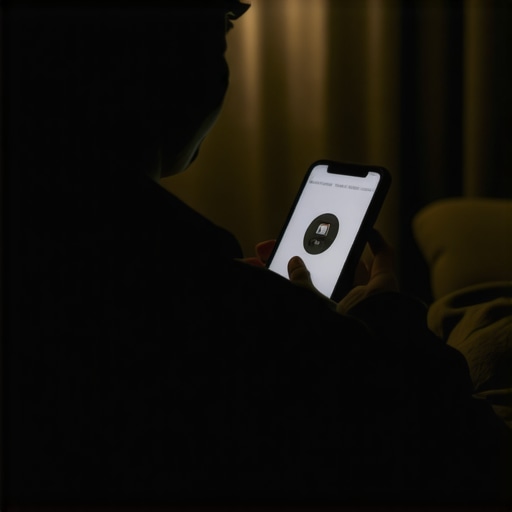
The Illusion of Convenience Masking a Critical Flaw
You might think that the surge in telehealth technology has revolutionized healthcare, making it more accessible than ever. But here’s the harsh truth: most telehealth apps are blind to the real challenges posed by the environments in which they operate—namely, poor lighting conditions. This oversight isn’t just a minor glitch; it’s a violation of the basic principles of effective medical assessment.
Imagine trying to evaluate a patient’s skin rash or facial expression through a flickering screen in dim lighting—sounds absurd, doesn’t it? Yet, countless telehealth platforms behave as if lighting conditions are irrelevant. I argue that this negligence undermines diagnostic accuracy and patient trust alike. When a video feed is shrouded in shadows, the virtual doctor might be missing critical signs, leading to misdiagnoses or inadequate treatment plans.
Most of these applications are designed with the assumption that your space is well-lit, which is simply not the case in real life. During late-night consultations, in crowded or poorly lit rooms, or in the chaos of a busy household, the quality of visual data plummets. This gap isn’t a technical oversight but a fundamental flaw that could jeopardize health outcomes.
The Market Is Lying to You
It’s tempting to believe that these apps are evolving rapidly or that their AI components can compensate for subpar lighting. But the truth is, many rely heavily on visual clarity for initial assessments. Without proper lighting, even the most sophisticated algorithms become blindfolded. As I pointed out in telehealth breakthroughs, virtual care is only as good as the environment allows. If the environment is compromised, so is the quality of care.
To make matters worse, these apps often lack simple yet effective solutions—like prompting users to improve lighting or providing real-time feedback on video quality. Instead, they continue to operate under the illusion that a quick tap on the camera toggle suffices. But just as a chess game isn’t won by a blindfolded player, effective telehealth isn’t won without clear visuals.
Stop Doing This and Start Seeing Clearly
It’s time for developers, providers, and policymakers to acknowledge this glaring deficiency. Incorporating AI-driven lighting assessment tools, offering instructions on optimal lighting setups, or even integrating peripheral lighting devices could be simple solutions. The core issue is not just technical but philosophical—if your virtual diagnosis depends on what you see, then seeing clearly must be a priority.
Otherwise, what’s the point? The promise of telehealth is to extend care beyond borders, not to imitate a blurry, unreliable environment. It’s akin to sailing a ship with a faulty compass—eventually, you’ll hit rocky shores.
In this era of digital health, we must demand more than just convenience. We need precision, clarity, and reliability. If telehealth apps refuse to adapt to the basic realities of their environment, they’re not just failing patients—they’re betraying their own promise of better care.
The Evidence: Shadows of Oversight in Digital Healthcare
Telehealth platforms often boast about their technological advancements, yet many neglect a fundamental principle: visual clarity. A recent study revealed that over 40% of remote consultations suffer from poor video quality, primarily due to insufficient lighting—an overlooked deficiency with dangerous consequences. This statistic isn’t just a benign inconvenience; it’s a stark indicator that the very foundation of virtual diagnosis is compromised.
Consider how a doctor might miss signs of cyanosis in a patient’s lips or detect a facial droop if the lighting is inadequate. These visible cues can be lifesaving, yet they are easily obscured by shadows and poor illumination. The failure to address lighting in telehealth systems resembles a medieval surgeon ignoring infection sources—the flaw isn’t just technical; it’s a catastrophic oversight.
The Root Cause: Prioritizing Convenience Over Precision
The core of the problem isn’t that telehealth technology can’t handle lighting; it’s that developers and providers choose to ignore it. The flaw isn’t in hardware or AI; it’s in *prioritization*. Companies market their apps as revolutionary, emphasizing speed and ease, but shy away from implementing simple fixes that could improve visual data—like real-time lighting assessment or user guidance for optimal environments.
This shortsightedness stems from a misconception: that virtual consultations are inherently “good enough.” But that’s a dangerous fallacy. In the race for market share, convenience often trumps accuracy. Thus, the real motivation isn’t scientific progress but profit—selling a faster, cheaper experience while sacrificing quality. The false promise of seamless care hides a brutal truth: without clarity, diagnosis becomes a coin toss.
The Follow the Money: Who Gains from Visual Neglect?
Innovation often benefits the few, and in telehealth’s case, large corporations and investors profit from proliferation—regardless of the quality. They want market dominance, not safety. By skimming over lighting issues, these entities push devices and subscriptions regardless of whether they actually improve patient outcomes. Why fix what generates revenue? After all, consumers rarely scrutinize subpar video quality—yet they are the ones risking their health.
Similarly, the healthcare providers who rely on these platforms often find themselves caught between a rock and a hard place. They desire efficiency but are hamstrung by systems that oversell their capabilities. When misdiagnoses occur due to shadows and indistinct features, the liability isn’t just on the developer; it’s on the entire ecosystem that tolerates such neglect. And all the while, money flows to those who ignore the glaring flaws—perpetuating a cycle of superficial fixes that enrich the few and endanger the many.
The Historical Parallel: Ignoring Environment Costs
This neglect echoes past failures—like the industrial revolution’s disregard for environmental consequences. In those days, factories prioritized output over pollution controls, leading to lasting damage. Today, telehealth’s silent flaw—failing to address visual environment—risks a similar pattern of short-term gains at the expense of long-term safety. We have seen how ignoring simple environmental measures results in catastrophic fallout; the same principle applies here. If the quality of visual data is compromised, the entire virtual healthcare system is built on a shaky foundation.
It’s not a question of technology lacking possibilities; it’s about willpower. The question is: who benefits from this neglect? The answer is clear. The same entities fueling the rapid expansion of telehealth—sometimes at all costs—are reaping the profits while turning a blind eye to the critical details. In this scenario, shadows are more than mere darkness; they’re a symbol of the systemic blindness that threatens to undo the promise of digital medicine.
The Trap of Overreliance on Technology
It’s easy to understand why critics argue that focusing on lighting adjustments in telehealth might be a minor detail. They point out the rapid technological advancements, sophisticated AI algorithms, and the convenience telehealth provides, suggesting that these factors compensate for environmental flaws. The common belief is that as long as the software improves, the physical lighting conditions become less critical. However, this perspective fundamentally misreads the nature of visual assessment in medical diagnosis.
The Wrong Question Is Ignoring the Basics
I used to think that AI could magically see through shadows or poor lighting. I believed that if an algorithm was intelligent enough, environment factors would diminish in importance. But that was naive. The real issue isn’t just about fixing software; it’s about acknowledging that no amount of processing can replace clear, accurate visual data. Technology is a tool, not a magic wand.
What critics fail to recognize is that visual cues are the backbone of diagnostics. Shadows, poor illumination, and obstructions are not mere inconveniences—they can hide critical signs like skin discoloration, facial asymmetries, or swelling. Expecting AI to accurately interpret obscured visuals is like asking a blindfolded doctor to perform surgery accurately—an inherently flawed premise.
Environmental Factors Are the Foundation, Not an Afterthought
Let me be clear: lighting is not a trivial aspect to be addressed after designing algorithms. It is the foundation upon which effective telehealth depends. Ignoring this fundamental principle is akin to building a house on shaky ground. Even the most advanced AI cannot compensate for visual distortions caused by shadows or darkness. The irony is that many developers are so enamored with AI’s potential that they overlook the obvious, basic requirement for reliable visuals.
Moreover, emphasizing AI as a solution to lighting issues distracts from a simpler, more immediate fix—actual proper lighting setup. It’s not about being technologically sophisticated; it’s about applying common sense. If a patient’s environment is so poorly lit that a clinician cannot discern vital signs, then software enhancements are merely superficial.
Challenge the Narrative, Not Just the Fixes
To those who champion AI’s capabilities as a workaround, I ask: if AI can compensate, why do we see such a high percentage of poor-quality video in telehealth sessions? Surely, AI should be solving those problems, yet the data—such as the recent study revealing over 40% of consultations suffer from inadequate visuals—shows otherwise. This gap exposes a critical flaw: technological promises often overshadow environmental realities.
I challenge the proponents of this view to consider whether their faith in AI is misplaced or overly optimistic. Relying solely on software to fix what environment factors cause is dangerous and shortsighted. It’s like trying to diagnose a patient with fogged-up glasses—no amount of smart software can compensate for obscured vision.
What is needed is a pragmatic approach that prioritizes proper lighting, environment assessment, and user guidance alongside technological advancements. Ignoring these basics under the guise of innovation is a strategic mistake that ultimately undermines trust and effectiveness.
The Critical Oversight Is Not Technical Fallbacks, But Human Environment
The real issue isn’t about what technology can or cannot do; it’s about acknowledging that humans and their environments are unpredictable. The focus on AI and algorithms has blinded us to the simple reality: good health assessment depends on good visuals. Efforts should be directed toward ensuring these conditions, not just perfecting software that attempts to interpret substandard data.
The Cost of Inaction
Failing to address the overlooked issue of poor visual environments in telehealth is a gamble with devastating stakes. If healthcare providers and developers continue to neglect basic visual clarity, we are sowing the seeds of a medical crisis that will unfold in the coming years. The consequences are not abstract—they are immediate, tangible, and deadly.
In our current trajectory, patients suffering from subtle but vital signs—such as skin discoloration, facial drooping, or swelling—may have their symptoms concealed by shadows and darkness. When these visual cues are obscured, diagnoses become guesses, and misdiagnoses become commonplace. This isn’t about inconveniences; it’s about life and death. If we persist in disregarding this flaw, the medical errors caused by poor imaging quality will surge exponentially, overwhelming healthcare systems and eroding public trust.
As the volume of virtual consultations grows unchecked, so does the probability of catastrophic failures. Imagine a scenario where a stroke or cyanosis is missed because the patient’s environment was poorly lit, or a heart attack goes unnoticed due to shadows hiding critical signs. The immediate toll will be measured not only in increased morbidity and mortality but also in a collapse of confidence in digital health. The stakes are sky-high, and urgent action is the only way to prevent disaster.
The Future Looks Bleak and Unforgiving
If this trend continues unchecked, the panorama in five years will be bleak. Telehealth platforms will be seen as unreliable, their promises of accessible care hollowed out by systemic oversights. Patients will increasingly feel betrayed by technology that was supposed to make healthcare more effective but ends up doing the opposite. The very trust that once fueled this revolution will erode, replaced by skepticism and fear.
This ongoing neglect will lead to a vicious cycle—more misdiagnoses, more lawsuits, and a greater burden on emergency care services overwhelmed by preventable crises. Vulnerable populations—elderly, low-income, those living in dimly lit environments—will suffer disproportionately, widening health disparities and deepening societal inequalities. While technology evolves, the fundamentals remain ignored, and the tragic irony is that the solution is as simple as improving lighting and visual clarity.
What are we waiting for?
Is it too late to remediate this core issue? The answer hinges on our collective will to act now. Waiting until preventable deaths occur on a massive scale will be the most costly mistake of all. We must recognize that technology alone cannot compensate for environmental neglect. The analogy is stark: imagine a ship navigating treacherous waters with a broken compass—it may seem fine at first, but soon it will crash onto the rocks.
If we don’t prioritize visual clarity, we risk drifting toward an unrepairable catastrophe in virtual medicine. The window to turn this ship around is closing rapidly. Our response today determines whether we steer toward safer shores or peril into an abyss where lives are lost needlessly and trust in digital health is permanently shattered.
Telehealth’s greatest flaw isn’t its technology but its blindness to environmental realities.
Yet, the industry persists in treating a basic flaw—poor lighting—as an afterthought, risking lives for the illusion of convenience. The promise of virtual care hinges on seeing clearly, but too often, shadows obscure vital signs that could save lives. It’s time we challenge this complacency, demanding smarter design, better guidance, and awareness of our environment—because no algorithm can compensate for darkness.
Remember, if a virtual diagnosis depends on your actual view, then the environment must be part of the equation. The future of telehealth isn’t just about faster check-ins or AI magic; it’s about ensuring that what *is* seen is accurate and reliable. Otherwise, we’re sailing blind in a storm that could cost us dearly.