
Why Seniors Should Avoid Late-Night Snacks Before Lab Work
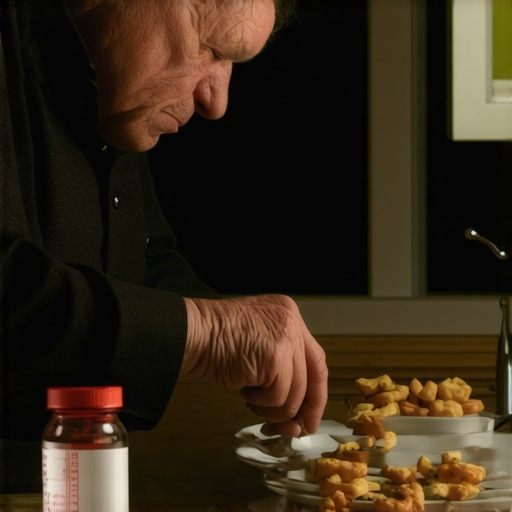
Why Your Midnight Fridge Raid Is Destroying Your Medical Data
You are not just eating a piece of toast at 11 PM; you are effectively sabotaging the only window your doctor has into your internal chemistry. Many seniors believe that a small snack won’t move the needle, but I argue that this casual disregard for fasting protocols is why so many chronic care plans fail before they even start. Why are we still treating medical instructions like polite suggestions? If you want an accurate diagnosis, you have to earn it with discipline.
Think of your morning blood draw as a crime scene investigation. When you introduce a late-night snack, you are the clumsy bystander trampling over the fingerprints and kicking over the evidence. The results come back, and they are a mess—skewed glucose, inflated triglycerides, and a frustrated physician who is now working with tainted data. You might think X (that one cracker doesn’t matter), but you’re wrong. It changes the entire narrative of your metabolic health.
The Fasting Rule Is Not A Suggestion
You might think you can cheat the system, but you are only cheating your own longevity. I have seen it time and again: a senior insists they fasted, yet their “high normal” readings are actually just the remnants of a late-night cookie. This is exactly the fasting rule that most people get wrong before blood work. If you want a clear picture of your health, you have to play by the rules. Anything less is a waste of everyone’s time.
Your body is a complex machine, and for seniors, that machine processes sugar and fat at a much slower rate than it used to. That 10 PM sandwich is still coursing through your system at 8 AM. I believe we need to get serious about the why your fasting blood work needs a water-only rule if we want to avoid unnecessary medication adjustments. Why would you risk a dosage change based on a lie? It is a reckless gamble with your own prescriptions. We see the error of skipping your blood work after a high-fat meal frequently because patients think they have already failed. The real failure is pretending the snack didn’t happen and letting the lab proceed with a contaminated sample.
Stop Pretending Your Metabolism Is Young
Let’s cut through the fluff: your digestive system isn’t a high-speed engine anymore; it’s a slow-moving freight train. When you eat late, you’re forcing your doctor to look at a distorted version of your reality. This lack of transparency leads to over-prescription and missed early warning signs. I am fighting for a world where seniors take control of their data. That starts with closing the kitchen at sundown. Is that extra slice of cheese worth a lifetime of the wrong blood pressure pills? I think not.
The Biological Lag Is a Data Killer
The problem isn’t your appetite; the problem is the biological clearance rate of a body that has seen seven or eight decades of life. When you were twenty, your metabolism was a furnace that could incinerate a midnight pizza before the sun rose. Today, it is a slow-drip system. When you ignore the fasting window, you are not just ‘having a snack.’ You are forcing your liver to stay in an active, processing state when it should be at a baseline rest. This is the root cause of the skewed data: your doctor needs to see your body in its neutral gear, but you’ve handed them a report of an engine running at three thousand RPMs.
It is a biological reality that insulin sensitivity declines with age. That 11 PM piece of toast causes a glucose spike that, in a senior, can take significantly longer to normalize. If your blood is drawn at 8 AM, you are still riding the tail end of that spike. The result? A ‘prediabetic’ diagnosis that might be entirely false. But once that data is in your chart, it is permanent. It is the foundation upon which your future care is built, and it is a foundation made of sand. ${PostImagePlaceholdersEnum.ImagePlaceholderB}
The Arithmetic of Clinical Error
Let’s look at the numbers, because the numbers do not care about your cravings. Research indicates that non-fasting can swing triglyceride levels by as much as 20% to 30%. That 30% isn’t just a statistical dip; it is a total collapse of diagnostic integrity. If your triglycerides are artificially inflated by a late-night handful of nuts, your doctor isn’t seeing your heart disease risk—they are seeing your snack. Why would any rational person want to start a daily regimen of statins based on a contaminated sample? It is the height of absurdity, yet it happens in clinics every single day because patients prioritize a momentary comfort over decades of chemical accuracy.
We see this in glucose monitoring constantly. A ten-point difference in fasting blood sugar is the difference between ‘healthy’ and ‘chronically ill.’ That ten-point gap isn’t a minor fluctuation; it is a life-altering label. If you eat late, you are essentially gambling that your body can clear those sugars faster than the lab tech can find them. It is a losing bet. Your body is slow, the test is sensitive, and the consequences of a false positive are measured in expensive prescriptions and unnecessary side effects.
Why Your Doctor is Flying Blind
Modern medicine is a data-driven enterprise. Your physician is an analyst, and their analysis is only as good as the raw information you provide. When you show up for a blood draw with a stomach full of half-digested carbohydrates, you are effectively blindfolding the person trying to save your life. They see the elevated levels and they do exactly what they were trained to do: they intervene. They don’t know you cheated. They don’t know the ‘high’ reading is actually just a ‘late’ reading. They see a crisis, and they treat it.
The real failure here is a lack of respect for the precision required in senior care. We are not talking about a margin of error that can be ignored. We are talking about a systemic failure of honesty between the patient’s habits and the patient’s records. If you cannot maintain a simple twelve-hour fast, you are telling your medical team that you are not a serious participant in your own longevity. You are choosing the cookie over the cure, and in the world of chronic care management, that is a choice that eventually leads to a very predictable, and very preventable, decline. It is time to stop treating fasting as a suggestion and start treating it as the prerequisite for a legitimate medical existence.
It is easy to see why the medical community has grown soft on these requirements. I know what you’re thinking: surely a dizzy spell or a hypoglycemic episode in the waiting room is a far greater risk than a marginally elevated glucose reading. Critics will argue that for a senior on a complex medication regimen, the strict twelve-hour fast is not just difficult—it is medically irresponsible. They suggest that a ‘buffer’ snack—a dry piece of toast or a few crackers—is a necessary evil to ensure the patient actually makes it to the clinic without collapsing. I used to believe this too, until I saw the sheer volume of patients being treated for ‘ghost’ conditions that only existed in the aftermath of those buffers. We are effectively creating a secondary health crisis by prioritizing short-term comfort over long-term diagnostic accuracy.
The Dangerous Myth of the Safety Snack
The ‘safety first’ argument sounds compassionate, but it is intellectually lazy. When you prioritize a moment of comfort over the integrity of the data, you aren’t being safe; you are being reckless with the long-term chemical management of your body. We are living in an era of precision medicine, yet we are feeding doctors garbage data under the guise of ‘patient comfort.’ If your health is so precarious that a twelve-hour fast causes a crisis, that is a data point in itself—one that should be managed under clinical supervision, not bypassed with a secret granola bar. By ‘protecting’ yourself from a brief moment of hunger, you are effectively blinding the diagnostic process. You are trading a morning of discipline for a decade of potentially unnecessary metformin or statins. This isn’t just a minor error; it’s a fundamental breakdown of the patient-provider contract. If you can’t provide the raw data, the doctor can’t provide the cure.
The common trap here is the belief that ‘a little bit’ doesn’t count. People think the metabolic response is a light switch—either it’s on or it’s off. In reality, it’s a complex chemical cascade. Even a few grams of carbohydrates trigger an insulin response that shuts down fat oxidation and alters the very baseline your doctor is trying to measure. ${PostImagePlaceholdersEnum.ImagePlaceholderC} This metabolic interference isn’t a theory; it’s a documented physiological event. When you introduce calories, you are shifting your body from a state of repair and baseline maintenance into a state of processing. You’ve just ruined the ‘still life’ photo your doctor was trying to take. Instead of a clear image of your resting health, they get a blurred snapshot of a body in motion. The resulting treatment plan is then designed to stop a motion that shouldn’t have been happening in the first place.
The elephant in the room is our collective refusal to acknowledge that senior care requires more discipline, not less. As we age, the margin for error shrinks. A younger body can hide the sins of a midnight snack with a roaring metabolism, but a senior body does not have that luxury. The ‘high-fat meal error’ is a perfect example: patients think they can just wait a few extra hours and be fine, but the inflammatory markers can linger for much longer than the hunger does. We need to stop coddling the idea that medical protocols are negotiable based on how hungry we feel at 11 PM. If you want the benefits of modern medicine, you have to accept the rigors of modern testing. Choosing to ignore the fast is a choice to ignore the truth of your own health, and no amount of ‘safety’ crackers can justify that level of self-deception.
We are seeing an epidemic of over-diagnosis because we have normalized the ‘small cheat.’ Doctors see a number that is slightly out of range and they prescribe. They don’t have the time or the resources to interrogate every patient about a hidden piece of cheese. They trust the lab. By breaking the fast, you are breaking that trust. You are placing your physician in a position where they are essentially guessing, even though they have a lab report in their hand. This creates a cycle of medication adjustments that are chasing shadows. One month your dosage is up because of a late-night cookie; the next it’s down because you actually followed the rules. This volatility is not a sign of a failing body—it is a sign of a failing patient protocol.
The broader implication of this casual attitude toward medical fasting isn’t just a skewed lab report; it’s the slow, quiet death of precision medicine. We are entering an era where the data we rely on to make life-saving decisions is being systematically corrupted by a lack of patient discipline. If we continue to treat clinical instructions as flexible guidelines, we aren’t just making a mistake—we are sabotaging the future of senior care. In five years, we will look at a landscape of medical records so riddled with noise and false positives that personalized medicine will become a hollow marketing term. We will be treating the symptoms of our own snacks rather than the root causes of our diseases.
The Erosion of Clinical Truth
Imagine a lighthouse keeper who refuses to clean the salt spray off the glass. The light is bright, the intentions are pure, but the signal that reaches the ships at sea is distorted, dim, and misleading. That is exactly what happens when you ignore a fasting window. You are the salt on the glass. Your doctor is looking for the beacon of your true metabolic health, but they are seeing a refraction—a ghost of a condition that doesn’t exist. This is the slippery slope we are currently descending. Each harmless cracker adds a layer of grime to the lens, until eventually, the entire medical system is navigating by a light that bears no resemblance to the reality of the coastline.
A Systemic Crisis of Trust
The stakes are immediate. When a physician prescribes a medication based on a false reading, they are essentially performing an experiment on a body that doesn’t need it. This leads to a cascade of side effects, further prescriptions to manage those side effects, and an eventual loss of faith in the medical process itself. We are building a house of cards where every card is a contaminated blood sample. If we don’t restore the sanctity of the clinical fast, we are choosing a future of medical guesswork. This isn’t a minor administrative hurdle; it is a moral imperative to preserve the integrity of our biological data.
What are we waiting for?
We are waiting for the moment when the data becomes so unreliable that the doctor stops trusting the lab altogether. That is a dangerous world to inhabit. When the lab results lose their authority, the only thing left is a best guess. For a senior with multiple comorbidities, a best guess is a death sentence. We are at a crossroads. We can either demand a higher standard of personal accountability or accept a future where our prescriptions are determined by our cravings rather than our chemistry. ${PostImagePlaceholdersEnum.ImagePlaceholderD}
The Point of No Return
We must stop viewing healthcare as a service that is performed on us and start viewing it as a partnership that requires our active, disciplined participation. The warning is clear: if we do not value the truth of our own biology enough to skip a late-night sandwich, we cannot expect the medical industry to magically find that truth for us. We are currently manufacturing our own illnesses through data contamination. If this trend is not reversed, the next generation of seniors will not be managed by science, but by a chaotic algorithm of errors. The cost of this inaction is a lifetime of unnecessary chemical intervention. We are trading our long-term health for a momentary satiation, and the bill is coming due.
The Choice Between Clarity and Convenience
I am asking you to reclaim the integrity of your health data. If you truly want chronic care management personalized telehealth strategies for better outcomes, you have to bring honest numbers to the digital table. You might think a sip of cream or a single cracker is harmless, but the reason your morning coffee ruins your blood test results is a biological certainty, not a medical whim. Your body does not negotiate with calories; it reacts to them. If you want to make the most of your next appointment, learn the move that shortens your lab wait time on busy mornings and show up with the discipline of a patient who values their future more than their midnight appetite.
The Final Verdict
Your medical record is a biography written in blood; do not let a midnight snack be the typo that ruins the story.
The Twist
We often view these restrictions as a test of our patience, but they are actually a test of our physician’s ability to help us. When you break a fast, you aren’t just breaking a rule; you are breaking the very tools your doctor uses to keep you alive. The most compassionate thing a doctor can do is demand the truth, and the most self-respecting thing a patient can do is provide it.
The fridge door is the thin line between a scientific diagnosis and a dangerous guess. Choose science.