
Why You Need Your Lab Imaging Instead of Just the Report
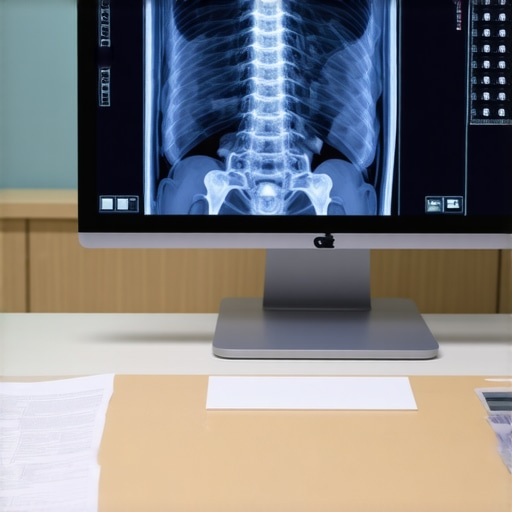
Stop Settling for Summaries: Why Your Lab Report Is Not Enough
You’re being gaslit by a PDF. You spend weeks waiting for an imaging appointment, hours in a sterile waiting room, and a small fortune in co-pays, only to be handed a three-paragraph summary written by a radiologist who has never even seen your face. This is the modern medical experience, and it is dangerously insufficient. I argue that the era of ‘doctor knows best’ is dead; we have entered the era of radical patient transparency. If you aren’t walking out of the imaging center with a disc or a digital link to your actual images, you aren’t getting the care you paid for. You are getting a filtered, curated, and potentially flawed version of reality. Why are you letting someone else own the keys to your biology?
[image_placeholder]
The Medical System Is Playing Telephone With Your Health
Why do we treat a radiologist’s report as the gospel truth? These documents are subjective. They are interpretations, not objective facts. Think of your health as a high-stakes crime scene. The imaging is the raw evidence—the fingerprints, the DNA, the security footage. The report is just a witness statement. Witnesses get things wrong. They miss details. They get tired. When you rely solely on the text, you are playing a game of telephone where the stakes are your physical well-being. I have insisted previously that you should always request a copy of your lab imaging because the report is merely one person’s take on a complex visual story. If you don’t have the source material, you are locked into that single perspective, unable to easily pivot when the treatment isn’t working.
Your Summary Is Hiding the Critical Details
We see this across all diagnostics, from the local clinic to the major hospital. The trend is toward ‘efficiency,’ which is often just a polite word for doing the bare minimum. Your raw lab data is more important than the summary because the summary is where nuance goes to die. If you’re managing chronic pain or a mystery illness, that ‘mild’ notation on a report might actually be the smoking gun for a second specialist with a different set of eyes. But that specialist can’t help you if they are squinting at a photocopied paragraph instead of the high-resolution files. It’s like trying to judge an art gallery by reading the titles of the paintings. Stop being a passive passenger in your own diagnostic journey. You wouldn’t buy a house based on a blurry Polaroid of the front door, so why would you accept a text-only summary of your spine or your brain? Demand the data. Own the images. Because at the end of the day, no one is as invested in your survival as you are. The system is built for speed; you must build it for accuracy.
The Business of Diagnostic Bottlenecks
The resistance you face when asking for your raw imaging isn’t accidental. It is structural. We are told that these systems exist for our protection, but the reality is far more cynical. The modern medical infrastructure is built on proprietary software and closed-loop ecosystems designed to keep you tethered to a single provider. When a hospital system makes it difficult to export your DICOM files or your full lab panels, they aren’t protecting your privacy; they are protecting their market share. It is a form of data-hostage-taking where the ransom is your continued patronage. They want the friction of moving your care to be so high that you simply give up and stay within the ‘network.’ This isn’t healthcare. It is a retention strategy. The problem isn’t a lack of technology; the problem is the intentional deployment of silos.
${PostImagePlaceholdersEnum.ImagePlaceholderB}
Why ‘Normal’ is Often a Lie
We have been conditioned to exhale when we see the word ‘Normal’ at the top of a summary. This is a mistake. In the world of chronic care and complex diagnostics, ‘normal’ is a statistical average, not a clean bill of health. A radiologist might label a scan as normal because it doesn’t show an immediate, life-threatening emergency, but that same image might contain the subtle markers of a degenerative condition that a specialist—someone who actually knows your history—would recognize instantly. By accepting the summary, you are accepting a low-resolution version of your own life. The summary is a filter. It strips away the edge cases. It ignores the anomalies that don’t fit the standard narrative. You are not a standard narrative. You are a biological exception, and you deserve the high-resolution truth that only the raw data can provide.
The Industry Standard is Failing You
The data doesn’t lie, but the delivery of it is broken. Current research indicates that nearly 80 percent of serious medical errors involve some form of miscommunication during the hand-off between providers. This isn’t a minor glitch; it is a fatal flaw in the system. When one doctor reads a summary of what another doctor saw, the margin for error expands exponentially. That 80 percent figure isn’t just a number; it’s a graveyard of missed diagnoses and preventable suffering. We are told that the system is ‘integrated,’ but true integration requires the patient to be the central repository of their own information. If the data doesn’t move with you—in its original, unedited, and raw format—then the system is failing its primary objective. We must stop pretending that a three-sentence email is the equivalent of a 2GB imaging file. It isn’t even in the same category of utility.
The Liability of the Filtered Truth
The reports you receive are written with one eye on the patient and the other on the legal department. Radiologists and pathologists are trained to be conservative, to use language that minimizes their own liability. This defensive medicine creates a culture of vague descriptions and ‘hedging’ that serves the institution, not the individual. A raw image or a full lab data set doesn’t have a legal team. It doesn’t have an ego. It just exists. When you bypass the summary, you bypass the institutional fear that dictates how your health is described. You move from the realm of corporate protectionism into the realm of objective reality. They will tell you that you ‘won’t understand’ the raw data. They will tell you it’s ‘too complex.’ Ignore them. Complexity is where the answers live. The summary is where the truth goes to hide.
The Expertise Trap
I know what the skeptics in the white coats are saying. They argue that handing a patient a raw MRI file or a complex metabolic panel is like handing a cockpit manual to a passenger mid-flight: it only causes panic. The prevailing wisdom suggests that ‘expert interpretation’ isn’t a filter, but a necessary translation layer that prevents you from spiraling into a Google-induced panic attack over a benign cyst or a standard anatomical variation. It’s a compelling argument because it’s rooted in a genuine, albeit condescending, desire to protect the patient from themselves. I used to believe this too, until I saw how often the ‘translation’ was actually a mistranslation that cost people years of their lives. We are told that we lack the context to understand our own biology, and therefore, we should be content with the sparknotes version of our health. This is the heart of medical paternalism, and it is a relic of an era when information was scarce and the doctor was the only person in town with a library card.
${PostImagePlaceholdersEnum.ImagePlaceholderC}
Don’t Be Fooled by the Anxiety Argument
The idea that ignorance is bliss in medicine is a lie told by people who want to manage their schedule, not your health. When you withhold the raw data, you aren’t protecting the patient from anxiety; you are depriving them of the ability to seek a second opinion or to truly understand the baseline of their own body. The ‘anxiety’ of seeing the data is nothing compared to the existential dread of a treatment plan that isn’t working while you’re being told everything is ‘normal’ on a one-page summary. The system assumes you are too fragile to handle the truth of your own cells. This assumption is not only insulting; it is clinically dangerous. By limiting your access to the raw files, the system creates a single point of failure. If that one radiologist had a bad morning, or if that one lab tech was rushed, the error becomes the permanent record because you have no way to verify the source material. We are told that the raw data is ‘too complex,’ yet we are expected to make life-altering decisions based on the oversimplified summaries of that very same data. It is a logical paradox designed to keep you compliant rather than informed.
The Gatekeeping Myth
The critics will say that patients will ‘misinterpret’ what they see. This assumes that interpretation is a static, finished process once the report is signed. It isn’t. Medicine is an evolving dialogue. When you have the raw data, you are empowered to bring that data to a specialist who might have a more nuanced perspective on your specific condition. Gatekeeping this information under the guise of ‘patient safety’ is a smokescreen for institutional efficiency. It is much easier for a hospital to manage a patient who only asks questions about a three-paragraph summary than one who comes in with specific questions about a 3D rendering of their own heart. The friction you encounter when asking for your records is not for your benefit; it is to protect the institution from the scrutiny that comes with transparency. The real danger isn’t a patient with too much information; it is a patient who is forced to navigate a life-threatening situation with a blindfold on, trusting a system that has already proven it values the summary over the substance. We must stop asking for permission to see ourselves. The raw data is the only objective truth we have; everything else is just an opinion that you are being billed for.
We are standing at a precipice where the definition of patienthood is being rewritten without our consent. If we continue to accept the filtered reality of three-paragraph summaries, we aren’t just being passive; we are being complicit in the steady erosion of our own biological agency. The stakes could not be higher. Right now, every time you walk away from a clinic without your raw data, you are validating a system that treats your health as a secondary concern to its own administrative ease. This isn’t a minor inconvenience. It is a slow-motion surrender of the most fundamental information you possess: the code of your own life.
Is it too late to reclaim our data?
The window for change is closing. If this trend of data-siloing continues for another five years, the ‘filtered truth’ will become the only truth. We are rapidly moving toward a future where artificial intelligence will be tasked with summarizing the summaries, adding layer upon layer of abstraction between you and your actual health. Imagine trying to navigate a dense, unfamiliar forest while holding a map that someone else drew from memory, rather than having the actual GPS coordinates. That is the danger of the summary. You are being forced to navigate the most treacherous terrain of your life with a tool that was never designed for precision. It is a recipe for a catastrophic wrong turn that you might not even realize you’ve made until it’s far too late to correct the course.
${PostImagePlaceholdersEnum.ImagePlaceholderD}
The Point of No Return
The moral imperative here is clear: we must stop treating medical transparency as a luxury and start treating it as a right. The industry’s current trajectory is leading us toward a ‘black box’ model of medicine, where patients are merely the inputs and treatment plans are the outputs, with the actual diagnostic logic remaining hidden inside the machine. This is the ultimate loss of autonomy. When you lose access to the raw evidence of your own physical state, you lose the ability to advocate for yourself. You become a hostage to the first opinion you receive, regardless of its accuracy. This is the warning we must heed before the silos become impenetrable. We are at the point of no return where either we reclaim the keys to our biology or we remain permanent tenants in a system that views our raw data as its own intellectual property.
A Choice to Make
The consequence of inaction is a world where medical errors are not just common, but systemic and invisible. When the source material is buried, the error becomes the reality. We cannot afford to wait for the industry to change its own incentive structure. It won’t. The business of medicine will always prioritize the retention of data over the empowerment of the individual. The only way to break the cycle is to refuse the summary. Demand the disc. Secure the portal login. Treat every diagnostic event as a battle for your own information. If we do not act now, the next generation will not even know that they have a right to the truth; they will grow up in a world where the summary is the only thing that exists, and the raw data of their own bodies is a ghost they are never allowed to see.
Stop Asking for Permission
The transition from a passive patient to an empowered one begins the moment you stop treating the medical front desk like a gatekeeper and start treating them like a service provider. When you request a copy of your lab imaging, you aren’t being a ‘difficult’ patient; you are being a diligent owner of your own biological assets. The medical system has spent decades conditioning us to wait for the knock on the door and the simplified explanation, but that era is over. If you can use a smartphone to manage your retirement account, you can use a DICOM viewer to understand your anatomy. Don’t let anyone convince you that the complexity of the data is a barrier meant to protect you—it is a resource meant to enlighten you.
The Power of the Pivot
Owning your data allows for the kind of agility that the traditional system often inadvertently suppresses. It allows you to know how to demand a specialist referral during a virtual call with the confidence of someone who has seen the evidence firsthand. You aren’t just reciting symptoms; you are providing source material. This shift is what differentiates those who receive ‘standard care’ from those who receive ‘exceptional care.’ As I have argued, your raw lab data is more important than the summary because it is the only thing that remains true even when the doctor’s opinion changes. It is your ultimate insurance policy against the inevitable margin of human error.
The Final Verdict
The summary is a map of the territory, but the raw data is the territory itself—and you cannot navigate your survival using someone else’s selective memory of a landscape.
The Twist
The real irony is that by hoarding the data, the medical establishment actually increases the very anxiety it claims to prevent; true peace of mind doesn’t come from being told ‘everything is fine’ by a stranger, but from the radical transparency that allows you to verify it for yourself.
Stop being the subject of a report. Start being the owner of the evidence. Your life depends on the difference.