
Why You Should Always Request a Copy of Your Lab Imaging
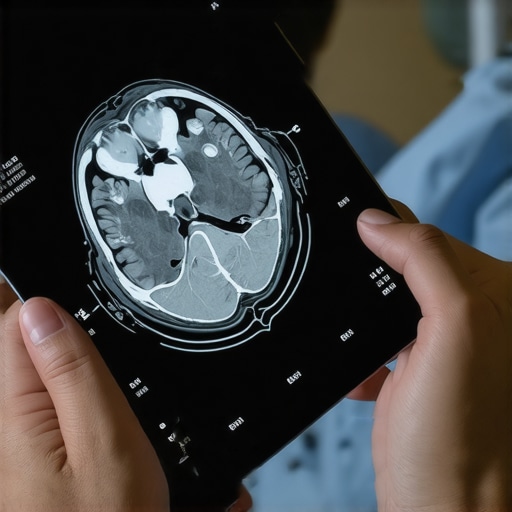
Stop Letting Doctors Guard Your Own Medical Scans Like State Secrets
You walk into a clinic, they slide you into a tube or poke you with a needle, and then you wait. A few days later, a portal pings with a single word: "Normal." You breathe a sigh of relief and move on with your life. I argue that you are making a massive mistake. That single word is not a diagnosis; it is a curtain. Why are we still handing over our physical autonomy to a system that treats our own biological data like classified documents? You might think your doctor is giving you the full picture, but you are wrong. They are giving you the edited, abridged, and often sanitized version of your own body.
The medical establishment thrives on your passivity. When you do not demand a physical copy of your imaging or your blood work, you are essentially signing a waiver on your own health intelligence. Trusting a one-sentence summary of a complex MRI is like buying a used car because the salesman gave you a "thumbs up" while standing twenty feet away. You wouldn’t accept that level of vagueness in your finances, so why accept it when it comes to your internal organs? This is exactly why your raw lab data is more important than the summary your doctor’s office provides. I believe that "unremarkable" is the most dangerous word in the medical dictionary because it lulls you into a false sense of security while ignoring the trends that lead to chronic illness.
The Summary is a Calculated Omission
Let’s be blunt: most doctors are drowning in paperwork. They have ten minutes to talk to you and an hour of data entry to follow. When they scan your imaging report, they aren’t looking for subtle signs of optimization; they are looking for a liability. If your scan doesn’t show a clear tumor or a broken bone, it gets flagged as "normal" and filed away. But "normal" doesn’t mean you are thriving. It just means you aren’t currently dying in a way that requires immediate intervention. By not holding the images yourself, you lose the ability to seek a second opinion without starting from scratch. You also lose the ability to track changes over years. A small shadow today might be "normal," but if it was absent two years ago, it is a signal. You will never know that signal exists if you do not own the data.
The medical system is a machine, and like any machine, it prioritizes efficiency over individual nuance. When you leave without your scans, you are just a number in a database. I want you to treat your health records like a title to a house. You wouldn’t leave the deed to your home in the hands of the previous owner, would you? So why leave the only visual evidence of your internal health in a digital silo you cannot access? Whether it is an X-ray from a quick clinic trip or a detailed panel, you need the hard copies. Even in simple cases, like understanding the truth about urgent care x-rays vs hospital imaging, having the actual file allows you to bridge the gap between different providers who rarely talk to each other.
This isn’t about being a paranoid patient; it is about being an informed owner of your own life. Do you really want to rely on a system that is often too rushed to catch the nuances? I’ve seen too many people realize too late that their "clear" scans from three years ago actually held the keys to their current health crisis. This is why I insist that you request your medical records after every visit. Don’t ask for permission. Don’t apologize for the "extra work" you are creating for the front desk. It is your data, paid for by your insurance or your wallet, and it belongs in your hands, not just sitting on a server in a basement you will never see. If you want to actually manage your health, you have to stop being a spectator and start being the lead investigator.
The Defensive Medicine Industrial Complex
The problem isn’t that your doctor is lazy; the problem is that the entire medical system has been rebuilt as a fortress of defensive medicine. When a radiologist types up a report, they aren’t writing a letter to you. They are writing a legal document designed to protect the hospital from a future lawsuit. This is the root cause of the clinical vagueness you experience. They use standardized, cautious language because specificity is a liability. If they tell you everything is ‘fine’ and it isn’t, they are at fault. But if they label your scan as ‘unremarkable’ and hide the raw images behind a digital paywall, they’ve effectively shifted the burden of curiosity onto you.
You are being fed a curated narrative. Think about it: why is it that you can check your bank balance, your credit score, and your pizza delivery status with millisecond precision, yet it takes a week and three phone calls to see a picture of your own spine? It is not a technical limitation. It is a control mechanism. The system wants you to remain a passive recipient of ‘care’ rather than an active manager of your biological assets. When you don’t have the raw data, you have no leverage. You are forced to accept their interpretation because you literally lack the evidence to challenge it.
${PostImagePlaceholdersEnum.ImagePlaceholderB}
The Proprietary Lock-In of Your Own Cells
Follow the money and the logic of ‘interoperability’ quickly falls apart. We are told that medical records are siloed for your ‘privacy.’ That is a lie. Your records are siloed because your data is the most valuable commodity the hospital owns. If you have your own scans, you can take them to a competitor. If you have your own lab trends, you can use a third-party service to analyze them. By keeping your data ‘secure’—which really means ‘inaccessible to you’—they ensure you stay within their ecosystem. It is proprietary lock-in, and you are the product.
The inefficiency is the point. When you realize that roughly 30% of all medical tests in this country are redundant simply because the previous results are ‘trapped’ in a different hospital’s software, you see the scam for what it is. That 30% isn’t a statistical error; it is a billion-dollar tax on your passivity. The system benefits from the friction. They get to bill for the second MRI, the second blood draw, and the second ‘consultation’ to explain the results you should have already had in your pocket. You aren’t just a patient; you are a recurring revenue stream that is most profitable when you are slightly confused and entirely dependent on their portal access.
The High Cost of Blind Trust
We have been conditioned to believe that ‘doctor knows best,’ but in the age of the ten-minute appointment, that is a dangerous fantasy. A doctor looking at a summary report is seeing a snapshot; you, as the owner of your body, should be looking at the film. A 10% increase in a specific marker over three years is a massive red flag that a ‘normal’ range will never catch. But you won’t see that 10% creep if you only look at the one-page summary from your last visit. You need the raw, unadulterated numbers. You need the DICOM files from your imaging. You need the actual data points from your lab tests and chronic care plans.
This is where the math of modern healthcare fails the individual. The system is designed for the ‘average’ person, but nobody is average. When they tell you your results are ‘within range,’ they are comparing you to a sick population. Most people getting blood work are already ill. Being ‘normal’ compared to a room full of sick people is not a victory. It is a slow slide toward telehealth interventions that treat symptoms rather than causes. By the time your ‘normal’ scan turns into an ‘abnormal’ one, the window for easy intervention has often slammed shut. Ownership isn’t just about rights; it’s about survival in a system that is fundamentally indifferent to your long-term vitality.
I know what you’re thinking because the medical establishment says it every time a patient asks for their own records: you aren’t a radiologist. The critics will argue that handing a raw DICOM file or a complex hormone panel to a layperson is like handing the keys of a Boeing 747 to a toddler. They claim it leads to cyberchondria, a surge in panicked Google searches, and a flood of pointless questions that eat up valuable clinical time. This perspective suggests that you are too fragile and too uneducated to handle the reality of your own biology. It is a convenient narrative for a system that values throughput over thoroughness.
I used to believe this too, until I realized that the anxiety caused by looking at your own data is nothing compared to the catastrophe of a missed diagnosis. The argument that patients will misinterpret their data is a classic straw man. Of course, you aren’t going to diagnose your own rare pathology on day one. But you are the only person with a twenty-four-seven vested interest in your health. A doctor looks at your file for three minutes; you live in your body for a lifetime. When you have the raw data, you have the ability to take it to a specialist who does have the expertise, without being tethered to a single hospital’s bureaucracy.
The Panic Myth Used to Silence You
The idea that data causes panic is a condescending relic of mid-century medicine. In every other aspect of life, we accept that more information leads to better decisions. You don’t hide your bank balance because you might misinterpret a dip in savings; you look at the numbers so you can adjust your spending. Why should your blood sugar or your spinal alignment be any different? The anxiety the system claims to be protecting you from is actually the friction required to keep you from seeking a second opinion. If you don’t have the data, you can’t leave. If you can’t leave, they own your health journey.
${PostImagePlaceholdersEnum.ImagePlaceholderC}
The real danger isn’t a patient who asks too many questions; it is a patient who stops asking them. By withholding the raw files, the system ensures that you remain a compliant patient rather than an engaged one. They want you to trust the summary because the summary is final. It doesn’t invite debate. It doesn’t show the gray areas where a normal result is actually trending toward a metabolic cliff. When critics say you can’t handle the data, what they are really saying is they don’t want to be held accountable for the nuances they missed while trying to meet their daily patient quota.
Gatekeeping information isn’t about your mental health; it is about maintaining a hierarchy where the expert is never questioned and the subject is never informed. The sheer arrogance of the idea that a person shouldn’t see their own internal imaging because they might get confused is the peak of medical paternalism. We have the tools to learn. We have the right to look. And we certainly have the responsibility to ensure that the person reading our scans isn’t simply checking a box to get to the next billing code. You can handle the truth of your own body, even if the system would prefer you stay in the dark.
The Inevitable Digital Enclosure
If we continue to sleepwalk through this era of medical paternalism, we are essentially consenting to a future where we are tenants in our own bodies. The medical system is currently building a digital enclosure around your biological information. This isn’t just about the inconvenience of a lost X-ray; it is about the total surrender of your health narrative. When you give up the right to your raw data, you give up the right to challenge a system that is increasingly incentivized to prioritize its own bottom line over your longevity. This is the path to a reality where your medical history is a black box that only the elites of the insurance world can open. The stakes are not merely bureaucratic; they are existential.
Is the Window for Health Sovereignty Closing?
The urgency of this moment cannot be overstated. We are moving toward a highly automated, AI-driven healthcare model. If you do not have your historical raw data—your blood panels from five years ago, your baseline MRIs, your genetic markers—you will be at the mercy of whatever ‘average’ the machine decides you should be. You become a data point to be managed, not a human to be healed. The stakes are nothing less than your physical autonomy. By the time you realize that your ‘normal’ results were actually early warnings of metabolic decay, the system will have already moved on to its next profitable patient. You are being pushed into a corner where your only role is to pay and obey.
Imagine owning a high-performance vehicle but the hood is welded shut and only the manufacturer has the key to the diagnostic port. You are told the car is running ‘within range’ while you hear the engine knocking. You can’t fix it, you can’t get a second opinion from a local mechanic, and you can’t even see the oil levels. You are forced to drive until the engine seizes, at which point the manufacturer offers you an expensive replacement. This is exactly how the medical establishment treats your body. They hold the keys, they hide the gauges, and they wait for the inevitable breakdown that they could have seen coming years ago if only they had let you look under the hood.
${PostImagePlaceholdersEnum.ImagePlaceholderD}
A Future Sold to the Highest Bidder
In the next five years, the gap between the ‘informed owner’ and the ‘passive patient’ will become a chasm. Those who hold their own data will be able to leverage emerging technologies to optimize their health in ways we can barely imagine today. Those who don’t will be trapped in a cycle of reactive, generic care that treats symptoms while the root causes go unaddressed. Your data is being used to train the very algorithms that will eventually decide your insurance premiums. If you don’t own that data, you are the product being sold, and your health is just the collateral damage of a corporate transaction. The time to demand your records is now, before the system finishes building the walls that will lock you out of your own life forever.
The Ownership Mandate
The medical establishment relies on the idea that you are incapable of understanding your own body. They want you to believe that learning how to read your own liver panel without a medical degree is a fool’s errand, but the truth is far simpler: knowledge is the only thing that breaks the cycle of dependency. Whether you are navigating urgent care innovations streamlining same-day lab tests or managing a lifelong condition through the future of telehealth transforming chronic disease monitoring today, the raw data is your only objective truth. Without it, you are just a passenger in a vehicle you are paying for but aren’t allowed to steer.
${PostImagePlaceholdersEnum.ImagePlaceholderE}
You are the Chief Executive Officer of your own biological corporation, and any provider who refuses to hand over the raw data is a consultant who is overstepping their bounds. The twist is that the very system claiming you are too ‘uneducated’ to handle your raw DICOM files is already using that same data to train AI models that will determine your future premiums. Stop asking for permission to see yourself. Demand the files, download the results, and become the most informed person in the room.