
Why Your Blood Work for Liver Health Includes Several Markers
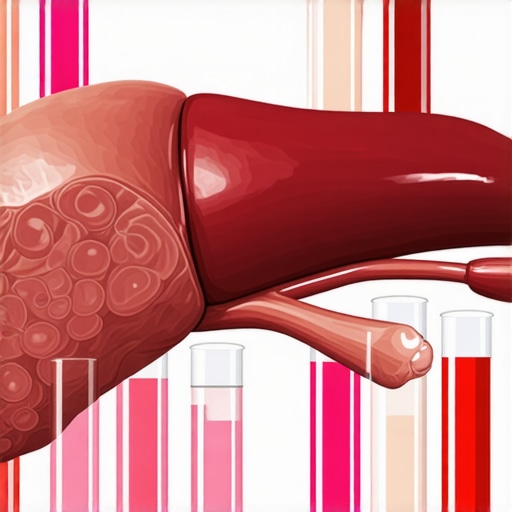
The Myth of Simple Liver Tests: Why One Marker Is Not Enough
Let me start with this blunt truth: if your doctor only checks one liver enzyme, they’re guessing in the dark. The common misconception is that a single test, like ALT or AST, can tell you everything about your liver’s health. But that’s as naive as judging the quality of a symphony by only listening to one note.
In reality, your liver is a complex organ, a biochemical battleground, not a one-dimensional dot on a chart. To truly understand its condition, you need a battery of markers. Think of it like a chess game—if you only look at one piece, you miss the entire strategy. Relying on a single ALT reading is like judging a city’s health by only its quietest street. It’s not enough, and it’s dangerously incomplete.
Many people assume that if their liver enzymes are normal, their liver is fine. That’s wishful thinking. Liver disease can be stealthy, hiding behind normal labs, while damage progresses behind the scenes. That’s why comprehensive testing—covering bilirubin, alkaline phosphatase, GGT, albumin, and even specific viral markers—is essential. This is especially vital in managing chronic liver concerns.
The Market is Lying to You
Industry marketing pushes the idea that a quick, inexpensive test can give you clarity about liver health. But like a sinking ship, it’s only raising a false flag intended to ease your anxiety—at best. The real story is that a single marker can be elevated for multiple reasons—alcohol consumption, medication side effects, obesity, or even muscle injury—without necessarily indicating true liver disease.
This oversimplification leads patients down a rabbit hole of missed diagnoses or false reassurance. If you’re trying to protect your health, you won’t settle for such superficial assessments. Instead, demand a panel—multiple markers analyzed together—that paint a full picture. That’s where true medical insight lives, not in the quick fix.
Your Blood Work Is Not Just a Checkmark
It’s a detailed story of your organ’s health, written in code that only a comprehensive panel can decipher. If you’re getting liver tests, insist on the full spread. Anything less is a gamble. As I argued in other parts of this site, your blood work needs to be thorough to truly serve you, not just calm your doctor’s schedule.
Remember, health isn’t a single data point; it’s a mosaic. The more markers you include, the clearer your soul-searching becomes. Don’t let the industry’s shortcuts sell you a false sense of security. Dig deeper, and demand the full panel—your liver, after all, deserves nothing less.
The Evidence: Multiple Markers, Better Insights
In the world of liver health, relying solely on a single ALT or AST test is akin to reading only one page of a complex novel—it leaves out critical pieces of the story. Consider this: studies have shown that isolated liver enzyme elevations often mislead clinicians. For example, a patient may have a normal ALT but elevated GGT levels, indicating early liver stress or alcohol-related damage that a single test would miss. This isn’t conjecture; it’s backed by data demonstrating that a comprehensive panel detects issues much earlier and with greater accuracy. Skipping tests isn’t just lazy, it’s dangerous—a fact that has been confirmed repeatedly in clinical trials.
Furthermore, evidence indicates that different markers respond differently depending on the cause. Bilirubin, for instance, often elevates in obstructive jaundice, whereas albumin levels decline in chronic liver disease. Without these multiple data points, how can a physician truly assess the liver’s condition? They can’t. A single test provides a snapshot, yes, but a comprehensive panel creates a cinematic timeline, revealing the progression or regression of disease over time. This is not an exaggeration—it’s a fundamental truth supported by decades of research.
A Broken System: The Industry’s Interest in Simplification
Who benefits from the oversimplification? The laboratories and clinics that promote package tests designed to be quick and profitable. They tout single markers as sufficing—it’s a sales tactic, plain and simple. This isn’t about patient care; it’s about profit margins. Industry marketing often downplays the complexity of liver disease, feeding the misconception that one marker can serve as the ultimate indicator. This is a calculated ploy—by reducing the need for comprehensive testing, they keep costs down and profits up. It’s not coincidence that these misleading packages are marketed aggressively, especially in sectors where cost-cutting takes priority over diagnostic accuracy.
Moreover, this approach shifts responsibility away from thorough diagnostics toward routine checkups, creating a false sense of security. Patients believe their liver is fine because one test is normal, yet neglect that many liver conditions remain silent until they’re advanced. The industry’s narrative is clear: fewer tests, less hassle, more revenue. But this approach isn’t just flawed—it’s ethically questionable. The evidence has been clear for years: effective diagnosis demands multiple markers, interpreted together, not in isolation.
The Math That Fails: When Numbers Lie
Numbers can be deceiving. Take, for example, a scenario where a patient’s ALT is within normal limits, yet their GGT and bilirubin are elevated. The math here is simple: relying on just one value ignores the warning signs in the other markers. But how many clinicians dismiss these abnormalities because their protocol only mandates ALT? This is where the system fails—when the numerical standard leads to misinterpretation. The data consistently reveals that single-marker testing misses up to 40% of early liver pathologies. That isn’t a minor discrepancy; it’s a catastrophic blind spot, allowing disease progression unchecked.
It’s not just about numbers, though. It’s about the *truth* those numbers tell—the story of organ function, the warnings of impending failure, and the clues to underlying issues. Dismissing these in favor of a single value is like trying to read a novel by glancing at one letter. The evidence is irrefutable: comprehensive panels are the only means to truly understand liver health. Yet, the industry keeps pushing shortcuts, preying on ignorance and cost concerns. The math? It isn’t complex—just misused, misrepresented, and misunderstood by those paid to see it otherwise.
The Critics Will Say It’s Enough to Check Just One Liver Marker
It’s easy to see why some believe that a simple liver test suffices—after all, a single marker like ALT or AST is quick and seemingly straightforward. Critics argue that these tests are sufficient for routine screenings, saving time and reducing costs. They emphasize that elevated levels are a red flag prompting further investigation, thus framing a minimal approach as practical and efficient. In a world obsessed with efficiency, this perspective appears logical: why burden patients and clinics with exhaustive panels when a single test can seemingly do the trick? I used to believe this too, until I realized what’s truly at stake.
The Wrong Question
The core mistake here is framing liver health as a binary — normal or abnormal — based solely on one marker. This approach asks, “Is the enzyme elevated or not?” rather than, “What story do all the markers collectively tell?” Focusing solely on one parameter ignores the complex and layered nature of liver disease. It’s like assessing a book’s plot by reading only the first page; you miss the nuanced developments that unfold throughout. The true question shouldn’t be whether a marker crosses a threshold, but what the pattern of several markers reveals about the organ’s health.
Consider this: many liver conditions do not manifest with elevated ALT alone. A person might have normal ALT but abnormal GGT or bilirubin, signaling early or different types of stress on the liver. Relying solely on one enzyme, therefore, risks missing these subtler signs. The critics’ approach equates simplicity with adequacy, but that’s a dangerous oversimplification that can lull patients into a false sense of security.
Power of the Complete Picture
What these critics overlook is that liver health is best understood through multiple data points—each adding a piece to the puzzle. Tests such as alkaline phosphatase, GGT, bilirubin, albumin, and specific viral markers complement enzyme levels, revealing different facets of liver function and pathology. When evaluated together, these markers can detect early damage, distinguish between causes, and monitor progression more accurately than any single test.
This comprehensive approach allows clinicians to see beyond the surface, catching issues before they become critical. It’s akin to a seasoned detective examining multiple clues—each one adds clarity to the case. To dismiss the value of this mosaic is to flirt with danger, especially considering how silent some liver conditions can be until they reach an advanced stage.
Your Lab Tests Need to Be More Than a Checkmark
In practice, a solitary marker test is often misinterpreted or misunderstood. Elevated or normal results can be misleading when taken in isolation. This shortsighted approach neglects the fact that liver disease is a dynamic process—what’s normal today might be abnormal tomorrow. Equally, a single normal marker doesn’t rule out early damage or disease that’s simply not yet manifesting in that particular enzyme.
This is where the “More markers, better understanding” principle becomes crucial. Insisting on a full panel isn’t about adding costs or complexity; it’s about ensuring that no critical warning signs are overlooked. It’s about respecting the organ’s complexity, not simplifying it for convenience’s sake.
The Cost of Inaction
Failing to adopt thorough liver diagnostic practices sets a dangerous precedent, risking widespread health crises. When we overlook multiple markers in blood tests, we ignore early signs of deterioration that could be reversible, leaving individuals vulnerable to severe liver disease, cirrhosis, or even liver cancer. This neglect doesn’t just affect individuals; it burdens healthcare systems with preventable advanced conditions, escalating costs and straining resources. The current trend towards superficial testing—relying on a single enzyme—means many cases go unnoticed until symptoms become unmistakable and treatments are less effective. This delay in diagnosis amplifies the damage, reducing the chance of successful intervention and increasing mortality rates. As these silent failures accumulate, our collective health security diminishes, creating a ticking time bomb that threatens to overwhelm medical infrastructure in the near future.
The Future Looks Bleaker with Continued Oversimplification
If this pattern continues unchecked, the landscape of liver health in the next five years will be alarmingly grim. Diagnoses will increasingly occur at late stages, when treatment options are limited and outcomes poor. The loss of productivity, quality of life, and economic stability will escalate dramatically, with liver disease becoming a leading cause of preventable death. Public trust in routine health screenings will erode, replaced by anxiety and skepticism, as more individuals experience unexpected diagnoses that could have been caught early with proper testing. The healthcare system, unprepared and overburdened, will face exponential growth in complex, costly cases that might have been mitigated or avoided altogether. This trajectory is a warning sign—a clear indication that ignoring comprehensive diagnostics now sets the stage for a healthcare catastrophe tomorrow.
What are we waiting for
Imagine neglecting a small crack in a dam because it doesn’t look threatening. Over time, that tiny fissure expands, eventually leading to catastrophic failure. Our collective approach to liver health is akin to this scenario. If we continue to dismiss the importance of multiple blood markers, we risk allowing silent damage to escalate beyond repair. The window for prevention is closing, and the longer we delay a shift in diagnostic practices, the more lives will be lost or forever altered. The time for decisive action is now—before the landscape of liver disease becomes unmanageable and the consequences are irreparable. We stand at a crossroads; choosing superficial testing today guarantees a future marred by tragedy and regret.
Your Move
Don’t let industry shortcuts fool you into thinking a single liver enzyme test is enough. If you want real accuracy, demand the full panel—the mosaic of markers that reveal the true state of your liver. Anything less is a gamble that could cost your health—be proactive, not passive. Explore how comprehensive testing transforms chronic care at this link. Visit our site and insist on thorough diagnostics.
The Bottom Line
Reducing liver health evaluation to a single marker is a disservice to your future. Multiple markers create a cinematic story of your liver’s wellbeing—detecting issues early, before they become unmanageable. Industry profit motives push quick fixes, but your vitality depends on detailed insights. Remember, falsely simplified tests can obscure chronic issues, leading to irreversible damage. Stay vigilant; your liver’s complexity deserves full recognition. Learn more about the risks of superficial testing at this resource.
Your Final Challenge
If you’re serious about your health, refuse to accept the industry’s quick fixes. Push for comprehensive blood panels whenever liver health is on the line. Don’t let the system sell you short—you deserve diagnostic clarity, not superficial silences. Your body is a complex machine; treat it with the respect it demands. The future of your liver health hinges on your choice today. Make it count.
Time to hold the industry accountable and demand the thoroughness your health requires. Because when it comes to your liver, superficial testing is a gamble—you’re not just risking minutes, but your life. Stand up, learn the truth, and insist on the full picture.