
Why Your Doctor Cannot Diagnose That Mole via Webcam
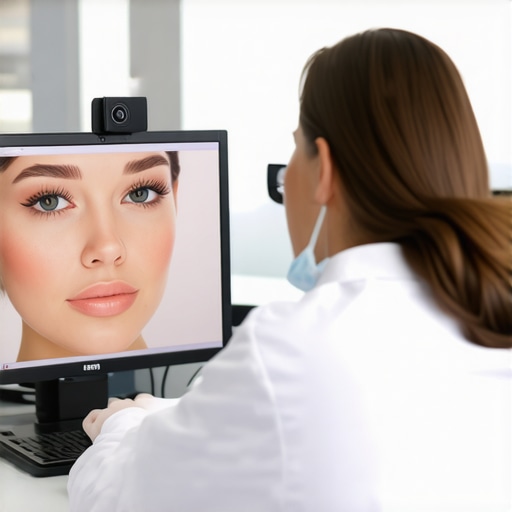
The Internet Can’t Replace a Doctor’s Eyes
Many people believe that a quick snapshot sent over a telehealth app can substitute for an in-person examination. Yet, this misconception dangerously oversimplifies the intricacies of diagnosis. When it comes to skin lesions, especially moles that might signal melanoma, a webcam cannot—and should not—be trusted to provide a definitive answer.
I argue that relying solely on digital images for diagnosing skin irregularities is not just naive; it’s potentially life-threatening. The notion that a high-resolution photo can replace the nuanced, tactile, and visual assessment performed by a trained dermatologist is flawed from the ground up. Think of telehealth as a game of chess: the stakes are high, the pieces are vital, but the digital moves are often too limited to secure a checkmate.
The Market is Lying to You
Tech companies and some healthcare providers trumpet the wonders of virtual consultations, claiming they are just as effective as in-person visits. They sell convenience and cost-saving, but at what cost to accuracy and safety? The truth is, the market is more interested in profits than your health. As I argued in The Future of Telehealth, a false promise of quick fixes is replacing thorough, thoughtful care.
Diagnosis Demands More Than a Glimpse
Skin cancers can hide in plain sight, disguised as benign moles or freckles. A photograph, no matter how detailed, lacks the ability to detect subtleties—a change in texture, firmness, or pigmentation—that only a doctor’s hands and trained eyes can identify. To put it bluntly, a mole viewed on a screen is like trying to judge a book by its cover alone. You might get a hint, but never the full story.
When it comes to potentially deadly skin cancers, there’s no room for guesswork. The stakes are simply too high. As I emphasized in interpreting lab results, context, nuance, and in-person evaluation are irreplaceable. The idea that a quick webcam shot can substitute for this process is not only misplaced but dangerous.
The Evidence: Limitations of Visual-Only Diagnosis
Empirical studies reveal that dermatologists correctly identify melanoma in less than 80% of cases through visual inspection alone. This underlines a troubling reality: even trained eyes miss subtle cues that may signal malignancy. Relying on photographs, regardless of resolution, grossly underestimates the complexity of skin pathology. When a doctor examines a lesion, they assess more than color and shape—they evaluate feel, texture, and the lesion’s evolution over time. Digital images strip away these critical layers of information, making certainty elusive. This is not guesswork; it’s a proven shortfall demonstrated by diagnostic accuracy rates, which plummet when reliance on photos alone increases.
The Roots of Misjudgment: Here’s Why It Happens
The core issue isn’t tech’s insufficient capability; it’s the misconception that pictures suffice for diagnosis. This stems from a flawed premise: that sight alone can determine the nature of a skin irregularity. In fact, tactile feedback—such as firmness or fluctuation—and dynamic assessment—like observing changes over days—are fundamental to proper diagnosis. Without these, clinicians operate with a limited viewpoint, often akin to judging a three-dimensional object from a single photograph. The problem is compounded by the fact that many skin cancers begin beneath the surface, with visual cues emerging *only* with hands-on examination. Hence, the root problem lies in underestimating the necessity of direct human assessment.
The Financial Incentives: Who Gains What?
Consider the landscape of digital health, dominated by tech giants and telecom providers eager to cash in on convenience. They pour billions into marketing telehealth as the future—an effortless, digitized substitute for traditional care. This push isn’t accidental; it’s driven by profits. The faster and easier a process appears, the more money flows. While clinics and startups tout ‘cost-effectiveness,’ what they often omit is the *cost* of misdiagnosis—delayed treatments, worse outcomes, higher long-term expenses. Market forces distort the perception of safety, disguising the risk inherent in over-relying on images. It’s straightforward: those who benefit most financially are rarely the patients, who bear the risk, which kept hidden behind a veneer of technological progress.
The Historical Parallel: When Technology Outpaces Knowledge
History is replete with examples where technological optimism outstripped reality—think of the ‘flying’ cars promised in the 1930s. Promoters insisted the future would be here any day, but reality proved otherwise. Many believed that a quick glance at a photo could substitute a trained eye, much like believing a keyboard could replace a surgeon’s touch. But in each case, overtrust in the technology led to setbacks—misdiagnoses, accidents, and eventual recalibration. The lesson echoes clearly: when it comes to health—a domain where the stakes are *life and death*—technology is a tool, not a substitute for expertise. If history teaches anything, it’s that shortcuts speed up failures, not success.
The Mathematical Fallacy: Why Numbers Lie
The assumption that digital images suffice is rooted in a distorted view of data. For example, a scale might show redness or irregular borders; but these numbers are *proxies*, not diagnoses. They tell us *what*, but not *why*. The 20% misdiagnosis rate isn’t a small margin; it’s a collapse of certainty. When a small fraction becomes a significant one, the entire safety net collapses. This isn’t about obsessing over precision but recognizing the *limits* of what a picture can reveal. Overestimating the power of imagery ignores the *mathematics of uncertainty*, which admonishes us that in medicine, especially regarding potentially deadly cancers, certainty is non-negotiable. The numbers expose a dangerous illusion—the illusion that images can mirror the full complexity of human tissue.*
Don’t Be Fooled by Convenience
It’s easy to see why many believe that sending a photo over a telehealth platform can replace an in-person dermatology visit. The allure of quick, cost-effective care appeals to busy schedules and remote locations. Supporters argue that increasingly sophisticated cameras and AI-driven diagnostics make digital assessments sufficiently accurate. Yet, this perspective fundamentally misjudges the complexities of skin cancer diagnosis and the indispensable role of tactile and visual examination by trained professionals.
The Wrong Question is About Images Alone
I used to believe that high-resolution photos could nearly match the diagnostic power of a dermatologist’s eye. But that was before I appreciated the subtle nuances beyond what a picture can capture. The real issue isn’t whether images can be high-quality; it’s whether they can convey the *full* scope of information needed for a reliable diagnosis. The question should not be about replacing the doctor but about whether images alone can provide the certainty necessary to rule out serious conditions—a flawed premise.
The danger lies in oversimplification. Skin lesions are dynamic and complex, involving textures, firmness, evolution over time, and tactile qualities that photos cannot transmit. Without the hands-on assessment and the capability to evaluate how a lesion feels or changes in real-time, relying solely on images is akin to trying to judge a 3D sculpture from a photograph—impossible to grasp the full picture.
The Critical Error in Market Assumptions
The industry’s narrative often hinges on the idea that technology minimizes the need for expert judgment. That’s a gross oversimplification. Market advocates promote telehealth as a perfectly adequate substitute, driven by profits rather than patient safety. They leverage the illusion of convenience to gloss over the potential for misdiagnosis. The false promise of accuracy and safety in digital-only assessments ignores evidence of diagnostic limitations, especially for conditions as deadly as melanoma.
In truth, these platforms often lack robust validation studies, and their reliance on photographs does not reflect the reality of clinical diagnosis. It’s an unwise wager to gamble a patient’s life on images that can be deceptive or incomplete. As I’ve argued elsewhere, true diagnosis demands more than mere appearance; it requires context, tactile feedback, and sometimes, a biopsy—none of which can occur through a screen.
The Illusion of Technology as a Substitute
When considering skin cancer, the stakes are high—delayed diagnosis can be fatal. The core issue is not that technology is incapable but that we have been deceived into thinking it can replace human expertise. Advanced imaging, AI, and machine learning are valuable tools, but they should augment, not replace, the trained eye. The real challenge is discerning when technology can assist and when it can’t.
To dismiss the importance of in-person assessments is shortsighted. For example, tactile examination can reveal firmness or fluctuation indicating benignancy or malignancy, something no photo can replicate. The idea that a photograph can substitute experiential judgment neglects the depth of clinical insight and the value of human judgment honed over years of practice. We shouldn’t accept technological shortcuts that compromise safety for fleeting convenience.
What We Must Recognize
People must understand that digital images are merely a starting point, not a definitive diagnosis. They can help flag potential concerns but should never replace a thorough examination by a trained dermatologist. Any system that claims to diagnosis melanoma through photos alone is, at best, incomplete; at worst, dangerously deceptive. To protect lives, we must confront the reality that some aspects of diagnosis are fundamentally tactile and visual beyond the scope of digital mimicry.
The Cost of Inaction
If we continue to dismiss the limitations of telehealth and digital diagnostics, we are poisoning our healthcare system with a slow-acting toxin. The stakes are unprecedented; delaying real change allows misdiagnoses to proliferate, especially in critical areas like skin cancer detection. Every missed melanoma grows more aggressive, turning treatable conditions into deadly emergencies. We are now at a crossroads where ignoring expert guidance could lead us down a pathway of irreversible consequences.
A Choice to Make
By undervaluing in-person evaluation, we are surrendering our ability to catch early signs of deadly diseases. This trend sets off a dangerous chain reaction: over-reliance on images diminishes the role of tactile examination, which in turn blinds clinicians to subtle cues only perceptible through physical contact. As misdiagnoses increase, trust in medical professionals erodes, and the system becomes less capable of safeguarding lives. The very essence of quality healthcare is at risk, and the decision we make today will shape the health outcomes of generations to come.
What are we waiting for?
Imagine navigating a minefield blindfolded because we’ve convinced ourselves the map is unnecessary. This is the peril we face if we continue to ignore the pivotal role of human expertise in diagnosis. The false comfort of quick fixes masks a dangerous reality: lives are being lost to preventable errors. Time is running out, and sitting on the fence only ensures future regrets. We must recognize that some truths cannot be digitized, and health is no place for shortcuts.
${PostImagePlaceholdersEnum.ImagePlaceholderD}
The Internet Can’t Replace a Doctor’s Eyes
Many believe that sending a quick photo over telehealth can stand in for the nuanced examination of a trained dermatologist, especially when it comes to skin lesions. Yet, this faith in digital images overlooks the critical tactile and visual assessments only human hands and trained eyes can provide. Relying solely on images is a dangerous oversimplification that risks lives.
This brings into focus the unsettling reality: the market’s push for convenience and cost savings often obscures patient safety. As I highlighted in The Future of Telehealth, true diagnosis demands context, tactile feedback, and dynamic evaluation—elements impossible to replicate through a screen.
Your Move Prevents Future Tragedies
Skin cancers can hide beneath the surface, and visual clues alone seldom tell the full story. The misjudgment begins with the misconception that sight alone suffices for diagnosis, failing to account for textures, firmness, and evolutions over time. Digital images strip away these critical layers, making certainty elusive and misdiagnosis commonplace, as evidenced by studies showing less than 80% accuracy even among experts.
This isn’t about technology being inadequate but about recognizing its limits. Without tactile assessment, clinicians operate with a restricted viewpoint akin to judging a 3D object from a single photo—an invitation for errors. The roots of this problem lie in an underestimation of human judgment’s depth, an underestimate that can cost lives.
The Market’s Illusions and the Hidden Cost of Relying on Photos
Tech giants push telehealth as the future, emphasizing convenience over safety, leveraging marketing narratives that overshadow the risks. Their profit-driven motives distort the true cost: delayed diagnoses, higher long-term expenses, and preventable deaths. Relying on photographs alone, with limited validation, is a gamble—one that patients cannot afford to take. The reliance on imagery ignores empirical evidence of diagnostic limitations, especially with deadly conditions like melanoma.
The Misleading Promise of Technology
Advanced imaging and AI hold promise, but they are tools—not substitutes—for human expertise. When it comes to skin cancer, the stakes are too high to accept shortcuts. Tactile examination reveals information no camera can, such as firmness or fluctuation, and observing how a lesion evolves over days provides insights beyond static images.
Science, history, and everyday experience all warn us: shortcuts in medicine lead to failure. Lives hang in the balance, and the sooner we recognize that some diagnostic truths are solely human, the better equipped we are to protect ourselves.
Stand Tall and Be Smart
The real challenge is shifting our perspective from reliance on images to valuing expert judgment. If we continue to dismiss the irreplaceable role of skilled clinicians, the consequences will be severe—misdiagnoses will rise, trust in healthcare erodes, and preventable tragedies multiply. We must demand better for ourselves and future generations. The tech-driven race toward virtual everything must not trump the fundamental need for human touch and expertise.
Identify the Signs
When considering your health, remember that digital images serve as initial alerts, not definitive answers. Relying solely on photos for diagnosing melanoma is a gamble with lives. Instead, prioritize in-person assessments that include tactile evaluation and dynamic observation—elements critical to accurate diagnosis.
This connects to my argument in maximizing urgent care efficiency—the real progress lies in integrating technology with human judgment, not replacing it altogether.
The Bottom Line
In medicine, certainty is non-negotiable. Digital images are merely starting points, not the final verdict. When lives are on the line, shortcuts are a luxury we cannot afford.
Final Thought
Don’t be seduced by the illusion of convenience. The true cost of reliance on images is measured in lives lost to preventable errors. The future of healthcare depends on valuing expertise over expedience—because some truths simply cannot be digitized. Take control of your health and advocate for the care that can save you—nothing less.