
Why Your Fasting Blood Work Fails After a Poor Night’s Sleep
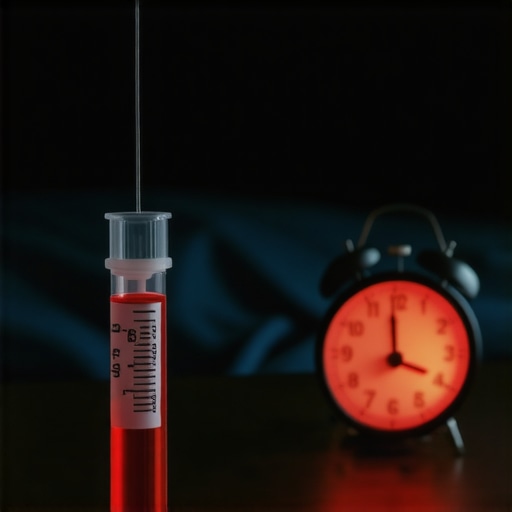
Your Fasting Blood Results Are a Lie If You Didn’t Sleep
You followed the rules. You didn’t eat. You didn’t drink that morning latte. You sat in that plastic chair at 8:00 AM, ready to prove your health is on track. But you spent the previous night tossing and turning, or worse, working late under fluorescent lights. I argue that your results are now essentially fiction. We treat lab tests like objective truths, but they are actually fragile snapshots easily shattered by a bad night. Why do we pretend that the stomach is the only organ that dictates our blood chemistry? It is a medical myth that needs to die. When you starve yourself but skip sleep, you aren’t getting a ‘fasting’ result; you’re getting a ‘stress’ result. Your body doesn’t know you just had a bad night; it thinks you are being hunted by a predator or surviving a famine.
The Medical System Is Gaslighting Your Metabolism
Most doctors will tell you to fast for eight to twelve hours and leave it at that. They focus on the fasting rule that most people get wrong before blood work, but they ignore the cortisol spike sitting right in front of them. When you don’t sleep, your insulin sensitivity drops faster than a lead weight in a pond. Your blood sugar creeps up. Your lipid profile shifts. You are presenting a fake version of your health to the person writing your prescriptions. I’ve seen it repeatedly. A patient obsesses over a water-only rule but ignores the fact that they only slept four hours. Then, when the results come back with high glucose, they panic. Is it diabetes? No. It’s biological sabotage. Sleep deprivation is like a masked thief that sneaks into your bloodstream at 3 AM and rearranges all the furniture. By the time the needle hits your vein, the data is a mess.
Stop Treating Your Body Like a Machine
We have become obsessed with the data of health while ignoring the context of life. If you want a real reading, you need to understand the morning routine that fixes your fasting glucose spikes, and that routine starts the night before. If you slept poorly, cancel the appointment. I mean it. Why pay for a map that is intentionally drawn incorrectly? Consider the markers of inflammation. A single night of poor rest can send your cytokines into a frenzy. You might think you’re checking for heart disease, but you’re actually just measuring your exhaustion. If you are looking for the blood marker that flags inflammation, you’ll find it—but it won’t be the chronic kind you’re looking for. This is how we end up over-medicating people for problems they don’t actually have.
The Great Thyroid Deception
Even your hormones are part of this rigged game. We check these levels once a year, as if they are static like the color of your eyes. They aren’t. When you are sleep-deprived, your TSH can dance around like a puppet on a string. I am tired of seeing people start lifelong medication because their annual physical needs a full thyroid panel that was drawn after a red-eye flight. We are chasing ghosts in the data. You might think the lab doesn’t care if you’re tired. But your blood cares. Your hormones care. If you wouldn’t take a driving test while drunk, why would you take a metabolic test while sleep-deprived? It’s time to demand better from our diagnostic standards. If you didn’t sleep, the needle should stay in the drawer.
The Biological Fraud of the Exhausted Body
The medical establishment operates on the archaic assumption that a fasting state is a neutral state. It is not. The moment you sacrifice sleep, you forfeit metabolic neutrality. The problem isn’t a lack of discipline in your diet; the problem is the HPA axis hijack. When you don’t sleep, your body enters a state of sympathetic dominance. It is bracing for impact. It is preparing for a crisis that doesn’t exist. This isn’t just about feeling ‘foggy’ or needing an extra cup of coffee. This is a systemic recalibration of your chemistry that makes objective testing impossible.
The Cortisol Coup Against Your Liver
Let’s look at the mechanics of this betrayal. Cortisol is the body’s primary alarm system. Under normal conditions, it follows a circadian rhythm, peaking in the morning to help you wake up. But when you are sleep-deprived, that rhythm is shattered. Your cortisol levels don’t just peak; they stay elevated, screaming at your liver to release stored glucose. This is the Dawn Phenomenon on steroids. You can fast for twenty-four hours, but if your cortisol is spiked, your blood sugar will be high. Your liver is essentially force-feeding your bloodstream while you think you are doing the ‘right thing’ by skipping breakfast. It is a rigged game. You are being judged on your liver’s emergency response, not your actual metabolic health.
The 40% Collapse of Your Metabolism
Consider the cold, hard data from clinical research. A single night of four hours of sleep can reduce peripheral insulin sensitivity by up to 40%. That 40% drop isn’t a dip; it’s a total metabolic collapse. In the eyes of a lab technician, that drop makes a healthy thirty-year-old look like a pre-diabetic on the verge of a crisis. This is where the danger lies. When we rely on lab tests taken under these conditions, we are making life-altering medical decisions based on a temporary state of emergency. We are treating the smoke and ignoring the fire. If you walk into a clinic after a sleepless night, your insulin is already failing to do its job before the needle even touches your skin.
${PostImagePlaceholdersEnum.ImagePlaceholderB}
When Medicine Mistakes Fatigue for Disease
This is the root of the over-diagnosis epidemic in chronic care. We have created a system that is incredibly efficient at measuring markers but tragically incompetent at assessing context. When a patient shows up for urgent care or an annual physical with elevated glucose or skewed lipids, the conversation rarely starts with ‘How did you sleep?’ It starts with a prescription pad. We are medicating the symptoms of exhaustion as if they were the symptoms of chronic disease. It is a fundamental category error. Your body isn’t broken; it’s just tired. By ignoring the impact of sleep, the medical community is effectively gaslighting patients into believing they have metabolic disorders that could be resolved with a consistent bedtime and a dark room.
The False Witness of the Lipid Panel
It doesn’t stop at sugar. Your lipids are equally susceptible to the chaos of a sleepless night. Sleep deprivation alters the way your body processes fats and triggers an inflammatory cascade. When you are tired, your C-reactive protein—a key marker of inflammation—spikes. This is a physiological certainty. If you are using telehealth services or local labs to monitor your heart health, you are getting a distorted view. That high cholesterol reading might not be the result of your last six months of eating; it could be the result of your last six hours of tossing and turning. We are asking our blood to testify against us, and when we are sleep-deprived, it gives false witness every single time. The system isn’t just flawed; it is actively deceptive because it ignores the foundational pillar of human health: recovery.
It is easy to see why the medical establishment clings to its current protocols with such ferocity. From a logistical standpoint, the argument for ignoring sleep is seductive. Critics will say that we cannot possibly wait for every patient to have a ‘perfect’ night of rest before drawing blood. They argue that if we added sleep quality to the checklist, the already backlogged system of lab tests and urgent care appointments would simply collapse. They claim that a single night of tossing and turning is merely ‘white noise’—a minor fluctuation that shouldn’t significantly mask the underlying reality of your health. In their view, if your glucose is high after a bad night, it is just a sign that your body is already struggling to maintain homeostasis. They want a system that is repeatable and fast, not one that is nuanced and slow.
The Dangerous Fallacy of the Robust Baseline
I used to believe this too, until I began looking at the sheer magnitude of the physiological shift caused by exhaustion. We are not talking about a 2% margin of error; we are talking about a fundamental systemic pivot. To suggest that a metabolism under the duress of sleep deprivation is ‘basically the same’ as a rested one is like suggesting a city under a hurricane warning is functioning normally because the buildings are still standing. By prioritizing the convenience of the lab over the state of the patient, we are choosing ‘clean’ data over ‘accurate’ data. This is the great trap of modern diagnostics. We have mistaken the ability to produce a number for the ability to produce a truth.
The opposition argues that ‘true’ pathology will always shine through the noise. But this ignores the fact that sleep deprivation is not noise—it is a signal in its own right. When your body is starved of rest, it enters a state of adaptive insulin resistance. This is not a malfunction; it is a survival mechanism designed to shunt glucose to the brain while the body ‘believes’ it is in a crisis. When a doctor sees those elevated markers and calls them ‘prediabetes,’ they are not uncovering a hidden truth about your pancreas. They are misinterpreting a temporary survival tactic for a permanent metabolic failure. We are essentially convicting people for crimes they did not commit because we caught them during a temporary emergency.
${PostImagePlaceholdersEnum.ImagePlaceholderC}
The Wrong Question for Your Health
The medical system asks, ‘What is the number?’ when it should be asking, ‘What does this number represent?’ If you are using telehealth platforms to track your progress, you are especially vulnerable to this lack of context. Without a clinician in the room to see the bags under your eyes or hear about your midnight flight, the data stands alone, cold and accusatory. The argument for standardization falls apart when you realize that ‘standard’ conditions for blood work currently include a massive, unmonitored variable that can swing results by 40%. That is not a standard; it is a chaotic gamble masquerading as science.
We must stop pretending that the ‘fast’ in fasting only refers to food. A true metabolic baseline requires a body that is at peace, not a body that is screaming for rest. If the medical community continues to ignore the sleep-blood connection, they are not practicing chronic care; they are practicing a form of high-tech palm reading. It is time to stop being fooled by the myth of the resilient baseline. Your blood is a sensitive instrument, and if you play it while the strings are frayed by exhaustion, do not be surprised when the music sounds like a disaster. The critics say we cannot afford to wait for sleep. I say we cannot afford the cost of the wrong diagnosis.
The Descent Into Medical Dependency
If we continue to ignore the biological wreckage caused by sleep deprivation before lab tests, we are not just making a few clerical errors. We are building a house of cards that will inevitably collapse on the very people we are trying to save. When we accept flawed data as the foundation for chronic care, we initiate a chemical chain reaction that is nearly impossible to reverse. A single false reading of elevated glucose leads to a prescription for Metformin. That medication, while useful for true diabetics, begins to alter the metabolism of a person who never needed it. Side effects emerge—digestive issues, fatigue, nutrient malabsorption—and suddenly, the patient needs a second drug to manage the consequences of the first. We are manufacturing illness out of thin air.
What are we waiting for?
Are we waiting for half the population to be labeled pre-diabetic simply because our modern lifestyle demands we stay awake while our biology demands we sleep? The path we are on is a one-way street toward systemic dependency. If we do not integrate sleep quality into the standard diagnostic protocol, the medical record becomes a work of historical fiction rather than a tool for healing. We are essentially forcing patients to live in a reality that doesn’t exist, treating a version of their body that only appears under the duress of exhaustion. This is not just a failure of science; it is a failure of empathy. We are asking people to change their lives based on a lie told by their own blood in a moment of extreme stress.
The Five Year Forecast of a Broken System
Imagine the landscape of healthcare five years from now if this trend continues. We will see an explosion of telehealth platforms flooded with data points that lack the vital context of human recovery. We will see urgent care clinics overwhelmed by patients who are terrified by ‘red’ numbers on their smartphone apps—numbers that could have been ‘green’ if they had simply slept eight hours. The burden on the economy will be staggering as billions of dollars are wasted on unnecessary medications and follow-up consultations. We are creating a generation of ‘biochemical ghosts’—individuals whose medical charts suggest they are on the brink of disaster, while their actual, rested bodies are perfectly healthy. This is the ultimate irony of the data age: the more we measure, the less we actually know.
${PostImagePlaceholdersEnum.ImagePlaceholderD}
The Compass in the Magnetic Storm
Continuing to practice medicine without accounting for sleep is like trying to navigate a ship using a compass that is being held next to a massive, hidden magnet. You think you are steering toward the safety of the harbor, but the magnet of exhaustion is pulling the needle off course. Every correction you make based on that false reading only takes you further into the storm. We are currently steering the ship of public health directly into the rocks of over-diagnosis because we refuse to acknowledge the magnetic pull of a sleepless night. If we do not recalibrate our instruments now, the damage to our collective trust in the medical system will be permanent. We must stop pretending that a body in crisis can provide a baseline for health. The stakes are nothing less than our metabolic autonomy. If we don’t demand a change, we are choosing to be patients for life, not because we are sick, but because we are tired.
Reclaim Your Metabolic Truth
We have spent decades perfecting the mechanics of the draw while ignoring the reality of the human being attached to the arm. This is why I insist that if you didn’t sleep, you shouldn’t test. It is time to stop the cycle of manufacturing ‘sick’ people out of exhausted ones. Whether you are seeking chronic care management or just doing an annual check-up, the data must be clean. We already know the fasting rule that most people get wrong involves more than just skipping a bagel; it involves protecting your biology from the stress of the previous twenty-four hours.
The next time you face the decision to keep an appointment after a night of tossing and turning, remember that advanced lab test technologies are only as good as the state of the body being tested. You are not a machine that produces a consistent output regardless of power supply. You are a biological system that requires recovery to maintain homeostasis. If we continue to ignore this, we are merely participating in a high-stakes guessing game.
The Final Verdict
A blood test taken after a sleepless night is not a diagnostic tool; it is a metabolic distortion that leads to unnecessary medical intervention.
The Twist
The ultimate failure of modern medicine isn’t that we lack the technology to measure your health, but that we lack the wisdom to realize that a single night of rest is a more powerful diagnostic filter than any chemical assay ever invented.
Stop letting the needle tell a lie. Your health is too precious to be decided by an exhausted shadow of yourself.