
Why Your Reading Osteopath Might Ignore Your Back to Fix Your Hip Pain
Why Your Reading Osteopath Might Ignore Your Back to Fix Your Hip Pain
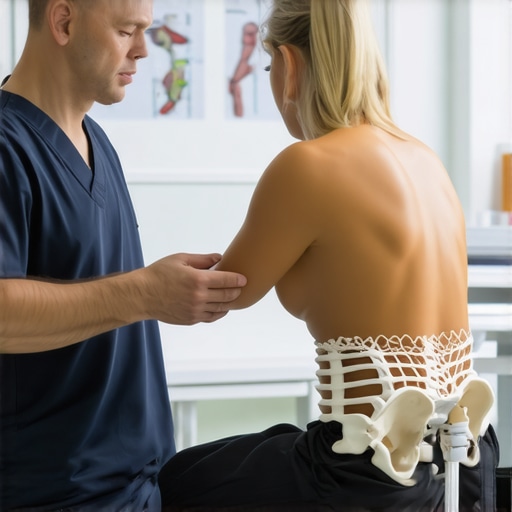
If you have ever spent weeks – or even months – nursing a nagging ache in your lower back, you know how consuming it can be. You’ve likely tried the heat packs, the ergonomic chairs, and perhaps even the occasional “crack” from a friend. Yet, when you finally walk into a clinic to see one of the Reading Osteopaths, you might be surprised when, after describing your back pain, the practitioner spends most of the session working on your hips.
It feels counterintuitive. If the fire is in the kitchen (your back), why is the detective looking in the garage (your hips)? As an Osteopath practicing here in Reading and a lecturer in sports massage, I often see patients who are initially baffled by this approach. However, the “detective” nature of osteopathy is built on the understanding that the site of pain is rarely the source of the problem. My name is Rick Weatherall, and in my years of clinical practice and teaching, I’ve learned that the body is a master of disguise. To truly resolve back pain, we must often look at the mechanical neighbors that are failing to do their job.
The Kinetic Chain: Understanding the Hip-Spine Connection
The human body does not function as a collection of isolated parts; it operates as a kinetic chain. In this chain, the hips and the lumbar spine (lower back) are inextricably linked. They form a functional unit designed to share the burden of movement, weight-bearing, and shock absorption. When one link in this chain becomes stiff or dysfunctional, the next link must work twice as hard to compensate.
In biomechanical terms, we often refer to the “joint-by-joint” approach. This theory suggests that the body is a stack of alternating segments: some require stability, while others require mobility. The lower back (lumbar spine) is designed for stability. Conversely, the hip joint – a ball-and-socket joint – is designed for a massive range of mobility. When your hips lose that mobility, particularly internal rotation or extension, your body doesn’t just stop moving. Instead, it “borrows” that missing movement from the nearest available source: your lower back.
This “over-moving” of the lumbar spine leads to micro-trauma in the intervertebral discs and facet joints. Over time, this results in the inflammation and pain that eventually brings you into a clinic. By focusing on hip mechanics, we address the root cause of why your back is being overworked in the first place. This is especially critical as we age, as The Subtle Gait Changes That Predict Senior Fall Risks often begin with subtle restrictions in hip extension that force the spine into a compromised position.
Why “Reading Osteopaths” Focus on Global Assessment
The philosophy of osteopathy is rooted in the “Whole-Body Approach.” Unlike some traditional medical models that might simply prescribe anti-inflammatories for the symptom, osteopaths in Reading are trained to perform a global assessment. We look at how you stand, how you walk, and how your pelvis tilts when you reach for your toes. We are looking for the “osteopathic lesion” – the area of restricted motion that is throwing the rest of the system out of balance.
This isn’t just a clinical hunch; it is backed by significant research. A landmark study published in The Spine Journal by Licciardone et al. (2013) highlighted the efficacy of this approach. The researchers found that Osteopathic Manipulative Treatment (OMT) significantly outperformed standard care for chronic lower back pain. The study demonstrated that by addressing the body’s structural imbalances through manual therapy, patients experienced substantial improvements in both pain levels and functional status. This is why we don’t just “rub where it hurts.” We are seeking to restore the structural integrity of the entire pelvic girdle to allow the spine to heal.
When you search for Reading Osteopaths, you are looking for a practitioner who understands that your back pain might be a symptom of a sedentary lifestyle, an old ankle injury, or, most commonly, restricted hip joints. By widening the lens, we provide a solution that lasts longer than a temporary fix. You might also find yourself wondering if you should Stop Chasing Normal Lab Results When You Still Feel Exhausted; often, the “exhaustion” in our muscles comes from the constant, invisible struggle of our core trying to stabilize a spine that is being pulled out of alignment by tight hips.
The Role of Soft Tissue: When to Seek “Reading Sports Massage”
While joint manipulation is a powerful tool, the soft tissues – muscles, tendons, and fascia – are the “cables” that pull the bones out of place. As a lecturer in sports massage, I spend a great deal of time teaching students about the psoas major. This muscle is the only one that connects the spine directly to the leg. It originates on the lumbar vertebrae and inserts into the femur (thigh bone). If you spend eight hours a day sitting at a desk in Reading, your psoas is in a shortened, tight state. When you finally stand up, that tight muscle acts like a bowstring, pulling on your lower back and creating a constant state of tension.
This is where manual therapy becomes vital. Seeking a Reading sports massage can be the missing piece of the puzzle. While an osteopath might adjust the alignment of your pelvis, a sports massage therapist focuses on releasing the chronic tension in the hip flexors, glutes, and piriformis. These muscles are often the “silent” contributors to your back pain. If the muscles remain tight, they will simply pull the joint back into its old, dysfunctional position within days of an adjustment.
Integrating soft tissue work into your recovery plan is essential. I often recommend patients try The 3-Minute Routine That Fixes Your Morning Joint Stiffness, which focuses on opening the hip complex before the day’s demands take hold. Whether you are looking for sports massage reading or osteopathic care, the goal is the same: to create a environment where the soft tissues and the skeletal structure work in harmony rather than in opposition.
Chiropractic vs. Osteopathy: Which Do You Need?
A common question I hear in my Reading practice is: “Should I see an osteopath or a chiropractor?” It is a valid question, as both professions are experts in spinal health and manual therapy. If you are searching for a Chiropractor Near Me, you are likely looking for someone who specializes in the nervous system and spinal alignment, often utilizing quick, targeted adjustments (manipulations) to improve joint function.
Osteopaths share many of these techniques, but we often lean heavily into the relationship between the body’s structure and its circulatory and organ systems. This is sometimes called visceral osteopathy. For example, an osteopath might look at how tension in the abdominal cavity or pelvic floor is affecting the mobility of the hips and back. We tend to use a broader range of techniques, including stretching, rhythmic joint movements (mobilization), and soft tissue work, alongside spinal adjustments. The choice often comes down to personal preference and the specific nature of your injury, but both paths are far superior to ignoring the pain and hoping it disappears.
Case Study: The “Caversham Desk Worker” Syndrome
Let’s look at a relatable scenario for many of my neighbors in the RG4 area. Imagine a professional who works from a home office in Caversham. Their day consists of back-to-back Zoom calls, sitting for 90 minutes at a time without standing. Over months, they develop what we call “dead butt syndrome” or gluteal amnesia. Because they are sitting, their hip flexors become incredibly tight, and their glutes – the primary stabilizers of the back – effectively “switch off.”
This person goes for a weekend walk along the Thames Path and suddenly feels a sharp, “slipped disc” sensation in their lower back. They go to see a practitioner, focusing entirely on the back pain. However, the true culprit is the hip complex that has become “frozen” from hours of sitting. In this case, a caversham massage aimed at the glutes and hip flexors, combined with osteopathic mobilization of the pelvis, is what actually provides relief. Focusing only on the back would be like putting a bandage on a splinter without removing the wood.
For these patients, I often explain that The Move That Cuts Chronic Pain Management Costs in Half isn’t a complex surgery; it’s the simple act of restoring hip extension. By fixing the hips, we stop the “wear and tear” on the lumbar discs, potentially saving the patient thousands of pounds in long-term private healthcare costs and avoiding invasive procedures.
3 Signs Your Back Pain is Actually a Hip Issue
How can you tell if your back pain is a “liar” and the hips are the real problem? While a professional assessment is essential, here are three common signs that your Reading Osteopath will be looking for:
- Difficulty with Daily Tasks: Do you struggle to put on your socks or tie your shoes because your hips feel “blocked”? If you have to twist your spine excessively to reach your feet, your hips are likely the primary driver of your back strain.
- Groin or Lateral Hip Pain: True hip issues often manifest as pain in the groin or on the outside of the hip bone. If your “back pain” frequently radiates into these areas, it’s a red flag for hip joint dysfunction.
- Stiffness After Sitting: If the first few steps after getting out of a car or a desk chair are painful and stiff, it indicates that your hip joints and psoas muscles have struggled to adapt to the transition from flexion to extension.
Understanding these signals is the first step in effective communication with your therapist. If you’ve been struggling to describe your symptoms, you might find The Secret to Explaining Nerve Pain So Your Telehealth Doctor Understands helpful for narrowing down exactly where and how you feel your discomfort.
Conclusion: Taking the First Step Toward Holistic Recovery
Chronic back pain can make your world feel very small, limiting your ability to play with your children, enjoy the local Reading parks, or even perform at your best in your career. But remember: the body is a beautifully complex, integrated system. If your osteopath is looking at your hips, your ankles, or even your breathing patterns, it’s because they are committed to finding the why behind your pain, not just the where.
Whether you are managing The Simple Habit That Reduces Chronic Arthritis Flare-ups or recovering from an acute sports injury, a holistic approach is the only way to ensure long-term health. Don’t settle for “living with it.” Book a comprehensive assessment today and stop chasing symptoms. Your back – and your hips – will thank you.