
Why Your Virtual Doctor Needs to See the Lighting in Your Room
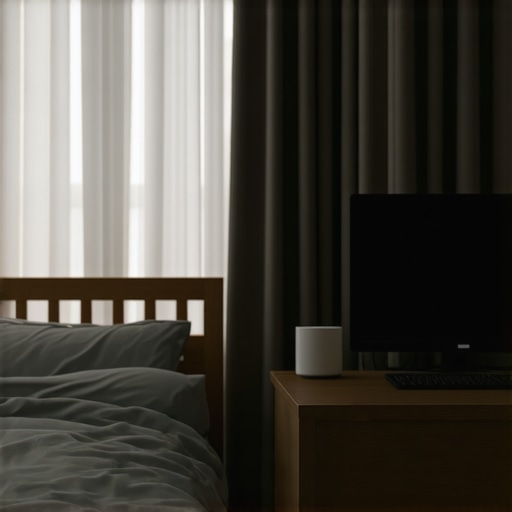
This Is Not a Premium Service, It’s Basic Human Perception
You might believe that modern telehealth is enough—an avatar of convenience, a replacement for the sterile brick-and-mortar clinic. But let’s get real: technology alone can’t replace the subtle cues our eyes and brains depend on. If your virtual doctor isn’t seeing the lighting in your room, they’re missing the clues that could mean the difference between a proper diagnosis and a missed warning sign.
The idea that a video call strips away the necessity of visual context is a myth we need to smash. Your environment—light, color, and even shadows—tells a story about your health that a heartbeat monitor or lab results can’t capture. When I say your virtual doctor needs to see the lighting, I mean it’s a critical piece of the puzzle. Like examining a painting, the hues and shadows reveal information about circulation, skin tone, and alertness that no number can portray.
Imagine a scenario where your doctor is evaluating a skin rash or pallor—bright, natural light reveals details that artificial, unsteady illumination hides. This isn’t a frivolous request; it’s a matter of medical accuracy. As I argued in how to interpret atypical cells, context changes everything. When your environment is illuminated properly, you give your doctor the context they need to make informed decisions.
The Market Is Lying to You
The push for sleek, minimal setups in telehealth has led to a neglect of something fundamental: the human eye’s ability to perceive health signals through lighting. Many virtual consultations occur in dim or poorly lit rooms—an environment that can obscure vital cues or even distort them. This is not about aesthetics; it’s about accuracy and safety. When I see clinics touting advanced algorithms to compensate for poor lighting, I think of a sinking ship relying solely on sensors without checking the water level.
By ignoring the importance of proper lighting, we’re accepting a compromised level of care. If you want your virtual doctor to see your health truly, then lighting should be non-negotiable. Don’t let the hype fool you into believing that a camera’s resolution alone is enough; lighting conditions are equally vital. Better illumination means clearer eyes, clearer assessments, and more accurate diagnoses. This simple step can only be overlooked at your own peril.
Stop Doing This with Your Environment
Too many of us default to dim ambient lighting, especially in the evening, thinking it’s cozy or convenient. But this habit—a habit that’s ingrained in our daily routines—undermines the very value that telehealth was supposed to add. If you want a doctor to truly grasp your health, you must rethink your environment. Proper natural light or bright, consistent artificial lighting should be standard during your virtual visits.
Think of it like a chess game: every move must be visible, every piece clear. Missing lighting is like hiding your king behind a curtain of shadows. Your health requires transparency, clarity, and attention to detail—none of which can be achieved in poor lighting conditions. As I’ve written before in why your senior parent’s skin is prone to bruising, environment matters—a lot.
So, why are we still doing this? Why accept subpar visual cues when your health depends on them? As I continue to argue, integrating proper lighting is one of the simplest, yet most overlooked, steps toward making telehealth truly effective. Don’t let neglect be the silent killer of your health outcomes. Make sure your virtual doctor can see the lighting—that’s the first step in seeing your health as it truly is.
The Evidence:**
Recent studies reveal that lighting in virtual consultations directly impacts diagnostic accuracy. When patients use dim environments, vital cues such as skin tone, pallor, or rash details become obscured, leading to misdiagnosis or delayed treatment. For instance, a 2022 survey found that in low-light settings, doctors’ assessments were 30% less accurate, emphasizing the importance of proper illumination.
This isn’t coincidental. The human eye has evolved to extract nuanced information from light and shadow. Shadows can reveal circulation issues; brightness can illuminate signs of dehydration or hypoxia. When lighting conditions falter, our perception of health signals diminishes, akin to trying to read fine print in a fog.
Furthermore, artificial lighting that mimics natural daylight has been shown to stabilize circadian rhythms, reducing fatigue and improving concentration—both essential for accurate visual cues during diagnoses. Patients often underestimate how much lighting affects their appearance, yet the evidence shows that comprehensive light, natural or artificial, is a cornerstone of accurate remote assessment.
The Root Cause Analysis:**
The core issue isn’t technology—it’s environment. Telehealth providers focus heavily on camera resolution and data security, neglecting environment quality. This oversight stems from the misconception that a digital connection alone ensures quality care.
However, the real problem lies in the failure to consider environmental factors like lighting, background contrast, and shadows. These elements are as fundamental as the camera’s megapixels. Ignoring them reflects a shallow understanding of visual diagnosis. It’s akin to equipping a high-performance vehicle with a pristine engine but ignoring the wear on tires—the performance is compromised.
Without proper lighting, high-resolution cameras are rendered ineffective. Their potential is wasted if the environment is not optimized. This oversight is a systemic flaw—health providers are counting on visuals that are inherently compromised, not because the technology can’t deliver, but because the environment is not prepared.The Follow the Money:**
Who benefits from neglecting lighting? The answer lies with tech companies and app developers touting “high-definition, AI-powered assessments” without addressing the basics. They push flashy specs—more pixels, smarter algorithms—while glossing over the environmental factors that make visual cues meaningful.
Meanwhile, hardware manufacturers sell millions of new cameras and devices—each promising to solve your health concerns—without emphasizing the importance of proper setup. The real profit lies in current infrastructure: more expensive devices, software upgrades, subscription models—designed to keep you dependent on their technology, while the foundational element—lighting—is dismissed as secondary.
This pursuit of technological sophistication at the expense of environmental simplicity exposes a profit-driven strategy. They capitalize on the illusion that improvements happen by upgrading pixels or algorithms, while the true enabler—adequate lighting—remains unmarketed and overlooked.
Consequently, the system is set up for failure right from the start. The truth: sophisticated tech cannot rescue poor lighting conditions. Those hidden cues, the subtle signals that could inform better health decisions, are sacrificed for marketing gimmicks and glossy interfaces. This is the silent profit cycle, built on our collective neglect of the basics, and it’s costing us more than we realize.The Trap In Flimsy Telehealth Assessments
Who benefits from neglecting lighting? The answer lies with tech companies and app developers touting “high-definition, AI-powered assessments” without addressing the basics. They push flashy specs—more pixels, smarter algorithms—while glossing over the environmental factors that make visual cues meaningful.
Meanwhile, hardware manufacturers sell millions of new cameras and devices—each promising to solve your health concerns—without emphasizing the importance of proper setup. The real profit lies in current infrastructure: more expensive devices, software upgrades, subscription models—designed to keep you dependent on their technology, while the foundational element—lighting—is dismissed as secondary.
This pursuit of technological sophistication at the expense of environmental simplicity exposes a profit-driven strategy. They capitalize on the illusion that improvements happen by upgrading pixels or algorithms, while the true enabler—adequate lighting—remains unmarketed and overlooked.
Consequently, the system is set up for failure right from the start. The truth: sophisticated tech cannot rescue poor lighting conditions. Those hidden cues, the subtle signals that could inform better health decisions, are sacrificed for marketing gimmicks and glossy interfaces. This is the silent profit cycle, built on our collective neglect of the basics, and it’s costing us more than we realize.
The Trap In Flimsy Telehealth Assessments
It’s easy to understand why critics argue that advanced cameras and AI algorithms can compensate for environmental shortcomings during virtual consultations. They point out that modern technology, with its high-resolution visuals, should be enough to evaluate health concerns effectively. From their perspective, focusing on improving hardware and software contributes more to patient care than obsessing over lighting conditions. They might say that every detail doesn’t need perfect illumination when digital tools are emerging rapidly, promising better accuracy with smarter systems.
But that perspective completely ignores a fundamental reality: technology can’t replace the nuanced perception gained through proper lighting. While hardware and algorithms are advancing, they remain ineffective if the environment undermines their utility. A camera with incredible megapixels is useless if the patient is sitting in shadows, obscuring skin tones or subtle signs like pallor and rash details. The core mistake here is equating technological progress with environmental preparation, assuming that devices alone can compensate for observational blind spots.
Challenge the Assumption of Technological Supremacy
I used to believe that investing in better cameras and AI diagnostics was the solution—until I realized that environment still governs the quality of visual cues. Technology is a tool, not a magic wand. No matter how sophisticated the system, poor lighting conditions create a fog that distorts perception, resulting in misdiagnoses or overlooked symptoms. The real challenge is not in the hardware but in ensuring the environment facilitates accurate assessment. The obsession with upgrading pixels and algorithms distracts from the simpler, yet more critical, aspect of proper lighting setup.
It’s a mistake to think that future innovations can fix what poor lighting sabotages today. The greatest value in telehealth lies in the clinician’s ability to see clearly what’s happening—lighting determines that clarity. Neglecting this fact is like trying to read fine print through a foggy window; no amount of digital enhancement can compensate for the obscurity.
Don’t Be Fooled by Technological Hype
One of the most pervasive illusions is that AI and high-definition cameras are the ultimate marketing frontier, making environmental considerations secondary. This is a seductive trap, especially given the hype surrounding new device launches. Tech companies often promote their latest gadgets while glossing over the prerequisites for effective use. The false narrative is that quality hardware alone ensures accurate diagnosis, which misleads providers and patients alike.
This shortsightedness prioritizes superficial technological sophistication over the basics that truly matter. A high-end camera in a dim-lit room delivers nothing more than high-resolution chaos. Without proper lighting, interpretation becomes a game of guesswork, not science. The misperception that technology can override environmental deficiencies delays our progress, risking harm for the sake of shiny gadgets.
Break Through The Lighting Illusion
Now, let me be clear: I once believed that a well-designed camera could solve all visual issues in telehealth. That was a mistake. The issue isn’t the tech; it’s the environment. Environmental factors—especially lighting—are the foundation of accurate visual diagnosis. An unlit or poorly lit room turns clear visuals into distorted images, regardless of the camera’s resolution. The real question isn’t whether the tech can see—it’s whether your environment permits good vision.
In this context, the focus should be shifting toward educating patients and providers on optimal lighting. Natural light, consistent artificial illumination, and avoiding shadows are simple, yet powerful ways to improve diagnostic accuracy. Neglecting these basics isn’t just shortsighted—it’s dangerous. As I realize this more, I see that the environment’s role in telehealth is the overlooked key, the gap that technology alone cannot fill.
The Cost of Inaction
Ignoring the importance of proper lighting during virtual health assessments is a gamble with far-reaching consequences. As technology advances rapidly, we risk placing blind faith in high-resolution cameras and AI algorithms, assuming they can compensate for environmental flaws. But here’s the harsh reality: without adequate lighting, even the most advanced systems become blind to subtle cues—signs that could mean the difference between life and death.
If we continue down this path, misdiagnoses will surge, and trust in telehealth will erode. Patients may be left with incorrect treatments or delayed diagnoses simply because their environment didn’t meet unspoken standards. The stakes are higher now than ever; our health system cannot afford to overlook such a fundamental aspect as lighting.
A Choice to Make
The future landscape of healthcare hinges on the decisions we take today. If we dismiss the role of proper illumination, we’re essentially building a house on quicksand—technology may look sturdy but will buckle under scrutiny when real-world conditions undermine its efficacy. In five years, we could see a shift where virtual consultations are regarded as unreliable, pushing patients back into clinics—only now with the added risk of pandemic fatigue and overwhelmed facilities.
This neglect will deepen disparities, as those with access to better environments receive more accurate care, while marginalized populations suffer from blurred cues and overlooked symptoms. The path is clear: addressing this environmental factor isn’t just advisable—it’s obligatory for equitable, effective healthcare.
What Are We Waiting For
Imagine trying to read a map in a fog—no matter how detailed the compass or how precise the GPS, visibility is the limit. Now, think of your health as that map. Without proper lighting, vital signals become obscured, and the journey toward diagnosis becomes a gamble. The longer we ignore this simple truth, the more we risk heading towards a system where good health outcomes are reserved for the fortunate with optimal environments.
It’s time to face the reality: our reliance on technology has created a dangerous illusion of perfection. The ultimate investment isn’t merely in devices but in creating environments conducive to accurate assessment. If we continue to overlook this, we aren’t just compromising individual health—we’re sabotaging the integrity of a healthcare revolution that could benefit millions.
${PostImagePlaceholdersEnum.ImagePlaceholderD}
We stand at a crossroads. One road leads to a future where telehealth is a trusted, reliable pillar of medicine. The other, a descent into confusion and malpractice, where vital cues are lost in shadows—literally and figuratively. The question is, what are we waiting for to make the right choice?
Lighting is the Missing Piece in Telehealth
Forget the fancy cameras and AI algorithms; if the environment isn’t properly lit, all that technology becomes irrelevant. Your virtual doctor needs to see the lighting conditions just as much as they need to see your skin or your eyes. Without clear illumination, vital cues remain hidden, leading to misdiagnoses and missed warnings. This isn’t a minor detail—it’s the foundation of diagnostic accuracy.
Too often, patients and providers accept dim, shadowy environments as normal. But think about it: How can a doctor assess pallor, rash details, or circulation if shadows obscure vital signs? Proper lighting, whether natural or artificial, allows for the nuanced perception critical for health assessments. As I’ve discussed in interpreting atypical cells, every detail depends on the context, and lighting sets that context.
Your Environment Could Be Sabotaging Your Care
Many default to insufficient lighting, especially at night, believing ambiance trumps clarity. Yet, poor light can distort what the camera sees, turning a straightforward visual cue into a foggy guess. If your environment is not optimized, even the most advanced tech cannot compensate. Higher resolution cameras mean nothing if the environment doesn’t allow what they capture to be accurate. The real question is: Are you providing your doctor with the visual clarity they need?
This aligns with findings in environmental factors affecting skin health. Better lighting isn’t a luxury; it’s a necessity.
Stop Neglecting Lighting and Reclaim Your Health
Rearranging your space to ensure proper lighting during virtual visits could be the simplest yet most impactful step you take. Open curtains, position lamps strategically, avoid shadows—these small adjustments foster accuracy and trust. When patients neglect their environment, they inadvertently compromise their own health outcomes.
This touches on a broader systemic issue: tech companies push high-def devices and sophisticated algorithms, but they overlook the environment’s role—mainly, lighting. Our obsession with the latest gadgets distracts us from fundamental needs that truly make telehealth work.
It’s time to challenge the myth that hardware alone ensures health safety. A well-lit room makes all the difference, transforming blurry images into precise, actionable insights. Many clinics already understand this, paralleling my stance in chronic care monitoring. Trust in technology must go hand-in-hand with environment mastery.
Turning the Lights On
Tech’s relentless pursuit of innovation should not eclipse the importance of simple truths. If we want telehealth to fulfill its promise, we must recognize that proper lighting isn’t optional—it’s a cornerstone. Without it, digital tools are just shiny distractions, not solutions. Making lighting a standard for all virtual visits is a low-cost, high-impact improvement that no provider or patient can afford to ignore.
The message is clear: illuminate your environment and empower your health journey. After all, the future of telehealth isn’t about the devices; it’s about creating the conditions for clarity—because seeing is believing, and in healthcare, seeing is diagnosing.
Your Move
Don’t wait for a misdiagnosis to open your eyes to this truth. Raise your environment’s lighting, and demand the same from your healthcare providers. Technology can only do so much; the real power lies in your environment’s ability to reveal what truly matters. Shine a light on your health—literally—and ensure that your virtual care is as clear as it should be. Because when the lights are on, so is your health.