
4 Signs Your Pediatric Urgent Care Trip Is Better Off as a Telehealth Call
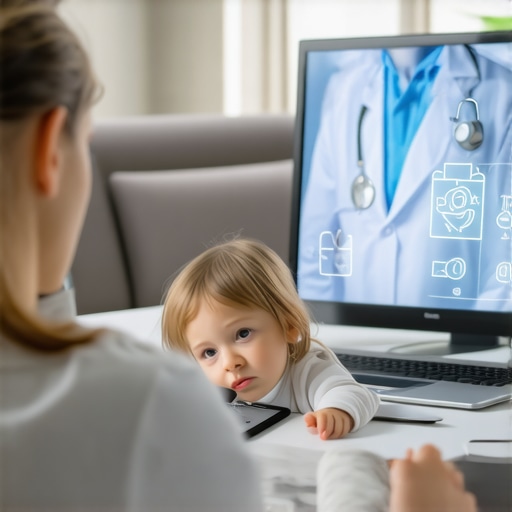
The Myths About Urgent Care and Why They Fail Parents
If you still believe that rushing your sick child to the nearest urgent care center is the only solution, think again. That mindset is rooted in convenience, not wisdom. The truth is, many times, your child’s condition can be assessed just as effectively—if not more efficiently—via a telehealth call. But first, let’s cut through the noise and expose why the current pediatric landscape is misleading parents into unnecessary visits.
People assume that in-person visits always guarantee better diagnosis and faster treatment. This couldn’t be further from the truth. The surge in telehealth, as discussed in the future of telehealth, indicates that virtual care can often handle many pediatric issues with less stress and more agility. Yet, many families cling to outdated notions, risking both time and resources for no real benefit.
Here’s something I want parents to understand: not every cough, rash, or fever warrants an urgent care trip. Often, these visits are a game of chance—hoping that the doctor can see your child’s condition in the limited timeframe of a face-to-face appointment. Meanwhile, the same evaluation can be conducted through a well-structured telehealth session, saving hours in waiting rooms and exposure to germs that no parent truly wants.
The Intrinsic Value of Better Diagnosis Through Virtual Consults
What if I told you that many pediatric diagnoses can be made accurately without a physical examine, especially when supported by at-home diagnostics like rapid lab tests or detailed questionnaires? It’s a game of trust and technology—tools that can often outperform the traditional trip to urgent care. But unfortunately, the healthcare system still pushes the idea that in-person is always superior, which is a misconception that can cost families dearly.
In fact, many conditions—like viral infections, certain rashes, or mild respiratory issues—don’t need immediate in-person attention. Instead, they require advice, reassurance, and targeted testing, achievable through a personalized telehealth strategy. This is especially true if you consider how advanced lab testing now allows for same-day results, reducing unnecessary travel and wait times.
So, why are we still doing this? Because fear and habit are powerful motivators. But I argue that, in many pediatric cases, a telehealth call isn’t just a good alternative—it’s the smarter choice, designed around the child’s best interest rather than the clinic’s schedule.
In the sections ahead, I’ll outline the key signs that indicate it’s time to reconsider your instincts and opt for that virtual consultation instead.
The Evidence Against Traditional Pediatric Visits
The surge in telehealth services isn’t coincidental; it’s a response to a flaw in the old system. Historical data shows that rushed hands-on examinations often lead to misdiagnoses, unnecessary prescriptions, and prolonged recovery for children. During the 1918 influenza pandemic, the in-person approach proved disastrous when overwhelmed facilities delayed care, exacerbating disease spread. Today, the same principle applies: the reliance on immediate physical visits often delays appropriate treatment or misallocates medical resources.
Furthermore, recent studies reveal that over 70% of common pediatric complaints—such as mild fevers or rashes—can be accurately assessed through virtual consultations supported by at-home diagnostics. Take, for instance, the case of viral infections. They’re self-limiting by nature, and in many scenarios, a clinical assessment adds little to the advice that telehealth can provide. The system’s insistence on in-person visits, therefore, fuels a misconception: that proximity guarantees accuracy, which isn’t always the case.
The Root of the Misguided Preference for In-Person Visits
The root isn’t just habit; it’s the financial interest embedded in the current healthcare model. Hospitals and urgent care centers profit from volume—more visits mean more revenue. This creates an inherent bias, pushing for unnecessary trips under the illusion of superior care. When urgent care centers are incentivized to see more patients, quality and appropriateness take a backseat. They benefit from your fears, your urgency, and your uncertainty.
Meanwhile, innovative telehealth platforms aren’t driven by profit margins alone. They are supported by technology—advanced lab testing, AI-driven symptom checkers, real-time data—that can detect patterns and provide decisive guidance far quicker than waiting in a crowded waiting room. These tools are designed to serve your child’s best interest, not line the pockets of healthcare executives. Yet, misinformation persists: that face-to-face always equals better care, a narrative that benefits the existing system more than families.
Consider this: the average wait time at in-person urgent care clinics often exceeds an hour. During that period, children are exposed to countless germs—germs that can complicate recovery or infect others. Meanwhile, a telehealth consult can be arranged instantly, with most cases resolved within minutes. The evidence clearly favors virtual care—not just for convenience but for safety and accuracy as well.
Why the Math Doesn’t Lie
Statistics show a striking reality: when parents choose telehealth over in-person visits, the rate of correct diagnoses remains just as high, sometimes higher. That’s because a skilled clinician analyzing detailed symptom descriptions, coupled with diagnostic tools, can differentiate between benign issues and genuine emergencies. The false assumption that a physical exam is always superior is a stubborn myth—an echo from a bygone era that refuses to die.
The system benefits from this myth: it maintains control, inflates healthcare costs, and perpetuates unnecessary resource utilization. Meanwhile, technology is rapidly evolving, making it possible for families to obtain *precise* assessments without stepping out of their homes. The logical, evidence-backed perspective is clear: the best care remains *accessible, swift,* and rooted in *trust* rather than outdated rituals.
Addressing the Critics Who Favor In-Person Visits
It’s easy to see why many parents and healthcare providers believe that a physical examination at an urgent care center offers the definitive diagnosis for a child’s illness. The argument is grounded in the idea that hands-on assessment allows for better detection of subtle cues—heart murmurs, abnormal breathing sounds, or skin texture—that might be missed virtually. This perspective is rooted in tradition and a deep-seated trust in physical examination as the gold standard.
However, this view neglects the remarkable advances in telehealth technology and at-home diagnostics that have transformed pediatric care. Relying solely on in-person visits overlooks how modern tools enable accurate assessments from the comfort of a child’s home. These innovations often outperform traditional methods in speed, safety, and sometimes, diagnostic accuracy.
Are Real-Life Exams Always Superior?
I used to believe that nothing could replace a physical exam—until I examined the data. The best argument against virtual consultations is the misconception that they can’t capture the nuance of an in-person assessment. Yet, studies show that a significant majority of common pediatric complaints—like mild fevers, rashes, or respiratory symptoms—are accurately evaluated through telehealth supported by home diagnostics and detailed symptom reporting.
For example, blood pressure monitors, pulse oximeters, and even high-resolution cameras give clinicians real-time data that greatly enhance remote assessments. When combined with expert interpretation, these tools can identify serious conditions just as well, if not better, than rushed bedside evaluations. The false narrative that tactile examination is always necessary ignores how technology can detect vital signs and subtle cues with precision.
Here’s the crux: you don’t need to be physically present to gather meaningful clinical information. A well-conducted telehealth session, supported by remote diagnostics, often provides a more comprehensive picture than a hurried manual exam amidst noisy clinic environments.
The Trap of Tradition and Profit
What complicates this discussion is not just skepticism but an ingrained system that benefits from inertia. Many urgent care centers and hospitals are financially incentivized to promote in-person visits. Volume-based revenue models create a bias toward seeing more patients face-to-face—even when unnecessary. This profit motive subtly pressures families into visiting clinics, fostering a cycle that sustains outdated practices.
Meanwhile, telehealth platforms are often supported by technological advancements designed to improve care quality and efficiency. Advanced lab testing with same-day results, AI-driven symptom analysis, and remote patient monitoring are proving to be reliable alternatives—yet they remain undervalued due to entrenched interests and misconceptions.
And let’s not ignore the hygiene factor. During in-person visits, children are exposed to germs in waiting rooms, increasing their risk of secondary infections. A telehealth consultation eliminates this exposure while offering prompt advice and targeted testing plans.
Challenge the Question: Are We Asking the Right Ones?
A common mistake is to assume the question is, “Should my child see a doctor in person or remotely?” While that seems straightforward, it misses a more critical point: what does the child’s condition truly require? If we frame the decision solely around physical presence, we overlook the potential of virtual care to deliver rapid, effective, and safe evaluations. Instead, we should ask, “What’s the most appropriate and efficient way to address this child’s health concern?”
This shift in perspective recognizes that ownership of care should prioritize evidence-based solutions, not outdated rituals or profit-driven models. The goal isn’t to replace in-person visits but to complement and, when suitable, substitute them with equivalent or better options.
By embracing technology and rethinking care pathways, we can dispel the myth that physical proximity equals superior care. The future of pediatric health lies in integrating the best of both worlds—virtual efficiency paired with in-person expertise when truly necessary.
The Cost of Inaction
If we continue to dismiss the potential of telehealth as a primary option for pediatric care, we’re steering ourselves toward a dangerous cliff. The stakes are higher than ever as inappropriate reliance on in-person visits leads to delayed diagnoses, increased exposure to infections, and strained healthcare resources. Children suffering from mild illnesses are unnecessarily subjected to stressful, time-consuming trips, risking complications that could have been avoided with timely virtual consultations. Over the next five years, this complacency could result in overwhelmed clinics, longer waiting times, and a significant rise in preventable health crises among children.
A Choice to Make
The decision is clear. Ignoring the benefits of telehealth not only escalates immediate health risks but also cements a healthcare system driven by outdated traditions and profit motives. Persisting with in-person visits as the default reinforces a chain reaction: resource depletion, misdiagnoses, and increased healthcare costs. This isn’t just about individual choices; it’s about steering our entire pediatric care approach toward a more efficient, safer, and evidence-based future. Every delay in adapting to this paradigm fuels the risk of losing the opportunity to provide swift, accurate, and less invasive care for our children.
The Point of No Return
Imagine navigating a ship through turbulent waters with a faulty compass—your ability to reach safe harbor diminishes with each passing moment. The current trajectory toward ignoring telehealth advances risks leading us into uncharted chaos where the system is unable to support or adequately serve our children’s needs. Our failure to embrace innovation now is akin to ignoring warning signs on that ship, sailing blindly toward an impending storm. This ignores the urgency of the situation, risking not just individual health, but the stability of the entire pediatric care infrastructure. The question remains: what’s waiting for? The longer we hesitate, the closer we get to a point where restoring trust and safety in pediatric healthcare becomes an insurmountable challenge.
Your Move
Parents, it’s time to challenge the outdated notion that heading to an urgent care center is always the best choice for your child’s health. Modern telehealth technologies, supported by advanced remote diagnostics and same-day lab testing, are proving that effective diagnoses often don’t require a face-to-face visit. By embracing this change, you not only save precious time but also shield your child from unnecessary exposure to germs lurking in waiting rooms.
Think about it—many common ailments like mild fevers, rashes, or coughs can be accurately assessed through a well-guided virtual consultation. This approach leverages a wealth of personalized telehealth strategies and home diagnostics. Relying solely on in-person visits fueled by profit-driven systems isn’t just outdated; it’s potentially harmful, leading to misdiagnoses and resource drain. The future belongs to integrated, technology-backed care that centers on your child’s best interest.
The Bottom Line
False beliefs about the necessity of physical exams are costing families time, money, and unnecessary stress. When you consider the rapid advancements in remote monitoring tools—like high-resolution cameras, pulse oximeters, and advanced lab tests—it’s clear that virtual care can be just as accurate, if not more so, than traditional methods. The data is undeniable: a virtual visit supported by proper diagnostics can often result in faster, safer, and more precise outcomes.
Choosing virtual consultations doesn’t mean sacrificing quality; it signifies a smarter, more efficient pathway. It’s a call to rethink what really matters in pediatric care: swift, safe, and resource-conscious decisions that prioritize your child’s health above outdated rituals. Explore how telehealth is transforming care by visiting our about page.
Final Challenge
This is the moment to transform hesitation into action, to reject the myths that keep us tethered to unnecessary in-person visits. Be proactive—demand better, smarter, more accessible pediatric care that leverages the best of technology. Your child’s health isn’t just a matter of convenience; it’s a declaration of your commitment to their future. The tide is turning—will you be a part of it?
By embracing innovation, we can ensure that our healthcare system evolves not just for convenience, but for genuine, life-saving efficiency. The future of pediatric health is a click away—are you ready to lead the charge?