
The Error in Relying on Home Pulse Oximeters During a Virtual Visit
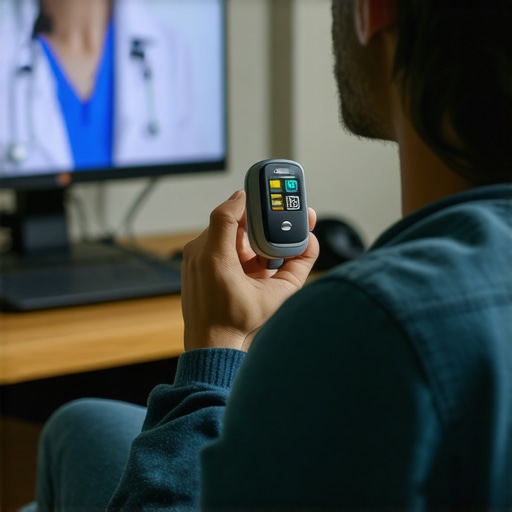
The Myth of Accuracy in Home Pulse Oximeters
Many patients and even some clinicians rely heavily on home pulse oximeters, believing they offer a perfect snapshot of one’s health status. But here’s the brutal truth: these devices are not the reliable guardians of health we’ve been led to trust. They are, at best, crude estimations and, at worst, dangerous illusions of precision.
Imagine relying on a weather app that claims clear skies but is actually predicting a storm. That’s precisely what depending solely on a home pulse oximeter during a virtual visit equates to. You might get a reassuring number that’s quite possibly far from reality. This false sense of security can be the difference between timely intervention and catastrophe.
High-quality lab tests and clinical evaluations are designed to detect hidden yet critical issues that a simple finger clamp cannot. As I argued in impressum, medicine’s backbone remains in its rigorous, controlled testing—something that consumer-grade devices just cannot replicate. Trusting a device with a margin of error that can range from 2 to 5 percent is asking for trouble, especially when dealing with respiratory or cardiovascular signals.
The Illusion of Home Monitoring
In the rush for convenience, the health industry has sold a narrative: that technology can replace clinical judgment. But this is a dangerous oversimplification. Are we really listening to a device or just comforting ourselves with numbers? During a virtual visit, a clinician’s hands-on assessment and laboratory tests remain the gold standard. The device is merely a rough sketch—not an architect’s blueprint.
The stakes skyrocket when patients with chronic conditions or those suspected of hypoxia lean on these gadgets. An inaccurate reading can lead to unnecessary anxiety or, worse, a false reassurance that delay urgent care. The concept of monitoring health at home is alluring, but it cannot serve as a substitute for comprehensive diagnostics and expert interpretation.
The Market Is Lying to You
Manufacturers promote these gadgets aggressively, capitalizing on fears and the desire for control in uncertain times. They often obscure the limitations, highlighting only the convenience factor. But do they care about accuracy? Or do they just want your money? The truth is, these devices are akin to playing roulette with your health.
The next time you lean on your pulse oximeter during a virtual visit, ask yourself: is this data guiding your decisions or just providing a comforting illusion? A proper health assessment involves laboratory blood work, clinical examinations, and contextual understanding—resources that a wearable cannot mimic. As I urged in this article, the future of telehealth hinges on our ability to discern genuine diagnostics from superficial gadgets.
Don’t be fooled by the simplicity of a finger clip. Your health deserves accuracy, not assumptions disguised as certainty. The cost of trusting unreliable data can be your health itself.
The Evidence: Flawed Data in Critical Moments
When debating the reliability of home pulse oximeters, the key question is: how much can we truly trust these devices? Studies reveal that these gadgets can deviate from clinical readings by as much as 5 percent. To put that into perspective, if a clinical lab reports a saturation of 92%, a home device could be providing readings anywhere between 87% and 97%. That 10-point swing isn’t a trivial margin—it’s a chasm that can determine life or death. During a respiratory crisis, such a discrepancy may cause a patient to dismiss worsening symptoms or, conversely, panic unnecessarily. This isn’t speculation—it’s a stark statistical reality that patient safety hinges on accurate data, which these devices fail to consistently provide.
The Root Cause: The Fallacy of Consumer-Grade Sensors
The crux of the problem isn’t just user error or manufacturing flaws; it lies in the fundamental design of these devices. They rely on basic photoplethysmography—a primitive technology that measures light absorption to estimate blood oxygen levels. Unlike laboratory analyzers or clinical pulse oximeters calibrated against gold standards, consumer models are designed for convenience, not precision. Manufacturers often optimize for cost and ease of use, sacrificing the core metric of accuracy. This approach creates a false equivalence: a $50 clip-on gadget cannot replicate the sophisticated, controlled measurements achieved in hospitals by trained professionals wielding cutting-edge equipment. The disparity isn’t a bug; it’s baked into the system from inception.
The Follow the Money: Who Profits from the Illusion?
Corporations see a lucrative market in fear and uncertainty. By marketing these devices aggressively, they tap into consumers’ desire for control—especially during a health scare. But profits are prioritized over validity. It’s profitable to sell the illusion of safety, to promise easy monitoring, even if the technology can’t deliver on that promise. The truth is, many companies intentionally obscure limitations, highlighting convenience and affordability while *downplaying* accuracy concerns. Just compare the marketing rhetoric—highlighting features like Bluetooth connectivity—versus disclosures about measurement errors. It becomes clear: those benefiting most are not patients but corporations cashing in on our fears. They sell gadgets that are, at best, approximations—at worst, dangerous toys masquerading as health tools.
Furthermore, insurance reimbursements and market incentives reinforce this cycle. If widespread use of unreliable devices becomes normalized, healthcare systems may unwittingly internalize their inaccuracies, relying on flawed data to make critical decisions. This pervasive acceptance perpetuates a cycle where questionable technology is integrated into health protocols, all driven by profit motives rather than patient safety.
The Cost of Illusions in Urgent Moments
In emergencies, time equals life. Yet, when decision-making hinges on unreliable oximeter readings, the stakes soar. A false reassurance may lull a patient into ignoring worsening symptoms, delaying essential intervention. Conversely, an inaccurate low reading could trigger panic—sending patients to emergency rooms unnecessarily, straining already overwhelmed systems. These are not hypothetical scenarios; they are daily realities for those trusting faulty devices. The insidious part? The more we rely on these gadgets, the more we accept their inaccuracies as norm—an acceptance quietly reinforced by marketing and convenience.
The Market’s Deception: More Than Just a Gadget
What drives this cycle is the relentless push for consumer demand. Manufacturers instinctively capitalize on our fears—exploiting a desire for quick answers in desperate times. They sell not just a product but the *illusion* of control. The sneakiest part? They hide behind scientific jargon, suggesting their devices are
The Trap of Simplicity in Health Monitoring
It’s straightforward to see why many believe that a simple device can reliably assess vital health metrics. After all, in an age dominated by consumer gadgets promising instant insights, why should medical accuracy be any different? People are naturally inclined to trust technology that appears to give quick, quantifiable data. The allure of controlling one’s health through a wearable or a fingertip sensor is seductive, especially during a pandemic or when access to healthcare is limited.
I used to believe that these devices could serve as supplementary tools for monitoring health. However, focusing solely on raw numbers without context leads us astray. While they might provide a general indication, these gadgets lack the nuance, calibration, and clinical validation that form the backbone of accurate diagnosis.
The Unseen Flaw in Consumer-Grade Sensors
The core issue lies in the technology itself. Consumer pulse oximeters use photoplethysmography, a technique that involuntarily catches light reflections to estimate oxygen saturation. Unlike hospital-grade devices calibrated against gold-standard laboratory tests, these are mass-produced with cost and convenience in mind, not precision. As a result, their readings can easily be skewed by factors like skin pigmentation, movement, or improper placement. This flaw isn’t just minor—it’s fundamental. The simplistic approach ignores the complex variables that impact measurement accuracy, creating a false sense of certainty where none exists.
One might argue that in most cases, minor measurement deviations don’t cause harm. But this overlooks critical moments when a 5% variance could mean the difference between timely intervention and catastrophic delay. It also fails to acknowledge that persistent reliance on imperfect data could distort medical decision-making over time, especially as patients try to interpret trending data without clinical context.
The Market Is Flawed, Not Just the Devices
It’s tempting to blame manufacturers for exploiting fears and pushing unreliable gadgets, but the broader issue is the systemic acceptance of these inaccuracies. The marketing campaigns often emphasize convenience, connectivity, and ease of use, while conveniently underplaying the limitations. It’s a marketing strategy that plays on our desire for control, preying on anxieties rather than educating consumers about the nuances of accurate health assessment.
Don’t be fooled: these devices are not medical instruments. They are consumer electronics that can mislead and, in some cases, jeopardize health. The public’s acceptance of their so-called reliability nourishes a market driven by profits rather than safety. Manufacturers benefit from selling hope wrapped in technology, even when that hope is statistically unreliable.
The Danger of False Reassurance and Overtesting
Here’s the uncomfortable truth: these gadgets can lull users into complacency or unnecessary alarm. An inaccurate high reading might distract from worsening symptoms, delaying critical care. Conversely, a falsely low reading could cause panic, leading to unnecessary emergency visits and unwarranted anxiety. Both outcomes are dangerous, especially when healthcare resources are stretched thin.
In the complex landscape of health, context is everything. A single measurement, especially one derived from a device with known inaccuracies, cannot replace clinical judgment. Our reliance on these gadgets diminishes the importance of professional evaluation and laboratory testing, which remain the only reliable sources of truth.
The Wrong Question for Our Times
Many ask whether home pulse oximeters are useful at all, but the real question is far more critical: why are we relying on flawed, unvalidated technology for such vital health decisions? We must recognize that the obsession with quick fixes and immediate data comes at a cost. The danger isn’t just in the inaccuracies—they’re a symptom of a deeper disconnect: our overconfidence in technology as a substitute for rigorous medical practice.
By chasing easy answers, we overlook the nuanced and often complicated reality of health assessment. As I reflect on these issues, it becomes clear that true health monitoring demands more than mere numbers — it requires the expertise and validation that only professional medicine can provide. Technology is a tool, not a replacement; and blind faith in its capabilities is a quick route to dangerous misunderstandings.
The Cost of Inaction
Continuing to rely on flawed, unvalidated health gadgets like home pulse oximeters without recognizing their limitations could set us on a path to disaster. As these devices become more embedded in our healthcare decisions, the danger intensifies. The stakes are higher than ever because lives are potentially hanging in the balance, especially during respiratory crises or pandemics where minute oxygen level changes signal the difference between life and death.
The Slippery Slope Toward Medical Misinformation
If we dismiss the importance of accurate diagnostics now, a chain reaction begins. Patients will place unwarranted trust in inaccurate readings, delaying urgent medical intervention or undergoing unnecessary procedures based on false reassurance. Healthcare providers might unknowingly base decisions on unreliable data, leading to misdiagnosis, improper treatment, and worsening health outcomes. Over time, this abdication of critical evaluation chips away at the integrity of clinical assessments worldwide.
The Future Looks Stark in Five Years
If this pattern persists, in five years, our healthcare system could resemble a house built on shaky foundations. Medical records cluttered with unreliable data, patients navigating false alarm and complacency, and clinicians overwhelmed with a deluge of misinformation. Imagine a scenario where every self-monitoring device is a gamble—some accurate, most not—and the entire paradigm of telehealth and remote diagnostics morphs into a confusing labyrinth of speculation. This isn’t just a bleak forecast; it’s an impending reality if urgent action isn’t taken now.
Is It Too Late? What Are We Waiting For?
Like rushing to fix a dam after it has begun to crack, waiting until tragedy strikes is a reckless gamble. The moment we dismiss the importance of rigorous validation and cling to superficial solutions, we risk undermining the very foundation of patient safety. We are standing at a crossroads—one path leads to a future fraught with preventable harm, while the other points toward responsible innovation grounded in accuracy and trustworthiness. Recognizing this before it’s too late is not just wise; it may be the only way to save lives and restore confidence in our health systems.
Consider this: trusting an unreliable device during a critical health moment is akin to navigating a city with a broken GPS. You might arrive at your destination—eventually—but the journey is fraught with wrong turns, delays, and potential dangers. The choice is ours: fix the GPS now or risk losing our way altogether.
The Myth of Precision
Many rely on home pulse oximeters, believing they’re infallible measures of health. But these devices, at best, offer rough estimations and, at worst, dangerous illusions of certainty. During a virtual consultation, trusting a finger clamp’s reading is like relying on a weather app predicting sunshine when a storm is brewing—false reassurance that can cost lives.
Your Home Monitoring May Be a Mirage
Fast-evolving health technology seduces us into thinking more data equals better care. Yet, these gadgets merely provide approximate numbers, not definitive diagnoses. They lack the nuance, calibration, and validation that laboratory tests and clinical evaluations offer. Relying solely on such devices during critical moments jeopardizes patient safety.
The Market Promotes Deception
Manufacturers aggressively market these gadgets, exploiting fears and the desire for control. They underscore convenience while obfuscating limitations, pushing products with measurement errors ranging up to 5 percent—errors that can mean the difference between life and death. Often, they hide the true risks behind jargon like Bluetooth connectivity, disguising the devices’ actual unreliability.
Your Move
Impressed with instant readings? Remember, these figures are approximations, not certainties. Proper diagnosis demands laboratory blood work, professional judgment, and comprehensive testing—resources that no wearable can mimic. Trust your health to calibrated, validated measures and qualified clinicians, not gadgets promising quick fixes. For more on accurate diagnostics, explore this resource. It’s time to demand safety over shortcuts—your life depends on it.
The Cost of Misplaced Trust
In emergencies, a faulty reading could delay urgent care or trigger unnecessary panic, straining healthcare systems already under duress. Persistent dependence on unreliable data distorts clinical decision-making, endangering patients over the long term. As I highlighted in this article, the future of telehealth hinges on our commitment to genuine diagnostics, not superficial gadgets.