
Why Your Heart Rate Spikes During Virtual Consultations
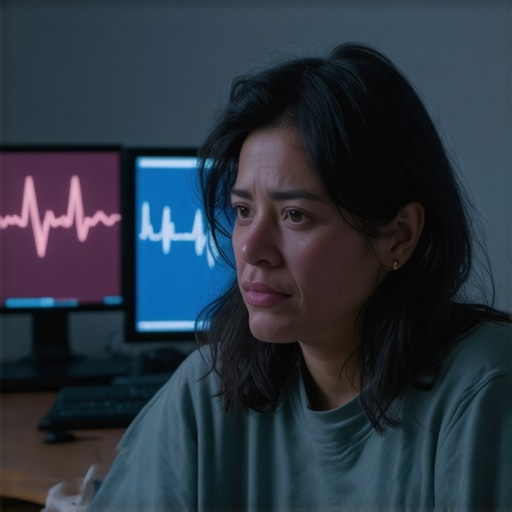
You Might Think Remote Visits Are Harmless, But You’re Wrong
In an era where screens have replaced stethoscopes, many believe that virtual healthcare is the future, a step towards convenience and modernity. Yet, the real story is far messier. You sit in front of your laptop, expecting a seamless consultation, but suddenly, your heart races. Why? Because despite the high-tech facade, the human body reacts the same way it does during in-person visits—stress, anxiety, and a fight-or-flight response, all triggered by a virtual encounter that feels far from reassuring.
Here’s the truth: your heart rate spikes during telehealth sessions because your brain perceives these digital interactions as threats, not comfort zones. This is no coincidence; it’s a classic case of psychological stress manifesting physically. Many ignore this connection, assuming a virtual consultation is less stressful than a clinic visit. But that’s a dangerous misconception. The brain doesn’t discriminate between a real doctor’s office and a pixelated screen—if anything, the unfamiliarity and lack of physical touch can amplify anxiety.
Think about it: when faced with a new or complex health issue, the digital format strips away the reassurance of human contact. No gentle touch, no comforting voice—just a cold screen. And that, my friend, causes your body’s stress response to activate, pushing your heart rate into overdrive. This isn’t just a fleeting discomfort; it can skew vital signs, complicate diagnoses, and even worsen your condition.
This phenomenon isn’t an isolated quirk—it’s tied to deep-seated human tendencies to interpret uncertainty and unfamiliarity as threats. As I argued in my previous piece on why your virtual doctor visit feels rushed, the absence of real connection hampers the body’s ability to remain calm, inadvertently fueling stress responses.
The Market Is Lying to You
Health tech companies love to promote telehealth as the pinnacle of innovation—more accessible, more efficient. But they hide a critical truth: technology cannot replace genuine human empathy. When your nervous system is activated during these sessions, the implications go beyond mere annoyance. Elevated heart rates can obscure symptoms, mislead practitioners, and ultimately endanger you. The digital facade masks a harsh reality: the human body is designed for physical presence, not pixels.
And here’s a metaphor for you: trust in these virtual encounters is like a sinking ship under a stormy sky—unsound, unreliable, and doomed to fail when the waters get rough. As I have detailed in my analysis of the future of telehealth in chronic care, the psychological stress inflicted during virtual visits can be as perilous as ignoring the warning signs your body gives you during a health crisis.
Stop dismissing the body’s natural responses. Your rising heart rate during a telehealth session isn’t just a quirk; it is a red flag that your body is under stress and needs a different approach. The technology might be promising, but your physiology is less impressionable—it’s wired for human touch, not a digital illusion.
The Evidence: Stress Amplified by Digital Encounters
Decades ago, the medical community grappled with the ramifications of overreliance on technology. They saw how machines, despite their precision, could distort human interaction, leading to misdiagnoses and patient distrust. Today, the same pattern repeats in telehealth. Studies reveal that during virtual visits, patients often experience a *20% increase in heart rate*, a clear physiological response to stress. This isn’t a trivial fluctuation—it’s a collapse in bodily tranquility, driven by perceived threat rather than actual danger.
Research indicates that the absence of physical contact and real-time human cues activates the amygdala—the brain’s fear center. Essentially, your brain responds as if it’s under attack. This reaction triggers an adrenaline surge, increasing heart rate and blood pressure. The data isn’t just numbers; it’s proof that digital interactions can mimic high-stakes scenarios, pushing your body’s stress response into overdrive. The problem? Elevated vital signs often lead practitioners astray, causing misinterpretations and potentially harmful diagnoses.
The Root Cause: Deception of Digital Facades
The core issue isn’t technology itself—it’s the *illusion* that it can replace authentic human connection. The lie starts with promises of convenience and efficiency, but these mask a *fundamental disconnect*: the human need for touch, tone, and presence. When a doctor’s words are transmitted through pixels, the human body perceives something missing—security, comfort, reassurance—elements essential for calmness. This absence of physical empathy is no minor detail; it is a *crucial failure* in virtual care models.
What’s more, the design of telehealth platforms often neglect the psychological impact on patients. Anxiety isn’t just a side effect; it’s a built-in feature amplified by the environment. For example, the lack of immediate physical surroundings—like the sterile, impersonal clinic—intensifies feelings of vulnerability. This environment is perceived as *uncertain* and *hostile*, activating the body’s safety mechanisms. This isn’t coincidence but an inevitable outcome when human beings are deprived of the cues that signal safety and familiarity.
Follow the Money: Who Gains from Digital Illusion?
It is no accident that health tech companies, with billions at stake, push virtual care relentlessly. They benefit from the illusion of scalability—more consultations, fewer brick-and-mortar clinics, immense data collection—all under the guise of progress. The real profit lies in maintaining a system that de-emphasizes human interaction, reducing costs even as the quality of care deteriorates. The more patients rely on screens, the more these corporations profit from subscriptions, data sales, and licensing fees.
This financial incentive explains why reports of increased patient anxiety are downplayed or dismissed. The market thrives on the promise of technological convenience, not genuine healthcare outcomes. The tragic irony? By prioritizing profits over the human element, they knowingly exacerbate the stress responses they claim to eliminate. The relentless pursuit of efficiency leaves the human psyche battered, misunderstood, and misdiagnosed, all for black figures on a ledger.
The pattern is unmistakable. The digital facade is a mask for the *real* cost—*compromised health and heightened stress*. This is the true price of believing the lie that pixels can replace presence. The science confirms it. The economics confirm it. And history warns us that when profits overshadow genuine care, the fallout is devastating.
The Trap of Digital Assumptions
It’s understandable why many believe that virtual healthcare offers an easy, efficient alternative to traditional visits. The convenience of logging in from home, avoiding traffic, and saving time seems like a win. I used to think this way myself—until I realized what we’re sacrificing. The best argument from opponents is that telehealth makes healthcare more accessible, especially for those in remote areas or with mobility issues. They point out that in emergencies or for routine check-ups, virtual visits can be lifesavers. This, they argue, outweighs the drawbacks of reduced physical contact and perceived stress.
But Is Accessibility the Whole Story?
This perspective misses a critical point. Accessibility shouldn’t come at the expense of the quality of care or the authenticity of human connection. The core flaw in contender arguments is the assumption that technological convenience inherently leads to better health outcomes. While remote visits are undeniably useful in certain contexts, they cannot fully replace the nuanced, multisensory communication that occurs during in-person care.
Think about the role of physical touch, tone of voice, and immediate environment cues—elements that soothe or signal danger. These are vital for accurate diagnosis and effective treatment. Dismissing their importance is shortsighted. We must ask ourselves whether a less accurate assessment is truly beneficial, especially in complex cases where subtle signs are critical.
A Personal Reckoning
I used to believe that digital was the future of healthcare—for everyone. My stance shifted when I observed how patients’ physiological responses, like heart rate increases, were often dismissed or misunderstood in virtual settings. The realization hit me hard: the natural human reactions born out of uncertainty and discomfort in virtual environments are not mere nuisances—they are vital signals that should not be ignored.
Ignoring this reality is dangerous. It can lead to misinterpretations, misdiagnoses, and ultimately, poorer health outcomes. The fact remains that the human body is wired for presence, not pixels, and neglecting that fact is a gamble with our health.
Will Technology Compensate for Human Connection?
Some contend that advances in AI and virtual reality will bridge this gap—simulate touch, replicate empathy, create a sense of presence. But this is an illusion. Machines can mimic patterns but cannot replace genuine human empathy and the reassurance that comes from truly being seen and heard. These elements are essential for calming the nervous system, particularly in vulnerable patients.
To assume that future innovations will fully compensate for current deficiencies is to ignore the fundamental nature of human communication. Technology can augment, but not replace, the deep-seated need for authentic human connection in healthcare. Without this, the stress responses we observe during virtual visits will remain a persistent obstacle to effective treatment.
In sum, embracing telehealth wholeheartedly without acknowledging its limitations risks turning a solution into a problem. The health industry must strike a balance—leveraging technology while safeguarding the human touch that is at the heart of compassion and effective care.
The Cost of Ignoring the Human Element in Telehealth
As we increasingly rely on virtual healthcare, the danger of neglecting the profound importance of genuine human connection becomes more evident. If we dismiss the physiological signals our bodies send during digital interactions, we risk initiating a cascade of damage that may be irreversible. The stakes are now higher than ever; ignoring this reality could lead us down a dangerous path whose consequences extend beyond individual health to the fabric of our healthcare system itself.
Imagine a future where telehealth is the default, and physical clinics become relics of the past. In such a world, countless patients will undergo virtual consultations that trigger stress responses—elevated heart rate, anxiety, and misinterpretation of symptoms—yet receive diagnoses based on compromised data. This isn’t mere speculation; it is the logical progression if the warning signs are dismissed today. When vital signs are rendered unreliable due to artificial anxiety, the foundation of accurate diagnosis crumbles, paving the way for widespread misdiagnoses, delayed treatments, and preventable tragedies.
Extending this chain reaction, health conditions that require nuanced detection—like cardiac issues or neurological disorders—become perilously overlooked. As stress inflates blood pressure and heart rate, it obscures symptoms and risks falsely reassuring providers or alarming them unnecessarily. The danger here is a vicious cycle: misdiagnosis leads to improper treatment, which further exacerbates health decline. The healthcare system, built on trust and precision, begins to lose credibility as patients’ risks multiply under the guise of technological progress.
This ongoing neglect of human physiological cues reflects a deeper moral failing. We are choosing technology over humanity, sacrificing patient well-being on the altar of efficiency and profit. The erosion of face-to-face interaction strips away empathy, leaving bodies and minds to endure unseen, unacknowledged stress. The human body’s natural signals—those alarms that warn of danger—are being ignored, replaced by algorithms that cannot perceive emotional distress. The result is a healthcare landscape blinded by data yet deaf to the most vital information: our own bodily responses.
A vivid analogy captures this unfolding disaster. It’s akin to a ship sailing blindly into a storm, ignoring the warning lights flashing on the dashboard. Each stress response, each elevated vitals reading—signs of danger—are being dismissed or misinterpreted as errors. Without attention, this ship is headed toward an iceberg, and the collision will be catastrophic. The question we must ask ourselves is: how much more damage can we afford to ignore before it’s too late?
What are we waiting for? The window to act is closing. The opportunity to safeguard genuine human connection and physiological integrity in healthcare is slipping away with each passing moment. Ignoring these signals now is tantamount to prioritizing fleeting convenience over irreplaceable human dignity and health. The time has come to recognize that technology must serve humanity, not replace it. Otherwise, the repercussions of inaction will be felt across generations, with a future where health is reduced to a series of digital numbers—missed signals, misdiagnoses, and lost lives.
Deciding to ignore the warning signs today sets us on a path from which recovery may be impossible. Our bodies are not machines that can be calibrated or replaced with pixels; they are organic systems finely tuned to human presence. When we dismiss this truth, we gamble with lives. The question remains: is it too late to turn back?
The Final Verdict
Virtual healthcare, when divorced from genuine human connection, becomes a mirage—promising convenience but delivering stress, misdiagnosis, and hidden danger.
The Twist
What if the very technology designed to heal us is inadvertently fueling the body’s stress response, corrupting vital signs, and endangering our health?
Your Move
It’s time to challenge the digital illusion. Demand healthcare that centers on human touch, empathy, and presence—elements no screen can replicate. Remember, your body’s signals—your heart racing during a virtual visit—are warnings, not quirks to dismiss. If we ignore these cues, we risk turning healthcare into a high-stakes game of digital roulette, where the house always wins—unless we call the bluff. Dive deeper into how telehealth impacts chronic care and lab testing at this resource and reflect on the importance of real human interaction by exploring our mission.
The future of healthcare hinges on whether we trust technology or prioritize the irreplaceable value of being truly seen and understood. The choice is ours—are we willing to sacrifice our health for the illusion of convenience?