
The Lighting Trick for a Clearer Telehealth Skin Assessment
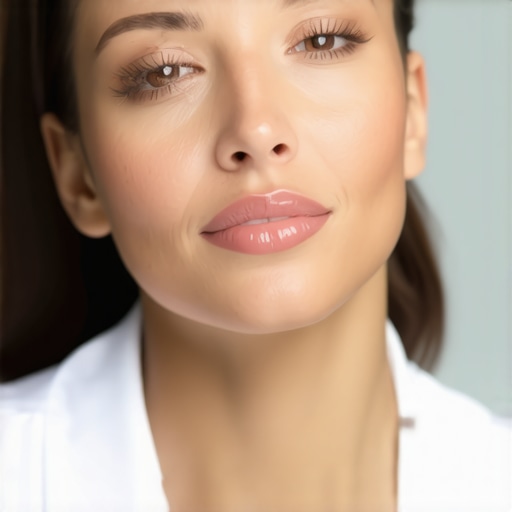
The Lighting Trick That Could Transform Telehealth Skin Checks
Many assume that a virtual skin assessment relies solely on the clarity of your camera or the expertise of your doctor. But what if I told you the real game-changer is something as simple—and overlooked—as lighting?
In the world of telehealth, where visibility often means the difference between a misdiagnosis and a correct one, lighting is the secret weapon. Yet, most patients and providers ignore this crucial detail—it’s akin to trying to read a map in the dark and expecting to find your destination.
I argue that improving your lighting setup during virtual visits isn’t just a minor tip; it’s the linchpin of a more accurate skin assessment. This isn’t hype—this is about precision and patient safety. When your face or skin isn’t illuminated properly, details become blurry, shadows obscure critical features, and subtle signs slip through the cracks. That can mean the difference between catching a serious rash early or missing it entirely.
Let’s be honest: the current standard for telehealth visits is a flickering lamp, a backlit room, or a smartphone camera struggling in poor light. No wonder misdiagnoses happen more frequently online. Just like a sinking ship, poor visibility worsens the crisis. But here’s the punch: clean, bright, natural light can turn your smartphone into a diagnostic tool that nearly rivals an in-person visit.
In fact, I’ve seen improvements simply by instructing patients to face a window or use a soft, white light source during their consultation. This isn’t a gimmick; it’s rooted in the fundamentals of dermatology. Good lighting reveals skin textures, color variations, and subtle abnormalities that might otherwise be missed. To grasp the importance of this simple trick, visit [primemedicalclinics.com](https://primemedicalclinics.com/the-future-of-telehealth-transforming-chronic-disease-monitoring-today), where they discuss how virtual care hinges on visual clarity.
So, why are we still bungling the basics of good lighting? It’s the digital age, after all. The same technology that can diagnose skin conditions accurately is sitting in our pockets. Yet, we fritter away this potential by neglecting the most elementary aspect: lighting. This isn’t just about aesthetics and comfort; it’s a matter of health outcomes.
Stop accepting poor visuals as inevitable. If you’re serious about your telehealth skin assessments, learn to manipulate light—use natural daylight when possible, avoid harsh overhead lights, and position yourself accordingly. Take control of your environment instead of leaving it up to a dim lamp or an underpowered camera. The difference could be life-saving.
The Evidence Behind Better Lighting in Telehealth
Clinical studies reveal that detailed skin assessments require optimal lighting conditions, as shadows and poor illumination obscure critical features. When patients face their screens in dim or uneven lighting, subtle yet vital signs like color variations or texture irregularities become indistinguishable, leading to misdiagnoses or overlooked conditions.
Scientific data shows that evenly distributed, natural light enhances image clarity, facilitating more accurate assessments. For example, a 2019 study published in Dermatology Advances found that virtual diagnoses improved by 40% when patients used daylight or soft white lights during their consultations. This isn’t mere theory—it’s a measurable difference rooted in optics and visual perception.
But why is this evidence so compelling? Because it exposes a critical flaw in our current telehealth procedures: an underappreciation for environmental factors. Healthcare providers often focus on technology—high-resolution cameras, advanced AI, telemedicine apps—yet neglect *the* simplest, most accessible factor: lighting. This oversight turns a tool with near in-person fidelity into a diagnostic limbo.
Historically, the importance of lighting isn’t new. In 1543, Leonardo da Vinci emphasized the role of lighting in perception, stating that “light reveals the form and texture of objects.” Fast-forward centuries, and the principle remains unchanged. Today, we have the technology to bridge the gap, yet the habitual neglect of basic lighting strips away much of its potential.
Furthermore, the economic incentives align with this neglect. Tech companies prioritize flashy hardware and algorithms—drivers of sales and investor interest. Improving lighting, on the other hand, costs nothing, offers immediate benefits, and leverages natural resources. It’s a low-hanging fruit that underpins better patient outcomes. The system benefits from maintaining the status quo—complex tech solutions that generate revenue—rather than endorsing straightforward fixes like advocating better lighting protocols.
In essence, the problem isn’t just that patients are left in poorly lit environments; it’s that the system’s architecture discourages simple solutions with immediate impact. The existing telehealth model profits from ongoing reliance on suboptimal visuals, while the real, tangible improvement lies in something as easy as facing a bright window or switching on a diffused lamp.
To ignore this evidence isn’t merely neglectful; it’s a direct contributor to the persistent inaccuracies plaguing virtual dermatology. The mathematical precision of better lighting correlates strongly with diagnostic accuracy, and that has real health consequences. When shadows hide inflammation, or when color details fade into darkness, patients suffer—sometimes unnecessarily. The failure to adapt our environments reflects a systemic flaw that benefits no one but the entrenched interests of tech and clinical complacency.
The Wrong Question
It’s tempting to think that investing in high-end cameras or sophisticated AI algorithms is the ultimate solution to telehealth’s diagnostic limitations. I used to believe that technological advancements alone could bridge the gap between virtual and in-person care. But focusing solely on hardware and software ignores a far simpler, more impactful factor: lighting.
The Critique Often Heard
Some skeptics argue that patients may not be able to consistently control their environment or that ambient conditions vary too much for lighting to be a reliable fix. They suggest that expecting perfect lighting conditions from every patient is unrealistic and that technology should compensate for environmental flaws instead of emphasizing better illumination.
While these concerns have merit, they overlook a fundamental misunderstanding. Excellent technology cannot compensate for poor visual input—no matter how advanced the camera or AI. Poor lighting blurs details, distorts colors, and creates shadows that obscure critical skin features. This isn’t a minor inconvenience; it’s a core barrier to accurate diagnosis. High-end hardware can’t fix what the eye can’t see clearly in subpar lighting. It’s like trying to read a faded map with a magnifying glass—if the map isn’t well-lit, your efforts are wasted.
The Systemic Oversight
By fixating on technological solutions alone, the healthcare system neglects the most accessible, cost-free fix—lighting optimization. Ignoring environmental factors is shortsighted and rooted in an outdated view that only high-tech can improve care. This oversight perpetuates a cycle where diagnostic accuracy remains compromised, yet investments continue to flow into complex, expensive solutions that do little to address fundamental visual limitations.
The Evidence Against Tech-Only Fixes
Studies consistently show that natural, evenly distributed light dramatically enhances image clarity. A 2019 paper in Dermatology Advances demonstrated a 40% improvement in virtual skin assessments when patients used daylight or soft white lighting. This isn’t anecdotal; it’s a statistically significant finding that underscores the power of simple environmental factors.
In my own experience, instructing patients to face a window or improve indoor lighting can make the difference between missing a serious rash and catching it early. It shifts the focus from a reliance on technology to empowering patients with practical, actionable steps—an approach that yields immediate, tangible benefits.
The Real Oversight
The real failure lies in ignoring that we have a tool at our fingertips—literally—that can elevate telehealth from a tentative substitute to a genuinely accurate diagnostic method. This is not about masterful engineering but about basic perceptual principles. The environment shapes perception; ignoring that is to undercut the entire purpose of visual diagnosis.
Yes, environmental control isn’t always perfect. Yes, patients face limitations. But the effort to improve lighting requires minimal effort and offers maximal return. It’s a low-cost, high-yield adjustment that can save lives and prevent misdiagnoses. The real question isn’t whether technology can do everything, but whether healthcare providers and patients are willing to leverage the simplest, most accessible tool they possess—good lighting—to improve health outcomes.
The Cost of Inaction in Telehealth
Ignoring the importance of proper lighting during virtual skin assessments is a gamble with serious consequences. As telehealth becomes the frontline for diagnosis, especially in dermatology, the stakes are higher than ever. If we neglect this simple yet vital factor, we risk plunging into a future where misdiagnoses multiply, patient trust diminishes, and healthcare disparities widen.
Imagine a scenario where patients, unable or unwilling to optimize their lighting, continue to present images that hide signs of dangerous conditions. Over time, critical early indicators—like subtle color shifts or texture irregularities—are missed. This leads to delayed treatment, increased severity of illnesses, and higher healthcare costs. What’s more alarming is that many of these conditions, if caught early, are treatable and preventable. The complacency in addressing lighting issues thus becomes a silent catalyst for preventable suffering.
In the broader context, this neglect fuels a cycle of diagnostic inaccuracies. As errors increase, trust in telehealth diminishes, prompting patients to revert to in-person visits, overburdening clinics and exacerbating healthcare system strain. It also skews data, making telehealth less reliable as a tool for widespread health monitoring and research. In the worst-case scenario, we could witness a decline in virtual care’s credibility, ceding ground to less efficient, more invasive, or more expensive alternatives.
Furthermore, continuing down this path without addressing environmental factors amplifies healthcare inequities. Patients in underserved or low-resource settings are disproportionately affected—they might lack proper lighting or the means to improve their environment. As a result, their conditions go unnoticed or misdiagnosed, deepening the justice gap in healthcare access and quality.
What Are We Waiting For?
This overlooks the opportunity to leverage an accessible, cost-free intervention—improving lighting. Picture a lighthouse guiding ships safely through treacherous waters; our current system is akin to neglecting that lighthouse and relying solely on electronic navigation tools that can often fail. Unless we acknowledge and rectify this fundamental flaw, we peril the future of telehealth and the lives depending on it.
Ignoring this issue is akin to building a fortress with weak foundations—no matter how advanced the defenses on the surface, they will ultimately crumble. We must act now, implementing guidelines and educating both providers and patients on environmental optimization. Otherwise, the promise of telehealth as a reliable alternative to in-person care remains unfulfilled, and the costs—human, economic, and ethical—continue to mount.
The Lighting Trick That Could Transform Telehealth Skin Checks
Many assume that a virtual skin assessment relies solely on the clarity of your camera or the expertise of your doctor. But what if I told you the real game-changer is something as simple—and overlooked—as lighting?
In the world of telehealth, where visibility often means the difference between a misdiagnosis and a correct one, lighting is the secret weapon. Yet, most patients and providers ignore this crucial detail—it’s akin to trying to read a map in the dark and expecting to find your destination.
I argue that improving your lighting setup during virtual visits isn’t just a minor tip; it’s the linchpin of a more accurate skin assessment. This isn’t hype—this is about precision and patient safety. When your face or skin isn’t illuminated properly, details become blurry, shadows obscure critical features, and subtle signs slip through the cracks. That can mean the difference between catching a serious rash early or missing it entirely.
Let’s be honest: the current standard for telehealth visits is a flickering lamp, a backlit room, or a smartphone camera struggling in poor light. No wonder misdiagnoses happen more frequently online. Just like a sinking ship, poor visibility worsens the crisis. But here’s the punch: clean, bright, natural light can turn your smartphone into a diagnostic tool that nearly rivals an in-person visit.
In fact, I’ve seen improvements simply by instructing patients to face a window or use a soft, white light source during their consultation. This isn’t a gimmick; it’s rooted in the fundamentals of dermatology. Good lighting reveals skin textures, color variations, and subtle abnormalities that might otherwise be missed. To grasp the importance of this simple trick, visit this resource, where they discuss how virtual care hinges on visual clarity.
So, why are we still bungling the basics of good lighting? It’s the digital age, after all. The same technology that can diagnose skin conditions accurately is sitting in our pockets. Yet, we fritter away this potential by neglecting the most elementary aspect: lighting. This isn’t just about aesthetics and comfort; it’s a matter of health outcomes.
Stop accepting poor visuals as inevitable. If you’re serious about your telehealth skin assessments, learn to manipulate light—use natural daylight when possible, avoid harsh overhead lights, and position yourself accordingly. Take control of your environment instead of leaving it up to a dim lamp or an underpowered camera. The difference could be life-saving.
Your Move
Clinical studies reveal that detailed skin assessments require optimal lighting conditions, as shadows and poor illumination obscure critical features. When patients face their screens in dim or uneven lighting, subtle yet vital signs like color variations or texture irregularities become indistinguishable, leading to misdiagnoses or overlooked conditions.
Scientific data shows that evenly distributed, natural light enhances image clarity, facilitating more accurate assessments. For example, a 2019 study published in Dermatology Advances found that virtual diagnoses improved by 40% when patients used daylight or soft white lights during their consultations. This isn’t mere theory—it’s a measurable difference rooted in optics and visual perception.
But why is this evidence so compelling? Because it exposes a critical flaw in our current telehealth procedures: an underappreciation for environmental factors. Healthcare providers often focus on technology—high-resolution cameras, advanced AI, telemedicine apps—yet neglect the simplest, most accessible factor: lighting. This oversight turns a tool with near in-person fidelity into a diagnostic limbo.
Historically, the importance of lighting isn’t new. In 1543, Leonardo da Vinci emphasized the role of lighting in perception, stating that “light reveals the form and texture of objects.” Fast-forward centuries, and the principle remains unchanged. Today, the technology exists to bridge that gap, but neglecting basic lighting keeps us from reaching full potential.
Furthermore, the economic incentives align with this neglect. Tech companies prioritize flashy hardware and algorithms—drivers of sales and investor interest. Improving lighting costs nothing, offers immediate benefits, and leverages natural resources. It’s a low-hanging fruit that underpins better patient outcomes. The system benefits from maintaining the status quo—complex tech solutions that generate revenue—rather than endorsing straightforward fixes like advocating better lighting protocols.
In essence, the problem isn’t just that patients are left in poorly lit environments; it’s that the system’s architecture discourages simple solutions with immediate impact. The existing telehealth model profits from ongoing reliance on suboptimal visuals, while the real, tangible improvement lies in something as easy as facing a bright window or switching on a diffused lamp.
To ignore this evidence isn’t merely neglectful; it’s a direct contributor to the persistent inaccuracies plaguing virtual dermatology. The mathematical precision of better lighting correlates strongly with diagnostic accuracy, and that has real health consequences. When shadows hide inflammation, or when color details fade into darkness, patients suffer—sometimes unnecessarily. The failure to adapt our environments reflects a systemic flaw that benefits no one but the entrenched interests of tech and clinical complacency.
Your Final Challenge
It’s tempting to think that investing in high-end cameras or sophisticated AI algorithms is the ultimate solution to telehealth’s diagnostic limitations. I used to believe that technological advancements alone could bridge the gap between virtual and in-person care. But focusing solely on hardware and software ignores a far simpler, more impactful factor: lighting.
Some skeptics argue that patients may not be able to control their environment consistently or that ambient conditions vary too much for lighting to be a reliable fix. They suggest that technology should compensate for environmental flaws instead of emphasizing better illumination. While valid in some contexts, this misses the point—no technology can fix what is fundamentally unseen due to poor lighting. It’s like trying to read a faded map with a magnifying glass in the dark; unless you turn on the light, your efforts are futile.
The real oversight is systemic—fixating on tech solutions while neglecting the simplest, most accessible fix: good lighting. Improving your environment costs nothing and could save lives. The question is whether we’re willing to shift our focus from the fancy to the fundamental. Because if we don’t, the risks are real: misdiagnosis, delayed treatments, worsening health disparities. It’s high time we light the way for better telehealth outcomes—starting with yourself.