
The Balance Exercise That Prevents Hip Fractures in Your 70s
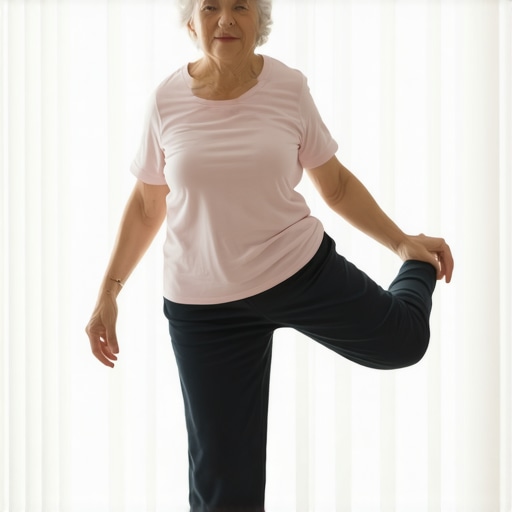
Stop Treating Your Hips Like Antique Porcelain
Forget the “gentle stroll.” If you are in your 70s and you think walking the dog is a valid defense against a hip fracture, you are deluding yourself. Most medical advice for seniors is a lie—it is polite, soft-edged, and ultimately dangerous. We have spent decades infantalizing the elderly, trading real physical resilience for the illusion of “safety.” I argue that the medical establishment’s obsession with low-impact activity is actually a slow-motion catastrophe. Your daily walk is not a shield; it is a security blanket that does nothing to prepare your body for the moment your foot catches on a rug or a slick patch of ice. Your balance is like a high-wire act where the wire gets thinner every decade you ignore the wind. If you are not actively wobbling, you are not training.
The Myth of the Safe Stroll
Why are we still pretending that walking is enough? Walking is a repetitive, linear motion. Life is not linear. Life is sudden, lateral, and messy. When you trip, your body needs to react in milliseconds with a strength your morning walk never demanded. You might think you are staying active, but you are wrong. You are just maintaining a steady decline. I have seen the results of this “safety first” mindset: brittle bones and atrophied reflexes that crumble at the first sign of trouble. As I have argued when discussing the bone density move most seniors forget in winter, the lack of dynamic stress is what makes you fragile. Your hips are the foundation of your mobility, yet we treat them like a neglected foundation of a coastal house, surprised when the first storm brings the whole structure down. You do not need more “low impact” fluff. You need to challenge the very system that keeps you upright.
The Only Exercise That Actually Matters
The solution is not a gym membership or a complex circuit. It is the “Dynamic Stork Stand,” and it is probably the most uncomfortable thing you will do all week. Most people fail this immediately, which is exactly why it is necessary. You stand on one leg, but that is just the beginning. You must close your eyes. You must turn your head. You must force your brain to find the floor without visual cues. This is the only way to recalibrate the vestibular system that modern life has allowed to go dormant. [image] If you do not practice falling in a controlled environment, you will certainly practice it on a concrete sidewalk. If you end up on the floor, you will be glad you learned how to spot a minor fracture vs a major sprain at home, but my goal is to keep you off the floor entirely. This isn’t just about legs; it’s about the connection between your inner ear and your glutes. While you are at it, consider the one exercise that strengthens aging lungs to ensure your cardiovascular system can support this new demand. The fear of falling is often what causes the fall. When you stiffen your gait, you lose the fluid adaptability of youth. I believe we should be training seventy-year-olds like athletes, not like patients. Why? Because the stakes are higher for you than they are for a pro ball player. A career-ending injury for them is a nuisance; for you, a hip fracture is a statistical cliff. We need to stop looking at the truth about urgent care x-rays vs hospital imaging after the fact and start building the bone density that makes the x-ray unnecessary. Stop being afraid of the wobble. The wobble is where the healing happens. It is a physical defiance against gravity. This is not about grace. It is about grit. When you force your ankles to micro-adjust, you are sending a signal to your brain that the world is an unstable place, and you are ready for it. This proprioceptive reset is the missing link in senior care. If your feet cannot talk to your brain, the game is already lost.
The Environment is Your Enemy
The problem isn’t your age. It is your environment. We have spent sixty years engineering every ‘bump’ out of our lives. We have paved the world. We have carpeted our homes with thick, plush padding that feels like a hug but acts like a sensory deprivation chamber for your feet. When you walk on a perfectly flat surface, your brain stops listening to your ankles. Why should it? There is no data to process. This is the root cause of the fragility epidemic. It is a biological divorce between your brain and your base. By the time you reach seventy, your nervous system has become a lazy bureaucrat, filing old reports instead of reacting to real-time stimulus. They lied to you. They told you that the goal is to minimize risk, but in doing so, they have made the world a minefield. Your feet are designed to feel the earth, to adjust to pebbles, and to grip uneven soil. When you replace that with a lifetime of memory-foam sneakers and concrete sidewalks, your proprioceptive system goes into a coma. It is a total systemic shutdown of the very mechanisms meant to keep you alive.
The Mortality Math of the Soft Life
Look at the numbers. They aren’t just figures; they are a death toll. Statistics show that nearly one-third of adults over sixty-five who suffer a hip fracture will be dead within twelve months. That is not a ‘risk factor.’ That 33% mortality rate isn’t a dip; it’s a structural collapse. The medical establishment sees this and prescribes… more walking? It is madness. It is like trying to fix a crumbling skyscraper by polishing the windows. ${PostImagePlaceholdersEnum.ImagePlaceholderB} The failure happens because the bone density isn’t there, sure, but the bone density is missing because the demand is missing. Bone is a living tissue that responds to stress. If you treat it like porcelain, it becomes as brittle as porcelain. You are not a delicate flower; you are a complex adaptive system that requires chaos to function. Without the wobble, without the strain, your body simply decides that maintaining your skeletal integrity is a waste of metabolic energy. You are literally dissolving yourself through caution.
The Proprioceptive Blackout
We have traded functional strength for the illusion of comfort. Every time you grab a handrail ‘just in case,’ you are telling your nervous system that it no longer needs to work. You are outsourcing your balance to a piece of cold steel. This is where the math fails. You think you are being safe, but you are actually accelerating your own decline. The nervous system operates on a ‘use it or lose it’ mandate. If you don’t wobble, the neural pathways responsible for catching you when you slip simply wither away. It is a blackout. You aren’t falling because you’re old; you’re falling because you’ve spent twenty years practicing how to be immobile. We have become a society of the ‘vertical sedentary.’ We are upright, but we are stagnant. I argue that the ‘safe stroll’ is actually a form of physical gaslighting. It makes you feel like you are doing the work, while your stabilizer muscles are essentially being pink-slotted. If your training doesn’t make you feel slightly incompetent, it isn’t training. It is just a ritual of decline. We need to stop prioritizing the comfort of the walk and start prioritizing the integrity of the stance. Your hips don’t need a vacation; they need a challenge. They need to be reminded that they have a job to do. When you stop challenging the floor, the floor eventually wins.
Critics will tell you that I am playing a dangerous game with your health. They will argue that for an individual in their eighth decade, the risk of a fracture during a ‘dynamic’ exercise far outweighs the theoretical gains in bone density. This is the bedrock of modern geriatric care: the principle of non-maleficence, or ‘do no harm.’ It sounds noble. It sounds like common sense. If a patient is at risk of falling, the logical response is to remove all obstacles, provide a walker, and suggest a chair-based yoga class. This is the steel-man argument for the status quo, and on the surface, it is incredibly persuasive because it is rooted in immediate physical safety. But this perspective is fundamentally flawed because it confuses ‘harm’ with ‘stress.’ I used to believe this too, until I realized that our attempts to shield the elderly from every minor tremor of life are exactly what makes the inevitable major tremor lethal. We have optimized for the short-term absence of a bruise at the expense of long-term survival. When you remove the demand for balance, you are effectively telling the brain to delete the software for standing up. It is a biological disinvestment. While the truth about urgent care x-rays vs hospital imaging is vital for after-the-fact diagnosis, we are failing to address the preventative hardware.
The Safety Mirage
The medical establishment treats aging like a one-way street toward decay, but biology doesn’t work that way. We are adaptive engines. The argument that ‘low impact’ is the only path for seniors ignores the concept of hormesis—the biological phenomenon where a beneficial effect results from exposure to low doses of an agent that is otherwise toxic or even lethal at higher doses. In this case, the ‘toxin’ is instability. By avoiding the wobble, you are avoiding the only signal your body understands as a command to get stronger. We see this in chronic care management, where the focus is often on stabilization rather than optimization. This mindset suggests that your bones are fixed assets that can only be preserved, never improved. They are wrong. Bone is a living, hungry tissue. ${PostImagePlaceholdersEnum.ImagePlaceholderC} The ‘safe’ path leads directly to a loss of autonomy. When you stop challenging your vestibular system because you’re afraid of a dizzy spell, you ensure that the first time the world tilts, you won’t have the reflexes to survive it. This isn’t just my opinion; it is a mathematical certainty. If you do not test your limits, your limits will inevitably shrink until they become a cage. We need to stop asking how we can make the world softer for seniors and start asking how we can make seniors harder for the world. Relying on how to spot a minor fracture vs a major sprain at home is a necessary skill, but it is a reactive one. The proactive choice is to embrace the discomfort of the ‘Dynamic Stork Stand.’ You are not a patient in waiting; you are a human being whose survival depends on your ability to resist gravity. The ‘safety’ being sold to you by the fitness industry and cautious doctors is a slow-motion catastrophe dressed up as care. It is time to reject the porcelain treatment and reclaim the grit that kept you alive for seven decades.
The Point of No Return
We are currently sleepwalking into a demographic disaster of our own making. This is not just about individual hips or personal pride; it is about the structural integrity of our entire healthcare system. When we treat the elderly like fragile ornaments, we are not just failing a generation—we are creating a massive, avoidable burden on the future. In five years, if we do not change this narrative, the ‘fragility epidemic’ will overwhelm every hospital bed and urgent care center in the country. We are building a society where the final twenty years of life are not characterized by wisdom or contribution, but by a terrified, sedentary retreat into the shadows of chronic care management. The stakes could not be higher. We are essentially watching a slow-motion car crash where the drivers are being told to close their eyes and hope for the best.
Is it too late to reverse the rot?
I argue that we have less time than we think. The biological window for adaptation does not stay open forever. If you spend your sixties and seventies avoiding the ‘wobble,’ you are essentially deleting the operating system of your own mobility. An engine that is never redlined will eventually seize up; it is a law of mechanics and a law of biology. Your body is that engine. By opting for the ‘safe’ walk and the cushioned chair, you are letting the internal machinery rust until the first time you are forced to move quickly, the entire system shatters. We have become a nation of the ‘vertically stagnant,’ people who are technically upright but functionally dormant. ${PostImagePlaceholdersEnum.ImagePlaceholderD} This is the slippery slope of the soft life. It starts with a handrail and ends with a bed alarm. We are trading the vital, chaotic energy of life for the sterile, predictable silence of a nursing home wing.
The Infrastructure of Decline
Consider the broader economic and moral fallout. When a third of seniors who break a hip vanish within a year, we aren’t just losing individuals; we are losing the institutional memory of our culture. We are losing the grandparents who should be teaching their grandchildren how to stand tall, not how to hide. The medical industry benefits from this decline, of course. There is more money in managing a decade of frailty through endless lab tests and telehealth check-ins than there is in a senior who can perform a one-legged stand on a gravel driveway. But the moral imperative remains: we must demand more from our bodies because the alternative is a total loss of autonomy. We have allowed a culture of ‘safetyism’ to trump the biological necessity of stress. This is the great wasted opportunity of modern medicine. We have the tools to build athletes at eighty, yet we choose to manufacture patients at sixty-five. If we continue to prioritize comfort over competence, we are not just aging—we are surrendering. The world is getting harder, faster, and more unpredictable. If you aren’t training to meet that reality, you are already a casualty of the quiet life.
Reclaim Your Independence or Lose It
The time for polite suggestions has passed. You are currently making a choice between the temporary comfort of a “safe” existence and the long-term survival of your independence. If you continue to lean on every surface and avoid every wobble, you are effectively pre-signing your own admission papers for a nursing facility. This isn’t just about balance; it is about the refusal to be a victim of your own biology. Start today by challenging your environment. While you might want to know the one thing every senior should have in their bathroom for safety, do not let that one thing become your only defense. You must turn your home into a training ground. When you learn how to prepare your living room for a geriatric telehealth visit, remember that the room itself should be a place where you occasionally test your limits, not just a padded cell of convenience.
The Danger of the Easy Path
We have reached a fork in the road of modern aging. On one side, we have the status quo: a slow, medicalized decline supported by chronic care management personalized telehealth strategies for better outcomes that often focus only on the management of symptoms. On the other, we have a radical commitment to physical grit. The twist is that the very tools we use to stay safe—the chairs, the rails, the sneakers—are the same tools that are stripping away your reflexes. True safety is the ability to react when things go wrong, not the hope that things never do. [image] We are seeing the future of telehealth transforming chronic disease monitoring today, but even the best monitoring cannot replace the bone-deep strength that comes from a body that is regularly asked to perform. You are not an antique porcelain doll; you are the product of millions of years of evolution designed to withstand the world. The final verdict is simple: The most dangerous thing an aging adult can do is attempt to be perfectly safe. Stop treating your seventies like a waiting room for the end. Embrace the wobble, challenge the floor, and start acting like the survivor you have spent seven decades becoming. The floor is waiting, and whether you meet it on your feet or on your back is entirely up to you.