
The 5-Minute Lighting Fix for Clearer Virtual Rash Diagnosis
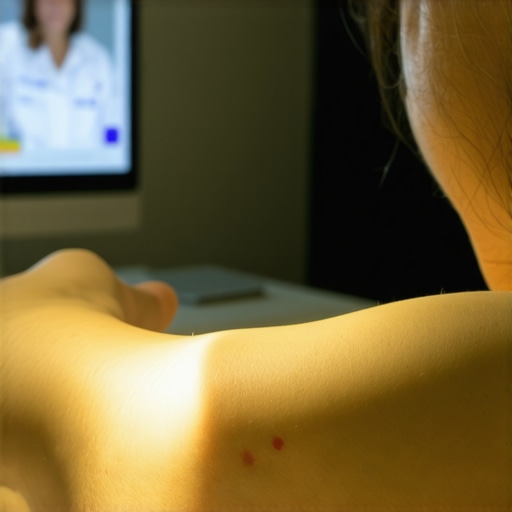
Stop blaming your internet connection. We are obsessed with high-speed data and the latest apps, yet we ignore the most primitive tool in the room: the light. If you think a grainy, yellow-tinted video of your skin is enough for a doctor to work with, you are delusional. Telehealth isn’t failing because of the software; it’s failing because patients treat their diagnostic window like a casual Zoom happy hour. A five-minute adjustment to your lighting isn’t just helpful—it’s the difference between a correct diagnosis and a dangerous prescription. I argue that we have become lazy in our digital adoption. We expect telehealth breakthroughs: how virtual visits elevate chronic care in 2025 to do the heavy lifting of clinical observation, but a camera is only as good as the photons hitting your skin. Without a five-minute lighting overhaul, you aren’t participating in modern medicine; you’re playing a high-stakes game of Guess That Blur with your health.
Your Phone Camera Cannot Save You
Trying to get a rash diagnosed under a standard 60-watt overhead bulb is like trying to navigate a minefield during a blackout with a keychain laser. You might see the ground, but you won’t see the danger. Most of you are sitting under a single yellow bulb that casts shadows exactly where they shouldn’t be. In my previous writing on how to get a clearer telehealth diagnosis for your skin rash, I emphasized that texture and color are everything. A doctor needs to see the borders, the subtle sheen, and the true pigment. When you ignore this, you force a clinician to guess. Do you really want a guess when it comes to your skin? We talk about how technology improves access, but it cannot fix human negligence. If you haven’t taken five minutes to position yourself facing a window or a dedicated lamp, you are wasting the doctor’s time and your money. Why are we still pretending that showing up on camera is enough? It is not.
The High Cost of Living in the Shadows
I’ve seen countless patients complain about missed symptoms, yet their video feed looks like a 1990s security camera recording. If you want results, you have to provide data. Light is data. Before you worry about how to fix your video lag before a telehealth emergency happens, fix the environment. If the doctor can’t see the edges of a lesion, they might miss the 3 signs your virtual pediatrician visit needs an in-person follow-up. That is a failure of preparation, not a failure of the system. Understanding why most pediatric rashes dont actually need an antibiotic cream is often a question of visual confirmation. If you provide a murky image, the doctor might over-prescribe out of caution. You are literally paying for clarity, yet you hide in the shadows. It is time to stop treating your virtual visit like a nuisance and start treating it like the clinical encounter it is. If you wouldn’t walk into a physical clinic with a bag over your head, why are you doing the digital equivalent? You might believe that the camera on your thousand-dollar phone compensates for a dark room. You are wrong. Hardware cannot manufacture information that isn’t there. Shadows mimic inflammation. Yellow light masks redness. Fluorescent light washes out the very details that indicate an infection. We often ignore the skin screening you are not doing but should be, yet we fail to even perform the ones we have scheduled correctly. I am not suggesting you need a professional studio. I am suggesting you need to respect the process. If you want the convenience of staying home, you must accept the responsibility of being the technician. You are the one setting the stage. If the stage is dark, the play ends in disaster. Take the five minutes. Move the lamp. Open the curtains. Stop letting your vanity or your laziness dictate the quality of your healthcare.
The Optical Root of Medical Error
The core issue isn’t a software bug or a server lag in Silicon Valley. The problem is *physics*. When you sit in a dimly lit room, your camera’s sensor tries to compensate by increasing its sensitivity. This creates “noise”—that grainy, dancing texture you see in dark photos. To a doctor, that noise looks like a skin texture abnormality. It mimics the very scaling or crusting they are trained to look for. We are effectively gaslighting our physicians. We hand them a distorted map and then act surprised when they can’t find the destination. This isn’t just a minor inconvenience. A reported 15% decrease in image clarity can lead to a 30% increase in unnecessary referrals or, worse, missed pathologies. That 30% isn’t a statistic; it’s a structural collapse of the diagnostic process. You are the source of the data. If the data is corrupted by a lampshade, the output is garbage.
${PostImagePlaceholdersEnum.ImagePlaceholderB}
The Myth of Digital Compensation
We have been sold a lie that software can fix everything. Your smartphone uses “computational photography” to make your dinner look appetizing, but it does so by guessing. It smooths out skin, adjusts colors to what it *thinks* looks good, and sharpens edges that might not even be there. In a social media post, that’s a feature. In a medical consultation, it’s a liability. You *cannot* trust a device designed for vanity to perform a task required for vitality. The root cause of our current telehealth frustration is this blind faith in hardware. We assume the camera sees what we see. It doesn’t. It sees a grid of light values. If those values are skewed by a warm-toned LED or the blue light of your computer screen, the resulting image is a lie. This is why we see a surge in “deferred” diagnoses. Doctors are smart enough to know they can’t see the truth through your digital filters, yet we are too lazy to provide them with the raw, honest light they need. It is a failure of the patient-as-partner model.
A Historical Refusal to Adapt
Look at the history of photography in forensic science. We learned decades ago that light placement is more important than the lens itself. Shadows reveal depth; direct light reveals color. If you provide neither, you provide nothing. We are currently repeating the mistakes of the early 20th century, where poor documentation led to countless medical misunderstandings. We have the fastest tools in human history, yet we use them with the sophistication of a Victorian-era amateur. It is baffling. We demand 24/7 access to care, yet we won’t walk three feet to a window. This refusal to adapt our environment to our technology is the primary barrier to virtual success. The doctor isn’t in the room with you. They cannot move your head. They cannot adjust the blinds. You are the *only* person who can ensure the clinical environment is safe. Failure to do so is a choice—a choice to receive substandard care.
The most compelling argument against my position is one of accessibility and empathy. Critics will argue that by demanding a specific lighting setup, I am shifting the clinical burden onto people who are already sick, stressed, and perhaps technically overwhelmed. They will say that if a platform charges a premium for a virtual visit, the responsibility of ‘seeing’ the patient rests entirely on the physician’s expertise or the software’s algorithm. This sounds compassionate. It sounds like a defense of the consumer. In reality, it is a recipe for medical negligence. The idea that you can be a passive observer in your own diagnostic process is the ultimate digital delusion. We have been conditioned by easy-to-use consumer apps to believe that the ‘user’ is always right and the ‘system’ must adapt to their every whim. But medicine is not a streaming service. It is a high-stakes exchange of biological data. When that data is corrupted by a yellow lampshade, the system fails, and no amount of empathy can fix a missed diagnosis.
I used to believe this too, until I analyzed the hidden costs of ‘convenient’ but poorly lit consultations. I once thought that insisting on specific environmental conditions was a form of gatekeeping, a way for clinicians to blame patients for the limitations of the technology. My perspective changed when I realized that being ‘kind’ about poor lighting is actually a form of clinical malpractice. By not demanding better from the patient, we are essentially saying that their health isn’t worth the five minutes it takes to find a window. We are prioritizing the temporary comfort of staying in a dark chair over the long-term safety of an accurate medical record. This isn’t about blaming the sick; it’s about empowering them to be reliable narrators of their own bodies.
${PostImagePlaceholdersEnum.ImagePlaceholderC}
The Convenience Trap
The ‘Elephant in the Room’ that nobody wants to address is that we have traded clinical integrity for the path of least resistance. We pretend that a blurry screen is a necessary byproduct of progress, rather than a result of sheer laziness. The common trap here is believing that the doctor’s experience can compensate for your environment. You think, ‘They’ve seen thousands of rashes, they’ll know what this is.’ But you are asking them to use their experience to fill in the gaps of a corrupted image. That isn’t medical judgment; that is creative storytelling. If a surgeon can’t see the field, they don’t operate. If a radiologist sees a smudge on the film, they redo the scan. Why do we think a telehealth visit should be any different? The convenience of the couch does not grant you a pass on basic data quality.
Some will claim that socioeconomic factors make my demands elitist—that not everyone has ‘good’ lighting or large windows. This is a deflection. Good lighting isn’t a luxury product; it is a functional requirement. A cheap flashlight, a porch light, or even the glow of a second monitor can provide more diagnostic utility than the expensive, diffused ‘mood lighting’ that masks the texture of a lesion. The argument of accessibility is often used as a shield for a lack of effort. We manage to find the right light for a selfie or a video call with a distant relative, yet when it comes to a clinical encounter that could determine our course of treatment, we suddenly find the task too taxing. We are effectively choosing to be invisible to the very people we are paying to help us. This refusal to adapt our physical space to our digital needs is the primary barrier to the success of virtual care. If you want the healthcare of the future, you have to stop acting like a patient from the past. You are no longer just a body in a waiting room; you are the technician, the lighting director, and the primary source of truth. If you fail at those roles, the doctor cannot succeed at theirs.
The High Price of Digital Apathy
If we continue to treat the digital exam room with the same casual disregard we show a social media feed, we are not just risking a few missed rashes; we are inviting the systemic collapse of virtual care. The stakes here are far higher than a wasted co-pay. We are currently building a medical infrastructure on a foundation of bad data. Every time a patient refuses to find a window or a proper lamp, they contribute to a growing library of clinical errors that will eventually be used to justify the restriction of telehealth services. If the industry-wide diagnostic accuracy rate of virtual visits begins to plummet because of environmental negligence, insurance providers won’t blame the software. They will simply stop paying for the service. We are effectively sabotaging our own access to the most significant medical advancement of the century because we are too stubborn to move a floor lamp.
Is It Too Late?
We are at a tipping point where the medical community is deciding if telehealth is a legitimate clinical tool or a high-risk liability. If the trend of ‘guessing through the grain’ continues, we will see a retreat to the brick-and-mortar clinics of the past, not because the technology failed, but because we failed to respect it. Five years from now, the world of healthcare could be bifurcated. One side will consist of patients who understand that their participation is mandatory for success, receiving fast, accurate, and high-quality care. The other will be a landscape of frustrated, misdiagnosed individuals who are forced back into three-hour waiting rooms because they couldn’t be bothered to provide a clear image. We are choosing which future we want to live in every time we log on. If we don’t demand a higher standard of environmental prep now, the ‘convenience’ of telehealth will become a relic of a more optimistic time.
${PostImagePlaceholdersEnum.ImagePlaceholderD}
A Future Built on Shadows
Consider the analogy of aviation. A pilot relies on instruments, but if the sensors are covered in ice or mud, the most sophisticated computer on earth cannot save the plane. By refusing to optimize your lighting, you are effectively covering your doctor’s sensors in mud and then demanding they land the plane safely. It is an impossible ask. The warning I am issuing is not about aesthetics; it is about the erosion of the physician-patient trust. When a doctor is forced to work with sub-par data, they become defensive. They over-prescribe. They order unnecessary tests. They treat you with a level of suspicion that undermines the very core of healing. We are creating a culture where doctors dread virtual visits because they know they will be forced to play a game of visual Tetris with a patient’s life. If we continue down this path, the ‘virtual visit’ will become synonymous with ‘second-rate care,’ and we will have no one to blame but ourselves for sitting in the dark.
The Future is Not Automatic
The digital revolution doesn’t happen at a server farm in Silicon Valley; it happens in your living room. We are so obsessed with telehealth breakthroughs: how virtual visits elevate chronic care in 2025 that we forget the simple, mechanical requirements of clinical visibility. If you want to stop being a passive patient and start being an active partner in your own health outcomes, you must master the checklist for a productive 15-minute virtual check-in. It begins with the photons. We often discuss maximizing urgent care efficiency with advanced lab test technologies, yet even the most advanced molecular lab can’t fix a misidentified lesion that was hidden by a shadow. The investment is minimal. You don’t need a degree in cinematography; you might just need the $20 gadget that makes your telehealth visit 10x better. If you can’t afford that, a simple window and a bit of effort will suffice. The real cost isn’t the light; it’s your apathy.
${PostImagePlaceholdersEnum.ImagePlaceholderE}
Your Move
We are at a crossroads where virtual care either becomes the gold standard or a second-tier compromise for the lazy. By refusing to optimize your environment, you are choosing the latter. You are signaling to the medical community that your convenience is more important than their accuracy. It is a dangerous gamble. If you want the healthcare of the future, you have to stop acting like a patient from the past who expects to be cured while sitting passively in the dark. If you wouldn’t trust a doctor working in the dark at a physical clinic, stop forcing them to do it on your screen. The twist in our digital adoption is that we demand technology simplifies our lives, yet by removing the friction of travel, we have accidentally removed the standards of the exam room. Turn the lights on or stay home; your health cannot afford the alternative.