
How to Get a Clearer Telehealth Diagnosis for Your Skin Rash
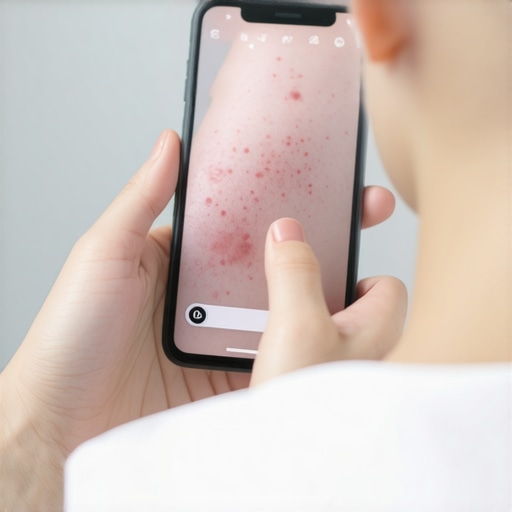
Your Webcam Is Not a Doctor and That Is Why Your Skin Diagnosis Is Wrong
You think you can just hop on a call, wave your arm in front of a grainy lens, and expect a medical miracle. You’re wrong. Most patients approach virtual visits with a casual laziness that borders on the negligent, and then they act shocked when the treatment plan fails. The hard truth? Telehealth isn’t a magic mirror; it is a high-stakes data transfer where you are the technician. If you provide garbage data, you get a garbage diagnosis. The screen between you and your physician is a narrow keyhole, and if you don’t know how to look through it, you’re wasting everyone’s time. I argue that the perceived ‘limitations’ of virtual care are often just a lack of patient accountability. If you want results, you have to stop being a passive observer of your own symptoms.
Stop Treating Your Webcam Like a Magic Mirror
Why are we still pretending that a dimly lit selfie is enough for a clinical assessment? Shadows hide texture. Incandescent yellow bulbs mask the true nature of inflammation. If you aren’t willing to set the stage, you’re essentially asking a doctor to read a book in a dark room. I’ve seen too many people fail because they didn’t bother to learn the lighting trick for a clearer telehealth skin assessment before their appointment started. You must be the one to provide the clarity that the hardware lacks. This isn’t about looking good; it’s about being seen. When you fail to prepare, you’re not just getting a ‘bad call’; you’re receiving a bad diagnosis.
We have been sold a lie that healthcare is as easy as ordering a pizza. It isn’t. The convenience of a virtual visit is a trap for the unprepared. You wouldn’t walk into a physical clinic with a bag over your head, yet that is effectively what you do when your internet connection is lagging or your lens is smeared with thumbprints. If your screen is flickering, you’re not getting care; you’re getting a guess. You need to fix how to fix your video lag before a telehealth emergency happens or accept that your diagnosis will be as blurry as your video feed. We need to demand more from ourselves as patients and quit expecting the technology to do the work for us.
You might think your doctor can see everything, but the reality is far more restrictive. There is a reason why your doctor cannot diagnose that mole via webcam with 100% certainty; a camera flattens the world. It strips away the three-dimensional nuances of a rash or a lesion. To bridge this gap, you have to stop being passive. You need to utilize 3 moves to make your virtual doctor visit feel less awkward and more productive. Are you holding the camera steady? Are you providing a scale for size? If not, you’re gambling with your health. The medical community has spent years explaining the real difference between urgent care and emergency room care, yet we still haven’t taught patients how to use their own living rooms as a clinic. Stop guessing and start performing the role of a capable medical assistant for your own case. The healthcare industry is pushing for the future of telehealth transforming chronic disease monitoring today, but that future remains out of reach if we treat our devices like toys. Your smartphone is a piece of medical equipment. Start treating it like one.
The Hardware Trap: A Failure of Resolution
The core issue isn’t a software bug. It’s a systemic delusion that pixels can replace palpation. We have traded the stethoscope for the scroll wheel, and the results are predictably mediocre. Medical school teaches doctors that the physical exam is the gold standard for a reason. When you remove the three dimensions of space and the physical sensation of touch, you aren’t practicing medicine; you’re practicing guesswork with a subscription fee. It’s a lie. We tell ourselves that a sensor is better than a finger, that a pixel is as good as a pore, and that a screen is a window when it is actually a filter. The doctor cannot feel the heat of the skin or the firm edges of a hidden mass through a 1080p display.
The math doesn’t lie. Research indicates that up to 30% of virtual dermatology consults require an in-person follow-up within weeks. That 30% isn’t ‘integrated care.’ It is a failure rate. It means nearly a third of the time, the digital shortcut was a dead end. We are wasting the most precious resource in the healthcare system—the physician’s time—on low-fidelity interactions that lack the resolution for a definitive answer. We’ve been sold a bill of goods that says a high-speed connection compensates for a lack of physical presence. It doesn’t.
${PostImagePlaceholdersEnum.ImagePlaceholderB}
The High Cost of Digital Convenience
Let’s talk about the physical reality of light and optics. Your smartphone camera, as advanced as you think it is, is optimized for social media, not oncology. It uses aggressive post-processing algorithms to make things look ‘vibrant’ rather than ‘accurate.’ It smoothes over textures and adjusts color balances to make images more pleasing to the eye. For a doctor trying to distinguish a benign cyst from an aggressive carcinoma, that smoothing is a catastrophe. It’s not just a bad photo; it’s a filtered reality that obscures the very markers of disease. You are essentially handing your doctor a map that has been airbrushed to hide the potholes.
The problem is actually our cultural entitlement to ‘instant’ results. We demand that healthcare mirror the speed of a streaming service. But human biology is slow, messy, and analog. It doesn’t compress well. When we prioritize speed over the physical presence required for a thorough skin check or a chronic care review, we are saying that our time is more valuable than our health. You are the one paying the price for this convenience in the form of misdiagnosis and delayed treatment. Efficiency is the enemy of accuracy in a clinical setting.
The Tactile Crisis in Modern Medicine
The rise of tele-driven ‘urgent care’ has created a culture of over-prescription. Because the physician cannot perform a physical swab or a tactile assessment, they often default to the ‘safe’ broad-spectrum antibiotic or a generic steroid cream just to cover their bases. This isn’t precision medicine; it’s defensive medicine. It’s the direct result of a system that has severed the physical link between doctor and patient. We have built a digital wall and then complained that we can’t see what’s on the other side. If the doctor can’t touch the patient, they will over-medicate to compensate for the uncertainty.
We have reached a point where the obsession with the ‘digital revolution’ has blinded us to the ‘analog necessity.’ We’ve been told that remote monitoring is the future of healthcare. It might be. But only if we stop pretending that a zoom lens is a substitute for a biopsy or a physical palpation. If we continue to treat chronic conditions through a keyhole, we shouldn’t be surprised when the door eventually slams shut on our well-being. The technology is a tool, not a replacement. Until we accept that, our virtual visits will remain expensive exercises in frustration.
I understand the allure of the ‘access’ argument. Proponents of digital-first medicine will tell you that a grainy, lag-filled video call is a moral victory because it brings a specialist to a rural zip code or a housebound patient. They argue that some care—any care—is inherently better than none. It is a seductive narrative. It positions the webcam as a tool of social justice, leveling the playing field for those who can’t afford the commute or the time off work. They claim that even if the resolution is poor, the clinical reasoning of the doctor compensates for the technological deficit. It’s an easy argument to make because it feels compassionate. But it is fundamentally flawed because it confuses presence with performance. I used to believe this too, until I realized that providing sub-standard diagnostic tools to underserved populations isn’t ‘equity’; it’s a secondary form of neglect. When we tell a patient in a remote area that their blurry selfie is ‘good enough,’ we are effectively saying they deserve a lower standard of care than the person who can walk into a physical office. We are offering them a lottery ticket and calling it a prescription. The ‘access’ being touted is often just a high-speed connection to a coin flip. The danger isn’t that the technology is missing; the danger is that the technology provides a false sense of completion. A patient walks away from a low-fidelity screen-to-screen interaction believing they have been ‘seen,’ when in reality, they have only been glimpsed. This digital veneer of safety prevents them from seeking the higher-level intervention they actually need.
The False Safety of the Digital Band-Aid
It is time we stop pretending that convenience and quality are the same thing. The common trap is believing that a doctor’s expertise can bridge a data gap that is physically impossible to cross. If the sensor on your phone cannot capture the depth of a lesion or the subtle hue of a vascular change, no amount of medical school training can conjure that information out of thin air. We are setting up a system where the most vulnerable patients are the ones most likely to receive a ‘guessed’ diagnosis because they are the ones we’ve funneled into the narrowest digital channels. We have prioritized the ‘reach’ of the healthcare system over the ‘results’ it delivers.${PostImagePlaceholdersEnum.ImagePlaceholderC}True equity would mean ensuring that every patient has access to the high-resolution, tactile, and physical examinations that remain the gold standard of medicine. By settling for the digital substitute, we are validating a tiered system of health. We are telling people that their zip code determines not just who their doctor is, but the very quality of the light that hits their skin. This isn’t progress; it’s a surrender to the limitations of the hardware. When we celebrate ‘democratized access’ without demanding clinical parity, we are just rebranding a failure of infrastructure as a technological breakthrough. A blurry screen is not an open door; it is a locked one that we’ve painted a window on. Instead, the reliance on these sub-par visuals forces clinicians into a defensive posture. When a doctor isn’t sure what they are looking at because of a compression artifact, they don’t always say ‘I don’t know.’ They often say ‘Take this antibiotic just in case.’ This creates a feedback loop of over-treatment that masks the original problem while creating new ones like gut dysbiosis or drug resistance. We are trading the precision of a scalpel for the blunt force of a broad-spectrum guess, and we are calling it ‘innovation.’ The cost of this digital convenience is a slow erosion of clinical rigor. We must stop pretending that a zoom lens is a substitute for the human hand, or we will find ourselves in a medical wasteland where everyone is treated but no one is actually healed.
Your Webcam Is Not a Doctor and That Is Why Your Skin Diagnosis Is Wrong
You think you can just hop on a call, wave your arm in front of a grainy lens, and expect a medical miracle. You’re wrong. Most patients approach virtual visits with a casual laziness that borders on the negligent, and then they act shocked when the treatment plan fails. The hard truth? Telehealth isn’t a magic mirror; it is a high-stakes data transfer where you are the technician. If you provide garbage data, you get a garbage diagnosis. The screen between you and your physician is a narrow keyhole, and if you don’t know how to look through it, you’re wasting everyone’s time. I argue that the perceived ‘limitations’ of virtual care are often just a lack of patient accountability. If you want results, you have to stop being a passive observer of your own symptoms.
Stop Treating Your Webcam Like a Magic Mirror
Why are we still pretending that a dimly lit selfie is enough for a clinical assessment? Shadows hide texture. Incandescent yellow bulbs mask the true nature of inflammation. If you aren’t willing to set the stage, you’re essentially asking a doctor to read a book in a dark room. I’ve seen too many people fail because they didn’t bother to learn the lighting trick for a clearer telehealth skin assessment before their appointment started. You must be the one to provide the clarity that the hardware lacks. This isn’t about looking good; it’s about being seen. When you fail to prepare, you’re not just getting a ‘bad call’; you’re receiving a bad diagnosis.
We have been sold a lie that healthcare is as easy as ordering a pizza. It isn’t. The convenience of a virtual visit is a trap for the unprepared. You wouldn’t walk into a physical clinic with a bag over your head, yet that is effectively what you do when your internet connection is lagging or your lens is smeared with thumbprints. If your screen is flickering, you’re not getting care; you’re getting a guess. You need to fix how to fix your video lag before a telehealth emergency happens or accept that your diagnosis will be as blurry as your video feed. We need to demand more from ourselves as patients and quit expecting the technology to do the work for us.
You might think your doctor can see everything, but the reality is far more restrictive. There is a reason why your doctor cannot diagnose that mole via webcam with 100% certainty; a camera flattens the world. It strips away the three-dimensional nuances of a rash or a lesion. To bridge this gap, you have to stop being passive. You need to utilize 3 moves to make your virtual doctor visit feel less awkward and more productive. Are you holding the camera steady? Are you providing a scale for size? If not, you’re gambling with your health. The medical community has spent years explaining the real difference between urgent care and emergency room care, yet we still haven’t taught patients how to use their own living rooms as a clinic. Stop guessing and start performing the role of a capable medical assistant for your own case. The healthcare industry is pushing for the future of telehealth transforming chronic disease monitoring today, but that future remains out of reach if we treat our devices like toys. Your smartphone is a piece of medical equipment. Start treating it like one.
The Hardware Trap: A Failure of Resolution
The core issue isn’t a software bug. It’s a systemic delusion that pixels can replace palpation. We have traded the stethoscope for the scroll wheel, and the results are predictably mediocre. Medical school teaches doctors that the physical exam is the gold standard for a reason. When you remove the three dimensions of space and the physical sensation of touch, you aren’t practicing medicine; you’re practicing guesswork with a subscription fee. It’s a lie. We tell ourselves that a sensor is better than a finger, that a pixel is as good as a pore, and that a screen is a window when it is actually a filter. The doctor cannot feel the heat of the skin or the firm edges of a hidden mass through a 1080p display.
The math doesn’t lie. Research indicates that up to 30% of virtual dermatology consults require an in-person follow-up within weeks. That 30% isn’t ‘integrated care.’ It is a failure rate. It means nearly a third of the time, the digital shortcut was a dead end. We are wasting the most precious resource in the healthcare system—the physician’s time—on low-fidelity interactions that lack the resolution for a definitive answer. We’ve been sold a bill of goods that says a high-speed connection compensates for a lack of physical presence. It doesn’t.
The High Cost of Digital Convenience
Let’s talk about the physical reality of light and optics. Your smartphone camera, as advanced as you think it is, is optimized for social media, not oncology. It uses aggressive post-processing algorithms to make things look ‘vibrant’ rather than ‘accurate.’ It smoothes over textures and adjusts color balances to make images more pleasing to the eye. For a doctor trying to distinguish a benign cyst from an aggressive carcinoma, that smoothing is a catastrophe. It’s not just a bad photo; it’s a filtered reality that obscures the very markers of disease. You are essentially handing your doctor a map that has been airbrushed to hide the potholes.
The problem is actually our cultural entitlement to ‘instant’ results. We demand that healthcare mirror the speed of a streaming service. But human biology is slow, messy, and analog. It doesn’t compress well. When we prioritize speed over the physical presence required for a thorough skin check or a chronic care review, we are saying that our time is more valuable than our health. You are the one paying the price for this convenience in the form of misdiagnosis and delayed treatment. Efficiency is the enemy of accuracy in a clinical setting.
The Tactile Crisis in Modern Medicine
The rise of tele-driven ‘urgent care’ has created a culture of over-prescription. Because the physician cannot perform a physical swab or a tactile assessment, they often default to the ‘safe’ broad-spectrum antibiotic or a generic steroid cream just to cover their bases. This isn’t precision medicine; it’s defensive medicine. It’s the direct result of a system that has severed the physical link between doctor and patient. We have built a digital wall and then complained that we can’t see what’s on the other side. If the doctor can’t touch the patient, they will over-medicate to compensate for the uncertainty.
We have reached a point where the obsession with the ‘digital revolution’ has blinded us to the ‘analog necessity.’ We’ve been told that remote monitoring is the future of healthcare. It might be. But only if we stop pretending that a zoom lens is a substitute for a biopsy or a physical palpation. If we continue to treat chronic conditions through a keyhole, we shouldn’t be surprised when the door eventually slams shut on our well-being. The technology is a tool, not a replacement. Until we accept that, our virtual visits will remain expensive exercises in frustration.
I understand the allure of the ‘access’ argument. Proponents of digital-first medicine will tell you that a grainy, lag-filled video call is a moral victory because it brings a specialist to a rural zip code or a housebound patient. They argue that some care—any care—is inherently better than none. It is a seductive narrative. It positions the webcam as a tool of social justice, leveling the playing field for those who can’t afford the commute or the time off work. They claim that even if the resolution is poor, the clinical reasoning of the doctor compensates for the technological deficit. It’s an easy argument to make because it feels compassionate. But it is fundamentally flawed because it confuses presence with performance. I used to believe this too, until I realized that providing sub-standard diagnostic tools to underserved populations isn’t ‘equity’; it’s a secondary form of neglect. When we tell a patient in a remote area that their blurry selfie is ‘good enough,’ we are effectively saying they deserve a lower standard of care than the person who can walk into a physical office. We are offering them a lottery ticket and calling it a prescription. The ‘access’ being touted is often just a high-speed connection to a coin flip. The danger isn’t that the technology is missing; the danger is that the technology provides a false sense of completion. A patient walks away from a low-fidelity screen-to-screen interaction believing they have been ‘seen,’ when in reality, they have only been glimpsed. This digital veneer of safety prevents them from seeking the higher-level intervention they actually need.
The False Safety of the Digital Band-Aid
It is time we stop pretending that convenience and quality are the same thing. The common trap is believing that a doctor’s expertise can bridge a data gap that is physically impossible to cross. If the sensor on your phone cannot capture the depth of a lesion or the subtle hue of a vascular change, no amount of medical school training can conjure that information out of thin air. We are setting up a system where the most vulnerable patients are the ones most likely to receive a ‘guessed’ diagnosis because they are the ones we’ve funneled into the narrowest digital channels. We have prioritized the ‘reach’ of the healthcare system over the ‘results’ it delivers.True equity would mean ensuring that every patient has access to the high-resolution, tactile, and physical examinations that remain the gold standard of medicine. By settling for the digital substitute, we are validating a tiered system of health. We are telling people that their zip code determines not just who their doctor is, but the very quality of the light that hits their skin. This isn’t progress; it’s a surrender to the limitations of the hardware. When we celebrate ‘democratized access’ without demanding clinical parity, we are just rebranding a failure of infrastructure as a technological breakthrough. A blurry screen is not an open door; it is a locked one that we’ve painted a window on. Instead, the reliance on these sub-par visuals forces clinicians into a defensive posture. When a doctor isn’t sure what they are looking at because of a compression artifact, they don’t always say ‘I don’t know.’ They often say ‘Take this antibiotic just in case.’ This creates a feedback loop of over-treatment that masks the original problem while creating new ones like gut dysbiosis or drug resistance. We are trading the precision of a scalpel for the blunt force of a broad-spectrum guess, and we are calling it ‘innovation.’ The cost of this digital convenience is a slow erosion of clinical rigor. We must stop pretending that a zoom lens is a substitute for the human hand, or we will find ourselves in a medical wasteland where everyone is treated but no one is actually healed. The current trajectory we are on is not one of progress, but of clinical atrophy. We are currently presiding over the slow death of the physical examination, and we are doing it under the guise of ‘efficiency.’ If we continue to treat the body as a data point that can be compressed and transmitted over a network, we will soon wake up in a world where the very concept of a family physician has been replaced by a tiered subscription model of diagnostic guesses. In five years, the ‘physical’ will be an expensive luxury for the elite, while the rest of society is relegated to a digital triage system that prioritizes throughput over accuracy. This is the slippery slope of the efficiency mandate. When we devalue the physical presence of the patient, we don’t just lose the ability to see a rash clearly; we lose the clinical intuition that is built in the three-dimensional space between two human beings. Think of it like this: trying to diagnose a complex skin condition via a smartphone is like trying to appreciate the texture and soul of a Renaissance oil painting by looking at a thumbnail image on a cracked screen. You might see the colors, you might recognize the subject, but you have no grasp of the depth, the brushstrokes, or the reality of the work. You are observing a representation of the truth, not the truth itself. ${PostImagePlaceholdersEnum.ImagePlaceholderD}
What are we waiting for?
If we do not demand a return to high-fidelity, in-person standards for complex assessments, we are essentially consenting to a future of medical ghosting. We will have millions of people who feel they are under medical supervision but are actually just being managed by algorithms and low-resolution video feeds. The real cost isn’t measured in the monthly subscription fee for a telehealth app; it is measured in the undetected melanoma that was mistaken for a freckle because of a lighting artifact. It is measured in the chronic conditions that are managed with generic prescriptions because the doctor was too far away to actually investigate the root cause. Real medicine requires the precision of lab tests and the certainty of physical presence, especially when managing complex urgent care needs. We are at a crossroads where we must decide if healthcare is a service we consume or a practice we participate in. If we choose the former, we should prepare for a sterile, automated future where the human touch is considered an unnecessary overhead. The warning is clear: by removing the hand from the healing process, we are removing the heart of medicine itself. We are building a system that is wide but shallow, and eventually, we will all find ourselves drowning in the shallow end.
The Bottom Line
We are standing at a precipice where the allure of the easy is systematically dismantling the accurate. It is easy to point at telehealth breakthroughs how virtual visits elevate chronic care in 2025 and claim victory over geography, but geography was never the primary obstacle—biology was. Human health is a three-dimensional reality that cannot be fully captured by a two-dimensional sensor. When we choose the convenience of a screen over the necessity of a physical exam, we aren’t just saving a commute; we are accepting a higher margin of error and a lower standard of clinical truth.
The danger of this digital complacency is that it hides the moments where a physical presence is non-negotiable. If you do not recognize the 3 signs your virtual pediatrician visit needs an in-person follow-up, you are essentially playing a game of chance with a loved one’s health. We have reached a point where the hardware is the bottleneck, and no amount of software intelligence can recreate the tactile data of a swollen lymph node or the true depth of a lesion. By treating our smartphones as all-seeing eyes, we are blinding ourselves to the risks of clinical distance.
If we want a future where chronic care management personalized telehealth strategies for better outcomes actually works, we must stop using our devices as shields against the reality of the clinic. The most advanced urgent care innovations streamlining same-day lab tests for faster results only matter if the initial human assessment is sound. We must acknowledge that why your doctor cannot diagnose that mole via webcam is not a failure of the physician’s expertise, but a fundamental failure of the medium itself to convey the necessary resolution of life.
The final verdict is simple: Your health is worth the drive. The real innovation in modern medicine isn’t a faster app or a prettier interface, but a patient who possesses the wisdom to know when to put the phone down and walk into a doctor’s office. Stop settling for a digital mirage. The screen is a tool, but the doctor’s touch is the cure; stop trading the latter for the temporary comfort of your couch.