
How to Check Your Child’s Ear for Infection at Home
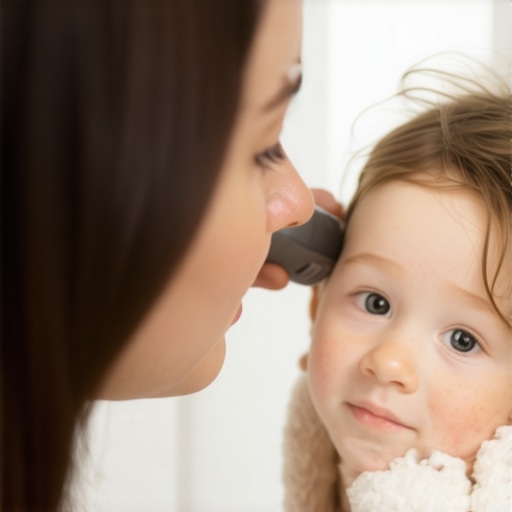
The Great DIY Medical Delusion
Stop pretending you know what a healthy eardrum looks like. I see parents every week who swear they saw a raging infection in their child’s ear, only for a professional exam to reveal nothing more than a bit of stubborn wax. You might think you are being proactive by peering into that tiny canal with a cheap plastic tube, but you are wrong. Most of what passes for a home ear exam is little more than medical theater—a performance designed to soothe the parent’s anxiety rather than treat the child’s pain. We live in an era where we believe a YouTube tutorial and a twenty-dollar gadget make us clinicians. They do not.
I argue that the obsession with home diagnostics has become a double-edged sword. While access to information is vital, the interpretation of that data is where the system breaks down. Trying to diagnose an ear infection at home without the proper digital tools and a trained eye is like trying to repair a Swiss watch during a total blackout with a pair of BBQ tongs. You are poking around in the dark, and usually, you are just making things worse by delaying actual care or demanding antibiotics for a viral flush. You need to understand the 3 signs your childs earache can wait until morning before you go rushing into a panic-driven mistake.
Your Cheap Plastic Otoscope Is Lying To You
The hard truth is that a standard, non-digital otoscope is useless in the hands of an amateur. You see pinkness and assume inflammation. I see pinkness and know the kid has been crying for twenty minutes, which naturally flushes the tissue. This misinterpretation leads to a cycle of unnecessary stress. Parents often panic at the first sign of a temperature, but as I have stated before, why a pediatric fever might not always need tylenol is a concept more people need to grasp. Fever is a tool, not just a symptom to be suppressed with the first bottle of syrup you find in the cabinet.
If you are going to do this at home, you have to stop the guesswork. Use a digital otoscope that connects to your phone. Use a high-definition interface that actually allows a remote provider to see the tympanic membrane. Without that, you are just a spectator at your child’s discomfort. It is the same mistake many make when they fall into the error of self-diagnosing your childs skin rash. You see a red bump and assume the worst; I see a red bump and see a dozen different possibilities that require a professional’s nuance. If you really want to help, focus on the logistics. Learn how to get your child to sit still for a virtual throat check or an ear exam, because a moving target is a recipe for a false negative.
Professional Eyes Over Parent Instincts
I am not saying ignore your child. I am saying acknowledge the limits of your tools. The rise of telehealth should have made us more efficient, but instead, it has empowered a generation of armchair doctors who lack the training to distinguish between a bulge and a reflection. When you call for a virtual visit, you need to be prepared. Knowing how to calm a toddler before a virtual doctor visit is a far more valuable skill than knowing how to squint through a piece of cheap glass. Reality check: your ‘instinct’ is a wonderful parenting tool, but it is a terrible diagnostic one. Let the technology do the heavy lifting, and let the professionals do the thinking.
The Commodification of Clinical Anxiety
The problem is not that you want to be a better parent; the problem is the lie that hardware can replace history. We have entered an era where the marketing of ‘peace of mind’ is a multi-billion dollar industry, selling you plastic wands and telling you they are portals to medical certainty. This is the root cause of our current diagnostic disaster. The industry has convinced us that a high-definition camera is a substitute for a medical degree. It is not. This is a dangerous fantasy that prioritizes the sale of a device over the health of the patient. Companies sell these gadgets by promising certainty in an uncertain world. They show you clear, brightly lit stock photos of a perfect eardrum, and then they leave you to navigate the wax, the hair, the squirming toddler, and the low-light distortion of a thirty-dollar lens. This creates a perception gap where you are looking at one thing but seeing another entirely. You see a bulge; I see a normal variation in anatomy. You see pus; I see a reflection of the very LED light you are using to look. The gadget isn’t the solution. It is the catalyst for a cycle of unnecessary panic.
The Math of Home Failure
Let’s look at the data, but let’s look at it through a realistic lens. Statistics suggest that even primary care providers, equipped with high-intensity halogen light and years of tactile experience, face a diagnostic accuracy rate of around seventy to eighty percent for acute otitis media. If the professionals have a twenty percent margin of error, your amateur attempt with a device that has the processing power of a singing greeting card is not a diagnostic tool—it is a coin flip. That twenty percent gap for experts isn’t a minor hurdle for you; it is a total collapse of reliability. The reality is that a red eardrum is just a red eardrum until it is framed by the duration of the fever, the mobility of the membrane, and the presence of fluid. When you bypass the professional’s nuance, you aren’t saving time. You are sabotaging the process. ${PostImagePlaceholdersEnum.ImagePlaceholderB} We have traded clinical wisdom for a digital placebo, and the price is paid in misdirected treatments and unnecessary anxiety.
A Systemic Collapse of Trust
This obsession with data over clinical context is a systemic failure. It is not a minor inconvenience. These false positives drive a frantic search for care that is not needed, clogging urgent care waiting rooms and demanding resources that should be reserved for actual emergencies. When you show up at a clinic and claim you ‘saw’ an infection, you aren’t assisting the provider. You are anchoring the diagnosis with your own bias. You want the clinician to see what you saw. But their job is to see what is actually there. The evidence is clear: the more we rely on these toy-like tools, the less we actually understand about our own health. We are drowning in raw data but starving for true clinical insight. Trying to find a diagnosis through a cheap plastic tube is like trying to navigate a minefield with a flashlight that only works half the time. It is a gamble you should not be taking with your child’s health. The problem isn’t the parent’s intent; it is the industry’s greed in selling expertise that simply cannot be packaged into a USB-powered camera.
It is easy to see why the gospel of home diagnostics is so seductive. The logic seems airtight: if a parent can catch a problem early at the kitchen table, it saves a trip to the ER, reduces healthcare costs, and puts power back into the hands of the family. Proponents argue that we should embrace the democratization of medicine, turning every smartphone into a miniature clinic. They claim that even a grainy, low-resolution photo of a child’s inner ear is better than nothing because it gives the doctor a ‘starting point.’ This sounds like progress. It sounds like the logical evolution of telehealth and chronic care in a digital age.
But this argument rests on a fundamental misunderstanding of how medical information actually functions. I used to believe this too, until I realized that bad data isn’t just neutral—it is destructive. In the clinical world, ‘better than nothing’ is a lie. When you provide a physician with a blurry, poorly lit image of an eardrum, you aren’t providing a ‘starting point.’ You are providing a distraction. You are asking a professional to navigate through your technical limitations, your shaky hands, and your lack of anatomical context. Instead of a clear path to a diagnosis, you have created a thicket of uncertainty that the doctor now has to cut through before they can even begin their actual work.
The Empowerment Trap
The industry markets these tools as ‘patient empowerment,’ but they are actually selling a form of high-stakes guesswork. True empowerment comes from understanding when you are out of your depth, not from being given a toy that makes you feel like an expert. When a parent presents a ‘finding’ from a home device, it triggers a psychological phenomenon known as anchoring. The parent is already convinced they see an infection. The doctor, even subconsciously, must now work against that preconceived notion. This is how unnecessary antibiotics are prescribed. This is how ‘just to be safe’ becomes the standard of care, leading to the very over-medicalization these tools were supposed to prevent.
The argument that these gadgets reduce the burden on the system is equally flawed. In reality, they create a new class of ‘worried well’ who clog up telehealth queues with images of normal earwax or physiological redness. ${PostImagePlaceholdersEnum.ImagePlaceholderC} We are replacing the physician’s seasoned intuition with a pixelated mess and calling it innovation. If we want to fix the healthcare system, we need to stop pretending that hardware is a substitute for expertise. We need to stop valuing the volume of data over the quality of the insight. The ‘peace of mind’ these companies sell is a temporary fix that ultimately erodes the trust between the patient and the provider by making the diagnostic process feel like a debate rather than a clinical assessment.
The Looming Crisis of Digital Health Theater
If we continue down this path of treating medical diagnostics as a consumer hobby, we aren’t just wasting money on plastic wands; we are actively eroding the foundations of public health. The stakes could not be higher. When every parent becomes an amateur clinician armed with a low-resolution camera, the result isn’t a more informed public—it is a more medicated one. We are already seeing the early tremors of this collapse in the form of rampant antibiotic over-prescription. When a parent ‘sees’ what they think is an infection and demands a cure, the pressure on the healthcare system to provide a quick fix rather than a correct diagnosis becomes overwhelming. We are trading long-term antibiotic efficacy for short-term parental comfort.
Is it too late to save medical authority?
The window to course-correct is closing. Within the next five years, if this trend goes unchecked, we will find ourselves in a world where the physician’s physical exam is viewed as an antiquated formality rather than the gold standard. We are moving toward a ‘health theater’ where the presence of a gadget matters more than the presence of a medical degree. In this future, your child’s medical history will be a chaotic patchwork of misinterpreted pixels, unnecessary lab tests, and ‘near-miss’ diagnoses that cloud the clinical picture for years to come. We risk creating a generation of patients who don’t trust their doctors unless there is a digital readout to confirm the obvious. Even the management of chronic care will be reduced to a series of automated alerts on a screen, devoid of the human touch required to truly heal.
The Cost of Inaction
Think of it this way: relying on a thirty-dollar home otoscope to manage your child’s health is like trying to fly a transatlantic jet using nothing but a smartphone weather app. You might see the clouds, and you might know it’s raining, but you lack the instruments, the training, and the thousand hours of flight time required to actually navigate the storm. You are a passenger pretending to be the pilot, and the safety of everyone on board is the price of your ego. This isn’t empowerment; it is a dangerous delusion of competence that puts the most vulnerable among us at risk.
The Point of No Return
We are standing at a crossroads where we must decide if we value the gadget or the graduate. If we don’t return to a model that prioritizes clinical context over raw, unverified data, the doctor-patient relationship will be permanently severed. We will become a society of DIY diagnosticians, forever chasing shadows in a digital viewfinder while missing the actual signs of illness right in front of us. ${PostImagePlaceholdersEnum.ImagePlaceholderD} This is the warning: once we lose the ability to value the human eye over the digital lens, we lose the heart of medicine itself. We are not just looking at ears; we are looking at the future of how we care for one another, and right now, the image is terrifyingly out of focus.
We are at the edge of a clinical cliff, and the view is deceptively clear. If we continue to prioritize the convenience of a thirty-dollar gadget over the decade-long training of a physician, we are effectively dismantling the safety net of modern medicine. The final verdict is simple: a high-definition image is not a medical degree, and a push notification is not a diagnosis. We must stop mistaking the ability to capture data with the ability to interpret it. This obsession with DIY diagnostics is a symptom of a larger cultural rot where we believe that every complex human problem can be solved by an app or a plastic peripheral. This dangerous mindset is already leaking into other areas of the home, as seen in the error in relying on home pulse oximeters for safety, where parents trade real vigilance for a flickering digital number.
The Twist of Digital Trust
The great irony of the digital health revolution is that it was supposed to bring us closer to our providers. Instead, it is pushing us further away, creating a wall of unverified pixels between the patient and the practitioner. When technology is used correctly, like in certain telehealth breakthroughs how virtual visits elevate chronic care in 2025, it acts as a bridge for those who truly need it. But when it is used as a toy for the ‘worried well,’ it becomes a barrier to efficiency and a catalyst for antibiotic resistance. You might think you are being an ‘engaged’ patient by bringing your own data, but you need to realize why your raw lab data is more important than the summary generated by a consumer-grade algorithm. Your role in the exam room is to provide the history and the symptoms; the doctor’s role is to provide the interpretation. When those lines blur, the patient is the one who pays the price.
The Challenge to the Modern Parent
So here is the challenge. The next time your child wakes up crying in the middle of the night, put the digital otoscope back in the drawer. Stop trying to find a reflection that confirms your fears and instead focus on the child in front of you. Trust the system that has been built on centuries of observation rather than the one built on quarterly sales targets for plastic wands. True medical empowerment isn’t about owning the tools; it’s about having the wisdom to know when to let the professionals use theirs. The health of our children depends on our ability to value human expertise over digital convenience. The pixelated image on your screen is just light and shadow; the child in your arms is reality. Choose reality every single time. ${PostImagePlaceholdersEnum.ImagePlaceholderE}