
The Error of Self-Diagnosing Your Child’s Skin Rash
Your Smartphone is Not a Medical Degree: The Dangerous Ego of the DIY Rash Diagnosis
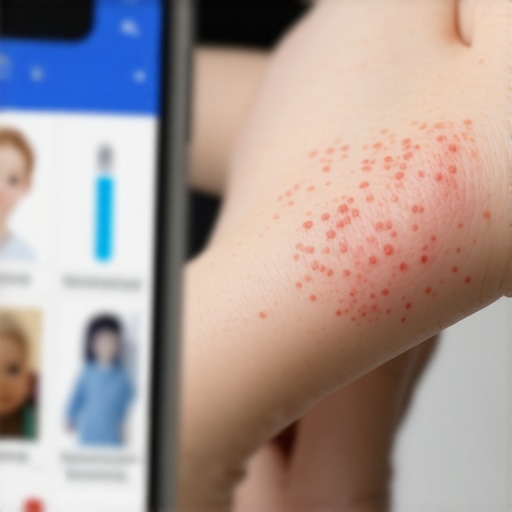
Stop pretending your search history is a substitute for a medical residency. Every time you squint at a red patch on your child’s arm and compare it to a grainy JPEG on a parenting forum, you are participating in a dangerous form of medical hubris. You aren’t “doing your own research.” You are gambling with your child’s health because you’re too impatient or too proud to admit that a screen cannot feel texture, heat, or induration. I argue that the rise of the DIY diagnosis is a quiet crisis in pediatric care, one born from a toxic mix of accessibility and arrogance. Why do we think a five-second search provides more clarity than a decade of medical training? It’s time to stop. Your child’s skin is not a project for you to “figure out” between scrolling through social media. It is an organ that requires professional oversight. You might think you’re being proactive, but you’re really just being reckless. When you misidentify a fungal infection as eczema and slather it in steroid cream, you aren’t helping; you’re fueling the fire. You’re making the condition harder to treat once you finally give up and see a professional. We’ve seen urgent care innovations streamlining same-day lab tests for faster results precisely because guesswork is the enemy of recovery. If you actually care about efficiency, stop guessing.
Google Images is Lying to You
The internet is a hall of mirrors. You search for “red spots” and get everything from heat rash to life-threatening meningococcemia. Your brain, wired for anxiety, either picks the least scary option to stay comfortable or the most terrifying one to fuel panic. Neither helps your child. Professional medicine exists because context matters. A rash is never just a rash; it is a symptom of a larger systemic state. While you’re busy trying to find a match on your phone, you’re missing the subtle signs that a clinician would catch in seconds. [IMAGE_PLACEHOLDER] Treating a mystery rash with over-the-counter creams based on a guess is like trying to navigate a dark forest with a flashlight that has no batteries—you’re moving, but you have no idea where you’re going or what’s about to trip you up. If you are going to use technology, use it to bridge the gap to an expert, not to replace them. If you insist on staying home, at least learn the 5-minute lighting fix for clearer virtual rash diagnosis so that a real doctor can actually see what’s going on. Even better, understand how to get a clearer telehealth diagnosis for your skin rash by following professional protocols instead of anecdotal advice from a Facebook group.
We are living in an era where we have the tools to be certain, yet we choose the fragility of an uneducated guess. Knowing how to spot an allergic reaction in infants before it becomes severe is a vital skill for any parent, but it should be the trigger for a phone call to a clinic, not the end of the conversation. The physical reality of dermatology is three-dimensional. A photograph flattens the world. It strips away the warmth of the skin, the firmness of a nodule, and the way a rash blanches under pressure. When you self-diagnose, you are working with less than half the necessary data. You are looking at a pixelated ghost of a problem. Real medicine requires the tactile, the nuanced, and the evidence-based approach. Why are you so afraid of the waiting room that you’d rather risk a secondary infection? Is your time really that much more valuable than a correct diagnosis? While you might think you’re saving time, you’re actually creating a triage error that keeps you in the waiting room longer later on because your “simple” rash has now morphed into a complicated mess of irritation and chemical burns from home remedies. Stop playing doctor. You didn’t earn the coat, so don’t take the risks.
The Illusion of Democratized Knowledge
The core of this crisis isn’t just that people are curious; it’s that we have fundamentally confused access to information with the possession of wisdom. We live in an age where the barrier to entry for any subject is a high-speed connection, leading to a toxic brand of overconfidence. This is the Dunning-Kruger effect in its most lethal form. When you type symptoms into a search bar, you aren’t engaging in science; you are engaging in a pattern-matching exercise that lacks the foundational biology required to interpret the results. The problem is not the search engine. The problem is the arrogance that suggests five minutes of reading can bypass the clinical judgment honed over thousands of patient encounters. It is a total rejection of expertise. We see it everywhere, from people ignoring managing chronic care in the modern world to those who think a blurry photo is enough for a prescription. You are not an expert just because you have a data plan.
The High Cost of the Free Search
Let’s talk about the data that we so conveniently ignore while we’re playing doctor. Studies on symptom checkers show they provide the correct diagnosis as the first result only about 36% of the time. That isn’t a minor discrepancy; it is a staggering categorical failure of the methodology. If a pilot had a 36% chance of landing on the correct runway, you’d never step foot on a plane. Yet, we let parents gamble with their children’s skin based on these same odds. [IMAGE_PLACEHOLDER] When you choose the path of least resistance—the screen in your palm—you are accepting a margin of error that is medically negligent. This isn’t efficiency. It is laziness disguised as autonomy. When you misapply a treatment, you aren’t just failing to cure the problem; you are actively complicating the clinical picture. By the time a professional sees the rash, it has been altered by whatever kitchen-cabinet concoction or over-the-counter steroid you’ve slathered on it, making the actual diagnosis twice as difficult. You are paying for your ‘free’ search with your child’s discomfort and your doctor’s time.
Clinical Intuition vs. Algorithmic Error
An algorithm cannot smell a secondary bacterial infection. It cannot feel the specific ‘woody’ texture of a deep-seated cellulitis. It cannot notice the slight lethargy in a toddler’s eyes that signals a systemic issue rather than a localized irritation. Medicine is a tactile, sensory discipline. The screen flattens the reality of human biology into a series of pixels and text strings, stripping away the very nuances that save lives. We are seeing a rise in complications simply because people wait too long to seek professional help, convinced that the next page of search results will finally hold the answer. They don’t. The answer is in the clinic. If you think you’re saving money, you’re wrong. The cost of fixing a botched self-treatment often dwarfs the cost of an initial consultation. The system is stressed not just by illness, but by the ego of the patient who thinks they know better. We have the technology to bridge gaps, like telehealth for skin rashes, but even those tools require a human expert on the other end to function. Without the expert, the tool is just a toy, and your child’s health is not something to play with.
It is easy to see why people think they are being responsible by triaging at home. We are told to be advocates for our own health, to be proactive, and to use the tools at our disposal. In an era of skyrocketing medical costs and bureaucratic hurdles, the internet feels like a great equalizer. Why spend four hours in a waiting room when you can find a matching photo in four seconds? I used to believe this too, until I witnessed how a parent’s attempt to treat a classic case of ringworm with a caustic home remedy turned a minor fungal infection into a weeping, secondary bacterial infection that required intravenous antibiotics. The argument that it is just a rash ignores the fact that every major medical emergency starts as just something minor. The resourceful parent is a role we all want to play, but without a medical degree, resourcefulness is often indistinguishable from negligence. Critics will argue that this perspective is elitist, suggesting that professional medicine is a closed shop designed to keep people dependent. They point to the democratization of information as a tool of liberation. This is the ultimate elephant in the room: the belief that a search engine is a valid substitute for a clinical environment. But access to information is not the same as the ability to synthesize it. You can read every flight manual in the world, but you still wouldn’t try to land a Boeing 747 in a storm. Why, then, do we feel qualified to navigate the complex immunological landscape of a child’s skin? The mistake is thinking that medicine is just a series of if-then statements that any algorithm can solve. It is an art of exclusion, where the doctor isn’t just looking for what the rash is, but more importantly, what it isn’t.
The High Price of Your Cheap Shortcut
${PostImagePlaceholdersEnum.ImagePlaceholderC}The pivot from careful observer to amateur clinician happens the moment you apply a treatment based on a guess. That is the point of no return. You are no longer watching the symptoms; you are interfering with them. This interference makes the work of actual professionals much harder. When you finally do show up at the clinic, the diagnostic picture is muddied. If you are truly worried about cost and time, then the only logical move is to get it right the first time. We have urgent care innovations streamlining same-day lab tests for faster results for a reason. These systems exist to provide the certainty that your phone cannot. Instead of playing a high-stakes game of guess the spot, utilizing telehealth for skin rashes can give you the expert eyes you need without the commute. But you must engage with the expert. The common trap is the belief that you are saving the medical system from an unnecessary visit. You tell yourself you’re being a good patient by not bothering the doctor with a small rash. In reality, you are often just allowing a manageable problem to evolve into a complex one. The rise of managing chronic care in the modern world shows us that early intervention is the only way to prevent long-term complications. By attempting to solve the problem yourself, you are rejecting the very foundation of modern healthcare: evidence-based intervention. Your child deserves the clarity of a professional diagnosis, not the fuzzy logic of a forum post. Stop treating the internet as a clinic and start treating your doctor’s expertise as the essential resource it actually is.
The Erosion of Expertise and the Looming Pediatric Crisis
If we continue down this path, we aren’t just mismanaging skin conditions; we are dismantling the social contract of healthcare. The broader implication of the DIY diagnosis is a world where expertise is treated as a suggestion rather than a requirement. We are standing at the edge of a cliff, and the ground is crumbling. When we prioritize the convenience of a search engine over the depth of clinical training, we don’t just risk a localized infection—we risk a future where professional medical advice is drowned out by the noise of the misinformed. This isn’t a minor shift in behavior; it is a fundamental breakdown of how we protect the vulnerable. If every parent becomes their own amateur dermatologist, the medical system will eventually stop being a proactive shield and start being a reactive cleanup crew for avoidable disasters. We are trading long-term safety for short-term ego, and the bill for that transaction is coming due.
Where Does the Arrogance End?
Imagine the world five years from now if this trend of digital overconfidence continues to accelerate. We will see a surge in antibiotic-resistant superbugs fueled by parents who misidentified infections and used leftover prescriptions or improper over-the-counter treatments. We will see children with permanent scarring from ‘natural’ remedies that were actually caustic chemicals. The pediatric clinic will no longer be a place for early intervention but a triage center for advanced complications. Treating symptoms based on a search engine is like trying to defuse a bomb by watching a silent film about clocks. You see the movement, you recognize the parts, but you have no idea which wire is live or what the timing mechanism actually signifies. You are playing with fire in a room full of oxygen, and you seem surprised when the sparks fly.
The Point of No Return
The stakes couldn’t be higher. This matters right now because we are losing the window of opportunity to preserve the authority of science. Every time a parent ‘cures’ a self-diagnosed rash that was actually going to go away on its own, their bias is confirmed, and their dangerous confidence grows. They then share that ‘success’ with a thousand other parents online, creating a ripple effect of misinformation that no doctor can fully counteract. ${PostImagePlaceholdersEnum.ImagePlaceholderD} We are creating a generation of medical skeptics who believe that their ability to scroll is equal to a clinician’s ability to heal. This is the wasted opportunity of our age: we have more data than ever, yet we are becoming less informed. We have the tools for absolute clarity, yet we choose the comfort of the lie. The moral imperative is clear: we must return to a state where we respect the limits of our own knowledge before those limits result in a tragedy we cannot undo.
We are currently facing a choice to make. We can continue to treat medicine as a hobby, or we can recognize it as the rigorous, life-saving discipline it is. If we do not make the right choice, the cost will be measured in more than just dollars or hours spent in a waiting room; it will be measured in the unnecessary suffering of children whose parents thought they knew better than the experts. The rise of the DIY diagnosis is not an evolution of healthcare—it is a regression into a pre-scientific era wrapped in the shiny packaging of a mobile app. The warning is simple: stop before the mistake you make is one that a real doctor can’t fix.
The Final Verdict
You are not your child’s doctor just because you have a search engine, and pretending otherwise is an act of medical negligence. The hard truth is that your data plan does not come with a medical residency, and using it to diagnose complex dermatological issues is a gamble where your child’s long-term health is the stake. We have reached a point where we must decide if we value the convenience of a search bar over the safety of professional clinical oversight. When you choose to bypass the expert, you aren’t being a savvy, proactive parent; you are being a reckless one. We have seen urgent care innovations streamlining same-day lab tests for faster results precisely because modern medicine recognizes that guesswork is the primary enemy of a swift recovery. [IMAGE_PLACEHOLDER] The twist in this digital tragedy is that the very technology you think is saving you time is actually the thing making the eventual medical intervention more expensive and complex. By the time you finally admit you’re out of your depth, you have often muddied the diagnostic waters with home remedies and incorrect creams, making a clear identification twice as difficult for the clinician. If the logistics of a clinic are your primary hurdle, then utilizing telehealth breakthroughs how virtual visits elevate chronic care in 2025 can provide a legitimate, expert-led path forward without the waiting room. If you are truly unsure of the next step, you can always contact us to bridge the gap between digital curiosity and clinical certainty. Your child’s skin is a vital, complex organ, not a pattern-matching exercise for an algorithm. Put the phone down, reject the ego of the amateur, and pick up the expertise of a professional. Your child’s health isn’t a Wikipedia entry—treat it with the respect it deserves.