
The Simple Change for More Accurate At-Home Heart Monitoring
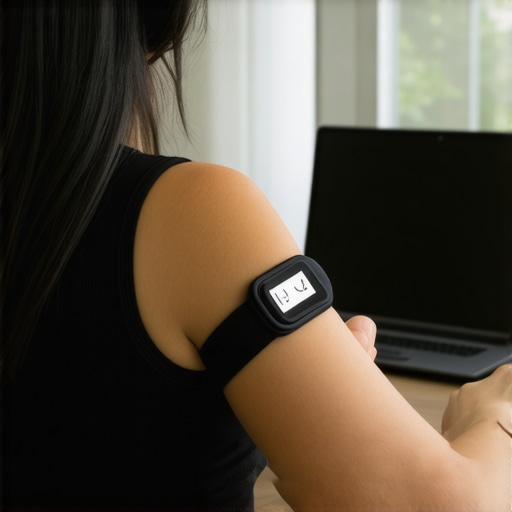
The Expensive Illusion of Precision
We are obsessed with data, yet we have never been more ignorant about what that data actually means. You strapped a three-hundred-dollar sensor to your wrist or bought a medical-grade cuff for your nightstand, thinking you’ve finally taken control of your health. You haven’t. Most of the numbers flickering on your screen are little more than digital noise. Why? Because you are treating heart monitoring like a casual hobby rather than a clinical procedure. I argue that the cult of ‘more data’ is actually making us sicker, fueling anxiety instead of providing clarity. Using a heart monitor without the right technique is like trying to weigh yourself while jumping on a trampoline; the equipment might be fine, but your method is a disaster.
The Hardware Is Not the Savior
You might think buying the most expensive device on the market guarantees accuracy, but you are wrong. I see it constantly: patients showing up with spreadsheets of heart rates and blood pressure readings that are utterly useless. They take their pressure after a cup of coffee, or while arguing with someone on the phone, or sitting with their legs crossed. When the numbers spike, they panic. This panic creates a feedback loop that drives the numbers even higher. I believe we need to stop blaming the technology and start looking at the person using it. As I have argued before, why your home blood pressure cuff might be lying to you often has nothing to do with a sensor malfunction and everything to do with human error.
The Physical Fix You Are Ignoring
So, why are we still doing this? Why are we still collecting junk data? The simple change for more accurate at-home heart monitoring isn’t a software update or a new gadget. It is five minutes of absolute, disciplined silence. You cannot expect a clean reading if your body is still processing the stress of the day. You must sit. You must uncross your legs. You must support your arm at heart level. If you don’t, you are just performing health-themed theater. This isn’t just my opinion; it is a fundamental physiological requirement that most people skip because they are in a hurry. If you are struggling with high readings, you should consider the simple tactic to lower your white coat hypertension instantly, which applies just as much to your living room as it does to a doctor’s office.
The Context Matters More Than the Number
A single heart rate spike doesn’t mean you’re having a cardiac event, just as a single drop of rain doesn’t mean a flood is coming. Yet, we react to every notification as if it is an emergency. We have lost the ability to distinguish between a temporary fluctuation and a chronic trend. I contend that the true value of at-home monitoring is only realized when you look at the long-term patterns, not the momentary glitches. Are you tracking your heart rate during a calm morning, or is it only when you feel ‘off’? Consistency is the only thing that matters. This is why I recommend the strategy for managing blood pressure during high-stress weeks, which focuses on the environment, not just the arm cuff. If you aren’t willing to fix your environment, you might as well throw the monitor in the trash. It’s time to stop being a slave to the beep of a machine and start being a student of your own physiology.
The Flaw in the Biological Mirror
The fundamental mistake we make is assuming that the body is a static machine. It isn’t. You expect your heart rate to be a constant, a reliable baseline that only shifts when something is ‘wrong.’ This is a lie. Your physiology is a chaotic, breathing ecosystem that reacts to the temperature of the room, the memory of a stressful email, and the salt content of your lunch. The problem isn’t the sensor’s sensitivity; it is the *user’s* lack of biological literacy. When you see a number that doesn’t fit your expectations, you don’t investigate the environment; you interrogate your own heart. This is the root cause of the modern health-tech crisis. We have weaponized data against our own peace of mind. We have replaced clinical intuition with a digital shadow that we don’t know how to interpret.
The Math of Anxiety
Let’s look at the numbers because the numbers are where the math fails the patient. Consider this: a fifteen percent discrepancy in a home reading isn’t a mere rounding error; it is the difference between a calm evening and a frantic, expensive trip to urgent care. This 15% swing is often nothing more than the result of a poorly placed cuff or a restless night of sleep. Yet, we treat it like a structural collapse. We are drowning in data points but starving for wisdom. We monitor our vitals with the intensity of a stockbroker watching a market crash, forgetting that the heart is meant to fluctuate. It is supposed to respond to the world. If it didn’t, you would be dead. We have become so obsessed with the ‘normal’ range that we have forgotten what ‘functional’ actually looks like.
${PostImagePlaceholdersEnum.ImagePlaceholderB}
The Professional Context Gap
The gap between a home monitor and a clinical assessment isn’t just about the quality of the hardware. It is about the professional lens. When you use telehealth to share your data, you are often handing over a mountain of garbage and expecting a diamond. A doctor looks at a spike and asks about your hydration, your caffeine intake, and your recent activity level. You look at a spike and see a heart attack. This lack of context is what makes at-home monitoring a double-edged sword. We are trying to perform chronic care on ourselves without the years of training required to understand the nuances of the human body. It is hubris, plain and simple. We want the shortcut to health, so we buy a gadget and ignore the discipline.
The Fallacy of More
The tech industry has sold us on the idea that more data equals better health. It doesn’t. In many cases, more data just leads to more interventions, more prescriptions, and more stress. The data itself is neutral, but the human brain is not. We are hardwired to look for patterns of danger. When you check your heart rate forty times a day, you are guaranteed to find something that looks ‘wrong.’ This is the ‘false positive’ trap that is clogging our healthcare system. We are seeing a surge in patients who are physically fine but emotionally wrecked by their own devices. They are trapped in a loop of monitoring, panicking, and re-monitoring. The device that was supposed to provide freedom has instead become a digital leash, dragging them into a state of perpetual hyper-vigilance. The hardware is working perfectly. The human is the one who is malfunctioning.
The Myth of the Digital Safety Net
The proponents of the digital health revolution will immediately push back. They will tell you that I am being a Luddite, or worse, that I am gatekeeping health. Their argument is simple and, on the surface, incredibly persuasive: ‘Data saves lives.’ They point to the rare but headline-grabbing stories of a wearable detecting an undiagnosed arrhythmia just in time, or a home cuff catching a spike that led to a life-saving trip to urgent care. They argue that by putting these tools in the hands of the public, we are democratizing medicine and creating a safety net that catches the people who fall through the cracks of a busy healthcare system. It is a seductive narrative. It suggests that for the price of a gadget, you can buy insurance against the unknown. It suggests that more information is inherently more protective.
But this argument is built on a foundation of survivorship bias. We hear about the one person saved by an alert, but we never hear about the ten thousand people who spent their weekend in a state of clinical-grade panic over a technical glitch. We don’t hear about the hundreds of thousands of dollars wasted on unnecessary lab tests triggered by a sensor that slipped while someone was sleeping. The ‘safety net’ argument assumes that all data is high-quality and that all users are rational actors. Neither is true. In reality, the flood of unfiltered, uncontextualized data is actually weakening the very safety net it claims to reinforce by clogging the pipelines of actual medical care with the ‘worried well.’
Knowledge Is Not Wisdom
I used to believe this too, until I spent a year watching my most anxious patients spiral into what I call ‘sensor-induced neurosis.’ I thought that giving people more access to their vitals would empower them to make better lifestyle choices. I was wrong. Instead of eating better or exercising more, many users simply became more obsessed with the monitoring itself. They traded the hard work of health for the passive observation of numbers. They started treating their heart rate like a high-score in a video game they were losing. This is the fundamental error of the ‘knowledge is power’ cliché. Information is only power if you have the framework to interpret it. Without that framework, information is just stress.
${PostImagePlaceholdersEnum.ImagePlaceholderC}
The Burden of Self-Diagnosis
The critics also argue that these devices serve as a vital bridge for telehealth, allowing doctors to monitor patients from a distance. Again, this sounds great in a brochure. But in practice, we are asking patients to take on the role of a medical technician without any of the training. When a patient sends a blurry screenshot of a jagged line and asks for a diagnosis, they aren’t participating in their own care; they are dumping a puzzle with missing pieces onto a clinician’s desk. This shift isn’t ’empowerment.’ It is the outsourcing of clinical labor to the untrained, and it is a recipe for disaster. We are seeing a rise in chronic care cases where the primary symptom isn’t the underlying condition, but the psychological exhaustion caused by the device itself.
The uncomfortable truth that the tech industry avoids is that the human body is not a closed system that can be ‘solved’ through constant tracking. By trying to eliminate the mystery of our own physiology, we have created a new kind of fragility. We have become so reliant on the digital mirror that we have forgotten how to feel our own pulse, how to listen to our own breath, and how to trust our own intuition. The opposing argument fails because it ignores the cost of the noise. It ignores the fact that a safety net made of static and false alarms isn’t a safety net at all—it’s a trap. We don’t need more sensors; we need more sense.
The Erosion of Human Instinct
We are standing at a precarious crossroads where the map has become more important than the territory. If we do not change our relationship with these devices, we are heading toward a future where human intuition is entirely replaced by algorithmic anxiety. This matters right now because we are already seeing the first generation of ‘digital hypochondriacs’—people who are fundamentally healthy but live in a state of constant, monitored terror. We have forgotten that health is a state of being, not a set of metrics. When we focus exclusively on the display, we lose the ability to read the actual machine. We are trading the actual experience of living for the cold comfort of a steady graph. If we ignore this warning, the very definition of health will be distorted beyond recognition.
Is it too late to trust our own bodies?
Imagine a pilot who becomes so mesmerized by a flickering sensor on the dashboard that they fail to look out the window and see the mountain directly in their path. That is the current state of modern health monitoring. We are staring at our wrists while our actual lives pass us by in a blur of stress and cortisol. This is not progress; it is a retreat from reality. By over-relying on home data, we are effectively blinding ourselves to the subtle, non-digital signals our bodies send us every day—the feeling of true fatigue, the rhythm of a healthy breath, or the quiet ease of a body in balance. This isn’t just about bad data; it’s about the atrophy of the human spirit’s connection to its own biology.
A Future of Algorithmic Anxiety
If this trend continues, the world five years from now will be one where a simple headache or a momentary palpitation leads not to a glass of water and a nap, but to an automated cascade of medical interventions. We will see urgent care centers overwhelmed not by the sick, but by the ‘notified.’ The healthcare system will be choked by a tidal wave of unnecessary lab tests and redundant telehealth consultations, all triggered by sensors that cannot distinguish between a panic attack and a heart attack. This is the ‘slippery slope’ toward a society that is perpetually under repair, even when nothing is broken. We are building an infrastructure of suspicion, where every citizen is a patient-in-waiting, and every heartbeat is a potential liability.
${PostImagePlaceholdersEnum.ImagePlaceholderD}
The Point of No Return
The tragedy of this situation is the wasted opportunity. We have the technology to revolutionize chronic care, to catch genuine issues early, and to support those who truly need it. Instead, we are diluting the power of these tools by applying them indiscriminately to the ‘worried well.’ We are burning out our clinicians and exhausting our own mental reserves. We must decide if we want to be the masters of our data or its subjects. If we continue to prioritize the volume of information over the quality of our insight, we will find ourselves in a world where we are more ‘informed’ than ever, yet more fragile than we have ever been in human history. The choice is not between technology and no technology; it is between wisdom and noise. We are currently choosing the noise, and the price of that choice is our peace of mind.
The Choice Is Between Wisdom and Noise
We are currently choosing the noise, and the price of that choice is our peace of mind. We have built an infrastructure of suspicion where every heartbeat is a potential liability. This isn’t just about heart rate; it’s a systemic problem. I have discussed similar issues regarding the error in relying on home pulse oximeters for safety, where the machine’s reading is prioritized over the patient’s actual ability to breathe. If we continue on this path, we aren’t just patients; we are data points in a flawed experiment.
Your Move
The solution isn’t to throw your watch into the river, but to change who is in charge: you or the algorithm. You need to understand that why your raw lab data is more important than the summary applies to your home devices too—context and professional interpretation are the only things that turn digits into health. As we look toward the future of telehealth transforming chronic disease monitoring today, we must demand that these tools serve our intuition rather than replacing it. The challenge is simple: stop checking the screen and start checking in with yourself. The next time your wrist buzzes with a warning, ignore the glass for a moment. Take a breath. Feel your own pulse. If you can’t trust your own body without a digital permission slip, no amount of technology can save you. Health is not a number on a screen; it is the quiet confidence of a life lived outside the feedback loop. Put down the device and pick up your life.