
Why Your Home Blood Pressure Cuff Might Be Lying to You
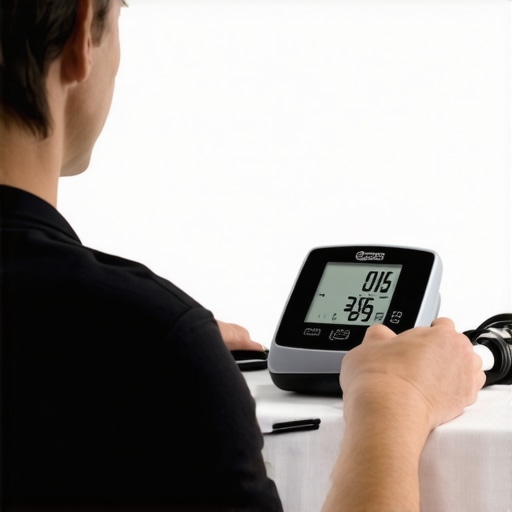
Your Home Blood Pressure Cuff is a Liar—and You Are Helping It
The tiny digital screen on your bicep says 120 over 80. You exhale, satisfied, convinced you’ve mastered the art of longevity. But here is the cold, hard truth: that plastic box is likely feeding you a comforting fiction. We live in an era where we mistake raw data for actual health and convenience for clinical care. I argue that the cult of home monitoring has created a dangerous feedback loop of false security and medical laziness. Why are we so eager to trust a device that most people use with the same casual disregard they show a microwave? You sit on the sofa with your legs crossed, scrolling through social media, and expect a clinical-grade result. It is a farce. If you aren’t following a rigorous protocol, you aren’t measuring your health; you are performing a hollow ritual.
The marketplace has convinced us that health is something we can buy at a big-box retailer. It isn’t. Buying a cuff doesn’t make you a technician any more than buying a stethoscope makes you a cardiologist. I believe we have outsourced our critical thinking to cheap sensors that were never designed for the chaotic reality of your living room. You might think you’re being proactive, but you’re likely just clouding the diagnostic waters. When you bring a week’s worth of erratic, poorly captured data to your doctor, you aren’t helping. You are providing a map drawn by someone who doesn’t know north from south.
The Home Healthcare Industrial Complex is Failing You
We were promised that technology would democratize medicine. Instead, it has offloaded the burden of accuracy onto the untrained, stressed-out patient. It is like trying to navigate a storm-tossed sea with a child’s toy compass. You see a needle moving, and you feel in control, but that needle isn’t grounded in reality. I have observed a rising trend of ‘data-induced paralysis,’ where individuals obsess over a single morning spike—perhaps caused by nothing more than a poorly timed cup of coffee—while ignoring the broader physiological context. This is exactly the hidden reason your blood pressure spikes at the clinic only; we don’t understand the triggers, so we blame the location rather than the methodology.
Consider the biological noise we ignore. Are you aware that the strategy for managing blood pressure during high stress weeks requires more than just a cuff? It requires an understanding of how your body reacts to the very act of measurement. Most home users ignore the basics. They don’t rest for five minutes. They talk during the reading. They use the wrong cuff size. Each of these mistakes is a brick in a wall of misinformation. We’ve replaced the expert eye with a flickering LCD screen and called it progress. If you are serious about your heart, you need to understand how to measure your own metabolic health without a clinic visit correctly, which involves far more than just strapping on a piece of Velcro and pressing a button.
I am not saying we should throw the devices away. I am saying we must stop worshiping them as infallible truth-tellers. Even within the promising future of telehealth, the machine is only as good as the human using it. If you continue to treat your blood pressure like a ‘set it and forget it’ appliance, don’t be surprised when the numbers betray you. The machine isn’t the doctor—you aren’t either. The danger isn’t just a wrong number; it’s the wrong action. I argue that thousands of people are either over-medicated or dangerously under-treated because of these digital ghosts. You might think your meds are working, or perhaps you’re wondering why your blood pressure meds might be making you more tired, all while the data you’re using to judge them is fundamentally flawed. It is time we stop playing doctor in our pajamas and start respecting the complexity of the human machine.
The User is the Variable
The problem is not the silicon or the sensors; it is the human. We have been sold a lie that medical diagnostics are as simple as operating a toaster. They are not. The root cause of our current data crisis isn’t found in a faulty circuit board, but in the chaotic environment of the modern living room. You sit on a soft sofa that prevents proper posture. You leave your feet crossed, which can artificially inflate your systolic reading by nearly 10 points. You take a measurement after a stressful email or a second cup of coffee and expect the machine to somehow filter out your lifestyle choices. It cannot. It is a mirror, and if the image it reflects is distorted, it is because you are standing in the dark.
The Math of Misinformation
Let us look at the cold reality of the numbers. Research indicates that approximately 15% of home blood pressure monitors are off by more than 10 mmHg. In the world of clinical medicine, that 10-point discrepancy isn’t a minor rounding error; it is a collapse of diagnostic integrity. It is the difference between a doctor telling you to go for a walk and a doctor writing a prescription for a powerful diuretic. We are making life-altering decisions based on data that has a higher margin of error than a political poll. When we rely on these flickering LCD screens, we aren’t practicing medicine. We are gambling with our cardiovascular future while pretending we have a winning hand.
${PostImagePlaceholdersEnum.ImagePlaceholderB}
A Systemic Failure of Education
The manufacturers of these devices care about sales, not your long-term outcomes. They provide a manual that no one reads and a cuff size that fits ‘most’—which in medical terms means it fits almost no one correctly. If the cuff is too small, your pressure looks high; if it’s too large, it looks low. This isn’t just a technicality. It is a fundamental flaw in the way we distribute health technology. We have handed out the tools of the trade without the years of training required to use them. The result is a population of amateur technicians drowning in a sea of irrelevant numbers. We have replaced the expertise of a trained nurse with the cheap convenience of a Velcro strap, and we are paying the price in anxiety and misdiagnosis.
The Illusion of Control
This obsession with home monitoring is driven by a desperate need for control in an increasingly unpredictable world. We think that by clicking a button every morning, we are somehow warding off the specter of heart disease. It is a digital charm, a high-tech rosary. But the data you collect is often nothing more than ‘biological noise.’ You are capturing a single, fleeting moment of physiological stress and treating it as a permanent truth. Real health is found in the trends and the professional interpretation of those trends, not in the frantic checking of a screen three times a day. If you want accuracy, you need a protocol, a calibrated device, and a level of discipline that most consumers simply do not possess. Anything less is just performance art.
It is easy to see why the medical establishment has embraced the home-cuff revolution. The logic is, on the surface, sound: more data points lead to a clearer picture. Proponents argue that the stress of the doctor’s office—the sterile smell, the cold stethoscope, the white coat—triggers a spike that isn’t representative of daily life. They claim that catching the ‘natural’ rhythms of your arteries at your kitchen table is the only way to find the truth. I used to believe this too, until I began reviewing the ‘data’ my own patients brought in—scribbled notes on napkins and blurry screenshots of apps that were fundamentally at odds with their clinical presentations. The theory of ‘more data’ ignores the messy reality of how that data is born.
The argument for home monitoring rests on the idea of ‘white coat hypertension,’ the phenomenon where blood pressure spikes simply because you are being watched by a professional. The solution, we are told, is to monitor ourselves in our natural habitat. But this assumes the living room is a neutral space. It isn’t. Your living room is where you argue with your spouse, where you worry about your mortgage, and where you sit in chairs designed for comfort rather than clinical posture. By trying to avoid the ‘white coat’ effect, we have swapped a known, predictable variable for a dozen invisible ones. We haven’t removed the bias; we have just hidden it under a layer of domestic chaos.
The Great Data Delusion
The defenders of the status quo will tell you that even imperfect data is better than a single snapshot every six months. They are wrong. In the world of chronic care and urgent care, a single accurate data point is worth a thousand ‘guesses’ from a poorly calibrated device. When we prioritize volume over validity, we are essentially trying to build a skyscraper on a foundation of wet sand. We see this in the way we approach other diagnostics; nobody suggests you perform your own lab tests at home with a toy chemistry set. We understand that blood chemistry requires precision, calibration, and a controlled environment. Why do we treat the pressure of our very lifeblood with less respect than a glucose level or a cholesterol count?
${PostImagePlaceholdersEnum.ImagePlaceholderC}
The pivot toward the future of telehealth is often cited as the ultimate justification for this trend. If the doctor isn’t in the room, the patient must be the eyes and ears. But this is a systemic failure of education. We have offloaded the labor without providing the training. We’ve told people to ‘monitor their health’ without explaining that the act of monitoring can itself be a stressor. I have seen patients develop a new kind of anxiety—monitor-induced hypertension—where the fear of a high reading actually causes the high reading. It is a feedback loop that no algorithm can fix. We are not empowering patients; we are turning them into neurotic technicians who are perpetually chasing a ghost in the machine.
If we are going to move forward, we have to admit that convenience is not a medical metric. A measurement taken while you are distracted, poorly positioned, or using an uncalibrated machine is not ‘health data.’ It is noise. And in a field where the margin between health and crisis is measured in single digits, we cannot afford to keep listening to the static and calling it music. We need to stop pretending that every ‘smart’ device is a substitute for clinical rigor. The solution isn’t more sensors—it is more common sense.
The Price of Digital Delusion
If we continue down this path, we aren’t just looking at a few bad readings; we are witnessing the wholesale erosion of diagnostic reality. The stakes could not be higher. We are currently building a collective medical history on a foundation of noise, and the structural integrity of our healthcare system is beginning to groan under the weight of this misinformation. In five years, the data-driven patient will not be healthier; they will be more medicated, more anxious, and ironically, less understood by the professionals who are supposed to save them. Imagine a pilot trying to land a plane in a thick fog using an altimeter that has a ten percent margin of error. They might think they are safely above the treeline until the moment the wheels catch the branches. That is precisely what we are doing with our cardiovascular health. We are flying blind, trusting a flickering screen to tell us we are safe while the silent killers—the ones that do not care about your average morning reading—continue their work undetected.
${PostImagePlaceholdersEnum.ImagePlaceholderD}
Is the Damage Already Done?
The danger is that we have already crossed a threshold where the average person trusts their smartphone more than their physical sensations. We are entering an era of systemic misdiagnosis. When thousands of people present flawed data to doctors who are already overworked and pressured by time, the result is a massive surge in unnecessary prescriptions and a catastrophic oversight of actual risks. This is not a technical glitch; it is a moral failure of the medical industrial complex. We have prioritized the sale of wellness over the delivery of health. If this trend accelerates, we will face a public health crisis where the leading cause of mismanaged chronic disease isn’t a lack of tools, but a surplus of bad ones. We will have a society of people who are perfectly healthy on paper, yet falling over in the streets because the paper was written by an uncalibrated machine in a noisy room.
The Erosion of Clinical Truth
The moral imperative here is clear: we must reclaim the standard of truth. If we don’t, the very concept of a clinical baseline will vanish. We are wasting the incredible opportunity that telehealth and remote monitoring provide by flooding the system with junk data. It is a tragedy of the commons; when everyone contributes low-quality information, the entire pool becomes toxic. We are losing the ability to distinguish between a life-threatening spike and a simple moment of human stress. This isn’t just about blood pressure anymore; it is about our relationship with reality itself. We must stop pretending that convenience is a virtue in medicine. It is a shortcut that leads to a dead end. The warning is written on the wall in low-resolution digital font: if we do not demand precision over ease, we are choosing to live in a fiction that will eventually, inevitably, break our hearts.
Your Move
The time has come to stop treating your cardiovascular health like a casual data-entry job. We have been seduced by the ease of the living room, forgetting that the heart does not operate on convenience. If you want to move beyond the digital noise, you must embrace the rigor that medicine actually requires. This shift is essential for chronic care management personalized telehealth strategies for better outcomes that move the needle on life expectancy. You cannot buy your way out of biological complexity with a thirty-dollar device from the pharmacy aisle. Accuracy is a habit, not an appliance.
We must acknowledge that telehealth breakthroughs only work when the data entering the system is untainted by human error. This is precisely why your raw lab data is more important than the summary; the nuances of how a number is captured tell a truer story than the number itself. If we continue to prioritize volume of data over its validity, we are simply building a faster road to a wrong diagnosis. The future of medicine isn’t about more sensors; it is about better standards.
Your home blood pressure monitor is not a clinician; it is a mirror that only reflects the accuracy of the effort you put into the measurement.
The irony is that while we obsess over the flickering numbers on a digital screen, we often ignore the physiological warnings our bodies are screaming at us—warnings that no Velcro cuff will ever detect. We have traded our intuition and professional oversight for a false sense of digital security. It is time to stop playing doctor in your pajamas and start respecting the complexity of your own physiology. The machine isn’t the doctor, and until you respect the protocol, you aren’t either.