
The Skin Screening You Are Not Doing But Absolutely Should
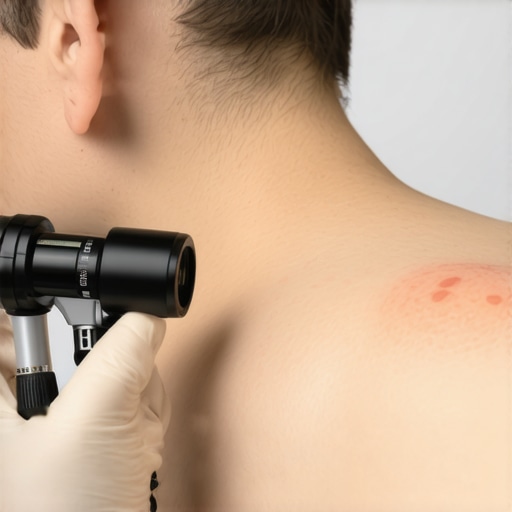
Your Yearly Physical Is Failing Your Skin and You Know It
Stop patting yourself on the back for that green juice and the five-mile morning jog. While you are busy tracking your macros and obsessing over your heart rate, the largest organ you own is likely being neglected by both you and your primary care physician. I argue that our current approach to skin health is little more than medical theater. We go through the motions of checking without actually looking, and the results are predictably disastrous. You probably think your doctor gave you a clean bill of health last year because they listened to your lungs and poked your abdomen. You are wrong. Most standard checkups are surface-level formalities that miss the silent killers hiding in plain sight on your own shoulders.
It is like owning a classic car and spending all your money on high-octane fuel and expensive oil changes while the chassis is literally rotting away from salt and rust. You will not see the disaster until the wheel falls off on the highway at seventy miles per hour. We treat our skin like a disposable wrapper, something to be tanned, scrubbed, or ignored, rather than a living, breathing warning system. So, why are we still doing this? Why do we settle for a thirty-second visual scan during an annual physical when we know the stakes are so high? We are a culture obsessed with the internal—cholesterol, blood sugar, gut health—yet we treat the surface as if it is invincible.
The Annual Physical Is a Dangerous Illusion of Safety
Let us be blunt: your doctor is rushed. The system is designed for speed, not for the meticulous, inch-by-inch examination required to catch early-stage malignancies. This is exactly why the screening most doctors forget to order during your annual physical is the very one that could save your life. We have been conditioned to believe that a quick look-over is sufficient. It is not. Real skin screening requires a level of detail that the average fifteen-minute appointment simply cannot provide. I believe we have traded thoroughness for convenience, and we are paying for it with late-stage diagnoses that could have been avoided. If your physician does not have you undress completely and use a magnifying tool, they are not screening you; they are just glancing at you.
Beyond the time constraints, there is a fundamental lack of specialized focus. Your primary care doctor is a generalist; they are looking for a thousand different things at once. If you want to know the truth about your health, you have to demand the skin screening you are not doing but should be. This is not about vanity or clear pores; it is about the cold, hard reality of cellular mutation. If you are not getting a full-body, dermatoscope-assisted exam once a year, you are essentially playing Russian roulette with your health. The medical community needs to stop treating skin checks as an optional add-on and start treating them as the life-saving necessity they are.
Stop Trusting Your Own Eyes in the Shower
You might think you know your body. You might think you would notice a new spot or a changing mole. You are kidding yourself. The human eye is remarkably good at ignoring what it sees every day. We develop a blindness to our own features, a cognitive bias that tells us ‘it has always been there.’ Furthermore, the error of self-diagnosing your child’s skin rash or your own ‘weird spot’ is a trap that leads to dangerous delays. You are not a trained pathologist. You do not have the tools to see below the surface where the real trouble starts.
Even when we try to use technology to bridge the gap, we often fail because of poor execution. For instance, the lighting fix for virtual diagnosis is a perfect example of how the smallest oversight can lead to a missed diagnosis. If your doctor cannot see it clearly on a screen or in person, it might as well not exist. But ‘not existing’ in a medical record is very different from not existing on your body. We need to stop pretending that a mirror and a smartphone flash are substitutes for professional clinical screening. If you are serious about longevity, you need to stop the DIY dermatology and get into a clinic that utilizes urgent care innovations and advanced testing to get real answers. I am tired of seeing patients wait until a lesion is bleeding or painful to seek help. By that point, the security system of your body has already been breached. It is time to stop the excuses and demand a real exam.
The Billing Code Is Killing You
The problem is not a lack of medical knowledge; the problem is the industrialization of the exam room. We have allowed the insurance industry to dictate the length and depth of a physical, turning a life-saving screening into a checkbox exercise. Doctors are not incentivized to perform a thorough skin check because the system does not value time; it values throughput. When a physician has only fifteen minutes to address your blood pressure, your cholesterol, and your family history, the skin is relegated to a five-second glance. This is a systemic failure. It is the cold, hard logic of the balance sheet applied to human flesh, and the result is a massive blind spot that allows malignancies to thrive. They call it efficiency. I call it professional negligence disguised as productivity.
Consider the data. Statistics show a nearly 200% increase in melanoma cases over the last thirty years. This is not a biological anomaly; it is a direct indictment of our failure to prioritize early detection. That 200% surge isn’t just a number on a chart; it is a *catastrophe* of missed opportunities. We have more tools than ever before, yet we are catching these cases later than we should. Why? Because we have separated ‘skin’ from ‘health.’ We treat the heart like a temple and the skin like a billboard. If your doctor spent as much time examining your moles as they did discussing your body mass index, we would see those survival rates skyrocket. Instead, we see a focus on internal metrics that are easy to quantify and even easier to bill for.
${PostImagePlaceholdersEnum.ImagePlaceholderB}
The Digital Mirage of Telehealth
We are told that technology is the solution, that telehealth and remote monitoring will fill the gaps. This is a dangerous lie. While digital consultations have their place in chronic care, they are a poor substitute for the tactile, high-resolution reality of an in-person clinical exam. You cannot feel the texture of a lesion through a 1080p screen. You cannot see the subtle architectural changes of a mole through a smartphone lens with poor white balance. When we rely on these shortcuts, we are not innovating; we are compromising. The industry pushes these ‘solutions’ because they are cheap and scalable, not because they are better for the patient. A digital image is a representation of a problem, not the problem itself. If you are relying on a screen to tell you that you are safe, you are trusting a ghost.
Urgent Care and the Burden of Proof
Because the primary care system has failed, we see a migration toward urgent care centers for immediate concerns. This is where the fragmentation of medicine becomes truly dangerous. In an urgent care setting, the goal is to treat the acute—the rash, the itch, the burn. There is no longitudinal view. There is no baseline. You are a stranger in a room full of strangers. While these facilities are excellent for lab tests and quick diagnostics, they are not designed for the long-term surveillance required to track cellular changes over time. We have traded the ‘family doctor’ who knew every scar on your arm for a rotating cast of clinicians who barely know your name. The burden of proof has shifted from the doctor to the patient. You are now expected to be your own pathologist, your own advocate, and your own early-warning system. It is an impossible task.
The Illusion of the Generalist
We need to stop pretending that a generalist’s ‘all-clear’ means anything when it comes to the complex landscape of oncology. A generalist is trained to spot the obvious, but cancer is rarely obvious in its infancy. It is subtle. It is deceptive. It requires a specific kind of exacting attention that the modern healthcare system has effectively outlawed. By the time a general practitioner notices a spot, it is often because it has already become a problem. We need a return to specialized thoroughness. We need to stop treating chronic care as something that only happens inside the body and realize that the most chronic, most visible threats are staring back at us in the mirror every single morning. The system is rigged for speed, and speed is the enemy of survival.
It is easy to see why the medical establishment pushes back against the idea of universal, specialized skin screenings. The most sophisticated argument against my position is one of utility and the prevention of ‘over-diagnosis.’ Critics argue that if every primary care physician spent thirty minutes with a dermatoscope on every patient, the healthcare system would grind to a halt. They claim that we would find thousands of benign spots, perform millions of unnecessary biopsies, and create a wave of ‘medical anxiety’ that outweighs the benefit of catching a few early stage melanomas. It sounds logical. It sounds fiscally responsible. It sounds like common sense. ${PostImagePlaceholdersEnum.ImagePlaceholderC}
The Efficiency Trap
But this logic is a trap designed to justify a status quo that accepts preventable deaths as an acceptable line item in a budget. I used to believe this too, until I looked at the actual trajectory of late-stage treatment costs compared to early intervention. When we talk about ‘over-diagnosis,’ we are essentially saying that we would rather miss a killer than accidentally investigate a harmless bystander. It is a cowardly approach to medicine that prioritizes the comfort of the system over the survival of the individual. We are not talking about elective cosmetic procedures; we are talking about the basic right to know if your own skin is betraying you.
The current defense of the primary care model relies on the idea of the doctor as a ‘gatekeeper.’ The theory is that the generalist filters out the noise so the specialist can focus on the signal. However, in the context of dermatology, the gatekeeper is often blind. Without the right tools—and more importantly, the right amount of time—the generalist is not filtering anything; they are simply ignoring the evidence. This isn’t a criticism of the individual doctors, who are often just as frustrated by the constraints as their patients. It is a criticism of a structure that treats chronic care as a series of disconnected data points rather than a holistic view of the human body. When you are told that a thorough skin check is ‘unnecessary’ for someone in your risk bracket, you are being told to play a game of probability where the house always wins.
We are told that telehealth and urgent care are the pressure valves for this system, but they only exacerbate the problem of fragmentation. A digital screen cannot replace the three-dimensional reality of a clinical exam. A quick trip for a lab test after a spot starts bleeding is not ‘early detection’; it is a late-stage reaction. The industry uses the specter of ‘unnecessary procedures’ to scare patients away from demanding the care they actually need. They want you to believe that ignorance is a form of medical prudence. It isn’t. It is a calculated risk taken with your life to protect a bottom line. We have specialized for everything else—cardiology, neurology, gastroenterology—yet we treat the skin as if it requires no more than a passing glance. The ‘efficiency’ of the modern physical is not a feature; it is a fatal flaw. It is time to stop pretending that a system built for speed is capable of providing safety. If your health is the priority, then the current ‘gatekeeping’ model is nothing more than a barrier to survival.
We are currently sleepwalking into a public health catastrophe of our own making. If we continue to allow the industrial medical complex to prioritize throughput over thoroughness, the consequences will be measured in more than just insurance premiums and missed appointments. They will be measured in the morgue. This isn’t hyperbole; it is the logical conclusion of a system that has decided that the largest organ on the human body is an optional checkbox. In five years, we won’t just be dealing with a 200% increase in skin malignancies; we will be facing a total loss of trust in the annual physical itself. We are trading the very essence of preventative medicine for a digital facade that prioritizes the balance sheet over the biopsy needle.
Will We Wake Up Before the Diagnosis?
The current drift toward telehealth and urgent care as primary screening tools is a slow-motion disaster. We are training a generation of doctors to look for the obvious and ignore the subtle, creating a medical culture that only reacts to pain rather than preventing pathology. It is like a coastal city that stops maintaining its sea walls because it hasn’t had a major storm in a decade. The city looks beautiful, the residents feel safe, and the budget looks balanced. But the sea is patient. The sea doesn’t care about your quarterly earnings or your fifteen-minute time slots. When the storm finally hits, the lack of a foundation will ensure that the destruction is total. We are currently stripping away our own defenses in the name of efficiency, leaving ourselves exposed to the inevitable tide of cellular mutation.
The Inevitable Collapse of the Surface
The broader implication of this neglect is a fragmentation of care that leaves the patient entirely alone. When we rely on lab tests ordered by a doctor who has never seen us in person, or a chronic care plan that ignores the very surface of our existence, we are participating in a dangerous charade. We are pretending that health is a series of data points rather than a physical reality. This systemic failure will eventually lead to a healthcare landscape where early detection is a luxury reserved for the ultra-wealthy, while everyone else is left with ‘good enough’ screenings that miss the very things that kill. ${PostImagePlaceholdersEnum.ImagePlaceholderD}
The Point of No Return
If we do not demand a return to the meticulous, in-person clinical exam, we are choosing a future where the skin is no longer a protective barrier, but a ticking time bomb. The warning signs are already here, etched into the faces and shoulders of patients who were told they were ‘fine’ during a sixty-second visual scan. We are at the point where inaction is a form of complicity. We can continue to praise the convenience of digital tools and the speed of modern clinics, or we can face the uncomfortable truth that real medicine takes time, and real health requires more than a passing glance. The choice is yours, but remember: the clock does not stop just because your doctor is in a hurry. We are losing the battle against the sun and time not because we lack the tools, but because we lack the will to use them properly.
${PostImagePlaceholdersEnum.ImagePlaceholderE}
The Mirror Is Not Your Doctor
We have spent this entire discussion dissecting a system that treats your skin as an afterthought. We have seen how the industrialization of the clinic and the rush for throughput have left us vulnerable. It brings us back to that classic car rotting in the garage: you can keep the engine humming, but if the frame collapses, the engine doesn’t matter. Your health is not a collection of blood markers and heart rates alone; it is the physical reality of the shell you inhabit. If you continue to accept a thirty-second glance as a medical screening, you are not being a ‘good patient’; you are being a victim of administrative convenience.
The rise of digital medicine has its benefits, but we must recognize its limits. While telehealth breakthroughs elevate chronic care in many respects, they are fundamentally incapable of performing the deep, textural analysis required to differentiate a freckle from a killer. Similarly, while maximizing urgent care efficiency with advanced lab test technologies is vital for acute illness, those facilities are not designed to be the guardians of your long-term dermatological safety. The responsibility has been pushed onto your shoulders, and it is time you pushed back. You must become the person who refuses to leave the exam room until every inch of your skin has been accounted for by a professional who knows what they are looking at.
The Bottom Line
Your skin is the map of your mortality, and right now, the medical establishment is looking at it with their eyes closed. The final verdict is simple: a physical that ignores the skin is not a physical at all; it is a clerical error waiting to happen. The twist is that the very system claiming to protect you from ‘unnecessary anxiety’ is actually setting you up for the ultimate catastrophe. Do not wait for a lesion to bleed, and do not wait for a generalist to notice something ‘odd’ during a rushed fifteen-minute window. Demand a full-body clinical exam with a dermatoscope. Your life is worth more than a fifteen-minute time slot. Stop trusting the surface and start demanding the truth.