
Why Seniors Should Request a Medication Review After Every Fall
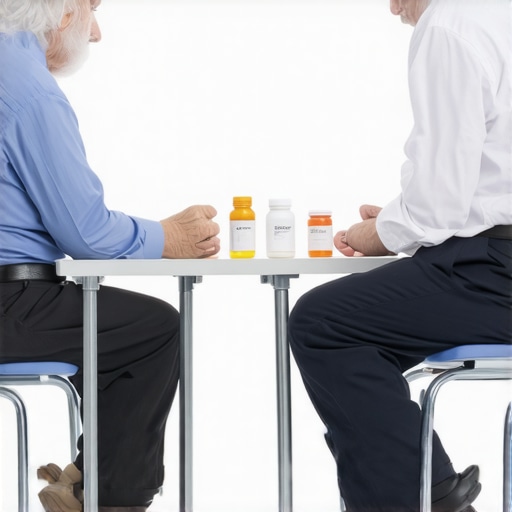
We have been conditioned to believe that as we age, our bodies simply decide to fail us. We buy the walker, we install the grab bars, and we pray to the gods of bone density. But let’s be blunt: when a senior falls, the most dangerous thing in the room isn’t a loose rug or a slippery tub. It’s the three-ring binder of prescriptions sitting on the kitchen counter. We treat a tumble as a misfortune of time, but I argue that it is frequently a predictable side effect of a pharmaceutical industry that prioritizes adding pills over subtracting risks.
If you or someone you love hits the floor, and the medical response stops at an X-ray, you are being failed by the system. I believe that every single post-fall medical visit is a wasted effort if it doesn’t culminate in a scorched-earth medication review. We are over-prescribing our way into the emergency room, and it is time to demand more than just a bandage and a referral for physical therapy. You might think your doctor is already checking for interactions, but the reality is much messier than a computer-generated alert.
A Prescription List is a Jenga Tower Waiting to Collapse
Think of a senior’s daily regimen as a high-stakes game of Jenga. Each new pill—whether it’s for blood pressure, sleep, or that minor anxiety—is another block pulled from the base and stacked on top. For a while, the tower stands. But eventually, the center of gravity shifts. The structure becomes so precarious that a simple turn toward the doorway brings the whole thing crashing down. When we look at a fall, we shouldn’t just look at the legs; we must look at the chemistry. You have to ask yourself: is the medication keeping them healthy, or is it making them a hazard to themselves?
[IMAGE_PLACEHOLDER]
As I have argued before, the physical injury is often just the tip of the iceberg, which is why you should never skip a post-fall medical checkup that looks deeper than the surface. We are often so focused on the physical aftermath that we miss how to prevent memory fog caused by common senior meds, which frequently precedes a loss of physical coordination. The medical community needs to stop treating falls as isolated physical events and start treating them as red flags for drug toxicity or mismanagement.
Doctors are Overlooking the Real Culprit
Why are we so obsessed with bone density but so indifferent to the dizziness induced by a nightly sedative? Is it because it’s easier to blame an accident than it is to admit our pharmaceutical intervention has become a liability? Many seniors are unaware that your current hypertension meds might make you tired to the point of instability. Fatigue and lightheadedness aren’t just part of the aging package; they are often the result of a dosage that was right five years ago but is dangerous today. You need to be the loudest voice in the room. When the triage nurse asks what happened, don’t just say they tripped. Say, they fell, and I want a specialist to tell me which of these pills is responsible for their loss of balance.
We must stop the cycle of prescribing a new drug to fix the side effect of the previous one. This prescribing cascade is a death trap for the elderly. A fall is the loudest warning sign a body can give. If we don’t listen to it by auditing the pharmacy bag, we are essentially waiting for the next, more permanent crash to happen.
The medical community wants you to believe that aging is a slow descent into fragility. They are wrong. The truth is far more clinical and far more infuriating. We have built a system where ‘care’ is synonymous with ‘addition.’ When a senior enters a clinic, the default setting of the modern physician is to add a line to the chart, never to erase one. This isn’t healthcare; it’s a slow-motion chemical collision. The problem isn’t that our bones are getting softer; it’s that our prescriptions are getting heavier.
The Anatomy of a Systemic Blind Spot
The root of this crisis lies in the fragmented nature of modern medicine. We have reached a point where the right hand has no idea what the left hand is prescribing. Your cardiologist is focused on your heart. Your endocrinologist is focused on your blood sugar. Your neurologist is focused on your sleep. Each one of them is competent in their own vacuum, but together, they are a recipe for catastrophe. They are prescribing drugs in isolation, ignoring the reality that these chemicals don’t stay in their respective lanes once they hit the bloodstream.
We have seen this before. In the mid-20th century, the medical establishment over-sedated patients in psychiatric wards to keep them ‘manageable.’ Today, we do the same to our seniors in their own living rooms, hidden behind the respectability of a pharmacy receipt. It is a historical echo that we refuse to acknowledge. We are trading physical stability for chemical compliance, and the result is a generation of seniors who are walking through a permanent, drug-induced haze.
The Deadly Math of Polypharmacy
Let’s look at the numbers, because the math is as cold as it is clear. Research indicates that the risk of falling increases by 7% for every additional medication a senior takes. This is not a linear increase; it is a compounding disaster. If a patient is on ten medications—which is a shockingly common baseline in the world of chronic care—their risk has effectively doubled due to pharmaceutical interference alone. That 100% increase isn’t a statistical outlier; it’s a mathematical certainty of disaster. When you see a senior on a dozen pills, you aren’t looking at a patient; you are looking at a ticking time bomb.
${PostImagePlaceholdersEnum.ImagePlaceholderB}
This isn’t just about the quantity of the pills; it’s about the specific nature of what’s being pushed. The ‘Beers Criteria’—a list of medications that are potentially inappropriate for older adults—is treated by many providers as a suggestion rather than a survival guide. When a doctor keeps a senior on a benzodiazepine for sleep or a high-dose diuretic without constant monitoring, they aren’t just treating a symptom. They are actively undermining the patient’s proprioception. It is a direct assault on the body’s ability to know where it is in space.
Why Your Specialist is a Danger to Your Balance
The ‘Prescribing Cascade’ is the most insidious part of this failure. It begins when a patient develops a side effect from a drug—let’s say, dizziness from a blood pressure medication. Instead of the doctor recognizing this as a drug reaction and adjusting the dose, they interpret the dizziness as a new medical condition and prescribe a second drug to treat it. That second drug causes nausea, leading to a third prescription. By the time the patient hits the floor, they are a walking chemistry experiment where the original ailment is buried under layers of unnecessary intervention.
You must realize that the system is not designed to de-prescribe. There is no financial incentive for a pharmaceutical company to tell you that you don’t need their product. There is no time in a standard fifteen-minute office visit for a doctor to weigh the interactions of fifteen different capsules. The burden of safety has been shifted onto the patient and the family. If you aren’t the one demanding a reduction in the pill count, nobody else will. The current standard of care is a conveyor belt moving in one direction: toward more drugs and less balance.
It is easy to understand the defensive posture of the medical establishment when we talk about cutting back on prescriptions. Critics will argue that every pill in that daily organizer was put there for a reason, backed by years of clinical research and ‘gold-standard’ guidelines. They point to the terrifying statistics of strokes prevented and heart attacks averted. They will tell you that suggesting a reduction in medication is not just radical, it is dangerous. This is the steel-man argument: that the risk of the disease is always greater than the risk of the drug. On the surface, it is a compelling, noble defense of modern science. Who would want to be the person who suggests stopping an anticoagulant, only to have the patient suffer a clot a week later?
I used to believe this too, until I watched how the ‘perfectly managed’ patient—the one whose blood sugar and pressure were exactly where the charts said they should be—was the same patient who couldn’t walk from the bedroom to the bathroom without a terrifying bout of vertigo. We have prioritized the numbers on a lab report over the human being standing in front of us. We are so obsessed with theoretical future risks that we are ignoring the concrete, immediate danger of a shattered hip. The guidelines that doctors cling to are often based on trials that excluded the elderly, the frail, and those with multiple conditions. We are applying the biology of a sixty-year-old to the reality of an eighty-five-year-old, and the results are predictable.
The Guidelines Are Not a Bible
The mistake everyone else makes is assuming that ‘standard of care’ is synonymous with ‘safety.’ It isn’t. The standard of care is a defensive shield for the provider, not a guarantee of health for the patient. When a specialist refuses to lower a dosage because it might slightly increase a long-term risk, they are failing to see the person in their entirety. They are treating a symptom in a vacuum while the patient is drowning in a sea of chemical interactions. We have to stop asking if the drug is working and start asking if the drug is worth the cost of physical independence. If a medication makes it ‘safe’ for your heart but makes it impossible for you to stand up without fainting, that medication is a failure.
${PostImagePlaceholdersEnum.ImagePlaceholderC}
This is the uncomfortable truth: the medical system is designed for accumulation, not subtraction. There is no protocol for taking someone off a drug that was started twenty years ago. We treat prescriptions as permanent fixtures, like a limb, rather than tools that should be discarded when they are no longer useful. This is where the fragmented nature of care becomes a death trap. Your primary doctor assumes the specialist knows what they are doing, and the specialist assumes the primary doctor is monitoring the overall impact. In reality, no one is driving the bus. The patient is just a passenger on a journey toward total chemical reliance.
We need to embrace a more aggressive approach to de-prescribing, especially after a fall. A fall is not a random act of gravity; it is a clinical data point that screams for a change in strategy. If we continue to treat every drug as ‘essential’ just because a guideline says so, we are effectively choosing to let our seniors spend their final years in a drug-induced fog, tethered to their walkers, while we pat ourselves on the back for their ‘controlled’ blood pressure. It is time to stop hiding behind the prescription pad and start valuing the dignity of movement over the convenience of a pill.
If we do not demand a radical overhaul of how we view elderly care, the next five years will usher in a silent epidemic of prescribed frailty. We are currently treating the symptom of aging with the poison of over-medication, and the math is catching up to us. This isn’t just a clinical error; it’s a societal abandonment. By failing to audit the pharmacy bag, we are effectively telling our elders that their physical independence is less valuable than the comfort of a doctor’s chart that looks good on paper. This is the moment where the path diverges, and the direction we choose will define the dignity of an entire generation.
The Price of Our Silence
The stakes could not be higher. We are witnessing the slow-motion erosion of the golden years, where the reward for a lifetime of hard work is a drug-induced haze and a hip fracture that could have been avoided. This matters right now because the healthcare system is reaching a breaking point. As the population ages, the number of seniors on multiple high-risk medications is skyrocketing. If we continue to allow the prescribing cascade to go unchecked, the financial and emotional toll on families will be catastrophic. We are not just losing balance; we are losing the very essence of what it means to age with grace and autonomy.
Think of a senior’s metabolism as a classic car. You wouldn’t try to make it keep up with a modern sports car by pouring high-octane racing fuel into its aging engine while simultaneously keeping the parking brake engaged. You would blow the gaskets and ruin the frame. That is exactly what we do when we stack stimulants for focus on top of depressants for sleep, then wonder why the engine—the human person—suddenly seizes up and hits the pavement. We are forcing the body to fight against its own chemistry, and the body is losing every single time.
${PostImagePlaceholdersEnum.ImagePlaceholderD}
A Looming Societal Fracture
If this trend continues for another five years, the world will look unrecognizable for the elderly. We will see a society where walking without assistance is a rarity, not because of biological decay, but because of pharmacological intervention. The emergency rooms will be perpetually clogged with fall victims whose primary diagnosis should simply be ‘toxicity.’ We will have a generation of seniors who are chemically tethered to their beds, unable to participate in the lives of their grandchildren because the ‘safety’ of their medication has robbed them of their presence of mind and their physical stability.
What are we waiting for?
We are waiting for a permission slip that will never come. The pharmaceutical industry will not tell us to stop. The overworked specialist will not tell us to stop. The change must be driven by the people who see the real-world consequences—the family members, the primary caregivers, and the patients themselves. Every day we delay a full medication audit is a day we gamble with a life-altering injury. The warning signs are flashing red. We have been given the evidence, and now we face a moral imperative to act before the next fall becomes the final one. The tragedy isn’t that we don’t have the tools to fix this; it’s that we are too intimidated by the white coat to demand they be used.
The current medical trajectory for the elderly is not a safety net; it is a weight that eventually pulls them to the floor.
We have reached the point where the greatest risk to a senior isn’t their heart condition or their blood sugar, but the pharmaceutical cocktail intended to treat them. This is the final verdict: if a doctor is not actively looking for reasons to remove a medication, they are contributing to the instability that leads to the emergency room. We must stop pretending that every pill in the organizer is sacred. In reality, the medication error most seniors make with multiple pharmacies is assuming that someone, somewhere, has checked the math on how these drugs interact. Often, they haven’t. The fragmented system trusts the chart, but the chart doesn’t have to live in a body that feels like it’s walking on a boat.
The Burden of Advocacy
You have to be the one to break the cycle. When you see how to manage a seniors sudden confusion safely at home, your first thought shouldn’t be ‘What drug can fix this?’ but rather ‘What drug caused this?’ The system will continue to prescribe until you demand a pause. This isn’t just about avoiding a tumble; it’s about preserving the dignity of an independent life. While physical therapy helps, even the balance exercise that prevents hip fractures in your 70s cannot overcome a nervous system that is being suppressed by three different sedatives and a high-dose diuretic. We are fighting a chemical battle that the human frame was never meant to endure.
A Final Thought
The twist in our modern healthcare narrative is that the most compassionate thing a doctor can do today isn’t to provide a new cure, but to have the courage to take one away. True chronic care management personalized telehealth strategies for better outcomes must prioritize subtraction over addition. We have spent decades building a culture of ‘more.’ Now, for the sake of our parents and our future selves, we must learn the art of ‘less.’ The choice is simple: we can keep stacking the Jenga tower until it inevitably collapses, or we can start removing the blocks that are making it sway. Your independence is not a side effect—it is the whole point. Demand a medication audit today.