
Why Your Current Hypertension Meds Might Make You Tired
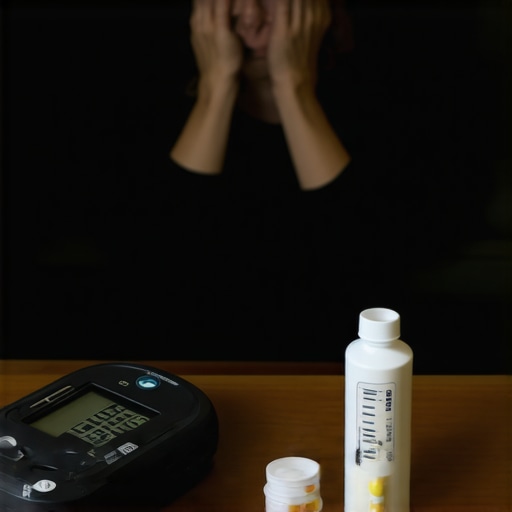
Stop Accepting Fatigue as the Price of Survival
You have been told that feeling like a walking zombie is a fair trade for a healthy heart. I disagree. We have built a healthcare culture where ‘getting the numbers down’ is the only metric of success, even if it leaves you too drained to actually enjoy the life you are supposedly saving. If you find yourself needing a mid-afternoon nap just to survive the day, your medication isn’t just working; it is overworking. I argue that the medical establishment has become lazy, relying on standardized dosages that ignore the individual reality of your daily life.
The cold, hard truth is that many clinicians treat hypertension like a static math problem. It isn’t. Your body is a dynamic system. I believe the primary reason why your blood pressure meds might be making you more tired is a failure of calibration, not a failure of your body. We are using a sledgehammer when we need a scalpel. Why are we still satisfied with patients who are ‘stable’ but exhausted? It is time to demand more than just a blood pressure reading that looks good on a chart.
The Medical System Often Values Numbers Over Human Vitality
Think of your vascular system like a garden hose. Your medications are designed to keep the pressure from bursting the pipes, but if the doctor turns the faucet off almost entirely, nothing grows. You become the wilting plant in your own life. This isn’t just a minor side effect; it is a fundamental flaw in how we approach chronic care management. When a beta-blocker slows your heart rate so much that you can’t climb a flight of stairs without gasping, that isn’t ‘management.’ That is a systemic failure.
You might think your doctor has considered every variable, but you’re wrong. Most prescriptions ignore the impact of external factors. For instance, did your physician mention that your blood pressure meds need a summer adjustment? Probably not. When the heat rises, your blood vessels naturally dilate. If you keep taking the same high dose of a diuretic or an ACE inhibitor, your pressure drops too low, leaving you dizzy and depleted. We are treating human beings like they live in climate-controlled laboratories rather than the real world.
I am also skeptical of the data used to prescribe these drugs in the first place. How many people are walking around over-medicated because of the hidden reason your blood pressure spikes at the clinic only? If your doctor bases your entire treatment plan on a single high reading taken after you spent forty minutes in traffic and ten minutes in a cold waiting room, they aren’t treating your hypertension; they are treating your stress. This leads to a cycle of over-prescription that drains your energy and clouds your mind. It is a pharmaceutical band-aid for a diagnostic error.
So, why are we still doing this? Why do we settle for a life of lethargy? It is because the system is designed for speed, not nuance. It is easier to write a script for a standard dose than to engage in the tedious work of fine-tuning. But you shouldn’t have to choose between a stroke and the ability to stay awake through a dinner party. We need to stop treating the chart and start treating the person. If your meds make you feel like you are moving through molasses, the problem isn’t you—it’s the prescription.
The Cult of the Clinical Average
The medical establishment has a fetish for the number 120 over 80. It is a benchmark that has been elevated to the status of a religious dogma, yet it ignores the messy, beautiful complexity of human biology. We are told that hitting this target is the only way to avoid catastrophe, but the evidence suggests that for many, the journey to that number is more damaging than the destination is beneficial. When the American Heart Association lowered the threshold for ‘Stage 1 Hypertension’ in 2017, it wasn’t because our species suddenly became more fragile; it was a move that instantly reclassified millions of healthy adults as patients. That 14 percent jump in the ‘sick’ population wasn’t a diagnostic triumph; it was a massive expansion of the pharmaceutical market. We aren’t getting healthier; we are just getting more prescriptions.
This shift reflects a Root Cause Analysis of a broken philosophy: the belief that the absence of a risk factor is the same thing as the presence of health. It is not. If you are so medicated that you cannot walk to your mailbox without feeling like you’re wading through wet cement, you are not ‘healthy.’ You are simply a controlled statistic. The system values the absence of a stroke risk—even a marginal one—far more than it values your ability to participate in your own life. It is a lopsided trade where you give up your present for a theoretical future that you might be too tired to even witness.
The Biochemical Theft of Your Energy
Let’s talk about what is actually happening inside your cells. Beta-blockers are often the first line of defense, but they function as a biological governor on an engine. They block the effects of adrenaline, the very hormone that allows you to respond to the world with vigor. They don’t just lower your heart rate; they put a ceiling on your existence. When your doctor says your heart is ‘protected,’ what they often mean is that it is being prevented from doing its job during moments of exertion. This is the fundamental reason why you feel like a ghost in your own house. The drug isn’t being ‘meticulous’ in its target; it is a blunt instrument that silences the body’s natural alarms.
${PostImagePlaceholdersEnum.ImagePlaceholderB}
Diuretics are no better. They are sold as simple ‘water pills,’ but they are actually metabolic disruptors. By forcing your kidneys to dump sodium and water, they often drag essential electrolytes like potassium and magnesium down the drain with them. These minerals are the sparks that fire your muscles and your brain. When they are depleted, your ‘numbers’ look great on a chart, but your brain feels like it’s wrapped in cotton wool. This isn’t health. It is a state of induced deficiency. We have accepted a medical culture where being ‘well-managed’ is synonymous with being chronically depleted.
A System Designed for Efficiency, Not Excellence
The problem isn’t just the drugs; it is the time. In the current urgent care and primary care model, a physician has perhaps fifteen minutes to see you. In that narrow window, they cannot possibly account for your sleep debt, your stress levels, or the fact that you’ve been eating processed salt-bombs because you’re too busy to cook. It is significantly faster to double a dose of Lisinopril than it is to investigate the lifestyle triggers of your hypertension. The prescription pad is the path of least resistance. It is the tool of a system that is designed to process people, not to heal them. We are being managed by algorithms that don’t care if we have the energy to play with our grandchildren, so long as our diastolic pressure remains under eighty.
I am tired of hearing that fatigue is just ‘part of getting older’ or a ‘small price to pay.’ These are lies designed to keep you compliant. The reality is that the medical industry has a vested interest in keeping you on the medication treadmill. They have created a world where the goal of treatment is the management of a metric rather than the flourishing of a human being. We must stop treating the data and start treating the person. If your medication has stolen your vitality, the system hasn’t saved you—it has merely traded one form of suffering for another.
It’s easy to see why the medical establishment clings to these rigid protocols. If you ask a cardiologist why they prioritize a systolic reading of 120 over your ability to stay awake during a dinner party, they will point to a mountain of clinical data. They will cite the SPRINT trial and tell you, with absolute certainty, that every millimeter of mercury reduced is a victory against the specter of a stroke. The argument is seductive in its simplicity: a tired patient is still a living patient. From their perspective, the fatigue you feel is merely a nuisance variable in a life-saving equation, a minor tax paid for the privilege of longevity. They aren’t trying to make you miserable; they are trying to keep you off an autopsy table.
I used to believe this too, until I realized that a patient who stops taking their medication because of soul-crushing fatigue is at a far higher risk than a patient on a lower, more tolerable dose. By framing the conversation as a binary choice between exhaustion and death, the medical community creates a false dichotomy that ignores the very human reality of treatment. When the side effects of a medication become unbearable, patients don’t just ‘tough it out’ for the sake of their long-term cardiovascular health. They stop. They skip doses. They hide the truth from their doctors because they don’t want another lecture on the dangers of hypertension. The irony is staggering: by aggressively chasing a perfect number, clinicians often drive patients toward the very risks they are trying to avoid. A perfectly balanced prescription is worthless if it sits unused in a medicine cabinet because the user can’t stand how it makes them feel.
The Fallacy of the Lesser Evil
This ‘survival at any cost’ mentality is the ultimate elephant in the room. It assumes that life is merely the absence of death. If your chronic care management strategy doesn’t account for your subjective experience, it isn’t care—it’s just surveillance. We have been conditioned to believe that the doctor’s office is the final authority on our well-being, yet most lab tests and clinical visits are just snapshots of a person under intense physiological stress. To base a decade of treatment on a fifteen-minute window of observation is not ‘science’; it is a gamble with your daily existence.
${PostImagePlaceholdersEnum.ImagePlaceholderC}
The medical system has become a factory of risk-aversion. Physicians are often terrified of being the one who didn’t ‘get the numbers down’ before a patient had a vascular event, so they over-prescribe to shield themselves from liability. They use standardized protocols as a professional safety net, often at the expense of the person sitting on the exam table. But what is the point of preventing a heart attack in twenty years if the patient is too lethargic to walk, play, or work today? This isn’t just about ‘tiredness.’ It is about the erosion of human agency. When we prioritize a clinical average over an individual’s vitality, we aren’t practicing medicine; we are practicing accounting. If your blood pressure meds are working on paper but failing in practice, the solution isn’t more discipline—it’s a better strategy.
Beyond that, we must acknowledge the limitations of the current urgent care mindset. In an environment where speed is king, the nuance of how a drug interacts with your specific lifestyle is lost. A marathon runner and a desk-bound executive have different physiological needs, yet they are often handed the same starting dose of Lisinopril or Amlodipine. This ‘one-size-fits-all’ approach is a relic of a time when we knew less about the individual variations of the human genome. Continuing to treat patients like interchangeable parts in a machine is not only outdated; it is dangerous. It’s time to stop asking if the medication is ‘working’ and start asking if the patient is actually thriving. If the price of a healthy heart is a deadened spirit, the price is too high. We need to stop pretending that a life lived in a state of constant depletion is a medical success story. It is a failure of imagination and a failure of care.
The Looming Crisis of the Medicated Mind
The danger we face is not merely a collection of tired individuals; it is a fundamental reconfiguration of the human experience. If we continue to ignore the devastating impact of over-medication, we are effectively consenting to a future where health is defined by the absence of risk rather than the presence of life. We are standing on the edge of a precipice where the medical establishment’s obsession with metrics is about to hollow out an entire generation. This is not just a warning for those currently on the treadmill; it is a forecast for our collective future. If the current trajectory holds, we are five years away from a society where being well-managed means being functionally sedated. Imagine a masterfully built skyscraper with the most advanced fire suppression system on earth, but the building is so tightly sealed that oxygen cannot get in. The structure is perfectly safe from fire, but it is uninhabitable. This is the architecture of modern hypertension management. We have fireproofed the body while suffocating the inhabitant. We are trading the vibrant, oxygenated reality of our daily lives for a sterile, secure emptiness. When we stop measuring quality of life, quality of life stops existing.
Will We Become a Nation of Biological Ghosts
The implications extend far beyond the individual. When millions of people are too lethargic to engage with their families, too brain-fogged to innovate at work, and too depleted to participate in civic life, the entire fabric of society begins to fray. We are witnessing a quiet, pharmaceutical-induced erosion of human potential. This isn’t just about blood pressure; it is about the energy required to sustain a civilization. If we lose our vitality to the altar of the 120/80 reading, we lose the very spark that drives progress. The medical industry is currently building a future where the patient is a permanent identity, not a temporary state. In five years, if we don’t demand a shift toward nuance and personalized care, the algorithms will have total control. These systems will not care about your desire to hike a mountain or write a book; they will only care that your vascular resistance remains within a pre-programmed corridor. We are moving toward a world of biochemical compliance where the human soul is treated as a troublesome variable that needs to be smoothed out.
${PostImagePlaceholdersEnum.ImagePlaceholderD}
The Point of No Return
This is the moral imperative of our time. We must reject the notion that we are merely a collection of biological inputs and outputs. The stakes are nothing less than the reclamation of our autonomy. If we do not stop this cycle now, the next generation will not even know what it feels like to have natural, unmedicated energy. They will grow up in a world where tired is the default setting for adulthood. We are currently training ourselves to accept a diminished version of existence as the price of survival. We have a choice to make before the concrete of these protocols sets forever. We can continue down this path of clinical automation, or we can demand a medicine that honors the whole person. The warning signs are everywhere, written in the heavy eyelids and slowed heartbeats of millions of stable patients. If we ignore these signs, we aren’t just failing ourselves; we are failing the very definition of what it means to be alive. The cost of inaction is a life unlived—a tragedy that no amount of clinical data can ever justify.
Reclaim Your Vitality
The medical industry will continue to optimize for the easiest path—standardized prescriptions—until we collectively decide that survival is an insufficient goal. We need to shift toward telehealth breakthroughs that allow for real-time monitoring and nuanced adjustments rather than reactive dosing. If you are struggling with high readings only when you enter a clinic, you must employ the simple tactic to lower your white coat hypertension instantly before you let a doctor increase your dosage based on a physiological lie. You have to be the primary advocate in your own chronic care management journey. The data is a tool, but your quality of life is the objective.
The Final Verdict: You are not a data point to be managed; you are a human being whose primary obligation is to live, not just to avoid death.
Here is the twist: The medical establishment isn’t actually afraid of your high blood pressure; they are afraid of the liability of your high blood pressure. Their protocols are designed to protect their charts, not your dinner parties, your hikes, or your morning clarity. When you realize that the safe dose is often just the legally defensible dose, you begin to see the pharmaceutical landscape for what it really is: a system of risk mitigation that has forgotten the person in the process.
Stop being a well-managed ghost in your own life. Demand a medicine that values your energy as much as your survival.