
How to Manage a Senior’s Sudden Confusion Without an ER Trip
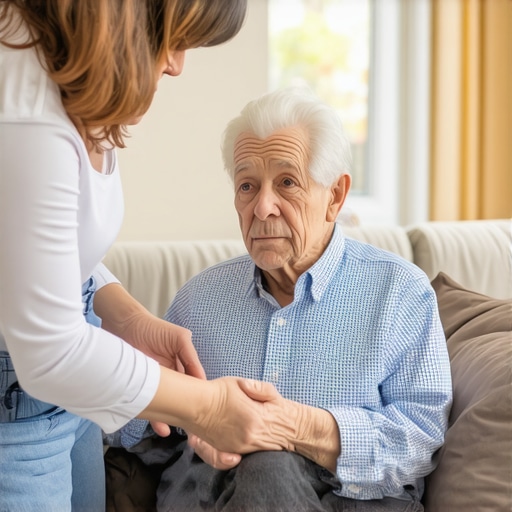
The ER is the Worst Place for Your Confused Parent
Rushing your mother to the Emergency Room because she is suddenly foggy is a knee-jerk reaction that often does more harm than good. I have seen this script play out too many times: a family panics, the senior is thrust into a chaotic, fluorescent-lit purgatory, and three days later, they return home more disoriented than when they left. We need to stop treating every instance of cognitive haze like a five-alarm fire. You might think you are being a responsible caregiver by sprinting for the car keys, but you are likely walking your loved one into a trap of hospital-acquired delirium.
I argue that the modern healthcare system has conditioned you to over-react, when learning how to manage a seniors sudden confusion safely at home usually requires a calm head and a digital connection to a doctor, not a siren-blaring ambulance. Sending a confused senior to the ER is like taking a laptop with a minor software glitch to a demolition derby. You are hoping for a repair, but the environment is designed for high-impact trauma. The noise, the lack of sleep, and the revolving door of strangers are the perfect recipe for mental collapse in a person who is already struggling to process reality. If there is no head injury and no physical trauma, why are we dragging them to the loudest place on Earth?
The Hospital Environment is a Factory for Delirium
Let’s be blunt about what happens when you cross those sliding glass doors. Your parent is stripped of their familiar surroundings, poked with needles, and kept awake by the constant chime of monitors. This is not healing; it is sensory assault. For a senior already battling a temporary mental fog, this change in scenery acts as a catalyst for permanent decline. Instead of a quick fix, you get a week-long stay for ‘observation’ that yields no answers and leaves the patient weaker than before. Why are we still doing this? Why do we assume that a stressed intern in a busy hallway has more insight than a doctor who can see the patient in their own environment via chronic care management programs?
The truth is that most sudden confusion is a biological hiccup, not a stroke or a brain tumor. It is usually something mundane and fixable. Is it a UTI? Is it a medication error most seniors make with multiple pharmacies that has finally reached a tipping point? Or perhaps it is simply dehydration in seniors that has parched the brain? These are problems solved with urgent care innovations and at-home triage, not a $5,000 bill and a traumatic night in a hallway bed. You have to be the gatekeeper. You have to be the one who says ‘no’ to the panic and ‘yes’ to a smarter, more methodical approach to geriatric care.
Home is the Best Diagnostic Lab
Think about the last time you were sick. Did you want to be in a cold room with strangers, or in your own bed? The diagnostic value of seeing a senior in their natural habitat cannot be overstated. A telehealth doctor can see the trip hazards, the unwashed dishes, and the pill organizers that tell the real story of what is happening. They can order advanced lab test technologies that come to you, or that you can access at a quiet clinic down the street. We have the tools to avoid the hospital trap. Why are we still acting like it is 1985?
Institutional Inertia Kills Clarity
The fundamental problem is not your parent’s sudden confusion. The problem is a healthcare infrastructure that treats every senior like a generic assembly line product. When you walk into an ER, the staff follows a protocol designed for acute trauma. They run the blood work, they check the vitals, and they wait. While they wait, the clock is ticking on your loved one’s cognitive health. Every hour spent under those buzzing fluorescent lights is an hour where the brain is disconnected from the cues of reality—the smell of home, the sound of the evening news, the familiar weight of a favorite blanket. This is not medical care; it is psychological isolation disguised as safety. The system is designed to stabilize the body while it inadvertently breaks the mind.
The Math of Mental Decline
We have the data, but we ignore the human cost. Evidence suggests that roughly one-third of hospitalized patients over age 70 will develop delirium during their stay. That is not a minor side effect. That is a systemic collapse. In many cases, the delirium lasts longer than the physical ailment that brought them there in the first place. You are trading a minor urinary tract infection or a bout of dehydration for a permanent drop in cognitive function. That 33% risk isn’t a statistic; it is a catastrophe waiting to happen. The ER takes a manageable problem and turns it into a life-altering disability. The math is simple: the longer they stay, the less of them comes back home. This is the hidden tax of the modern hospital system, and we pay it every time we panic.
${PostImagePlaceholdersEnum.ImagePlaceholderB}
Where the System Fails the Patient
The ER exists to keep people from dying today. It does not exist to help people live well tomorrow. This is why chronic care management is a superior weapon against the fog of aging. When a senior becomes confused, they need a physician who understands their baseline. An ER doctor has no baseline. They only see the chaos of the moment. They see a ‘difficult patient’ or a ‘disoriented senior,’ not a human being who was perfectly lucid two days ago before they stopped drinking enough water. The environment is the poison. The revolving door of nurses and the lack of a window in the triage room strip away the last vestiges of time and place. It is not about ‘monitoring’ anymore. It is about institutional suffocation.
A Smarter Path Forward
We must stop pretending that the biggest building in town is the best place for health. We have the technology to bring the clinic to the kitchen table. Why risk a traumatic car ride when advanced lab test technologies can be deployed locally, or even at home, to check for the usual suspects? A quick blood draw or a urine sample at a quiet urgent care facility is infinitely more humane than a twelve-hour wait in a plastic chair. You are told the ER is the only safe option, but that is a lie born of convenience for the insurers, not for the patient.
The Illusion of Safety
You think the hospital is ‘safe’ because there are doctors everywhere. It is an illusion. The hospital is where the superbugs live. It is where the medication errors happen. It is where the sleep deprivation begins. If you want to protect a confused parent, you keep them in their environment and bring the expertise to them via telehealth. You don’t throw them into the engine of a machine that wasn’t built to handle their complexity. The system is broken because it prioritizes the facility over the family. It is time we stopped playing along with a model that views elderly confusion as a reason to disrupt an entire life rather than a symptom to be managed with dignity.
I understand the paralyzing fear that grips you when your father suddenly doesn’t recognize his own kitchen. Your brain immediately jumps to the worst-case scenario: a stroke, a mass, an aneurysm. The common defense for the emergency room sprint is the ‘what if’ argument. Critics will say that it is better to endure twelve hours of hospital chaos than to miss a life-threatening neurological event. They argue that the hospital is the only place with the million-dollar imaging machines and the specialists required to rule out a catastrophe. This is the ultimate steel-man argument for the ER—the idea that safety is found in the highest concentration of technology and white coats. It feels like the responsible choice because we have been taught that ‘more’ medical intervention always equals ‘better’ outcomes.
But this logic is a dangerous trap. It assumes the hospital is a neutral environment where you can get answers without paying a price. I used to believe this too, until I realized that for a geriatric patient, the hospital is never neutral. It is an active intervention with significant side effects. When you choose the ER to ‘rule out’ a stroke, you are simultaneously ‘ruling in’ a 30% chance of hospital-acquired delirium. You are trading a small risk of a rare event for a near-certainty of cognitive trauma. The safety you think you are buying is an illusion because it ignores the fragility of an aging brain. The system is designed to save the heart and the lungs while it inadvertently shreds the mind through sleep deprivation and sensory overload.
The Rule Out Everything Trap
The institutional reflex is to run every possible test because the system is terrified of liability. In a crowded ER, your parent is not a person; they are a series of checkboxes. The doctors don’t have the time to ask about their baseline or their recent water intake. They simply follow a protocol that demands high-tech imaging. This blunt-force approach completely misses the nuance of geriatric health. Most of the time, the answer isn’t in a $3,000 CT scan; it is in simple lab tests that could have been handled in a quiet office. We are using a sledgehammer to hang a picture frame, and we are surprised when the wall crumbles.
${PostImagePlaceholdersEnum.ImagePlaceholderC}
We have to stop pretending that the ER is the only place to find answers. Modern chronic care models and specialized telehealth platforms are now capable of triaging these situations with surgical precision. A doctor who knows your parent’s history can often spot a medication interaction or a brewing infection through a screen faster than an ER intern can find a vein. By bypassing the hospital, you aren’t being negligent; you are being protective. You are filtering the noise so that the real medical signal can be heard. Choosing urgent care alternatives isn’t about cutting corners—it’s about providing care that is actually appropriate for the age and condition of the patient.
The Error of Excessive Caution
The most uncomfortable truth is that our ‘caution’ is often for our own peace of mind, not the patient’s well-being. We take them to the ER so we can say we did ‘everything.’ But ‘everything’ is often too much. The real bravery in caregiving is staying home, staying calm, and using the tools of advanced lab test technologies in a setting where the patient feels safe. The hospital should be the last resort for a confused senior, not the first. We must shift our perspective from ‘what if we miss something’ to ‘what will we lose if we go.’ When the price of an ER visit is the permanent loss of a parent’s independence and mental clarity, the ‘safe’ choice starts to look like the most reckless gamble of all.
The Quiet Devaluation of the Aging Mind
If we continue to ignore the toxic impact of the hospital environment on the geriatric brain, we are effectively consenting to a future where aging is synonymous with preventable trauma. We are currently standing at a crossroads where medical convenience is being prioritized over human dignity. By defaulting to the emergency room for every episode of cognitive haze, we aren’t just making a medical choice; we are participating in the systematic erosion of the elderly’s mental independence. Every time we ignore the data on hospital-acquired delirium, we are gambling with the final years of our parents’ lives, trading their remaining lucidity for the comfort of a protocol. This is the quiet devaluation of the senior mind, where a ‘safe’ discharge is valued more than the preservation of a person’s soul and history.
${PostImagePlaceholdersEnum.ImagePlaceholderD}
What are we waiting for?
The stakes couldn’t be higher. In the next five years, as our population ages at an unprecedented rate, the strain on these high-impact facilities will only intensify. If we do not demand a fundamental shift toward home-based triage and specialized geriatric care, the emergency room will become a graveyard for cognitive function. We will see a generation of seniors who could have lived out their days in their own gardens instead wandering the halls of memory care units, all because we were too afraid to bypass the siren and the sliding glass doors. This is not a hypothetical risk; it is a mathematical certainty. Every senior pushed into the chaotic machinery of an ER is a potential victim of institutional neglect disguised as intervention.
The Coming Wave of Preventable Trauma
The tragedy is that this decline is entirely optional. We have the digital infrastructure and the clinical tools to treat the person, not just the symptom, within the four walls of their own home. To continue the current path is like trying to repair a delicate, centuries-old grandfather clock by putting it through a high-pressure industrial car wash. You might wash away the dust, but you will almost certainly shatter the gears that make it tick. By the time the hospital realizes the damage, the clock has stopped. We are currently breaking the very people we claim to be protecting because we are too wedded to an outdated model of ‘care’ that sees the body as a machine and the mind as an afterthought.
The Point of No Return
We are approaching a point of no return where the healthcare system will no longer be able to hide its failures behind the mask of ‘necessary’ caution. When the cost of a ‘rule-out’ test is the permanent loss of a mother’s ability to recognize her own children, the word ‘care’ loses all meaning. We must wake up to the reality that for the aging brain, the loudest, busiest, and most sterile place on Earth is also the most dangerous. If we do not act now to reclaim the home as the primary site of healing, we will be forced to watch as our loved ones are swallowed by a system that was never designed to hold them with the tenderness they deserve. The warning is clear: the safety we seek in the hospital is often the very thing that destroys us.
Reclaiming the Kitchen Table as a Clinic
We are currently standing at a threshold where the old reflexes no longer serve the modern reality of aging. If you want to save your parent’s mind, you must stop treating the hospital as a sanctuary and start seeing it as a last-resort intervention. The evidence is clear: the road to permanent cognitive decline is often paved with well-intentioned ER visits. This realization is central to understanding the future of telehealth as a protective shield for the elderly. We must pivot away from the high-trauma factory of the emergency room and toward a model where advanced lab test technologies are deployed in the quiet safety of a living room. This isn’t just a matter of convenience; it is a fundamental battle for the preservation of a person’s dignity and history.
${PostImagePlaceholdersEnum.ImagePlaceholderE}
The Final Verdict
The most compassionate medical decision you can make for a confused parent is often the decision to stay exactly where they are. By embracing chronic care management and specialized home-based triage, you are not avoiding care—you are providing the only care that actually matters. The twist is that the “safe” choice you’ve been sold is a reckless gamble with a 33% failure rate. It is time to stop playing the odds with the people we love. We have the digital infrastructure to bypass the siren and keep the gears of the aging mind turning in the environment where they function best. Your parent doesn’t need a siren; they need a system that respects their fragility as much as their survival. Choose the home. Choose the sanity. Choose the better way before the system makes the choice for you.