
Why Your Annual Skin Check Should Include Your Scalp
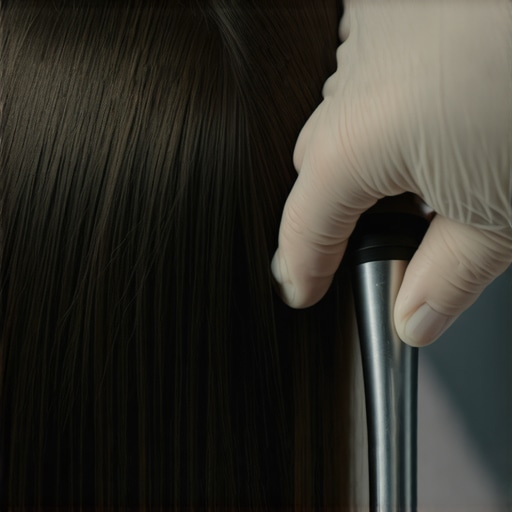
Your Annual Skin Check is a Dangerous Half-Measure
You walk into the clinic, strip down to your underwear, and wait for the cold touch of the dermatoscope. You think you are doing everything right. You checked your back, your legs, and that weird spot on your arm. But if your doctor did not part your hair and look at your scalp, you did not actually get a full screening. You got a performance of safety that ignores one of the most lethal hiding spots for melanoma. I argue that a skin check without a scalp exam is like a householder obsessing over a few weeds in the front lawn while a massive termite colony quietly devours the structural beams of the roof. It is incomplete, it is reckless, and for some, it is a death sentence. Why are you still settling for partial protection? You deserve a medical system that looks where it is difficult to see, not just where it is convenient.
The Scalp is a Blind Spot in Your Safety Net
We have a visibility problem in modern medicine. If it is hard to see, it is hard to bill for, and it is easy to ignore. The scalp is a dense forest of follicles that makes a quick visual sweep nearly impossible. But here is the hard truth: skin cancer on the scalp is often more aggressive and diagnosed much later than on any other part of the body. You might think your hair provides a natural shield against the sun, but you are wrong. UV rays find their way through, and when a lesion develops there, it has a direct path to your vascular system. I believe we must stop treating the scalp as an optional “extra” to a physical exam. Much like the error of skipping your annual skin cancer screening entirely, failing to insist on a thorough head-to-toe check—including the hair—is a gamble with your life. Are you willing to bet your future on a doctor’s desire to stay on schedule?
Why does this oversight persist? Speed. Efficiency. The pressure of maximizing urgent care efficiency often pushes practitioners to move fast. It takes time to comb through a full head of hair. It is “fussy.” It is “time-consuming.” But your life should not be sacrificed for the sake of a ten-minute time slot. I have seen patients who are meticulous about their health, individuals who never miss their annual blood work, yet they have never had a doctor actually touch their scalp. This is the skin screening you are not doing but absolutely should demand at every single visit. If your physician does not reach for the comb, you need to find a new physician. It is that simple. You must be your own advocate. You must demand the thoroughness that the medical bureaucracy often tries to trim away.
Think about the last time you were in the exam room. Did you feel rushed? Did the doctor look at your toes but ignore your crown? This is a systemic failure of attention. We focus on the “easy” areas because they fit the workflow. But cancer does not care about a doctor’s workflow. It does not care about a clinic’s bottom line. I argue that we need a radical shift in how we approach these checkups. We need to stop seeing the scalp as “just hair” and start seeing it as a high-risk zone for silent, deadly growth. Just as you would learn how to get your lab results explained without a long wait, you must learn to command the exam room. Tell the doctor: “Check my scalp. I am not leaving until we are certain.” It is your body, your health, and your responsibility to force the hand of a distracted system. Do not let your hair become a burial shroud for a tumor that could have been caught with a simple comb and a focused eye.
The Structural Failure of the ‘Easy’ Exam
The core of the issue is not simply a lack of time; it is a fundamental miscalculation of what constitutes ‘prevention.’ Our current medical infrastructure is obsessed with the low-hanging fruit. It is easy to scan a back. It is simple to check a leg. These areas are vast, flat, and require zero effort to inspect. But the scalp is different. It is a complex terrain of hair and oil. Because it requires a physical intervention—the actual parting of hair—it is treated as a specialty task. This is the root cause. We have allowed the difficulty of the task to dictate its necessity. This is a lie. A screening that ignores the hardest parts to see is not a screening at all; it is an exercise in theater. We are paying for the comfort of a ‘clear’ report while the actual danger remains hidden in the brush.
A Lethal Economy of Time
Let us look at the numbers, because the numbers do not lie, even if the system does. Studies have consistently shown that melanomas on the scalp are diagnosed at a much greater thickness than those on the limbs or torso. Specifically, the mortality rate for scalp and neck melanoma is nearly twice that of melanomas on other parts of the body. That 100 percent increase in risk isn’t just a ‘stat’; it is a direct consequence of delayed detection. When a doctor skips your scalp to stay on schedule, they are effectively gambling that you aren’t part of that 100 percent. They are trading your long-term survival for their short-term efficiency. It is a cold, calculated transaction where the patient always loses. If your clinician claims they ‘saw enough,’ they are prioritizing the clock over the cure. The math of ‘quick’ medicine is a math that results in funerals.
${PostImagePlaceholdersEnum.ImagePlaceholderB}
The Biology of the Blind Spot
Why is the scalp so dangerous? It is not just about visibility. The scalp is incredibly vascular. It has a rich blood supply and a direct line to the lymphatic system. This means that once a lesion takes hold, its path to metastasis is shorter and faster than a lesion on your foot. We are talking about a high-speed highway for cancer cells. Yet, we treat it like a peripheral concern. The problem isn’t that the hair protects the skin; the problem is that the hair protects the cancer from the doctor’s eyes. By the time a scalp lesion becomes visible to the patient in a bathroom mirror, it is often already too late for the simplest interventions. This is why the ‘root cause’ isn’t the sun—it is the silence of the exam. We have built a system that rewards speed, and in the world of oncology, speed in the exam room leads to haste in the pathology lab.
The Arrogance of the Superficial Scan
We see this same pattern in every facet of the industry. From the way we handle chronic care to the cursory glance given during urgent care visits, the goal is always ‘throughput.’ But throughput is the enemy of thoroughness. Practitioners have become accustomed to the superficial scan because it satisfies the basic billing requirements for a ‘full-body’ check. It is a bureaucratic loophole that leaves you exposed. They look where the light is brightest, not where the shadows are deepest. You must understand that the medical system is a machine designed for the average case, not the edge case. But you are not an average; you are an individual with a crown that is just as susceptible to the sun as your nose. If you do not force the doctor to move their hands, to use their tools, and to actually work for that co-pay, you are complicit in your own neglect. The scalp is the ultimate blind spot, and it is time we stopped pretending that looking at half the map is the same as knowing the territory.
Critics of my position often point to the staggering reality of clinical burnout. They argue that dermatologists and primary care providers are already drowning in a sea of patient quotas and administrative bloat. The logic goes like this: adding ten minutes of meticulous hair-parting to every single skin check would effectively collapse the daily schedule. They claim that because the scalp represents a smaller surface area than the torso, the statistical probability of finding a lesion there doesn’t justify the ‘waste’ of clinical time. It sounds like a rational, data-driven approach to resource allocation. If you only have fifteen minutes for a full-body scan, you spend them where the sun hits most frequently, right? This is the argument of the pragmatist, the spreadsheet-wielder who believes that healthcare is a game of averages.
The Fallacy of Patient Surveillance
I used to believe this too, until I realized that ‘average’ medicine is what kills people with ‘unusual’ problems. The pragmatist’s argument is actually a confession of systemic failure. When we say we don’t have time to check the scalp, we are saying we have accepted a lottery where the stakes are human lives. You would never accept a mechanic who claimed they didn’t have time to check the brakes because they were too busy polishing the headlights. Yet, we allow this exact logic to dominate our clinics. This reliance on the patient or their hairdresser to spot a lesion is an abdication of professional duty. A hairdresser is trained to cut hair, not to diagnose a nodular melanoma that mimics a harmless mole. By the time a layperson notices a change in their own scalp, the cancer has often already begun its aggressive journey into the vascular system.
This culture of the ‘quick look’ has been exacerbated by the way we use modern tools. While telehealth and the rapid throughput of urgent care are excellent for managing chronic care or processing routine lab tests, they have inadvertently created a ‘point-and-click’ medical culture. We have traded the comprehensive physical exam for a series of superficial snapshots. If the snapshot is obscured by hair, the scalp simply ceases to exist in the medical record. We are treating the human body as a collection of easy-to-see parts rather than a singular, vulnerable organism. The ‘efficiency’ being celebrated is a lie; it is merely a way to move patients through the system faster while leaving the most dangerous risks unaddressed.
${PostImagePlaceholdersEnum.ImagePlaceholderC}
The economic argument for skipping the scalp is equally hollow. Yes, it takes more time to perform a thorough head-to-toe exam that includes the crown. But the cost of treating a Stage IV melanoma discovered two years too late dwarfs the cost of a few extra minutes with a dermatoscope and a comb. We are prioritizing the short-term throughput of the clinic over the long-term survival of the patient. This is a false economy. Every time a doctor skips your scalp to stay on schedule, they are effectively gambling that you aren’t the one who will end up in an oncology ward with a preventable tragedy. It is a cold, calculated transaction where the patient is the only one losing anything of value.
The arrogance of the ‘superficial scan’ assumes that what we cannot see easily isn’t worth looking for. It ignores the biology of the scalp, which is more vascular and closer to the brain and lymph nodes than almost any other skin surface. We must stop pretending that a ‘partial’ screening is better than nothing. In many ways, it is worse than nothing because it provides a false sense of security that prevents the patient from seeking further answers. If we allow ‘easy’ to become the standard for ‘complete,’ we are not practicing medicine; we are practicing theater. It is time to demand a system that values the patient’s life more than the doctor’s stopwatch.
What are we waiting for?
The silence following a “clear” exam is not always the silence of safety; often, it is the quiet before a storm that we intentionally chose not to forecast. If we continue to prioritize the clock over the patient, we are building a graveyard of preventable errors. Imagine a security system where the cameras are only allowed to film the front sidewalk because the backyard is too overgrown with bushes to monitor. You feel safe because you see the monitor, but the intruder is already climbing through the kitchen window. That is the scalp exam we are skipping. It is a fundamental breach of the medical contract. We are effectively signing our own warrants for future trauma because the process of prevention was deemed too inconvenient for the practitioner’s schedule.
The Price of Collective Apathy
If this trajectory remains unchanged, the next five years will see a widening chasm between our technological capabilities and our clinical outcomes. We will have the most sophisticated telehealth platforms and urgent care centers equipped with automated lab tests, yet people will continue to die from lesions that could have been found with a five-dollar comb. The irony is staggering. We are spending billions on digital innovation while failing at the basic physical labor of medicine. This is a moral failure that trickles down from the insurance boards to the exam table. When we accept a partial check, we are telling the system that our lives are only worth the parts of us that are easy to scan. We are participating in a dangerous lowering of standards that will eventually touch every other aspect of chronic care. If we do not act, the next five years will usher in a “new normal” where the definition of a full-body scan is legally narrowed to exclude any area that requires more than three seconds of observation.
${PostImagePlaceholdersEnum.ImagePlaceholderD}
The Point of No Return
We are standing at a crossroads. One path leads to a high-speed future where every checkup is a checklist and every patient is a data point to be processed and cleared. The other path requires a demanding, vocal advocacy where we refuse to be “cleared” until we are actually checked. The stakes are not just a missed diagnosis; the stakes are the very soul of clinical practice. If we lose the thoroughness of the physical exam, we lose the primary defense against the most aggressive forms of cancer. We must decide if we want a medical system that works for the throughput of the provider or the survival of the patient. The choice must be made now, before the next “routine” appointment turns into a terminal prognosis. We cannot afford to wait for the system to fix itself while we are the ones paying the ultimate price for its neglect. Your life is not a statistic, and your scalp is not a footnote. Demand the exam you were promised, or prepare for the consequences of a system that only looks at what is easy.
The Audit of Your Own Survival
We are at a point where the medical industry must be held accountable for the blind spots it deliberately maintains. When you look at the evolution of chronic care management, you see a shift toward high-tech data, yet we are regressing in the basic physical check. If you find yourself in a room where the practitioner is more interested in their tablet than your crown, you are participating in a dangerous charade. The Final Verdict is clear: A medical system that values speed over the scalp is not a system of care; it is a system of convenience that leaves the most vulnerable patients behind. This connects directly to the broader issue where the error of skipping your annual skin cancer screening is amplified by doctors who only do half the job once you finally arrive. We have the tools, through telehealth breakthroughs and advanced clinics, to be better, but technology cannot replace the tactile necessity of a human hand parting your hair.
The Twist
The great irony of the modern patient experience is that we pay for the peace of mind that a clear report provides, yet that very report may be the document that signs our death warrant by omitting the one area where cancer hides in plain sight. We are buying comfort at the expense of survival. You must stop being a polite passenger in your own healthcare. Demand the comb. Demand the time. Demand the truth. If you don’t, you aren’t just a patient; you are a risk factor waiting to be realized.
The next time you strip down for an exam, remember: if the doctor doesn’t touch your hair, they haven’t saved your life.