
The Colonoscopy Alternative That Actually Detects Issues Early
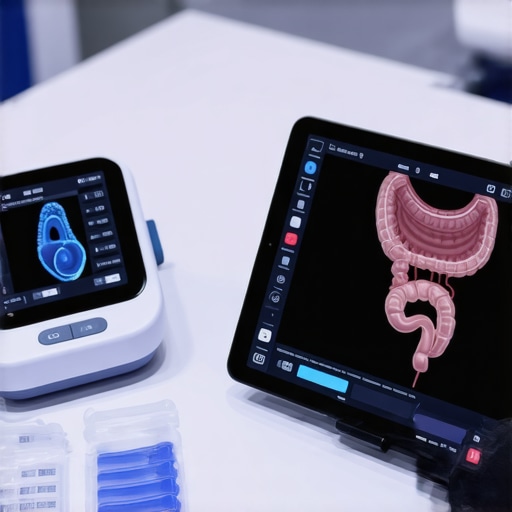
Stop pretending that the ‘gold standard’ of colonoscopies is anything more than a medieval relic of an era when we didn’t know how to read genetic signals. You’ve been conditioned to believe that discomfort equals accuracy. I argue that the future of cancer detection isn’t found at the end of a long tube; it’s found in the molecular data we’ve been flushing away for decades. Why are we still doing this? Why are we insisting on a procedure that requires a day of starvation and sedation when a simple, non-invasive kit can catch the same warning signs from your own bathroom? It is absurd that we still treat a major surgical event as a routine prerequisite for health.
The medical establishment clings to the colonoscopy because it’s profitable and familiar. But let’s be honest: it’s like using a sledgehammer to hang a picture frame. Yes, it gets the job done, but it’s overkill for a routine screening. The real breakthrough isn’t another way to look at your insides—it’s the ability to detect DNA changes before a tumor even exists. We are talking about a fundamental shift in how we approach preventative care, moving away from reactive procedures toward proactive data analysis.
The Theater of Invasive Medicine Must End
Most patients are terrified of the prep, the loss of time, and the rare but real risks of perforation. You might think you’re being ‘thorough’ by choosing the hard way, but you’re actually just falling for medical theater. The data suggests that for average-risk individuals, stool-based DNA tests are not just a ‘second-best’ option; they are a strategic choice for early intervention. Just as the routine screening that catches pre-diabetes while it is reversible shifted the focus from treatment to prevention, we need a similar shift here. Why put yourself through a traumatic day at the clinic when the evidence shows we can find the same red flags through a simple lab test?
I’ve seen how people delay these screenings for years because of the ‘ick’ factor or the logistical nightmare of taking two days off work. That delay is what kills. A screening you actually do is worth ten screenings you’re too scared to schedule. If we want to win the war on cancer, we have to stop making the entrance fee so high. It is a failure of our healthcare system that we prioritize the most invasive methods over the most accessible ones. We are effectively punishing people for wanting to be healthy by making the process as miserable as possible.
The Medical System Is Protecting Its Own Interests
Why isn’t your doctor shouting from the rooftops about high-sensitivity stool tests? Because a colonoscopy is a high-billing event. It’s a machine that needs to be fed. When you look at the tactical reason to schedule your labs on a Tuesday, you start to see that healthcare is as much about logistics and revenue as it is about biology. The alternative tests—those that look for occult blood and altered DNA—offer a level of convenience that threatens the status quo of the gastroenterology suite. They don’t want you to know that for many, the tube is optional.
We need to move toward a model where the least invasive option is the primary recommendation. We are already seeing this in other areas of medicine, such as the secret to getting your lab results without the long wait, where speed and accessibility are finally being valued. Why should your colon be any different? Stop letting the fear of a ‘lesser test’ keep you from the smartest test. The ‘gold standard’ is tarnished, and it is time we admitted that the most effective tool is the one that actually gets used before it’s too late. I argue that our obsession with the invasive is a distraction from the real goal: early, painless, and frequent detection.
The Profit Margin Behind the Prep
Let’s follow the money, because in the American healthcare system, the truth usually hides behind a billing code. A single colonoscopy can bill for thousands of dollars once you factor in the facility fee, the specialist’s time, and the anesthesiologist who is only there because we’ve made the procedure too invasive to bear while conscious. Contrast that with a stool-based DNA kit that shows up at your door for a fraction of the cost. The math doesn’t work for the hospital’s bottom line, so they keep pushing the narrative that anything less than a full internal sweep is ‘cutting corners.’ It isn’t. It’s just efficient. The medical establishment doesn’t want you to realize that their ‘gold standard’ is actually a gold mine.
We have built an entire infrastructure around the colonoscopy. There are clinics, specialized staff, and supply chains all designed to keep this specific machine running. To admit that a lab test you perform in your own bathroom could be just as effective for average-risk individuals is to admit that much of that infrastructure is obsolete. They are protecting their investments, not your health. This is institutional inertia at its finest, where the weight of the past prevents us from embracing the logic of the present. They tell you it’s for your safety, but it’s really for their stability.
${PostImagePlaceholdersEnum.ImagePlaceholderB}
The Participation Gap Is a Policy Failure
Consider the compliance rates. The CDC notes that roughly one-third of eligible adults are not up to date with screenings. That 33% gap isn’t a failure of education; it’s a failure of empathy. It is a massive, gaping wound in our preventative care strategy. We are asking people to take unpaid leave, drink liquid fire, and let a stranger navigate their anatomy just to check a box. When you offer an at-home option, the participation spikes. That isn’t laziness—it’s the rational response to a system that refuses to modernize. That 33% isn’t just a number; it represents thousands of preventable deaths caused by a barrier to entry that is unnecessarily high.
The system is designed to reward the most complex intervention. We see this in chronic care and urgent care as well, where the most expensive route is often the one most heavily promoted. If we prioritized outcomes over procedures, the conversation would be entirely different. We would be celebrating the fact that we can now catch genetic markers of cancer without a single needle or sedation. Instead, we treat these breakthroughs as ‘alternatives’ or ‘secondary options.’ It is an insult to the intelligence of the patient and the capability of modern science.
The Fallacy of the Superior Sight
The argument for the colonoscopy always comes down to ‘seeing’ the polyps. But this visual obsession is a relic of 20th-century medicine. We are now in the era of molecular diagnostics. A doctor’s eyes, no matter how trained, are not more accurate than a lab’s ability to detect microscopic DNA changes. The idea that a physical camera is the only way to be sure is a lie. In fact, the miss rate for small polyps during a colonoscopy is higher than the industry likes to admit. Human error is part of the package when you rely on a manual search. Data, however, doesn’t get tired at the end of a long shift.
We’ve seen this shift before. We used to rely on invasive measures for things that are now handled by simple lab tests or telehealth consultations. The resistance to change is always the same. The experts claim that the old way is the ‘only’ way until the evidence becomes so overwhelming that they can no longer ignore it. We are at that tipping point now. The evidence is clear: the most effective screening is the one that people actually complete. By insisting on the most traumatic method, the medical system is actively sabotaging public health. It is a choice between a 1970s solution and a 2024 reality.
It is easy to see why the medical community fights so hard for the status quo. Their strongest argument—the one that stops most critics in their tracks—is the ‘see-and-treat’ capability. They argue that because a colonoscopy can remove a polyp the moment it is found, it is inherently superior to a test that only flags its existence. It’s a compelling narrative: why do two things when you can do one? If you find a fire, you put it out immediately; you don’t just walk away and schedule a follow-up with the fire department. This logic has kept the gastroenterology industry profitable for decades.
But this argument completely ignores the reality of risk and the catastrophic inefficiency of our current triage system. I used to believe this too, until I realized we were subjecting ninety-five people to a high-risk, invasive procedure just to find the five who actually needed an intervention. We are using a diagnostic tool as a screening filter, and that is a fundamental category error. It’s like requiring every person who enters an airport to undergo a full strip search just because a few might be carrying contraband. It works, sure, but the cost to the system and the individual is staggering.
The Efficiency Fallacy That Costs Lives
The ‘one-stop-shop’ defense assumes that the only barrier to health is the physical presence of a polyp. It ignores the psychological and logistical barriers that keep a third of the population from ever walking through the clinic door. When you insist that the only valid screening is the one that involves a sedative and a day of missed work, you are effectively choosing a 100% effective test that 50% of people take over an 80% effective test that 95% of people take. The math of public health favors the latter every single time. By holding out for the ‘perfect’ procedure, we are letting people die from preventable cancers because they were too intimidated to start the process.
Let’s talk about the ‘miss rate’ again. The medical establishment acts as if a colonoscopy is an infallible eye in the sky. It isn’t. Data shows that even in the hands of experts, small or flat polyps are frequently overlooked. A molecular test, however, doesn’t care if a polyp is hidden behind a fold of tissue. It looks for the chemical signature of malignancy. It is a digital solution to an analog problem. We are clinging to the physical ‘see-and-treat’ model because it feels more proactive, but in reality, it’s just more theatrical. We are prioritizing the performance of ‘doing something’ over the data-driven reality of early detection.
${PostImagePlaceholdersEnum.ImagePlaceholderC}
The real danger is the assumption that a positive stool test is a ‘failure’ or an ‘extra step.’ In a modern system, the stool test should be the universal filter. Those who trigger a positive result then move on to the colonoscopy, which is now being used for its actual purpose: a surgical intervention. This turns the colonoscopy from a wasteful, overused screening tool into a precision instrument for high-risk cases. We need to stop treating everyone like they are already sick and start using the tools that respect their time, their autonomy, and the biological reality of how cancer actually develops. The era of the universal tube is over; we just haven’t had the courage to tell the surgeons yet.
If we refuse to modernize, we aren’t just being old-fashioned; we are being negligent. The current trajectory points toward a healthcare system that is technically advanced but practically useless for the average person. We are building medical Ferraris that no one can afford to navigate. If we continue to gatekeep preventative health behind a wall of sedation and physical trauma, the ‘participation gap’ will become a permanent fixture of American life. The consequence is not just a missed diagnosis here or there; it is the systemic erosion of public trust in preventative medicine itself. People are already opting out, and if this trend continues, the next five years will see a surge in late-stage, preventable cancers among the very populations who would have happily used a home test but refused the tube.
The Price of Our Collective Inaction
The stakes are higher than a simple choice between two tests. We are talking about the soul of our healthcare delivery. By prioritizing high-billing, invasive procedures over accessible molecular data, we are signaling to the public that their comfort and time are secondary to the hospital’s bottom line. This creates a culture of avoidance. When patients view screening as a punishment rather than a privilege, the system has failed. If we don’t demand a shift now, we are essentially sentencing a third of the eligible population to a game of Russian roulette with their own biology.
Insisting on a colonoscopy for an average-risk individual is like demanding that every person who wants to check their blood pressure undergo a full cardiac catheterization. It is a gross misalignment of tools and needs that serves the practitioner far more than the patient. This structural greed is hollowing out our ability to fight cancer at scale. We are obsessed with the ‘best’ possible intervention while ignoring the most ‘effective’ one—the one that actually gets done. This is the definition of a wasted opportunity, where the tools for victory are in our hands, but we are too committed to the old ways to pick them up.
${PostImagePlaceholdersEnum.ImagePlaceholderD}
A System Built to Fail Its Patients
The future of cancer detection is digital, molecular, and decentralized. If the medical establishment continues to fight this evolution, they will find themselves presiding over empty clinics and rising mortality rates. We are at a point of no return where the logic of the status quo no longer holds water. The ‘gold standard’ has become a golden cage, trapping both doctors and patients in a cycle of expensive, unnecessary intervention. We have the data to prove that stool-based DNA tests can change the landscape of public health, yet we treat them as a footnote. This isn’t just a clinical error; it is a moral one.
What are we waiting for?
Are we waiting for the numbers to get worse? For the costs to become even more unsustainable? The warning signs are everywhere. The refusal to integrate non-invasive testing as the primary filter for colon health is a choice to let people die. It is a choice to ignore the science of 2024 in favor of the billing codes of 1990. We are standing at a crossroads. Down one path lies a data-driven, patient-centered approach that maximizes participation. Down the other is more of the same: more sedation, more risk, and more people falling through the cracks because the entrance fee was too high. The window for a graceful transition is closing, and the cost of our hesitation will be measured in lives that didn’t have to be lost.
The Best Test Is the One You Actually Take
The numbers do not lie: a screening you complete is infinitely more effective than a ‘gold standard’ you avoid out of fear or frustration. We are witnessing a fundamental transition where access outweighs procedure. This shift mirrors the evolution seen in the future of telehealth transforming chronic disease monitoring today, where the focus has moved from the clinic walls to the patient’s own molecular data. If we can monitor heart conditions and metabolic health from a smartphone, we can certainly detect the precursors of cancer from a simple lab kit without a day of sedation.
The Patient Must Become the Priority
The real twist is not that technology has suddenly surpassed the colonoscopy; it is that the medical establishment remains the primary hurdle to widespread adoption. They are protecting a billing cycle, not a biological outcome. Much like knowing how to get your lab results explained without a long wait empowers patients to take charge of their own health timelines, shifting to stool-based DNA testing empowers individuals to skip the trauma of unnecessary invasive procedures. We have the tools to make cancer screening a minor inconvenience rather than a major surgical event. The only thing missing is the collective will to stop worshiping the tube.
${PostImagePlaceholdersEnum.ImagePlaceholderE}
Your Health Your Data Your Terms
Stop waiting for a system designed for the 1990s to catch up to the reality of 2025. You are not a ‘patient’ waiting for a procedure; you are an advocate for your own longevity looking for an early warning signal. We see this drive for efficiency in telehealth breakthroughs how virtual visits elevate chronic care in 2025, proving that the most sophisticated care is often the least intrusive. Demand the molecular path. Choose the data over the drama. The ‘gold standard’ is only as good as its ability to save lives, and right now, it is mostly saving a profit margin. The tube is optional; your survival is not.