
Why Most Hip Pain Isn’t Actually Your Hip Joint
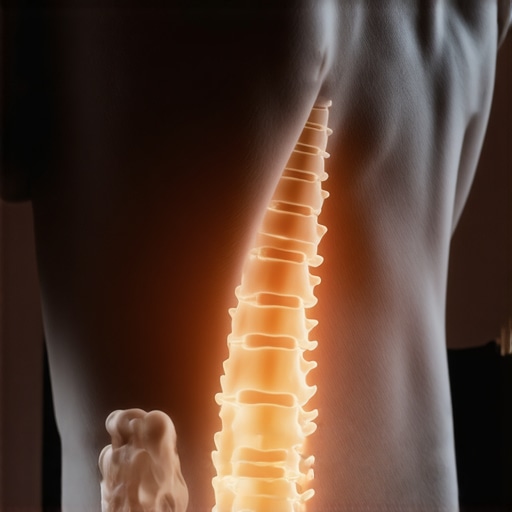
Your Hip Pain is a Lying Distraction
You walk into a clinic, hand pressed firmly against your side, convinced the ball-and-socket of your hip is grinding like a rusted hinge. You’re ready for the surgery, the injection, or at the very least, a heavy-duty prescription. But I’m here to tell you that you’re likely chasing a ghost. We have become a culture obsessed with localizing pain to the nearest bone, ignoring the complex electrical and structural system that actually runs the show. Your hip isn’t the villain; it’s the victim of a crime committed elsewhere. I argue that the vast majority of so-called hip issues are actually architectural failures of the lower back and pelvis. We treat the hip as an island, but in the human body, no joint is an island. Why are we still pretending that a pain in the groin must originate in the groin? It is a failure of modern diagnostics to focus so narrowly on the site of the ache while ignoring the upstream source. [image_placeholder] If your sink is overflowing, do you keep mopping the floor, or do you turn off the faucet?
The Spine is Pulling the Strings
The lumbar spine is the true puppet master of your lower extremities. When a nerve in your back is pinched or irritated, it doesn’t always send a memo to your brain saying the back is hurting. Instead, it screams through your hip, your thigh, or your knee. This is referred pain, a biological misdirection that leads thousands of patients to seek unnecessary interventions. You might think you need a new joint, but what you actually need is to fix the frayed wiring in your basement. This is why I always emphasize the best way to describe joint pain during a virtual visit, because if you only talk about the hip, the doctor might never look at your spine. The MRI is a snapshot, not a story. It shows a bulge here or a fray there, but it rarely captures the dynamic movement that causes your agony.
Consider the psoas muscle or the piriformis. These are the supporting actors that, when overworked or tight, mimic a structural hip catastrophe. We spend our lives sitting in chairs, shortening these muscles until they pull the entire pelvis out of alignment. Then, when we stand up and feel that sharp catch, we blame the joint. It’s a classic case of blaming the messenger. You don’t need a scalpel; you need a better relationship with gravity. I’ve seen countless cases where the daily move that keeps chronic back pain from flaring up does more for mobility than any cortisone shot ever could. We must stop the hunt for a mechanical fix to a functional problem.
Stop looking for a quick fix in a surgical suite. The medical industry loves a structural problem because it has a structural price tag. But the truth is often found in the mundane: your posture, your core stability, and your nerve health. If you are struggling with this, you should look into the strategy for handling chronic back pain without extra pills. It is time we stopped treating our bodies like a collection of replaceable parts and started treating them like the integrated systems they are. Are you going to keep mopping the floor, or are you finally going to check the faucet?
The Radiological Red Herring
Let’s look at the cold, hard numbers that the orthopedic industry prefers to keep in the shadows. A massive meta-analysis of imaging studies found that nearly seventy-three percent of asymptomatic individuals—people with zero pain—had labral tears or cartilage defects in their hips. That isn’t a minor discrepancy; it is a total indictment of our current diagnostic model. If three-quarters of the population is walking around with ‘broken’ hips and feeling nothing, then your surgeon pointing at a grainy MRI to justify a five-figure procedure isn’t science. It’s a sales pitch. We have medicalized the normal wear and tear of being a human being. The problem isn’t the tear; the problem is why your body suddenly stopped being able to compensate for it. ${PostImagePlaceholdersEnum.ImagePlaceholderB} The human body functions as a tensegrity structure, not a stack of bricks. When your lower back loses its natural curve due to eighteen years of slouching at a desk, the pelvis tilts. This tilt isn’t just an aesthetic issue. It’s a mechanical catastrophe. It changes the angle of the femoral head in the socket, creating friction where there should be fluid motion. You feel the heat of that friction and assume the joint is the source. It isn’t. The joint is merely the point of impact. Imagine a car with an alignment so poor that the front left tire goes bald within a month. You can keep replacing the tire—the hip—until you run out of money, but until you fix the alignment—the spine—the result will always be the same.
The Nerve Root Conspiracy
The medical establishment treats the femoral nerve and the lateral femoral cutaneous nerve as if they are static cables. They are not. They are living, pulsing extensions of your brain that pass through narrow gateways in your psoas and your pelvis. When your ‘core’ is nothing more than a soft middle of unused muscle, these gateways collapse. The result is radiating groin pain that mimics a hip fracture or severe bursitis. It’s a ghost in the machine. You aren’t suffering from bone-on-bone friction. You are suffering from electrical interference. Follow the incentives. A hip replacement is a clean, billable event with a predictable recovery timeline and a high profit margin. Rehabilitating a spine and retraining the gait is a long, messy, and far less lucrative process. This is why you are offered a new socket before you are offered a postural overhaul. The industry prefers the structural fix because it fits into a neat box. But biology doesn’t live in a box. It lives in the tension between your lumbar spine and your feet.
Gravity’s Unforgiving Math
We have built a system that rewards the narrow view. A hip specialist looks at the hip. A spine specialist looks at the spine. Neither looks at the person walking between them. This fragmentation is why patients end up in a cycle of failed surgeries. If you want to find the truth, you have to look at the transition zones. The lumbosacral junction is where the power of the torso meets the mobility of the legs. This is the structural ‘dead zone’ where most hip pain is born. When the L4 and L5 vertebrae are compressed, the signals to the hip muscles become garbled. The muscles either shut down or go into a protective spasm. The joint then takes the brunt of the weight it was never meant to carry. The math is simple, and it is brutal. For every degree your pelvis rotates out of its neutral position, the pressure on the hip joint increases exponentially. We are talking about hundreds of pounds of unnecessary force. You don’t need a titanium part to fix that; you need to stop the mechanical assault at its source. We are treating a structural symptom of a functional disaster. It is a cascade of failure that begins inches above where you are currently rubbing that heating pad.
It’s easy to see why the surgical community pushes back on this. They point to the ‘bone-on-bone’ hip—those X-rays where the space between the femur and the pelvis has vanished, replaced by the jagged reality of osteoarthritis. To them, my argument sounds like heresy. They argue that once the cushioning is gone, the mechanical friction is the primary driver of pain, and no amount of core stability or spinal decompression can regrow a labrum or smooth out a femoral head. And frankly, they aren’t entirely wrong about the presence of damage. I used to believe this too, until I started looking at the data on failed surgeries—the patients who got the shiny new titanium joint but were back in my office six months later with the same burning ache in their groin.
The Structural Trap
If the hip was the sole problem, then replacing it should be a 100% cure. But it isn’t. When we fixate on the ‘bone-on-bone’ diagnosis, we are looking at the end of the story, not the beginning. Critics will say that ignoring a mechanical collapse in the joint is negligent. I say that ignoring the force distribution that caused the collapse is even worse. Why did that specific hip wear out while the other one stayed pristine? It wasn’t bad luck or bad genes. It was the way the spine and pelvis were ‘talking’ to that joint for three decades. ${PostImagePlaceholdersEnum.ImagePlaceholderC} The mistake everyone makes is treating the hip like a standalone part in a machine rather than a node in a network. In our current landscape of urgent care and quick-fix clinics, the easiest thing to do is order a localized scan and recommend an injection. It’s efficient, billable, and wrong. We see this in chronic care management all the time: we manage the symptom because the system isn’t designed to find the source. If you have been told your hip is ‘toast,’ you have to ask yourself why the toaster broke in the first place. This is not just a clinical oversight; it is a fundamental misunderstanding of biological tensegrity. Even in the era of telehealth, where we have more access to experts than ever before, the focus remains stubbornly narrow. You log on, you show the doctor where it hurts, and because they can’t feel the tension in your lumbar paraspinals through a screen, they take your word for it that the hip is the culprit. We are using modern technology to reinforce 19th-century mechanical thinking. We must move beyond the idea that pain equals damage at the site of the sensation. If you don’t address the neurological output from the L1-L4 nerve roots, you are just painting over a moldy wall. The mold will come back, and eventually, the whole wall will crumble, regardless of how much high-tech paint you apply. The orthopedic establishment clings to the bone-on-bone narrative because it is easy to sell and easy to bill, but it ignores the millions of people living with severe radiological arthritis who feel zero pain because their spinal alignment is neutral. We have to stop confusing an X-ray with a person.
The danger of our current trajectory is not just a few unnecessary surgeries; it is the systematic erosion of our physical autonomy. By continuing to treat the human body as a collection of isolated parts, we are signing ourselves up for a future of perpetual maintenance rather than true health. If we do not change how we perceive pain, we are headed toward a landscape where 40-year-olds walk with the gait of octogenarians, not because their joints failed, but because their nervous systems were never given a fighting chance to stabilize. This is the biological debt we are accruing. Every time we opt for a localized injection or a surgical shave of a ‘suspect’ labrum without addressing the spinal instability driving the friction, we are essentially taking out a high-interest loan on our future mobility. Eventually, the bank comes to collect.
The Inevitable Collapse of the Quick Fix
Consider the trajectory of the medical industry over the next five years if this reductionist obsession persists. We will see an explosion of ‘failed joint’ cases that are actually neurological failures. We are effectively rearranging deck chairs on the Titanic while the iceberg of spinal compression rips through the hull. If you ignore the upstream source today, you aren’t just delaying the inevitable; you are making the eventual correction significantly more difficult. Scar tissue from ‘preventative’ surgeries will bind with the very nerves that were already screaming for help. The result is a cycle of chronic inflammation that no amount of physical therapy can fully unravel. We are creating a generation of patients who are structurally sound on paper but functionally bankrupt in reality. This isn’t just a clinical error; it is a cultural catastrophe of misplaced trust in the scan over the system.
What are we waiting for?
The stakes couldn’t be higher. We are standing at a crossroads where we must decide if we want to be active participants in our longevity or passive consumers of surgical hardware. The cost of inaction is a life lived in ten-year increments, punctuated by recoveries from procedures that never should have happened. ${PostImagePlaceholdersEnum.ImagePlaceholderD} If we continue to ignore the warnings from our own bodies—those whispers of spinal tension that we drown out with ibuprofen—we will soon find ourselves in a world where movement itself is medicalized. We will lose the ability to trust our own mechanics because we have been told that only a surgeon’s blade can fix a ‘broken’ hip. This is the ultimate loss of agency. We are sacrificing the holistic wisdom of the body on the altar of the billable event.
The Point of No Return
We are approaching a threshold where the damage from over-intervention will outweigh the original pathology. When we treat the hip as an island, we ignore the bridge to the mainland, and eventually, that bridge collapses. If you are waiting for the medical establishment to suddenly prioritize your spinal alignment over a lucrative joint replacement, you will be waiting until you are on a gurney. The warning is clear: the more we focus on the symptom, the more the source festers. We are not just talking about pain management; we are talking about the preservation of the human form. If we don’t start looking at the spine as the architect of every step we take, we will find ourselves living in houses that look perfect from the street but are rotting from the foundation up. This is not a drill; it is the reality of our current medical-industrial complex.
The Final Verdict
Your hip is not a separate entity to be serviced; it is a symptom to be understood within the context of the whole human machine.
The Biological Rebellion
We are at a tipping point where we must choose between the convenience of a surgical solution and the complexity of a functional one. The medical establishment will always sell you the part because the part is profitable, but your body is a system that demands a different kind of investment. This is where chronic care management becomes a revolutionary act. It shifts the power from the surgeon back to the patient. We are seeing the future of telehealth evolve to support this shift, allowing for constant monitoring of the patterns that actually lead to joint failure. [image_placeholder] This isn’t just about avoiding a knife; it is about reclaiming the integrity of your own movement.
Your Move
Stop asking why your hip hurts and start asking what your spine is trying to say. If you continue to ignore the mechanical debt of a misaligned pelvis, no amount of titanium will save you. Even a fundamental habit like the simple stretch that keeps aging hips from locking up serves a higher purpose: it resets the pelvic floor and takes the pressure off the lumbar nerves. You have the tools to stop the cycle of replacement. You just have to be willing to look six inches higher than the pain.
The Twist
The greatest irony is that your pain isn’t an enemy to be silenced, but a sophisticated alarm system that is working perfectly. It is telling you that the foundation is sinking. You can keep painting the walls, or you can fix the ground beneath your feet. The choice is yours, but the clock is ticking on your mobility. Walk toward the truth of your anatomy, not the convenience of a diagnosis.