
Why Your Evening Exercise Is Ruining Your Morning Fasting Labs
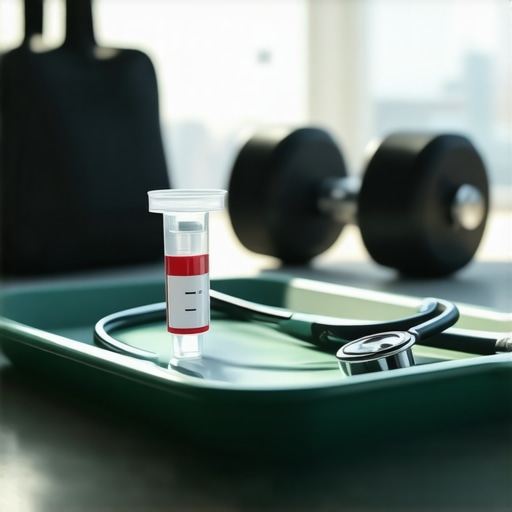
Your Late-Night Gym Sessions Are Sabotaging Your Doctor Visits
Your 8:00 PM sprint session is a metabolic lie. We have turned exercise into a secular religion, and like any dogma, it has blinded us to irrationality. You have been told that any movement is good movement, regardless of the clock. This is wrong. When you drag your exhausted body to the gym after a long day, you aren’t just burning calories; you are actively poisoning the data your physician relies on to keep you alive. I argue that the cult of the evening workout is the single greatest contributor to the noise in our modern medical records. You think you are being healthy, but you are actually skewing your results toward a diagnosis you don’t deserve.
The obsession with hitting the gym after dark ignores one fundamental biological truth: your body doesn’t have an off switch that resets your chemistry the moment your head hits the pillow. When you push your limits under artificial lights, you force your liver and adrenal glands into a state of high alert. You might feel exhausted afterward, but your internal chemistry is screaming. You are effectively presenting a distorted version of your health to the lab. It’s a waste of time and clinical resources that leads to unnecessary prescriptions and avoidable anxiety.
Your Evening Sweat is a Medical Hallucination
Why are we still acting surprised when our lab results come back skewed? If you spend your evening under a heavy barbell, your fasting glucose will look like that of a pre-diabetic. This isn’t because you have a disease; it’s because the reason your blood sugar spikes after an intense workout is a natural physiological defense mechanism. Your liver dumps glucose to fuel the fight, and that sugar doesn’t just vanish because you slept for six hours. You are walking into that clinic with a body that is still cleaning up the wreckage of your late-night ego-lifting.
Trying to get an accurate fasting blood panel twelve hours after a high-intensity workout is like trying to weigh a heavy suitcase while it’s still hurtling down a moving airport conveyor belt. The scale might give you a number, but that number is a fiction. It reflects the momentum, not the mass. When you present this fictional data to a doctor, you are inviting a misdiagnosis. This is why personalized telehealth strategies for better outcomes often hit a wall—not because the care is lacking, but because the input data is trash. You are essentially lying to your medical provider without saying a word.
The Morning Lab is Not a Performance
You might think you’re being disciplined by fitting in that late session, but you’re being reckless with your medical history. I’ve seen patients panic because their blood sugar spikes in the morning without realizing they are the ones who caused it. It’s not just about the sugar, either. If you’re monitoring your renal health, the late-night gym habit is even more destructive. There is a specific reason to avoid exercise before your kidney function test: muscle damage markers like creatinine will skyrocket. Your doctor sees those numbers and thinks your kidneys are failing. In reality, you just did too many squats ten hours before the needle hit your vein.
We need to stop treating our bodies like machines that can be toggled on and off for convenience. If you want results that mean something, you have to stop performative fitness and start practicing physiological honesty. You need to adopt a morning routine that fixes your fasting glucose spikes by actually allowing your body to reach a baseline state before the sun comes up. If you can’t workout before noon, don’t do it the night before a blood draw. Stop lying to your labs, and start respecting your biology.
The Cortisol Debt No One Can Pay
The problem isn’t the sweat; it’s the endocrine debt. When you engage in high-intensity training at 9:00 PM, you aren’t just burning calories; you are placing a massive order for cortisol and adrenaline that your body cannot cancel before your 8:00 AM blood draw. The medical establishment treats the ‘fasting state’ as a simple twelve-hour window of abstinence from food, but this is a gross oversimplification of human biology. Your liver does not care that you didn’t eat a bagel if it is still pumping out glucose to recover from a set of heavy deadlifts. We are forcing a high-stress biological event into a low-stress diagnostic box, and the results are catastrophic for your medical record.
We have ignored the biological lag. The human body is a sluggish vessel when it comes to hormonal recalibration. You think you are resting because your eyes are closed, but your internal systems are still running a marathon to repair micro-tears in muscle tissue and replenish glycogen stores. This process is noisy. It is chaotic. Most importantly, it is detectable. When a physician looks at your blood panel, they are looking for a baseline, a steady state that represents your ‘normal’ function. By working out the night before, you are handing them a peak and calling it a valley. It is a fundamental betrayal of the diagnostic process.
${PostImagePlaceholdersEnum.ImagePlaceholderB}
The Architecture of a False Diagnosis
The math simply does not add up for the late-night athlete. Consider the standard markers for kidney function. A 30% elevation in creatinine levels following a heavy leg day is not a statistical anomaly; it is a physiological certainty. In any other context, that 30% jump isn’t just a slight variation—it is a red alert for acute kidney injury. Your doctor, who likely has fifteen minutes to review your chart, is not going to cross-reference your Strava activity with your lab results. They are going to see a number that suggests your renal system is failing and proceed accordingly. They will order more tests. They will suggest lifestyle changes you don’t need. They will treat a ghost in the machine.
This isn’t just about one or two markers. The ripple effect extends to your entire metabolic profile. Intense exercise triggers a systemic inflammatory response. C-reactive protein (CRP) levels, often used to gauge cardiac risk, can stay elevated for over twenty-four hours after strenuous activity. If you are tested during this window, you aren’t being evaluated for your actual heart health; you are being evaluated for how hard you pushed yourself in the squat rack. It is a false positive by design. You are paying for a professional medical opinion based on data that is fundamentally corrupted by your own calendar.
Where the Lab Work Fails
The industry is built on the myth of the static patient. The system assumes you are a sedentary creature whose only variables are what you ate for dinner and how much you slept. It is not equipped for the individual who oscillates between extreme physical exertion and clinical stillness within a ten-hour window. This is the root cause of the modern medical disconnect. The problem isn’t that the tests are bad; it’s that the timing is arrogant. We assume we can ignore the massive physiological spike of a workout because it’s ‘healthy’ movement. Biology does not make moral judgments. It only reacts.
If you insist on the midnight gym session, you are choosing to live in a state of permanent medical ambiguity. You are voluntarily entering a cycle of ‘borderline’ results and ‘re-tests’ that drain your bank account and your mental health. Every time you step into that clinic with a body still recovering from a late-night session, you are gambling with your diagnosis. The data is clear: your effort is being misread as illness. You are a healthy person presenting as a sick one because you refuse to respect the time your body needs to actually reach a baseline. The gym isn’t saving you; it’s masking who you actually are.
The standard defense for the late-night gym habit is seductive in its simplicity: "The best workout is the one you actually do." I hear it from fitness influencers, productivity gurus, and exhausted parents alike. They argue that in an era of sedentary decay and rising obesity, criticizing the timing of exercise is elitist gatekeeping. They claim that the psychological win of maintaining a streak outweighs the minor "noise" in a blood panel. From a purely behavioral standpoint, they are right. If your choice is a 9:00 PM session or no session at all, the 9:00 PM session wins for your waistline. But this argument is a dangerous category error. It confuses habit formation with clinical reality. It assumes that as long as you are moving, the biological context of that movement is irrelevant. This is not just a misunderstanding of fitness; it is a profound misunderstanding of how medical science actually functions.
The Trap of Consistency
It is easy to see why people think consistency is the only metric that matters. We have been conditioned to believe that the human body is a linear machine—input effort, receive health. If you hit your targets, you are "good." I used to believe this too, until I spent months reviewing lab results for high-performers who looked like medical disasters on paper. I saw a thirty-year-old marathoner whose kidney markers suggested he was headed for dialysis, simply because he squeezed in a heavy leg session the night before his physical. The consistency that made him an athlete was the same consistency that was making him a medical anomaly. We are told to "just show up," but showing up at the wrong time creates a version of you that doesn’t actually exist in nature. You are presenting a stressed, inflamed, and metabolically frantic snapshot as your permanent identity.
${PostImagePlaceholdersEnum.ImagePlaceholderC}
The critics will say that a good doctor should be able to account for a workout. This is the "Common Trap" of overestimating the diagnostic system. We imagine our physicians as Sherlock Holmes-style detectives who will piece together our late-night deadlifts with our elevated liver enzymes. The reality is far more clinical and far more cold. The medical system is a massive, automated processing plant designed for the average, sedentary human. When you input data that looks like pathology, the system treats it as pathology. Expecting a clinician to manually "adjust" your glucose or creatinine levels based on your gym schedule is like asking a pilot to ignore the engine warning light because you know you just pushed the throttle a bit too hard. It is a reckless way to manage your health history.
The argument that the body "adapts" to late-night stress is equally flawed. Yes, you might get better at sleeping after a heavy session, but your endocrine system doesn’t care about your sleep quality when it’s busy managing a cortisol spike. The lag is the law. Biological processes operate on a circadian rhythm that has been fine-tuned over millennia. When you ignore that rhythm to fit a workout into your schedule, you aren’t just being "disciplined." You are being biologically arrogant. You are assuming that you can overwrite your evolutionary programming because you bought a 24-hour gym membership. The result is a medical record filled with "noise" that masks real issues and highlights fake ones. You aren’t just burning calories; you are burning your credibility as a patient. The goal of a lab test is to find the truth, not to see how well you can hide the evidence of your latest workout.
The Dangerous Erosion of Clinical Truth in an Always-On Culture
We are standing at a precipice where the line between actual disease and self-induced physiological noise is blurring beyond recognition. If we continue to treat our bodies as 24-hour performance machines while expecting clinical precision, we are inviting a systemic collapse of the diagnostic process. The stakes are no longer just a bad test result or a follow-up phone call. We are talking about the permanent corruption of your medical identity. Every time you force a lab to read your post-workout exhaustion as a resting state, you are tattooing a lie onto your digital health record—a lie that will follow you for decades.
The Price of a False Record
Consider the immediate fallout of this metabolic masquerade. When you present as pre-diabetic or as having stage 2 kidney disease because of a late-night gym session, the medical machine reacts with defensive aggression. You are placed on statins you don’t need, or metformin that masks your actual insulin sensitivity. This isn’t just about unnecessary co-pays; it is about the cascading side effects of medications intended for the sick being prescribed to the healthy. We are over-medicalizing the fit because the fit refuse to be still. If we do not stop this cycle, we will reach a point where doctors no longer trust the labs, and patients no longer trust their doctors. The entire foundation of evidence-based medicine rests on the assumption of a clean sample. Without it, we are just guessing in the dark.
${PostImagePlaceholdersEnum.ImagePlaceholderD}
A Future Written in Error
In five years, this problem will not be human-controlled; it will be algorithmic. As we move toward AI-driven diagnostics, these systems will not have the nuance to ask if you did heavy triples at midnight. They will simply see the spike in creatinine or the dip in heart rate variability and flag you as a high-risk liability. We are moving toward a world where your health insurance premiums and your access to specialized care are determined by a digital twin that is constantly fed corrupted data. Imagine being denied coverage or being forced into a high-risk pool because your evening habit created a pattern that looks like chronic inflammation to a machine learning model. This is the slippery slope of physiological dishonesty.
Is it too late to reclaim the truth?
The urgency of this moment cannot be overstated. We are currently building the datasets that will train the next generation of medical AI. If those datasets are filled with the noise of midnight gym-goers, the very definition of normal will be permanently skewed. It is like a navigator trying to steer a massive ship using a compass that has been placed next to a powerful magnet; the deviation might seem small at first, but over a long enough journey, you end up miles away from your destination. We are drifting away from biological reality, and the cost of that drift is a life spent managing diseases you never actually had. The choice is yours: maintain the vanity of the late-night streak, or protect the integrity of the only body you have. The window to choose is closing.
Reclaim Your Biological Integrity
If we continue to blur the lines between high-intensity exertion and clinical stability, we are effectively choosing to be treated for a version of ourselves that is perpetually in crisis. You are not a static data point; you are a complex biological system that requires a baseline to be understood. This isn’t just about avoiding a few re-tests or a follow-up phone call. It is about ensuring that the future of telehealth transforming chronic disease monitoring today is built on a foundation of clinical integrity, not high-intensity noise. Every time you skip the necessary recovery phase for your endocrine system, you are inviting a diagnostic algorithm to mislabel your life for the next decade.
We must demand better of our schedules so our doctors can demand better of our data. Whether you are leveraging urgent care innovations streamlining same-day lab tests for faster results or managing a lifelong condition through personalized telehealth strategies for better outcomes, the quality of your care is tethered to the honesty of your sample. You might be searching for the one blood marker that predicts burnout before you feel it, but you will never find it if it is drowned in the adrenaline of a midnight deadlift. This is the only real strategy for getting an accurate cholesterol test and protecting your medical identity from the noise of your own making.
The Final Verdict: You cannot expect a clear medical signal from a body you keep in a state of constant, self-induced physiological static.
The Twist: We have spent years trying to hack our health through timing and intensity, only to realize that the most powerful health hack of all is simply being still enough for the truth to catch up with us.
The lab doesn’t care about your consistency in the gym; it cares about your baseline—find it before the medical system finds a disease you don’t actually have.