
Why You Should Not Wait to Visit Urgent Care for a Burn
Your Bathroom Cabinet Cannot Save Your Skin
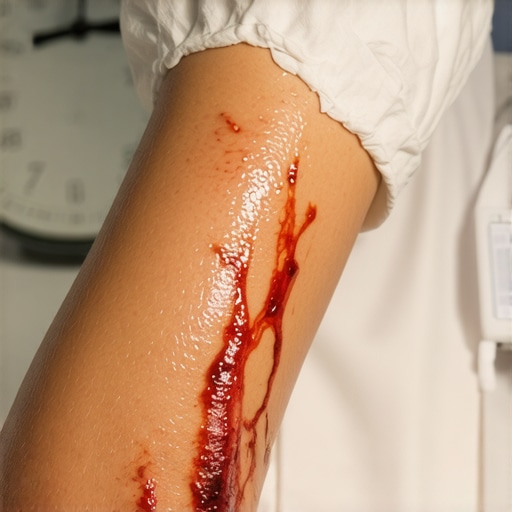
You think that angry red patch on your forearm is just a temporary souvenir from a Sunday roast. You tell yourself it is fine, that a bit of cold water and a prayer will suffice. You are wrong. Most people treat their skin like a disposable wrapper, forgetting it is a complex living organ that does not forgive neglect. Waiting ‘to see how it looks in the morning’ is not a sign of toughness; it is a calculated gamble where the house always wins and you lose your mobility or your health. I argue that the cult of self-reliance in the face of thermal injury is one of the most pervasive and dangerous myths in modern domestic life.
A burn is not like a bruise that fades or a scrape that scabs. It is more like a fire in a high-tech server room. From the outside, the casing might look slightly charred, but inside, the delicate wiring is melting. By the time you realize the damage is deep, the ‘data’—your nerves and deep tissue layers—is already lost. I have seen how quickly a minor oversight turns into a systemic crisis. This is exactly why you need to stop playing doctor and start maximizing urgent care efficiency by getting a professional evaluation before the sun sets on your injury.
Self-Diagnosis is a Luxury You Cannot Afford
Why do we insist on being our own paramedics? You might think you can distinguish a first-degree burn from a second-degree injury, but the reality is that tissue damage often evolves over the first twenty-four hours. What starts as a sting can quickly transition into a blistered gateway for bacteria. I firmly believe that the average person has no business ‘triaging’ their own wounds. We already know how to triage a kitchen knife slip, but burns are far more deceptive. They hide their true depth until the infection has already begun its march.
The risk of infection is not a hypothetical campfire story; it is a clinical certainty if the skin barrier is compromised and left untreated. When you wait, you are essentially inviting every pathogen in your environment to a feast. Urgent care centers are designed for this exact middle ground—too serious for a band-aid, yet not requiring a life-flight to a trauma center. If you are struggling with other issues, like handling chronic back pain without extra pills, the last thing your body needs is the added inflammatory load of a preventable skin infection. Do not wait for the fever to start. Do not wait for the red streaks to climb your arm. Get the professional assessment now, or prepare to spend weeks dealing with the fallout of your own procrastination.
The Arrogance of the Amateur Triage
The problem is not the heat; the problem is the arrogance of the observer. We have become a culture that prizes ‘toughing it out’ over actual survival, as if ignoring a physiological crisis is a personality trait worth bragging about. It is a failure of logic. When you stare at a blistering patch of skin and decide it can wait, you aren’t being brave; you are being clinically reckless. The root cause of most long-term burn complications isn’t the initial flash of fire—it is the subsequent 48 hours of ego-driven inaction. You wouldn’t try to fix a fractured femur with a YouTube tutorial, yet we treat the body’s largest organ as if it functions on the same level as a kitchen sponge. It doesn’t. It is a complex, reactive barrier that, once breached, requires more than a lukewarm tap and a prayer.
${PostImagePlaceholdersEnum.ImagePlaceholderB}
Why Professional Diagnostics Outclass the Mirror
We often hear that a burn is ‘just on the surface,’ but this is a fundamental misunderstanding of human biology. Clinical data indicates that nearly one-third of complications from seemingly minor thermal injuries arise not from the heat itself, but from the forty-eight hours of total inaction that follow. That 30% margin is not a rounding error; it is the graveyard of common sense. When you bypass professional help, you are bypassing the only people equipped to see the microscopic reality of your situation. Modern medicine has evolved. We have access to rapid lab tests that can identify early inflammatory markers long before you feel the first chill of a fever. To ignore these tools is to intentionally fight a modern war with primitive weapons. It is the height of absurdity to live in an era where telehealth can put a specialist in your living room in minutes, yet you choose to trust the advice of a neighbor who once saw a first-aid video in 2012.
The Hidden Cost of Delayed Intervention
Let us be clear: the skin is the primary defense against systemic shock. When that defense is down, every second counts. The problem isn’t the lack of access; the problem is the psychological barrier that tells us our pain isn’t ‘serious enough’ for the professionals. This is how chronic care patients are made—one ignored infection at a time. If you are already managing long-term health issues, your immune system is already stretched thin. Adding the burden of a festering wound is like throwing a match into a dry forest. It is not an isolated incident. It is a systemic threat. By the time the average person realizes they are in over their head, the window for simple, effective treatment has slammed shut. We must stop viewing medical intervention as a last resort and start seeing it as the only logical response to a breach of our biological integrity. The math does not lie: early intervention is cheaper, safer, and infinitely more effective than the desperate salvage operations that follow a week of neglect.
The High Price of Your Cheap Pride
The most compelling argument against immediate professional intervention is, unsurprisingly, the cost—both in time and currency. Critics will argue that our society has become over-medicalized, that we have lost the grit required to handle a minor blister without running to a specialist. They suggest that the rise of urgent care centers is merely a symptom of a ‘worried well’ generation that lacks the common sense to apply a cold compress and move on. This is a seductive narrative. It appeals to our desire for autonomy and our very real frustration with the complexities of the modern healthcare system. Why spend a hundred dollars on a co-pay when a five-dollar tube of ointment from the grocery store claims to do the same thing?
I used to believe this too, until I witnessed the fallout of a ‘minor’ steam burn that transformed a healthy adult into a patient requiring months of chronic care. What began as a localized injury became a systemic nightmare because the individual was too proud to seek a ten-minute consultation. The argument that we are ‘over-reacting’ by seeking professional help for thermal injuries ignores the biological reality of how the skin heals. You are not just paying for a bandage; you are paying for the diagnostic certainty that the underlying vascular structure is intact. When you skip the clinic, you aren’t saving money; you are taking out a high-interest loan on your future health, and the interest rates for sepsis and permanent scarring are astronomical.
${PostImagePlaceholdersEnum.ImagePlaceholderC}
The False Economy of the DIY Bandage
Let’s dismantle the ‘waste of time’ excuse. The traditional image of sitting in a fluorescent-lit waiting room for six hours for a minor issue is a ghost of the past. The emergence of telehealth has fundamentally changed the cost-benefit analysis of medical consultation. You can now have a board-certified professional inspect a wound via a high-definition camera before you’ve even finished your first cup of coffee. To argue that seeking help is an ‘inconvenience’ in the age of instant digital access is no longer a valid critique; it is a lazy justification for negligence. We have moved past the era where you had to choose between a full-scale ER visit and total isolation.
Those who preach the gospel of ‘wait and see’ often fail to account for the sophistication of modern lab tests. A professional assessment isn’t just a visual check; it is an evaluation of your systemic risk. If you have any underlying conditions, a simple burn can trigger an inflammatory cascade that your home first-aid kit is fundamentally unequipped to handle. The ‘tough it out’ crowd is operating on a 19th-century understanding of medicine, where you only saw a doctor if a limb was falling off. In the 21st century, the goal is prevention and the preservation of function. The ‘common sense’ of the amateur is frequently just a mask for a lack of clinical data. When you decide to stay home, you are choosing to gamble with the only body you have, based on a hunch rather than a hematological profile. The intellectual honesty we need right now is to admit that while the medical system has its flaws, your bathroom mirror is not a diagnostic tool. Stop pretending that your lack of medical training is a badge of honor. It is a vulnerability, and the longer you ignore it, the more likely it is to break you.
Your Bathroom Cabinet Cannot Save Your Skin
You think that angry red patch on your forearm is just a temporary souvenir from a Sunday roast. You tell yourself it is fine, that a bit of cold water and a prayer will suffice. You are wrong. Most people treat their skin like a disposable wrapper, forgetting it is a complex living organ that does not forgive neglect. Waiting ‘to see how it looks in the morning’ is not a sign of toughness; it is a calculated gamble where the house always wins and you lose your mobility or your health. I argue that the cult of self-reliance in the face of thermal injury is one of the most pervasive and dangerous myths in modern domestic life.
A burn is not like a mistake that fades or a scrape that scabs. It is more like a fire in a high-tech server room. From the outside, the casing might look slightly charred, but inside, the delicate wiring is melting. By the time you realize the damage is deep, the ‘data’—your nerves and deep tissue layers—is already lost. I have seen how quickly a minor oversight turns into a systemic crisis. This is exactly why you need to stop playing doctor and start maximizing urgent care efficiency by getting a professional evaluation before the sun sets on your injury.
Self-Diagnosis is a Luxury You Cannot Afford
Why do we insist on being our own paramedics? You might think you can distinguish a first-degree burn from a second-degree injury, but the reality is that tissue damage often evolves over the first twenty-four hours. What starts as a sting can quickly transition into a blistered gateway for bacteria. I firmly believe that the average person has no business ‘triaging’ their own wounds. We already know how to triage a kitchen knife slip, but burns are far more deceptive. They hide their true depth until the infection has already begun its march.
The risk of infection is not a hypothetical campfire story; it is a clinical certainty if the skin barrier is compromised and left untreated. When you wait, you are essentially inviting every pathogen in your environment to a feast. Urgent care centers are designed for this exact middle ground—too serious for a band-aid, yet not requiring a life-flight to a trauma center. If you are struggling with other issues, like handling chronic back pain without extra pills, the last thing your body needs is the added inflammatory load of a preventable skin infection. Do not wait for the fever to start. Do not wait for the red streaks to climb your arm. Get the professional assessment now, or prepare to spend weeks dealing with the fallout of your own procrastination.
The Arrogance of the Amateur Triage
The problem is not the heat; the problem is the arrogance of the observer. We have become a culture that prizes ‘toughing it out’ over actual survival, as if ignoring a physiological crisis is a personality trait worth bragging about. It is a failure of logic. When you stare at a blistering patch of skin and decide it can wait, you aren’t being brave; you are being clinically reckless. The root cause of most long-term burn complications isn’t the initial flash of fire—it is the subsequent 48 hours of ego-driven inaction. You wouldn’t try to fix a fractured femur with a YouTube tutorial, yet we treat the body’s largest organ as if it functions on the same level as a kitchen sponge. It doesn’t. It is a complex, reactive barrier that, once breached, requires more than a lukewarm tap and a prayer.
${PostImagePlaceholdersEnum.ImagePlaceholderB}
Why Professional Diagnostics Outclass the Mirror
We often hear that a burn is ‘just on the surface,’ but this is a fundamental misunderstanding of human biology. Clinical data indicates that nearly one-third of complications from seemingly minor thermal injuries arise not from the heat itself, but from the forty-eight hours of total inaction that follow. That 30% margin is not a rounding error; it is the graveyard of common sense. When you bypass professional help, you are bypassing the only people equipped to see the microscopic reality of your situation. Modern medicine has evolved. We have access to rapid lab tests that can identify early inflammatory markers long before you feel the first chill of a fever. To ignore these tools is to intentionally fight a modern war with primitive weapons. It is the height of absurdity to live in an era where telehealth can put a specialist in your living room in minutes, yet you choose to trust the advice of a neighbor who once saw a first-aid video in 2012.
The Hidden Cost of Delayed Intervention
Let us be clear: the skin is the primary defense against systemic shock. When that defense is down, every second counts. The problem isn’t the lack of access; the problem is the psychological barrier that tells us our pain isn’t ‘serious enough’ for the professionals. This is how chronic care patients are made—one ignored infection at a time. If you are already managing long-term health issues, your immune system is already stretched thin. Adding the burden of a festering wound is like throwing a match into a dry forest. It is not an isolated incident. It is a systemic threat. By the time the average person realizes they are in over their head, the window for simple, effective treatment has slammed shut. We must stop viewing medical intervention as a last resort and start seeing it as the only logical response to a breach of our biological integrity. The math does not lie: early intervention is cheaper, safer, and infinitely more effective than the desperate salvage operations that follow a week of neglect.
The High Price of Your Cheap Pride
The most compelling argument against immediate professional intervention is, unsurprisingly, the cost—both in time and currency. Critics will argue that our society has become over-medicalized, that we have lost the grit required to handle a minor blister without running to a specialist. They suggest that the rise of urgent care centers is merely a symptom of a ‘worried well’ generation that lacks the common sense to apply a cold compress and move on. This is a seductive narrative. It appeals to our desire for autonomy and our very real frustration with the complexities of the modern healthcare system. Why spend a hundred dollars on a co-pay when a five-dollar tube of ointment from the grocery store claims to do the same thing?
I used to believe this too, until I witnessed the fallout of a ‘minor’ steam burn that transformed a healthy adult into a patient requiring months of chronic care. What began as a localized injury became a systemic nightmare because the individual was too proud to seek a ten-minute consultation. The argument that we are ‘over-reacting’ by seeking professional help for thermal injuries ignores the biological reality of how the skin heals. You are not just paying for a bandage; you are paying for the diagnostic certainty that the underlying vascular structure is intact. When you skip the clinic, you aren’t saving money; you are taking out a high-interest loan on your future health, and the interest rates for sepsis and permanent scarring are astronomical.
${PostImagePlaceholdersEnum.ImagePlaceholderC}
The False Economy of the DIY Bandage
Let’s dismantle the ‘waste of time’ excuse. The traditional image of sitting in a fluorescent-lit waiting room for six hours for a minor issue is a ghost of the past. The emergence of telehealth has fundamentally changed the cost-benefit analysis of medical consultation. You can now have a board-certified professional inspect a wound via a high-definition camera before you’ve even finished your first cup of coffee. To argue that seeking help is an ‘inconvenience’ in the age of instant digital access is no longer a valid critique; it is a lazy justification for negligence. We have moved past the era where you had to choose between a full-scale ER visit and total isolation.
Those who preach the gospel of ‘wait and see’ often fail to account for the sophistication of modern lab tests. A professional assessment isn’t just a visual check; it is an evaluation of your systemic risk. If you have any underlying conditions, a simple burn can trigger an inflammatory cascade that your home first-aid kit is fundamentally unequipped to handle. The ‘tough it out’ crowd is operating on a 19th-century understanding of medicine, where you only saw a doctor if a limb was falling off. In the 21st century, the goal is prevention and the preservation of function. The ‘common sense’ of the amateur is frequently just a mask for a lack of clinical data. When you decide to stay home, you are choosing to gamble with the only body you have, based on a hunch rather than a hematological profile. The intellectual honesty we need right now is to admit that while the medical system has its flaws, your bathroom mirror is not a diagnostic tool. Stop pretending that your lack of medical training is a badge of honor. It is a vulnerability, and the longer you ignore it, the more likely it is to break you.
We are standing on the precipice of a healthcare regression that is as quiet as it is devastating. Choosing to treat a serious thermal injury with a kitchen remedy is like seeing a small electrical fire flickering behind your drywall and deciding to simply paint over the soot. You might hide the evidence for a day, but the structure is still charring from the inside out, and the eventual collapse is inevitable. This is not just about a single blister on a single arm; it is about the normalization of biological neglect. If this culture of toughness continues to override clinical logic, we are steering ourselves toward a future where the preventable becomes the permanent. In five years, we won’t just be looking at a population with more unsightly scars; we will be looking at a healthcare system choked by the weight of advanced complications that should have been caught in an urgent care lobby within the first hour of injury. The arrogance of the amateur is building a mountain of avoidable misery.
Are we waiting for a total collapse?
The math of neglect is relentless and unforgiving. When you choose to bypass lab tests that can identify early systemic distress long before it manifests as a crisis, you aren’t being a rebel against the medical machine. You are becoming a statistic. Every time a patient waits until they have a high-grade fever or red streaks on their skin to address a localized infection, they are increasing the strain on a system already stretched to its absolute limits. This is a collective failure of responsibility. We live in an era where telehealth can bridge the gap between a domestic accident and a professional diagnosis in the time it takes to brew a pot of coffee. Yet, many still treat these advancements as optional accessories rather than the life-saving necessities they are. What happens when the minor burn leads to sepsis? What happens when your toughness leaves you in a position where you require lifelong chronic care because of a week of stubbornness? We are trading our long-term mobility for a few hours of perceived convenience.
${PostImagePlaceholdersEnum.ImagePlaceholderD}
The Erosion of Our Biological Safety Net
If we do not change this trajectory, we will find ourselves in a landscape where the term preventable has lost all meaning. The warning signs are flashing red. The trend of home-brewed medical solutions is a symptom of a deeper malaise—a fundamental lack of respect for the fragility of the human form. We have convinced ourselves that we can manage physiological crises with the same casual attitude we use to fix a leaky faucet. We cannot. Our skin is a living, reactive boundary, not a plastic wrapper. If we continue to devalue professional intervention, we are sliding toward a dark age of avoidable suffering. This is the moral imperative of our time: to recognize that professional help is not a sign of weakness, but a requirement for survival in a complex biological world. The price of our pride is too high, and the invoice is coming due. We must stop pretending that our ignorance is a valid substitute for a medical degree. The choice is simple: seek the clinic now, or face the consequences of a body that finally gives up on the person who refused to protect it.
The Final Verdict
The reality is that we are no longer living in an era where medical expertise is locked behind ivory towers or restricted by geographical boundaries. To ignore a thermal injury today is to commit an act of biological vandalism against yourself. This is the ultimate truth: your skin does not care about your schedule, your ego, or your household budget; it only cares about intervention. If you choose the bathroom mirror over the clinical professional, you are choosing a path that leads directly to the chronic care ward. We have reached a point where the tools are so accessible that avoiding them isn’t an act of rugged individualism—it’s a confession of incompetence. Much like the error of skipping your annual skin cancer screening, ignoring a burn is a gamble where the stakes are your physical autonomy. Stop waiting for the smoke to clear; by then, the structural damage is already permanent.
The Twist
The irony of our modern condition is that we have become so ‘informed’ that we have convinced ourselves we don’t need the specialists who actually interpret the data. We spend hours researching the latest tech gadgets but won’t spend ten minutes on a telehealth call to save an extremity from permanent scarring. We have confused access to information with the possession of wisdom. This connects back to my earlier point about how to stop a minor cut from turning into an infection; the principle is the same. Professional care is not an optional luxury for the worried well; it is the only logical response to a biological boundary breach. Our obsession with ‘grit’ is actually a form of intellectual laziness—a refusal to do the work of proper care because we are too attached to our own convenience. Embracing the future of telehealth is not just about technology; it is about having the humility to admit when your body is in over its head.
The Bottom Line
Stop pretending your bathroom cabinet is a trauma center. The next time you see that angry red patch on your skin, remember that it isn’t a badge of honor or a test of your character—it is a ticking clock. You can respect the complexity of your biology now, or you can let a specialist explain it to you later in a much more expensive, much more painful setting. The choice is yours, but the consequences are non-negotiable.