
How to Manage Senior Isolation with Better Virtual Access
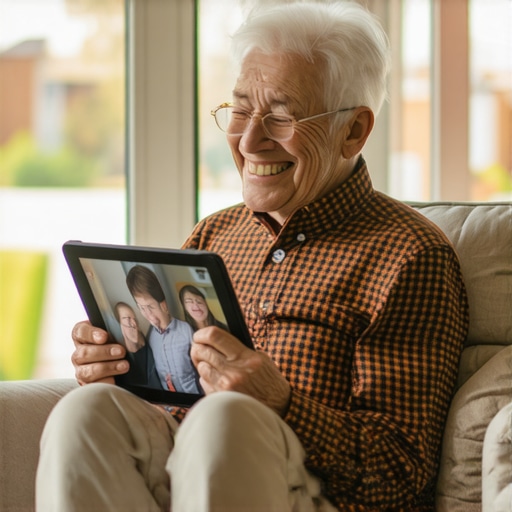
Stop Pretending the Internet Replaces the Human Heart
Stop pretending that a high-speed internet connection is a substitute for a handshake or a shared cup of coffee. We have been sold a dangerous narrative that “virtual access” is the magic pill for senior isolation. It isn’t. I argue that our current obsession with digital connectivity is often just a convenient mask for a societal failure to show up in person. You might think you are being a dutiful child by mailing a tablet to an assisted living facility, but without a strategy, you are just handing your parent a glowing brick of frustration. Isolation is a biological tax on the elderly, and a Zoom link alone doesn’t pay the bill.
We treat technology like a fire-and-forget weapon. We drop the hardware off, provide a three-minute tutorial, and expect the loneliness to vanish. But virtual access without intention is like a ghostly echo in an empty hallway; it reminds the senior of the life they are missing without providing any of the warmth. If we want to manage isolation, we have to stop treating the screen as the destination and start treating it as a very fragile bridge that requires constant maintenance. I believe we are currently using technology to outsource our guilt rather than to build real presence.
Screens Are Just Hardware Not Heart
The tech industry wants you to believe that more pixels equals less loneliness. They are wrong. Most virtual setups fail because they ignore the sensory reality of the aging body. Before you even think about the software, you must understand how to prepare your living room for a geriatric telehealth visit properly. It isn’t about the bandwidth; it is about the lighting, the acoustics, and the physical comfort of the person sitting in the chair. A senior struggling to hear a tinny speaker isn’t “connected”—they are being reminded of their own decline in high definition.
I have seen families spend thousands on high-end devices while ignoring the simple things. Sometimes, the 20 dollar gadget that makes your telehealth visit 10x better is more effective than the latest smartphone because it actually solves a specific physical barrier. We need to stop chasing the newest shiny toy and start focusing on usability. If a senior cannot navigate the interface while they are tired or confused, the technology is a failure, not the person. I argue that we must simplify the digital environment until it is as invisible as a telephone landline used to be.
Furthermore, we need to recognize that virtual access is a skill that must be coached, not just installed. You cannot expect someone to thrive in a digital space without a foundation. This is why I advocate that you must how to set up a senior friendly telehealth station at home with the same care you would use to baby-proof a house. It is about creating a sanctuary of communication, not a laboratory of frustration. When we fail to do this, we aren’t helping them manage isolation; we are adding a layer of technological exile to their already lonely lives. Even when we how to prep your senior parent for a virtual memory check, the focus should be on the person, not the platform. If the tech is the main character, you’ve already lost the plot.
The Convenience of the Digital Ghost
The problem isn’t that our technology is insufficient; the problem is that our intention is hollow. We have entered an era where we use digital connectivity as a shield to protect ourselves from the messy, time-consuming reality of physical presence. It is a Root Cause Analysis of a society that has decided efficiency is more valuable than empathy. We’ve outsourced the duty of care to algorithms and fiber optics, convinced that as long as the ‘green light’ is on, our elders are fine. It’s a lie. We are not connecting; we are merely monitoring.
When we look at the rise of virtual care, we see a system designed for the provider’s balance sheet, not the patient’s soul. We have replaced the warmth of a waiting room—a place where humans once sat together—with a cold, sterile portal. This shift isn’t about progress; it is about the commodification of attention. We are treating the elderly like hardware that needs a remote software update rather than living, breathing people who need the weight of a hand on their shoulder. If you think a video call replaces a visit, you aren’t paying attention. You are just checking a box to soothe your own conscience.
${PostImagePlaceholdersEnum.ImagePlaceholderB}
A Biological Tax on the Soul
Loneliness is not a poetic sentiment. It is a physiological state. The data is clear: social isolation carries a health risk equivalent to smoking 15 cigarettes a day. That 26% increase in the risk of premature mortality isn’t just a statistical dip; it is a systemic collapse of the human body under the weight of neglect. When we tell a senior that their lab tests look good via a portal message, we are ignoring the fact that their heart is slowing down from the sheer lack of human friction. Biological systems require more than data; they require the chemical signals of safety that only come from physical proximity.
We have reached a point where we believe that ‘access’ is synonymous with ‘care.’ It isn’t. You can have the fastest 5G connection in the world, but if the person on the other end is suffering from chronic care issues that include the slow rot of isolation, that bandwidth is useless. The body knows when it is being placated. It knows when the ‘interaction’ is just a series of pixels and compressed audio. We are effectively placing our seniors in a high-tech sensory deprivation tank and wondering why their cognitive health is failing. It’s because the brain requires the complex, unpredictable input of the physical world to stay sharp.
The Myth of Efficiency in Virtual Medicine
The tech-evangelists will tell you that telehealth and urgent care apps are saving the healthcare system. They are right, but they are saving it in the same way a payday loan ‘saves’ a bank account—by borrowing against the future at a ruinous interest rate. By removing the physical examination, we are removing the most basic element of the healing arts: the touch. A doctor cannot see the subtle tremor of a hand or the dullness in an eye through a 720p webcam. We are trading diagnostic depth for convenience, and the price is being paid by the most vulnerable among us.
This reliance on virtual platforms has created a class of ‘digital ghosts’—seniors who exist in our systems as data points but have no physical footprint in our lives. They are managed, but not known. They are treated, but not healed. I argue that the more we lean into the ‘virtual’ for chronic care, the more we lean out of our humanity. The technology should be the emergency backup, the urgent care of last resort when distance is an absolute barrier. Instead, we have made it the primary mode of existence, a convenient way to keep the elderly at arm’s length while pretending we are closer than ever. It is a hollow victory of engineering over emotion.
Critics will tell you that I am being a Luddite, or worse, an idealist who ignores the crushing reality of logistics. They argue that in a world where children live three states away and doctors are buried under paperwork, a screen is the only viable lifeline. They point to the ‘democratization of access,’ claiming that virtual tools bring specialized knowledge to those who would otherwise have nothing. It is a compelling argument because it sounds practical. It frames digital care as the only logical response to a broken system. They say we must choose between a pixelated doctor and no doctor at all. I used to believe this too, until I realized that by accepting the ‘something is better than nothing’ mantra, we have stopped demanding the ‘something’ that actually matters. When we settle for a video call for chronic care management, we aren’t filling a gap; we are permanently replacing a human relationship with a subscription service. We are telling the elderly that their presence is a logistical problem to be solved rather than a human right to be honored. If we accept the screen as the solution, we stop looking for ways to bring people back into the room. This isn’t just about medicine; it’s about the fundamental social contract we have with our elders.
The Scalability Trap
The tech sector loves ‘scale.’ But human empathy doesn’t scale. You cannot mass-produce the feeling of being heard or the comfort of a steady hand. When we push telehealth as the gold standard for the aging, we are falling into a trap that confuses data transmission with care. A platform can deliver lab tests results in seconds, but it cannot interpret the fear in a patient’s eyes when they hear those results. It cannot smell the subtle scent of neglect in a home or notice the way a senior is favoring one side of their body when they walk across the room. By ‘scaling’ the interaction, we have stripped it of its most vital diagnostic and emotional components. The data points might be accurate, but the context is entirely lost. ${PostImagePlaceholdersEnum.ImagePlaceholderC} We are being fooled by the efficiency of the interface. We think because the video is clear, the connection is deep. This is the great illusion of our time. We have optimized for the urgent care model—the quick fix, the rapid triage—and applied it to the long, slow, complex process of aging. This isn’t innovation; it’s a surrender. We are essentially saying that the elderly are not worth the ‘inefficiency’ of a physical visit. We have built a world where it is easier to buy a high-definition monitor than it is to drive thirty minutes to sit on a porch. This digital buffer we’ve built doesn’t protect the senior; it protects us from the discomfort of their decline. If we don’t recognize this as a moral failure disguised as progress, we are headed for a future where we are all just icons on a screen, waiting for a connection that never truly arrives. The ‘efficiency’ of the digital world is often just a polite word for the abandonment of the physical one. We must stop pretending that a high-resolution image of a person is the same thing as the person themselves. It is a shadow, and you cannot build a life or a healthcare system on shadows.
The Cost of Human Absence
We are currently sleepwalking into a civilizational disaster. By embracing the digital screen as our primary tool for managing the elderly, we are architecting a future of profound abandonment. If we continue down this path, in five years we will have successfully automated the care of our parents while simultaneously erasing their humanity. We are building a digital ghetto where the elderly are monitored like prisoners rather than cherished like ancestors. This isn’t just about technology; it’s about the erosion of the social contract that binds generations together.
Treating an elderly parent via a tablet alone is like trying to nourish a starving plant with a high-definition photograph of a sun-drenched garden; it provides the visual representation of life while the roots continue to wither in the dark. We are trading the messy, vital exchange of human presence for the sterile safety of a video stream. When we do this, we are not just ‘providing access’—we are outsourcing our guilt to an algorithm. We are creating a world where chronic care is reduced to a series of push notifications, and the profound wisdom of our elders is lost to the noise of bad connectivity.
Is it too late to turn back?
The stakes couldn’t be higher. If we do not stop viewing telehealth as a complete replacement for a physical visit, we will face a wave of cognitive decline and depression that no urgent care clinic can fix. The brain is a social organ; it requires the chemical and sensory complexity of real life to stay sharp. When we remove that complexity, we trigger a systemic biological shutdown. The lab tests might look fine on the doctor’s screen, but the person behind those numbers is slowly fading into a digital ghost.
${PostImagePlaceholdersEnum.ImagePlaceholderD}
The Point of No Return
If we allow the screen to become the permanent barrier between us and the people who raised us, we are surrendering our most basic instinct for empathy. We are teaching the next generation that care is a task to be delegated to a device rather than a duty to be lived. This is the ultimate warning: if we continue to prioritize the efficiency of the interface over the sanctity of the individual, we will wake up in a society that is technologically advanced but emotionally bankrupt. We are losing the ability to look someone in the eye and see their soul, and once that is gone, no amount of bandwidth can bring it back. We are standing at a crossroads where the ‘convenient’ path leads directly to a world where we are all eventually managed, monitored, and utterly alone.
The Bottom Line
We are standing at a threshold where efficiency has become a mask for neglect. The digital screen is a supplement for geography, never a substitute for the human soul. We have spent billions perfecting the art of the telehealth interface while letting the art of the house call wither away. If we continue to believe that a high-resolution image is the same as a physical presence, we aren’t just failing our parents; we are redesigning the human experience to be as shallow as the glass we stare at. We must demand chronic care management personalized telehealth strategies for better outcomes that treat the screen as a tool, not a cage. The data from lab tests and urgent care apps should be the prologue to a conversation, not the final word on a person’s worth.
Your Move
The challenge before us is to reclaim the physical world. We must stop using technology to outsource our guilt and start using it to facilitate real-world friction. When you look at the future of telehealth transforming chronic disease monitoring today, look for the human in the machine. It is your responsibility to know how to tell if your telehealth doctor is actually listening or if they are simply navigating a dashboard. If you find the connection hollow, pull the plug and find a different way. Before you ever look for the checklist you need before your parent moves to assisted living, look for the ways you can remain a constant, physical presence in their lives. The screen can bridge a gap, but it cannot hold a hand.
The Twist
The true danger of our digital pivot isn’t that technology fails to mimic life, but that it successfully trains us to be comfortable with a life that has no room for the inconvenient needs of others. We are not just isolating the elderly; we are pre-ordering our own eventual abandonment by teaching our children that care is something that happens on a dashboard. If we don’t fight for the physical presence of our elders now, we are ensuring that when our own turn comes, we too will be nothing more than a notification on a busy child’s phone. The abandonment we facilitate today is the solitude we will inhabit tomorrow. Stop checking the signal strength and start checking the pulse; log off and show up.