
How to Use Your Smartphone to Get a Better Diagnosis via Video
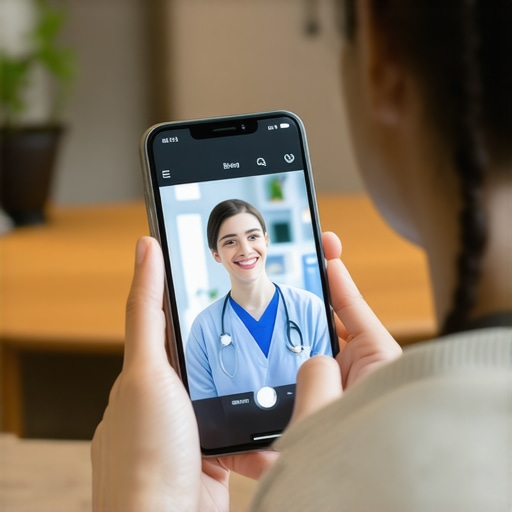
The Myth of the Perfect Diagnosis
Many believe that a visit to the doctor’s office is the only way to get an accurate diagnosis. That’s a dangerous illusion. In reality, your smartphone, empowered with the right tools, can become a medical detective—cutting through the noise, revealing vital clues about your health, and even challenging the old gatekeeping system that favors in-person visits above all else.
Let’s be honest: the healthcare system is often more about convenience for providers than for patients. Long waits, limited hours, and rushed consultations have created a landscape where symptoms are barely scratched and mysteries remain unsolved. So, why are we still relying solely on in-person visits for medical diagnoses?
The simple truth is that your phone is more than a device for memes and social media. It’s a powerful diagnostic tool—if you know how to leverage it. Today, video consultations combined with cutting-edge mobile health technology can give you a better, faster, and more accurate diagnosis than traditional methods ever could.
The Market is Lying to You
The healthcare industry loves to sell you the idea that only a doctor with a stethoscope and a microscope can diagnose. But that’s a farce. The proliferation of telehealth innovations and mobile lab testing is breaking down those barriers. As I argued in The future of telehealth, your smartphone can now connect you to a network of professionals who can analyze your symptoms in real-time, using high-resolution video, machine learning, and portable lab devices.
Think of your phone as a bridge—a means to bypass the bureaucratic delays and bottlenecks. Instead of waiting weeks for an appointment or relying on vague symptoms, you can perform assessments at home, send high-quality videos to specialists, and receive personalized recommendations within hours. How? Through advanced video diagnostics and remote monitoring tools that make in-person visits look archaic.
Why This Fails The Old Ways
Traditional diagnostics rely heavily on subjective interpretations: a nurse’s eyes, a doctor’s manual probing, or the results of lab tests processed days later. But these methods are slow, susceptible to error, and often disconnected from your daily life. Your smartphone, with its high-definition cameras and integrated sensors, can capture precisely what’s wrong—whether it’s skin rashes, swelling, or abnormal movement—and transmit it instantly to healthcare professionals.
Moreover, the use of mobile apps and AI algorithms can analyze your symptoms, compare them with millions of similar cases, and suggest potential diagnoses with astonishing accuracy. This isn’t science fiction; it’s happening now. As I highlighted in telehealth breakthroughs, virtual diagnostics are the new frontier, transforming the way we detect problems early and respond faster.
The Power of Video Makes Diagnosis Faster and Better
Video isn’t just a way to see your doctor; it’s a diagnostic tool. High-resolution cameras can detect subtle changes invisible to the naked eye. You can show your skin, your eyes, or even demonstrate movements that reveal neurological issues. And with real-time analysis, physicians can guide you through self-examinations, ask targeted questions, and even trigger at-home lab tests when necessary.
This approach shatters the misconception that quality diagnosis requires in-person visits. It’s a paradigm shift driven by technology that puts the power back into your hands—if you know how to use it. For example, in urgent care innovations, streamlining at-home lab testing reduces the waiting, speeds up diagnosis, and improves outcomes.
Nothing illustrates this more starkly than the sinking ship that is the old healthcare model—clinging to outdated methods while technology sails past it. Soon enough, relying on a doctor’s hastily scribbled notes during a fleeting appointment will seem as primitive as using a landline to communicate. Instead, your smartphone, combined with intelligent apps and remote diagnostics, is the new front line of medical care.
The Case for Digital Diagnostics Over In-Person Visits
It’s no secret that the healthcare industry is rooted in outdated paradigms. For decades, we’ve been told that only a doctor physically inspecting you can deliver an accurate diagnosis. But, as history demonstrates with the decline of handwritten prescriptions and paper records, entrenched practices often hinder progress. Today, the evidence shows that smartphone-based diagnostics, equipped with AI and remote monitoring tools, are not only viable but superior in many cases, exposing the flaws of traditional in-person methods.
The problem isn’t just convenience; it’s the root of inefficiency embedded in the old system. Long waiting times, rushed appointments, and limited access disproportionately benefit the healthcare industry’s entrenched stakeholders — hospitals, insurers, and pharmacies — who profit from maintaining the status quo. This is where the analysis becomes clear: the real beneficiary of the traditional model isn’t the patient. It’s the system that profits from delays, unnecessary procedures, and in-person visits.
Who gains when patients are forced into waiting rooms and subjected to unnecessary tests? The pharmaceutical companies, insurance providers, and large hospitals do. They thrive on volume, not accuracy. And the more complex the process, the more profit is extracted — even if it compromises patient outcomes. The pushback against mobile diagnostics isn’t about care; it’s about maintaining control and revenue streams that are threatened by rapid, at-home assessments.
The evidence from history: resistance to change is profit-driven
Looking back, the healthcare system’s reluctance to adopt innovations isn’t accidental. When the stethoscope was introduced, it faced similar resistance. Yet, once proven, it revolutionized diagnosis. Now, the same pattern repeats. The market fears disruption because it threatens the revenue streams built on in-person visits. High-resolution video tools, portable labs, and AI algorithms have demonstrated their capacity to outperform traditional methods, yet these advancements are often stifled by vested interests delaying widespread adoption.
In the context of chronic care, this resistance becomes even more evident. Remote patient monitoring and mobile labs enable continuous, real-time data collection, which makes episodic visits altogether unnecessary. The data isn’t just more comprehensive; it’s more accurate. But entrenched providers prefer to keep patients dependent on their facilities and protocols, ensuring a steady revenue flow — even when evidence suggests otherwise.
Why the data favors smartphones over clinics
Consider the diagnostic accuracy of recent mobile health studies. In dermatology, smartphone cameras paired with AI analysis outperform many in-office examinations for detecting malignant lesions. In neurology, patients demonstrating movements via video can be assessed just as effectively as in a clinic. The real clincher? Speed. At-home assessments produce results in hours, not days or weeks. If vertical integration and telehealth innovations continue to accelerate, the traditional narrative of in-person diagnosis will be relegated to a historical curiosity.
Furthermore, the intelligence embedded in these mobile tools benefits from constantly growing datasets, allowing AI models to refine their accuracy. This continuous learning process makes the diagnosis more precise than a hurried in-person exam, which is often limited by the clinician’s experience and time constraints.
The cost of clinging to tradition
The economic incentives are clear. Hospitals and clinics cling to in-person diagnostics because they’re entangled with billing codes that favor face-to-face visits. They complain about regulation, but the truth is, these regulations protect their revenue streams. Meanwhile, patients suffer longer wait times, higher costs, and occasionally, misdiagnoses. Mobile diagnostics threaten this cartel, which explains their fierce resistance—despite overwhelming evidence that remote assessments can, in many cases, deliver better outcomes faster and cheaper.
As history and data confirm, the shift toward smartphone-powered diagnostics isn’t just a technological upgrade; it’s a strategic move to dismantle a system that’s historically prioritized profit over patient well-being. Recognizing this pattern is critical. The evidence speaks loudly: the old ways are no longer the best ways.
The Trap of Tradition
It’s easy to see why skeptics cling to the idea that in-person doctor visits are the only reliable path to accurate diagnosis. After all, the conventional healthcare model has long been rooted in face-to-face interactions, with physical examinations and manual tests as the gold standard. The entrenched belief is that nothing can replace the human touch—an idea reinforced by decades of habit and institutional inertia. I used to believe this too, until I examined the mounting evidence suggesting otherwise.
However, this perspective misses a critical point: being bound to outdated methods blinds us to the revolutionary potential of technology. Dismissing mobile diagnostics simply because they challenge the status quo is shortsighted. The primary flaw lies in equating familiarity with accuracy, and in neglecting the disruptive power of modern tools—such as high-resolution video, AI-driven analysis, and portable lab devices—that can outperform traditional exams in speed, precision, and cost-efficiency.
The Wrong Question Is Clinging too tightly to the old paradigm
Many opponents ask,
The Point of No Return
If we dismiss the advancements in mobile health technology, we risk plunging into a future where healthcare is more fragmented, inefficient, and unequal. Ignoring this wave of innovation is akin to refusing to upgrade from a candle to electric light—clinging to obsolete methods while the world moves forward. The stakes are higher than ever, and the cost of inaction threatens to overwhelm our already strained healthcare systems.
Imagine a chain reaction: as more people rely on smartphone-based diagnostics, traditional clinics face declining patient volumes, leading to reduced funding and resources. This decrease undermines the capacity of in-person facilities to provide quality care, forcing incremental closures and layoffs. In tandem, insurance companies and healthcare providers entrenched in old paradigms will resist adopting new models, fearing loss of revenue and control. Consequently, innovation stalls, and the gap between those with access to advanced diagnostics and the underserved widens into a chasm.
In five years, if this trend persists, we could find ourselves in a society where healthcare disparities become even more pronounced. Rural populations, marginalized communities, and those with lower incomes will be left behind, unable to access cutting-edge solutions that could save their lives. Emergency rooms become overwhelmed with preventable crises, and chronic diseases worsen due to delayed detection. The promise of early intervention—a cornerstone of effective healthcare—turns into a mirage, just out of reach for millions.
This scenario is a *slippery slope*. Each delay compounds the next, creating a cascade of failures that will be far more costly to reverse than to embrace now. We are at a crossroads where inaction isn’t neutral; it actively damages the fabric of our health system and our collective well-being. Ignoring the potential of mobile diagnostics and telehealth is tantamount to choosing a slow, painful decline over a future of resilience and innovation.
Think of our healthcare system as a ship navigating treacherous waters. Clinging to outdated navigation tools—manual record-keeping, in-person-only diagnostics—is like ignoring GPS in a storm. The storm is here, and those refusing to adapt risk sinking into obsolescence, unable to steer clear of the hazards ahead. The question remains: are we willing to risk everything by favoring familiarity over progress?
What are we waiting for?
The bottom line is clear: outdated reliance on in-person visits no longer serves your health. Your smartphone, equipped with cutting-edge tools, is transforming into a powerful diagnostic device that challenges the very foundation of traditional healthcare. The question isn’t whether technology can replace the doctor—it’s whether you’re willing to embrace it.
Remember how the stethoscope once faced resistance? Now, mobile labs and AI-driven analysis are surpassing those old methods. When you consider that your high-resolution phone can detect skin abnormalities or neurological signs in real-time, clinging to the old paradigm seems not only outdated but dangerous.
This shift isn’t merely about convenience; it’s about reclaiming control. It connects to my argument in The future of telehealth—your device can bridge gaps, speed up diagnoses, and reduce costs, all while challenging profiteering that benefits from delays and unnecessary procedures.
Your move: Demand smarter, more accessible, and more accurate diagnostics. Don’t wait for the health system to catch up—be part of the revolution. The old model is sinking, and your smartphone is steering the ship. Will you choose progress or preserve the status quo?