
The Strategy for Handling Senior Mobility Changes at Home
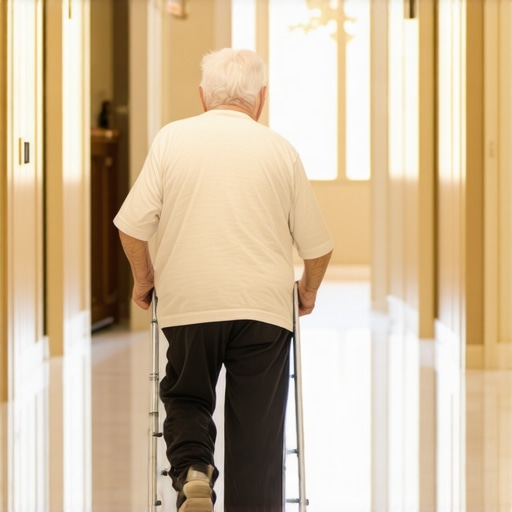
Stop Pretending Your Home Isn’t a Hazard for Aging Parents
Most people treat the aging process like a surprise party they forgot to plan for. They see a parent struggle to stand up from a recliner and call it a “slow day.” They watch a spouse grip a doorframe for balance and call it “being careful.” I call it a ticking clock. I argue that our obsession with “aging in place” has become a dangerous form of negligence. We prioritize the sentimental value of a two-story house over the physical safety of the person living in it. Mobility changes are not a slow decline you can ignore; they are a logistical emergency. You might think your childhood home is a sanctuary, but for a senior with failing balance, it is a vintage car with failing brakes—beautiful to look at, but a disaster waiting to happen.
Your Denial is a Safety Risk
We have to stop sugarcoating the conversation. If you are waiting for a catastrophic event to trigger a change, you have already failed. Why are we still doing this? Why are we waiting for the sound of a fall in the middle of the night? The strategy for handling mobility isn’t about buying a cane and hoping for the best. It starts with a brutal audit of the environment. I have previously discussed how to get your senior parent to accept help at home, and the first step is often admitting the home itself is the enemy. It is about realizing that those throw rugs are essentially banana peels glued to the floor.
The Myth of the Safe Living Room
You think you know your home, but you do not. You see a hallway; a senior with mobility issues sees a gauntlet. If you haven’t learned how to prep your living room for a geriatric assessment, you are flying blind. We focus on the big things like stairs while ignoring the silent killers. Dehydration, for instance, leads to dizziness that makes even a flat floor dangerous. You should be using the simple home test for checking dehydration in seniors regularly. This isn’t about micromanaging; it is about survival. Beyond that, physical changes aren’t always about muscle. Sometimes it is internal. A sudden lack of coordination could be the specific signs of a silent urinary tract infection in seniors, which masks itself as a mobility issue. If you ignore the medical underpinnings of movement, you are just rearranging deck chairs on the Titanic.
The Arrogance of Being Fine
“I’m fine” is the most dangerous sentence in the English language for anyone over seventy. It is the verbal equivalent of closing your eyes while driving a car into a fog bank. I see families nod along because they don’t want to start a fight. They don’t want to be the “bad guy” who suggests the master bedroom should move to the first floor. This isn’t about being the bad guy; it is about being the person who ensures there is a next year. When mobility shifts, the physics of the house changes. A chair that was once a place of rest becomes a trap if the seat is too low. A shower becomes a slip-and-slide without a proper bench. If you are serious about safety, you need to understand the reason your chronic back pain needs a better sleep setup and apply that same logic to every room. Stop telling yourself they are “just getting older.” Start acting like their life depends on your proactivity—because it does. You need to focus on the balance exercise that prevents hip fractures in your 70s today, not after the ambulance arrives. If a stumble occurs, why you should never skip a post-fall medical checkup becomes the most important lesson you will ever learn.
The Design Flaw We Call Home
We need to stop talking about ‘getting older’ as if it is a personal failure and start talking about our houses as the structural disasters they actually are. The problem isn’t that your father’s legs are getting weaker; the problem is that your house was built for a twenty-five-year-old athlete. We live in spaces designed for the peak of human agility, and then we act shocked when those same spaces become uninhabitable for the elderly. It is a fundamental design mismatch. The average American home is a series of obstacles—sunken living rooms, narrow doorways, and high-threshold tubs—that are essentially booby traps for anyone with a gait change. We call it ‘classic architecture.’ I call it spatial negligence. We have prioritized aesthetic trends from the eighties over the biological reality of the human lifecycle.
The Statistics of Systemic Collapse
When you look at the data, the picture isn’t just grim; it is an indictment of our passivity. The CDC notes that one out of four older adults falls each year, but we shouldn’t view that 25% as a mere clinical statistic. That number represents a wholesale collapse of the domestic safety net. It is not a ‘risk’; it is a statistical certainty. If you have four seniors living in unmodified traditional homes, one of them is going to the emergency room this year. Period. We treat these falls as accidents, like a lightning strike or a random bout of bad luck. They are not. They are the predictable result of putting a person with declining proprioception into an environment filled with trip hazards and low lighting. To call it an accident is to lie to ourselves to avoid the cost of a renovation.
${PostImagePlaceholdersEnum.ImagePlaceholderB}
Nostalgia is a Lousy Architect
The root cause of this hazard isn’t a lack of equipment; it is a surplus of sentimentality. We cling to the family home because the crown molding reminds us of our childhood, ignoring the fact that the very same molding frames a doorway too narrow for a walker. Sentiment is a death trap. We would rather let a parent struggle with a flight of stairs every night than ‘ruin’ the house by moving the master suite to the first floor. This is a bizarre form of vanity where the preservation of a floor plan is more important than the preservation of a human life. We are essentially asking our parents to perform a high-wire act every time they want to go to bed, all because we don’t want to admit that the house we grew up in is no longer fit for purpose. It is a refusal to accept that a home must evolve or it becomes a prison.
The Theater of the Quick Fix
I see families all the time who think they’ve solved the problem because they bought a rubber mat for the shower and a cheap grab bar from a big-box store. This is safety theater. It is a performance designed to make the adult children feel better while doing nothing to actually mitigate the danger. A grab bar screwed into drywall without proper blocking is a prop, not a safety device; it will rip out the moment someone actually puts their weight on it. True safety is expensive, it is intrusive, and it is mandatory. If you aren’t willing to rip out the carpet, widen the halls, and install high-contrast lighting, you aren’t ‘helping’ them age in place. You are just watching them decline in high-definition. We have to stop the half-measures. The house is the enemy, and until you treat it with the same urgency as a leaking roof or a broken furnace, you are complicit in the next fall.
Critics will argue that I am advocating for the ‘sanitization’ of the golden years. They will say that stripping a home of its character—the rugs, the antiques, the stairs—strips the inhabitant of their dignity. They claim that the psychological trauma of being forced to live in a ‘geriatric-proofed’ bunker is worse than the risk of a broken hip. It is a seductive argument because it allows us to do nothing under the guise of being ‘supportive.’ We tell ourselves we are honoring their wishes when we are actually just avoiding an uncomfortable conversation about the reality of biology. I used to believe this too, until I realized that there is no dignity in a person being a prisoner in their own upstairs bedroom because they are too afraid to navigate the stairs. There is no autonomy in a senior dehydrating themselves because they want to avoid the trip to the bathroom. We have conflated ‘independence’ with ‘isolation in a dangerous environment.’ True independence is the ability to move through your life without fear. If the house creates fear, the house is the enemy of independence, not its guardian. ${PostImagePlaceholdersEnum.ImagePlaceholderC}
The Dignity Delusion
The most common trap families fall into is the belief that safety and aesthetics are a zero-sum game. They think that making a home safe means it must look like a sterile ward. This is a failure of imagination. But more importantly, it is a failure of priorities. We are choosing the ‘feeling’ of a home over the ‘function’ of a life. When we prioritize a parent’s desire to keep a dangerous throw rug over their ability to walk without a fracture, we aren’t being respectful. We are being negligent. We are gambling with their remaining years because we don’t want to deal with the friction of a renovation or the cost of a contractor.
The Cost of Inaction
The argument that these changes are too expensive or too intrusive is the ultimate ‘Elephant in the Room.’ Yes, widening a doorway or installing a ramp costs money. But have you seen the bill for a three-week stay in a sub-acute rehab facility? Have you calculated the cost of 24/7 in-home care after a hip replacement? The financial argument against home modification is a classic example of being penny-wise and pound-foolish. We treat the house like a static museum piece instead of a living tool that must adapt to the user. If your car’s brakes were failing, you wouldn’t keep driving it because you liked the upholstery; you would fix the brakes. Why do we treat our parents’ houses with less urgency than our vehicles?
We need to stop asking if our parents ‘want’ these changes and start asking if they ‘need’ them. The human body does not care about your sentimental attachment to a 1920s staircase. It only cares about gravity. By refusing to adapt the environment, we are essentially setting a trap and waiting for it to spring. It is time to stop pretending that ‘safety’ is an optional upgrade. It is the baseline for survival. We must recognize that the home as it exists is a legacy of a younger version of ourselves, one that no longer reflects the medical or physical reality of the present. Refusing to change the house isn’t an act of love—it is an act of denial that places those we care about in the path of avoidable harm.
The Institutionalization Trap
If we continue to treat home modification as a luxury rather than a medical necessity, we are choosing a path toward systemic collapse. The consequence of our collective denial isn’t just a bruised ego or a broken hip; it is the forced institutionalization of an entire generation. When a home is no longer safe, the only remaining option is a facility. By refusing to adapt our living spaces now, we are effectively pre-signing the admission papers for a nursing home. We are trading the autonomy of our parents for the familiarity of a floor plan. This is a moral failure masked as sentimental preservation. If you think the cost of a walk-in tub is high, wait until you see the bill for a decade of assisted living that could have been avoided with a few structural changes.
What Are We Waiting For?
We are currently standing at a crossroads, and the direction we choose will define the health of our communities for the next twenty years. Living in an unadapted home while mobility declines is like sailing a ship with a rotting hull and hoping the ocean stays calm forever. It is an act of extreme optimism that borders on the delusional. The ocean—the reality of aging—will not stay calm. Gravity is a relentless force, and it does not negotiate. If we don’t act, we are choosing a future where every minor stumble becomes a life-altering catastrophe. We are creating a world where the ‘golden years’ are spent in a state of high-alert anxiety, waiting for the one misstep that ends independent life as we know it.
${PostImagePlaceholdersEnum.ImagePlaceholderD}
A Future of Preventable Tragedy
In five years, if we do not change our approach to domestic safety, our emergency rooms will be even more crowded with ‘social admissions’—seniors who are medically cleared to leave the hospital but have no safe home to return to. We will see a surge in chronic care needs and urgent care visits driven entirely by environmental hazards. This isn’t just a prediction; it is a mathematical certainty based on current demographic trends and housing stock. We are building a bottle-neck in our healthcare system. Every time someone skips a necessary home upgrade to save money, they are essentially taking out a high-interest loan against their future mobility. The interest on that loan is paid in pain, isolation, and a loss of self-determination.
The Point of No Return
The time to intervene is before the first wobble. Once the skeletal system is compromised by a fracture, the trajectory of health changes permanently. We have to stop viewing the home as a static object and start seeing it as a dynamic part of the care team. Telehealth and lab tests can monitor the internal biology, but they cannot fix a steep staircase or a slick bathroom floor. We are providing 21st-century medicine in 19th-century environments. This mismatch is unsustainable. We are nearing a point where the physical environment will become the primary driver of geriatric disability, outpacing disease itself. If we don’t start treating our floor plans with the same scrutiny we treat a prescription bottle, we are willfully walking into a storm without an umbrella.
Stop Rearranging the Deck Chairs
It is time for a radical shift in how we define a safe home. We must stop viewing home modifications as a sign of weakness and start viewing them as the highest form of stewardship. If you truly value independence, you will dismantle the barriers that threaten it before they become lethal. This connects to my argument that managing the physical environment is just as vital as clinical intervention. You should be leveraging chronic care management personalized telehealth strategies for better outcomes to ensure the medical side of the equation is as robust as the structural one. We often ignore the internal cues of decline until they manifest as a catastrophic external fall, yet modern tools like telehealth breakthroughs how virtual visits elevate chronic care in 2025 allow us to monitor these risks from the comfort of a—hopefully—renovated living room. ${PostImagePlaceholdersEnum.ImagePlaceholderE}
The Real Price of Sentiment
We spend thousands on life insurance to protect our families after we are gone, but we refuse to spend a fraction of that to protect them while they are still here. It is a staggering irony that we are more concerned with the resale value of a house than the survival value of its inhabitants. If you are not actively auditing the home, you are passively accepting the risks. This means being vigilant about biological factors too, such as knowing how to tell if your aging parent is secretly dehydrated, which directly affects balance and coordination. You cannot pray away a fall on a polished hardwood floor; you can only prevent it with a rug-free path and a lighting upgrade. Stop waiting for the right time to make these changes. The right time was six months ago. The second-best time is right now.
The Final Verdict: Your house is either a tool for longevity or a structural engine for disability, and the choice between them is made with a hammer, not a prayer.
The Twist: We meticulously curate our homes to reflect our past, yet we neglect the very modifications that would actually allow us to have a future in them.
The stairs do not care about your childhood memories—and neither does the concrete of an emergency room floor.