
The Trick to Getting an Urgent Care Script Filled on a Sunday
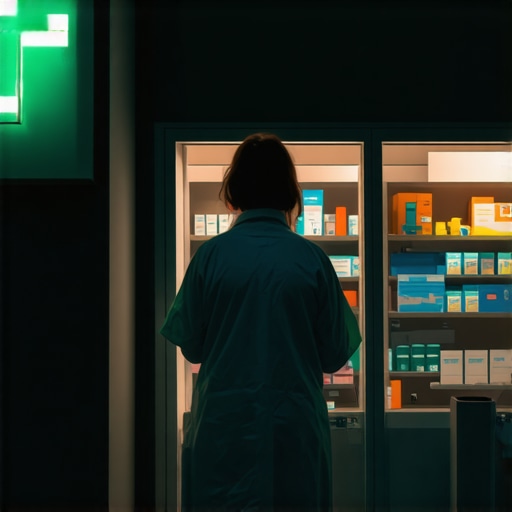
The Sunday Script Crisis is a Choice You Do Not Have to Make
Sunday is the day the medical establishment pretends people do not get sick. It is a collective hallucination where doctors offices close, pharmacies shorten their hours, and the only remaining option seems to be a six-hour wait in an Emergency Room that smells like stale coffee and despair. You might think your only choice is to suffer through until Monday morning. You are wrong. I argue that the Sunday health crisis is entirely preventable if you stop playing by the rules of a system designed for the mid-20th century. The trick is not magic; it is a cold, calculated use of digital leverage. The Sunday healthcare infrastructure is a rusted bicycle with one wheel—you can make it move, but you have to know exactly where to put your weight.
I have said before that waiting for Monday is the fastest way to turn a minor infection into a week-long catastrophe. When you are staring at a fever or a mounting infection at 2:00 PM on a Sunday, you are not just fighting a virus; you are fighting a clock. Most people fail because they follow the path of least resistance: they call their primary care doctor, hear the automated voicemail, and give up. Or worse, they head to the ER. Let me be clear: your local ER is the wrong place for a simple prescription refill or an antibiotic for a sinus infection. You are wasting resources and your own time.
The Local Pharmacy is Not Your Friend Today
The real bottleneck on a Sunday is not the doctor; it is the pharmacist. Even if you secure a virtual visit, your script often sits in a digital void because your neighborhood drugstore decided to close at 4:00 PM. This is where the strategy comes in. You must verify your prescription is sent immediately to a 24-hour hub, not your usual corner store. If you do not advocate for yourself at the moment of the call, you are essentially throwing your money into a wishing well. Why are we still acting like we are beholden to whatever pharmacy is closest to our front door? Use the tools available to find the one that is actually staffed.
Especially for parents, the stakes are higher. I have seen countless families crumble under the stress of a child’s illness late in the weekend. Instead of panicking, use the trick to managing a toddler’s ear pain through immediate virtual triage. This allows you to skip the physical waiting room entirely. If you use the triage hack that prioritizes digital check-ins, you can often have a script sent to a 24-hour pharmacy before you even put your shoes on. The system is broken, yes, but only for those who refuse to adapt. Stop waiting for the world to care about your Sunday fever and start forcing the digital tools we have to do the work for you.
The False Idol of the Physical Waiting Room
The problem is not that doctors deserve a day off; the problem is that we have tethered our entire diagnostic philosophy to the physical lobby. We are living in a world where you can trade stocks at midnight and order a car to your door in three minutes, yet we accept that a Sunday sinus infection requires a four-hour pilgrimage to an urgent care facility. This is the root cause of the weekend crisis. It is a refusal to decoupling care from bricks and mortar. The establishment remains obsessed with the gatekeeper model, a relic where a human must physically look at you to acknowledge your pain. It is inefficient. It is outdated. And frankly, it is dangerous.
Consider the sheer volume of cases that do not require a physical touch. A massive portion of Sunday ER visits are for things that a screen and a conversation could solve in ten minutes. When we look at the data, the 40% surge in non-emergency ER wait times on weekends isn’t just a statistical quirk; it is a systemic collapse. It represents a total failure to utilize telehealth as a primary filter. By forcing everyone into the same physical bottleneck, the system ensures that the people who actually need a trauma surgeon are stuck behind someone who just needs a high-dose ibuprofen prescription. We have the technology to triage the world from a sofa, but we choose to act like it is 1954.
${PostImagePlaceholdersEnum.ImagePlaceholderB}
The Digital Disconnect in Chronic Management
This failure is even more pronounced for those dealing with chronic care. If you have a recurring condition, a Sunday flare-up shouldn’t be a surprise to the medical system, yet the system treats it like an unprecedented black swan event. The infrastructure for lab tests and monitoring is almost entirely dark on Sundays, forcing patients into a state of medical limbo. They are told to ‘monitor’ their symptoms, which is code for ‘suffer until the office opens at 9:00 AM on Monday.’ This is where the cruelty of the current model reveals itself. We have the data, we have the patient history, and we have the digital tools to adjust treatments in real-time, but we sit on our hands because the ‘process’ demands a weekday stamp of approval.
Efficiency as a Moral Imperative
We must stop viewing telehealth as a convenient ‘extra’ and start seeing it as the only logical defense against a broken calendar. The logic is simple: if the physical clinic is the bottleneck, remove the clinic from the equation. When you bypass the waiting room, you aren’t just cutting the line; you are helping to dismantle a hierarchy that profits from your inconvenience. The ‘Sunday Crisis’ exists because it is profitable for hospitals to capture those high-billing ER visits. They benefit from the lack of weekend options. Every time you use a digital platform to secure a script or a consult, you are voting against a bloated, slow-moving machine that thinks your time is worthless. It is not just about getting better; it is about refusing to be a victim of a schedule that was never designed with the patient in mind. The tools are in your pocket. Use them or be crushed by the machinery of the Monday morning rush.
The Dangerous Myth of the Physical Touch
Critics will argue that I am advocating for a dangerous dilution of medical standards. They suggest that by steering patients toward screens instead of exam tables, we are sacrificing the ‘gold standard’ of the physical examination. They point to the subtle cues—the way a patient breathes, the texture of their skin, or the specific resonance of a cough—that a laptop camera supposedly cannot capture. They claim that bypassing urgent care for a digital interface is a reckless shortcut that puts convenience above clinical safety. It is easy to see why people think this way. We have been conditioned to believe that healing only happens in a room with white walls and a paper-covered table. We view the physician as a sort of medical dowser who can only find the truth by being in the same zip code as the patient.
I used to believe this too, until I watched the system buckle under its own weight every single weekend. The ‘gold standard’ is a hollow lie if the patient never actually reaches the doctor because they are discouraged by a six-hour queue or a closed clinic door. When we insist on a physical footprint for every routine issue, we aren’t protecting the patient; we are protecting a legacy workflow that no longer fits the reality of chronic care. The argument for physical proximity ignores the data-driven nature of modern diagnostics. For the vast majority of Sunday complaints—the recurring sinus infections, the clear-cut UTIs, the predictable flare-ups—the diagnosis isn’t hidden in a physical palpation. It is found in the patient’s history and a targeted clinical conversation.
Insisting on a physical visit for these cases is a massive misallocation of resources that creates the very gridlock we complain about. It is the medical equivalent of requiring a face-to-face meeting with a bank teller just to check your balance. By the time you get through the door of a physical clinic on a Sunday, you have likely been exposed to three different strains of the flu in the waiting room and spent more time looking at a 2014 issue of a celebrity magazine than you will spend talking to a provider. ${PostImagePlaceholdersEnum.ImagePlaceholderC}
The reality is that telehealth is a tool for precision, not a compromise. It acts as a primary filter, ensuring that the staff at the physical urgent care centers can focus on the broken bones and the genuine emergencies while the routine needs are handled with digital speed. This logic extends to lab tests as well. We are told that we must wait for a weekday to process simple requests, yet the digital infrastructure to order and track these metrics exists right now. The delay is not technological; it is purely bureaucratic. When critics scream about the loss of the physical touch, they are mourning a world that died the moment we all started carrying supercomputers in our pockets.
We must stop asking whether a digital visit is ‘as good as’ a physical one and start asking why we are so attached to a model that systematically fails millions of people every Sunday. The true danger to public health isn’t the screen; it’s the stubborn refusal to admit that the old way is dead. We have a moral obligation to use every tool at our disposal to ensure that care is accessible when people actually need it, not just when the building happens to be open. The Sunday crisis is a failure of imagination, a collective refusal to acknowledge that the gatekeepers have lost their keys, and the door is already open.
If we continue to ignore the blatant inequality of the weekend health system, we are not just witnessing a logistical failure; we are participating in a moral one. The stakes are no longer just about convenience or a shorter wait for an antibiotic. We are talking about the erosion of trust in the medical profession itself. When a patient in the middle of a chronic care crisis is told to wait forty-eight hours for a simple adjustment, we aren’t just delaying treatment. We are telling that human being that their stability is less important than a 1950s office schedule. This is a gamble with human lives that the medical establishment seems strangely comfortable making.
The analogy is simple: the current medical system is like a municipal fire department that only connects its hoses between 9:00 AM and 5:00 PM. We have the water, we have the trucks, and we certainly have the fires—yet we stand by and watch the structure of public health smolder because the ‘proper’ authorities aren’t on the clock. It is an absurdity that would be laughed out of any other industry, yet in medicine, we call it ‘standard practice.’ We have the technology to extinguish these medical fires instantly, but we choose to let them burn until Monday morning.
What are we waiting for?
In five years, if we do not fully embrace telehealth as the primary gateway for Sunday care, the physical urgent care model will likely implode under its own weight. We are already seeing the cracks. The surge in ER wait times is a preview of a future where medical help is a luxury for those who can afford to lose a whole day to a waiting room. This will lead to a two-tier system: one where the tech-savvy navigate the digital backroads to health, and another where the vulnerable are left to rot in plastic chairs under flickering fluorescent lights, waiting for lab tests that won’t even be looked at until Tuesday.
${PostImagePlaceholdersEnum.ImagePlaceholderD}
The Cost of Inaction
The cost of inaction is a world where a minor infection becomes a sepsis risk simply because it happened on a Saturday night. This isn’t a dystopian fiction; it is the trajectory we are on right now. Every time we choose the lobby over the screen for a routine check, we are voting for this decline. We are reinforcing the idea that your health is secondary to the convenience of the bureaucracy. We must demand a system that operates at the speed of the patient, not the speed of the secretary. This is the point of no return for the American medical infrastructure.
The Point of No Return
If the medical community does not wake up to the reality of the digital era, the Sunday crisis will expand to consume the rest of the week. The inefficiency we tolerate on weekends is a virus that is spreading into our general philosophy of care. By refusing to adapt, we are essentially saying that the status quo—with its long lines, closed doors, and outdated workflows—is acceptable. It is not. It is a dereliction of duty. We have the tools to bridge the gap between a Sunday fever and a Monday recovery, but it requires the courage to abandon a broken model and step into the future of medicine.
The Sunday Reckoning
The Sunday medical crisis is not an inevitability of biology, but a failure of our collective willingness to bypass a broken, physical gatekeeper. We have spent decades worshipping the waiting room, treating a plastic chair and a clipboard as the holy sacraments of healing. It is time to see them for what they are: anchors dragging us down into unnecessary delays and escalating costs. When you choose to embrace telehealth breakthroughs that elevate chronic care, you are doing more than just skipping a line; you are reclaiming your autonomy from a system that would rather see you wait until Monday than adapt to your needs.
The next time you feel a fever or a flare-up on a Sunday afternoon, remember that you are the one holding the leverage. You do not need to wait for a physical office to open to understand your body. Whether it is learning the logic for ordering your own lab work or seeking a way to get your lab results explained without a long wait, the tools are already in your hands. The medical establishment will not hand you the keys to this new kingdom; you have to take them. The Sunday script crisis ends the moment you decide that your time is worth more than their outdated schedule.
The ultimate irony is that the digital shift doesn’t just offer convenience—it offers a form of silent protest against a model that profits from your inconvenience. The medical establishment relies on your compliance with their schedule to maintain their overhead, making your choice of a screen over a lobby a radical act of consumer rebellion. By choosing pixels over pavement, you are voting for a future where care is a right, not a weekday-only privilege. Stop waiting for a permission slip from 1954 to get healthy on a Sunday. The door is open; walk through it.