
Why You Should Never Ignore a Persistent Metallic Taste in Your Mouth
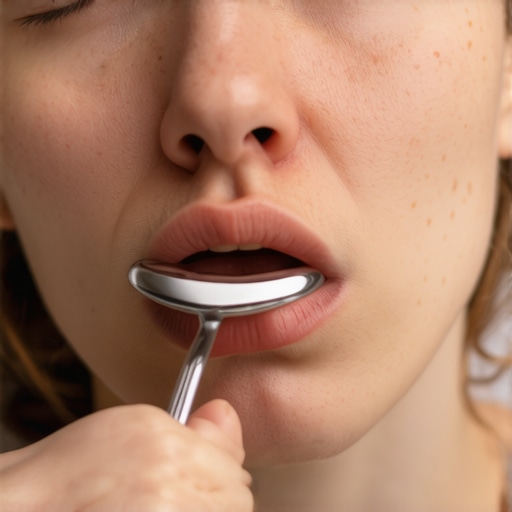
Your Mouth Is a Whistleblower and You Are Dangerously Ignoring the Alarm
You probably think that strange, coppery tang at the back of your throat is just a side effect of a vitamin or the remnants of a cheap lunch. You are wrong. While most people brush off a persistent metallic taste as a minor annoyance, I argue that it is actually a biological distress signal that we have been conditioned to ignore. We live in a culture that rewards ‘pushing through’ discomfort, but ignoring this specific symptom is a form of medical negligence against yourself.
The medical term is dysgeusia, but let’s be blunt: it is a systemic alarm. It is not just about your taste buds; it is about your liver, your kidneys, and your metabolic balance. When your mouth tastes like you have been chewing on pennies for three days straight, your body is begging for a deeper look. I believe the modern obsession with quick fixes leads us to buy mouthwash when we should be booking blood work. As I’ve noted when discussing the future of telehealth and chronic disease monitoring, waiting for a symptom to become ‘painful’ before acting is a dinosaur’s way of managing health in 2025.
Stop Trusting Your Tongue to Fix Itself
Think of a persistent metallic taste as the ‘check engine’ light on a luxury car. You can put a piece of black tape over the blinking red light so you don’t have to see it, but the engine is still overheating. Masking the taste with mints or gum is that piece of tape. Is it your medication? Is it a silent infection? Or is it something far more sinister like early-stage renal dysfunction? You won’t know until you stop treating your body like a nuisance and start treating it like a complex machine that requires data.
The reality is that our standard healthcare model often fails here. Doctors spend ten minutes with you and blame ‘stress’ or ‘allergies.’ This is why I maintain that your raw lab data is more important than the summary your physician skims through. You need to see the numbers. A metallic taste is frequently a byproduct of waste products like urea building up in the blood. When your kidneys aren’t filtering properly, you taste it. Why are we still acting like this is a dental issue? It is time to demand more than a ‘wait and see’ approach from your provider.
If you are serious about your longevity, you have to acknowledge that your standard physical is missing critical health markers that explain these sensory shifts. We are so busy looking for the big, loud diseases that we ignore the subtle, metallic whispers of a system starting to fail. Stop waiting. The taste isn’t going away because the problem isn’t in your mouth—it is in your blood.
The Toxic Accumulation of Neglect
The copper taste in your mouth is not a ghost. It is the physical manifestation of metabolic waste that has nowhere else to go. When your kidneys fail to perform their primary function—filtering the blood—the concentration of urea nitrogen begins to climb. This is not a subtle shift; it is a chemical transformation of your saliva. As urea is broken down by enzymes in the mouth, it releases ammonia. That sharp, metallic tang is literally the scent of your body’s internal filtration system failing in real-time. It is not an inconvenience; it is a warning of systemic toxicity.
The data paints a grim picture. Reports suggest that nearly 90% of individuals with early-stage renal impairment are completely unaware of their condition. This isn’t just a gap in healthcare—it is a catastrophic failure of diagnostic awareness. By the time most people seek help for the ‘pennies’ in their mouth, their kidney function has already significantly declined. This is why the ‘wait and see’ approach is a death sentence for your long-term health. The system is designed to treat catastrophes, not to prevent the slow, quiet erosion of your metabolic integrity. You are tasting the failure before the blood test even gets ordered.
${PostImagePlaceholdersEnum.ImagePlaceholderB}
Pharmaceutical Interference and the Sensory Cost
We are a culture over-medicated and under-monitored. From blood pressure medications like ACE inhibitors to common antibiotics like clarithromycin, the list of drugs that induce dysgeusia is staggering. These substances are not ‘side-effect free.’ They are chemical agents that alter the delicate balance of your zinc levels and your central nervous system’s perception of flavor. When you take a pill to fix one problem and it creates a metallic taste, your body is protesting the chemical load. The burden is too high.
Instead of investigating the root cause, we are told to drink more water or chew gum. This is the equivalent of silencing a smoke detector while the house burns. The problem is not the tongue; the problem is the liver’s inability to process the synthetic compounds we shove into our systems daily. We have traded sensory health for pharmaceutical convenience, and the cost is a permanent loss of physiological intuition. We have forgotten that the body is a closed-loop system where every chemical input has a sensory output. You are not ‘imagining’ the taste; you are experiencing the biological friction of a body struggling to maintain its equilibrium under the weight of modern medicine.
The Myth of the Temporary Symptom
Stop telling yourself it will go away on its own. It won’t. If the taste persists for more than a few days, the equilibrium has already shifted. This is the result of a chronic imbalance, not a passing fluke. Whether it is a silent sinus infection or the early markers of diabetes, your mouth is the most honest part of your body. It is the only part of you that refuses to lie about your internal chemistry. The medical establishment wants you to focus on the big, loud symptoms—the heart attacks and the broken bones. They ignore the metallic whispers because there is no quick, expensive surgery to fix a ‘taste.’ There is only the hard work of deep diagnostics and metabolic restoration. You must demand the data before the copper taste becomes a permanent fixture of your reality.
It is easy to look at the clinical literature and conclude that a metallic taste is almost always benign. The medical establishment loves to lean on the ‘horses, not zebras’ analogy, suggesting that we should always look for the simplest, most common explanation first. They will tell you it is likely a new toothpaste, a mild case of gingivitis, or perhaps a lingering cold. This perspective is not technically wrong—it is just dangerously incomplete. By the time the ‘zebra’ of kidney dysfunction or liver stress becomes obvious, the opportunity for early, aggressive intervention has already passed. We have been conditioned to believe that if a symptom is not agonizing, it is not urgent. This is a fundamental flaw in how we approach modern wellness.
I used to believe this dismissive logic too, until I started looking at the raw lab data of patients who were told their symptoms were ‘nothing to worry about.’ What the standard medical model misses is that we no longer live in a ‘standard’ environment. Our bodies are bombarded with microplastics, synthetic compounds, and an unprecedented pharmaceutical load. In this context, a metallic taste is not a random fluke; it is the first sign that your internal filtration system is struggling to keep up with the chemical demands of the 21st century. Ignoring it is not an act of resilience; it is an act of metabolic surrender.
The Trap of Statistical Normalcy
The common trap most patients and doctors fall into is the belief that ‘normal’ lab results mean everything is fine. But those ‘normal’ ranges are often calculated based on an increasingly unhealthy population. When you have a persistent metallic taste, your body is telling you that its specific threshold for waste management has been crossed. It does not matter if you fall within a broad statistical range if your individual biology is screaming for help. This is why the ‘wait and see’ approach is the most expensive mistake you can make. It treats your health like a reactive fire department rather than a proactive management system.
${PostImagePlaceholdersEnum.ImagePlaceholderC}
Stop Excusing Your Bodys Warnings
The argument that dysgeusia is just a side effect of medication is perhaps the most frustrating dismissal of all. If a drug causes a metallic taste, it is not a ‘side effect’—it is a primary effect of that drug on your metabolic pathways. It means the substance is altering your zinc levels or forcing your liver to work overtime. To ignore this because ‘it is just a known side effect’ is to accept a lower standard of living. You are being told to ignore your own senses to accommodate a pharmaceutical solution. This is a trade-off that rarely pays off in the long run. We have become so used to the ‘pennies’ in our mouth that we have forgotten what it feels like to have a clean metabolic slate.
The Fraud of the Benign Side Effect
The medical community often argues that if there is no pain, there is no problem. This is a catastrophic misunderstanding of how chronic disease functions. Pain is a late-stage signal. It is the bodys last-ditch effort to get your attention. Sensory shifts, like a metallic taste, are the early-warning system. If you wait until it hurts to check your kidney function, you are waiting until the damage is semi-permanent. We need to stop rewarding the ‘pushing through’ mentality and start valuing the subtle shifts in our sensory experience. Your tongue is not lying to you, but your doctors reassurance might be based on an outdated, reactive philosophy that prioritizes crisis management over actual health. The reality is that the medical system is not built to find small problems; it is built to manage big ones. If you want to avoid becoming a ‘big problem,’ you have to listen when the signal is small. The metallic taste is that small signal. It is the biological equivalent of smoke before the fire. By the time the flames are visible, the structure is already compromised.
The copper-tinged reality we are ignoring today is the foundation for the chronic failure of tomorrow. If we continue to treat our bodies like disposable hardware rather than integrated biological systems, the outcome is predictable and devastating. We are sleepwalking into a future where the ‘check engine’ light has been flashing for years, and we have simply pulled the fuse to stop the blinking. This isn’t just about a bad taste in your mouth; it is about the fundamental collapse of our collective health resilience. When we dismiss sensory warnings as ‘nuisances,’ we are not being tough; we are being medically illiterate.
The Ticking Clock of Metabolic Exhaustion
Consider the trajectory we are on. In five years, if current trends of diagnostic neglect continue, we will see a surge in end-stage renal disease and liver failure among populations that are currently ‘feeling fine’ despite persistent dysgeusia. The healthcare system, already buckling under the weight of reactive care, will be unable to handle the sheer volume of patients who waited until their symptoms were loud enough to be heard. We are creating a bottleneck of avoidable tragedy. By ignoring the metallic signal now, you are essentially signing a contract for a future of dialysis, transplant lists, and pharmaceutical dependency.
Think of your body like a submarine deep beneath the ocean’s surface. Before the hull breaches, the metal groans. It creaks under the immense pressure of the depths. A smart captain listens to those groans and ascends to safer waters. An arrogant one calls the noise a ‘side effect’ of the descent and keeps going until the pressure becomes fatal. Your mouth is groaning right now. The metallic taste is the sound of the hull starting to buckle under the pressure of metabolic waste and chemical overload. If you wait for the water to come rushing in, it is already too late to save the vessel.
${PostImagePlaceholdersEnum.ImagePlaceholderD}
What are we waiting for?
Why do we require a catastrophic event to justify a medical inquiry? We have been conditioned to believe that health is the absence of pain, but this is a dangerous fallacy. True health is the presence of equilibrium, and that equilibrium is clearly broken the moment your internal chemistry starts leaking into your perception of flavor. The stakes could not be higher. We are losing the window of opportunity to reverse damage before it becomes structural. Every day you wake up with that penny-like taste and do nothing is a day you have actively chosen to let your organs degrade. This is a moral imperative to yourself: stop accepting the degradation of your sensory experience as a normal part of aging or medication.
The Inevitable Price of Willful Ignorance
The future is not a place that just happens to us; it is a place we build with our daily choices. If we continue to ignore these metabolic whispers, the future looks like a sterile landscape of chronic disease management where the quality of life is traded for mere survival. We will be a society of people who can no longer taste their food, no longer trust their senses, and can no longer escape the consequences of a decade of neglect. The warning is in your mouth, the data is in your blood, and the time to act is shrinking with every breath. You have been warned: the metallic taste is the final courtesy your body extends to you before it stops asking for help and starts demanding it through failure.
The Final Verdict
The metallic taste in your mouth is the biological equivalent of a smoke detector; if you ignore it because there are no flames yet, you deserve the fire that follows.
The Twist
We live in an era where we can track our steps and heart rate in real-time, yet we dismiss the most direct chemical feedback our body provides as a simple annoyance. The tragedy of modern health is not a lack of information, but a lack of intuition. You can utilize telehealth breakthroughs that elevate chronic care in 2025 to investigate these signals, or you can wait for the inevitable collapse. This links back to why I emphasize that stealth kidney markers show up years before failure, provided you are willing to look. Don’t be the patient who says ‘I didn’t know’ when your body has been shouting in the language of copper for months. Stop settling for a ‘wait and see’ approach and demand urgent care innovations that prioritize same-day results. Your health isn’t a suggestion; it’s a mandate.
The whistle has been blown. The only question left is whether you are brave enough to listen before the silence becomes permanent.