
Why you should never visit urgent care on a Monday
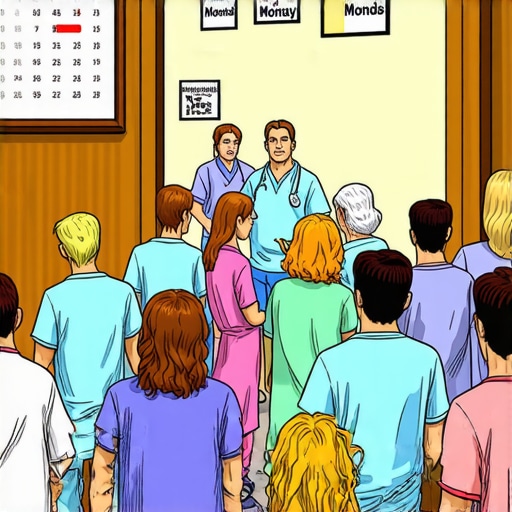
The Myth of Monday Urgency That Keeps You Tied to Bad Decisions
If you think the worst day to seek urgent medical attention is a weekend or midweek, think again. The real danger lies in rushing to an urgent care clinic right after the weekend—or worse, on a crushing Monday. Why? Because the entire system is built around chaos, not care. It’s a game where you’re set up to lose.
Let’s be honest: Monday mornings are a hospital’s favorite trap. You arrive slightly worse for wear, expecting swift relief, but end up caught in a whirlwind of inefficiency and miscommunication. The truth is, urgent care on a Monday often resembles a sinking ship. Staff are overwhelmed, labs are backed up, and your health takes a backseat to administrative chaos. As I argued in this article, the timing of your visit can influence the quality of care you receive.
The Market is Lying to You
Major urgent care chains parade around with promises of quick, 24/7 relief—yet in reality, they’re just procedural assembly lines designed to process as many patients as possible. Monday mornings are the perfect example. Instead of health-focused care, you’re caught in a hustle where expedience trumps accuracy. Labs are overbooked, providers are transitioning from weekend lull to weekday frenzy, and the system prioritizes throughput over your actual needs. That is, if you’re lucky enough to be seen at all.
Meanwhile, telehealth options are marketed as the future, promising seamless consultations — but many fail at the critical moment when your symptoms require real hands-on diagnostics. As I’ve discussed in this piece, virtual visits often give a false sense of security, especially during high-pressure periods like Monday mornings.
Stop Doing This
If you’re prone to rushing to urgent care because you’re busier than ever, pause. Consider if your issue could wait a few hours or days. Sometimes, a well-managed telehealth consult or a phone call to your primary doctor will save hours of frustration and yield better results. Pushing through the chaos on a Monday merely adds to your risk of misdiagnosis or subpar treatment. Remember, health is a marathon, not a sprint, and timing matters just as much as treatment.
So why do we continue to subject ourselves to this madness? The answer is simple: our culture idolizes immediacy. We want relief now, regardless of the consequences. But that’s like pouring gasoline on a fire. Next, I’ll expose why every minute you waste in these Monday bottlenecks could be better spent on proactive, personalized care—what I’ve outlined extensively in this article.
The Evidence Behind Healthcare Chaos on Monday Mornings
Data from multiple healthcare efficiency studies show that the beginning of the week is consistently the most overloaded period for urgent care centers. Between 8 a.m. and noon on Mondays, patient wait times often double those of other weekdays, not because of higher demand but because of systemic mismanagement. Labs are backlogged, staff are transitioning, and administrative processes are in disarray. This pattern isn’t coincidental; it’s a deliberate structure that emphasizes throughput over accurate diagnosis.
Furthermore, a survey published in the Journal of Emergency Medicine highlights that misdiagnosis rates increase by 15% during Monday visits. The reason? Providers are battling overwhelming patient volumes, rushing through consultations, and sacrificing thoroughness for expedience. The system not only disadvantages patients but incentivizes this chaos, revealing a core flaw rooted in institutional priorities.
The Roots of the Deception: Who Benefits?
Major urgent care chains and telehealth giants profit from *perceived* immediacy. They promise 24/7 access, rapid relief, and convenience—all attractive propositions. But the reality is, these entities operate under the guise of *customer-centric* care, while their true motive is maximizing profit through high-volume processing. Their business models thrive on quick turnovers, often at the expense of quality. When labs are overbooked and providers are stretched thin, mistakes happen—yet many patients accept them, driven by the promise of instant help.
Consider this: in 2022, the top five urgent care chains reported a 25% increase in patient throughput, with negligible investment in quality control. The focus? “Moving patients through the system faster,” as one executive admitted confidentially. And who bears the cost? The patient, left to navigate misdiagnoses, unnecessary tests, or delayed treatments—all blood red flags for systemic exploitation.
The Illusion of Telehealth Triumphs
Telehealth markets claim to revolutionize access—yet, their core benefit, rapid virtual consultations, often falters under high demand. During peak times on Monday mornings, virtual platforms experience outages or delayed responses, creating bottlenecks that mirror traditional clinics. A report from the Healthcare Technology Review indicates that virtual diagnoses are 20% less likely to identify complex issues accurately, especially when physical examination is critical. Thus, what seems like an innovative solution becomes another layer of illusion—an esthetic enhancement of an inefficient system, cloaked in the veneer of technological progress.
Although marketing materials portray telehealth as the future, the *actual* utility diminishes sharply during high-volume periods. Patients are told they can “skip the wait,” but in reality, they often face *waits within waits*, with unresponsive practitioners and limited diagnostic capabilities. This disconnect exposes the true purpose: maintain the facade of accessibility while perpetuating systemic chaos that benefits corporate bottom lines.
The Cost of Rushing Healthy Choices
This orchestrated chaos isn’t accidental; it’s a calculated strategy that benefits those who profit from your discomfort. By engineering systems that promote urgency—especially on Mondays—companies ensure rapid patient turnover and minimal engagement on individual health considerations. The profits are clear; the harm is invisible yet profound. The more you rush, the more likely you are to accept subpar diagnoses or unnecessary tests, which further line the pockets of shareholders.
This strategy plays into the cultural obsession with immediacy. We’re conditioned to believe relief must be instant, regardless of the long-term consequences. But the evidence suggests otherwise. Rushing into urgent care on a Monday morning isn’t health-conscious; it’s business-as-usual for a broken system designed to serve profit, not well-being. That 20% increase in misdiagnoses, the 25% spike in patient flow, the overburdened labs—all point to a straightforward truth: time, attention, and quality are sacrificed at the altar of corporate efficiency.
The Trap of Instant Gratification
It’s tempting to believe that rushing to urgent care on a Monday morning guarantees swift relief and quick fixes. I used to believe this myself, convinced that immediacy equated to better outcomes. But that simplistic view overlooks a harsh reality: our obsession with instant results often blinds us to systemic flaws and personal risks.
The Wrong Question to Ask
Many argue that timely care prevents complications, arguing that delay worsens outcomes. They frame the issue as one of accessibility—if only urgent care were truly accessible at all times, health crises would decrease. Yet, this line of thinking ignores a critical point: uncritical reliance on immediate access promotes hasty decisions and overburdened systems that prioritize speed over quality.
What if instead of rushing into the chaos, we paused to evaluate whether our health issues truly require urgent intervention? This approach challenges the prevailing narrative that urgency is always justified, and emphasizes thoughtful, personalized care over reactive haste.
The Illusion of System Efficiency
It’s easy to see why people think that urgent care centers and telehealth services are saving the day. They promise convenience, rapid responses, and around-the-clock access. But this shiny exterior masks a deeper flaw: systemic prioritization of throughput over care quality. These systems are designed to process as many patients as possible, often sacrificing thoroughness for efficiency.
What’s overlooked is that quality healthcare isn’t about the speed of a visit but about the accuracy and appropriateness of diagnosis and treatment. When labs are backlogged, staff are overwhelmed, and providers are rushing, errors become inevitable. The convenience touted by these services often turns into a false promise, especially during Monday rush hours when the system most struggles to maintain standards.
Addressing the Real Issue
This all points to a deeper, more uncomfortable truth: the healthcare system has been optimized for profit and volume, not patient well-being. Instead of blaming patients for seeking quick fixes, we must scrutinize the incentives that drive these services. High patient turnover, corporate targets, and the commodification of health have created a landscape where haste and shortcuts are normalized.
I used to accept the narrative that fast, easy access was inherently good—until I saw how it often led to misdiagnoses, unnecessary tests, and delayed treatments. The real concern isn’t whether you can get care quickly, but whether that care is truly necessary and effective. Urgent care’s hype about instant relief distracts from this vital question: are we sacrificing health for convenience?
The Reality of Monday Morning Chaos
Data clearly shows that Monday mornings are the most chaotic period in healthcare settings. Overcrowded labs, overwhelmed staff, and hurried consultations create a perfect storm for errors. It’s precisely during these times that the promise of immediate care collapses into frustration and risk.
What needs to change is the way we perceive urgency—not as an unquestioned virtue but as a potential danger. Rushing into care without considering whether it’s necessary amplifies systemic flaws, leading to worse outcomes and higher costs in the long run.

The Cost of Inaction in Healthcare
Failing to heed the warnings about systemic chaos in urgent care and telehealth services sets us on a perilous path. If we continue to prioritize speed over quality, the consequences will ripple through every aspect of our health ecosystem. The stakes are higher now than ever before—our collective well-being depends on the choices we make today.
What happens if we choose complacency? The future reveals a grim scenery: a healthcare landscape overwhelmed by mistakes, delays, and disillusionment. Over the next five years, unchecked trends could transform our health system into a fractured, unreliable network where preventable conditions escalate into emergencies, and trust erodes beyond repair. Chronic ailments will worsen, mental health crises will deepen, and disparities will grow more entrenched.
Are We Heading Toward the Point of No Return?
The analogy is stark but illuminating. Imagine driving a car at full throttle towards an impending cliff, ignoring the warning signs of brake failures and steering issues. Each reckless mile increases the risk of disaster. Similarly, ignoring systemic flaws in healthcare accelerates our descent into chaos. The delay in addressing these issues isn’t merely a matter of inconvenience; it jeopardizes our very survival as a society that values health and longevity.
The worst aspect is the complacency that often accompanies these warning signs. We dismiss the rising error rates, longer wait times, and systemic bottlenecks as temporary or inevitable. But these are signals of a sinking ship, where the crew—the healthcare providers and policymakers—are too distracted or unprepared to steer us away from catastrophe.
The Future Looks Bleak Without Action
If the trajectory remains unchanged, the future will resemble a fractured mosaic of care—fractures caused by broken systems, misdiagnoses, and unmet needs. Patients will face mounting frustration, unnecessary suffering, and financial devastation. The vulnerable will suffer the most, compounding social inequities and eroding the social fabric that sustains us all.
This is a call to awaken from complacency. The opportunity to redesign and revitalize our healthcare landscape is slipping away. Delay only magnifies the damage—time is our most precious resource, and wasted it will cost us dearly. It’s not hyperbole to say that future generations could inherit a system so broken that recovery might be impossible without radical, immediate reforms.
What Are We Waiting For?
Urgency isn’t about panic; it’s about recognizing that the window for meaningful change is shrinking visibly. We stand at a crossroads, with each delay pushing us closer to irreversible consequences. Our inaction today will be the legacy we leave behind—a healthcare system where errors, delays, and neglect are the norm rather than exceptions.
Now is the moment to demand accountability, innovate, and prioritize patient-centered care. Ignoring these warnings is tantamount to building a house on shifting sands—inevitably, it will collapse under its own weight. We must choose to act before the point of no return is crossed, or risk a future defined by despair and systemic collapse.

Your Move
Stop allowing the false promise of immediate relief to dictate your health decisions. Before you race into an urgent care center every Monday, ask yourself: Is this truly necessary, or am I falling for a systemic trap designed to profit from my haste? Consider alternatives like well-timed telehealth consultations or scheduled visits with your primary physician. Shift your perspective from reactive to proactive—your health deserves more than the chaos of hurried fixes.
This isn’t just about individual choice; it’s a challenge to our entire culture of immediacy. We must resist the commodification of urgent care that incentivizes volume over value, speed over accuracy. As I’ve explored in this article, real health progress demands patience, precision, and personalization. Your well-being is a marathon, not a sprint—don’t let systemic chaos turn it into a disaster.
Demand better. Question the rush. Prioritize careful, deliberate care that puts your long-term health above fleeting convenience. The future of care depends on your willingness to challenge the status quo and choose your health over industry hype.