
Why Your Aging Parent Refuses to Use Their Walker and How to Help
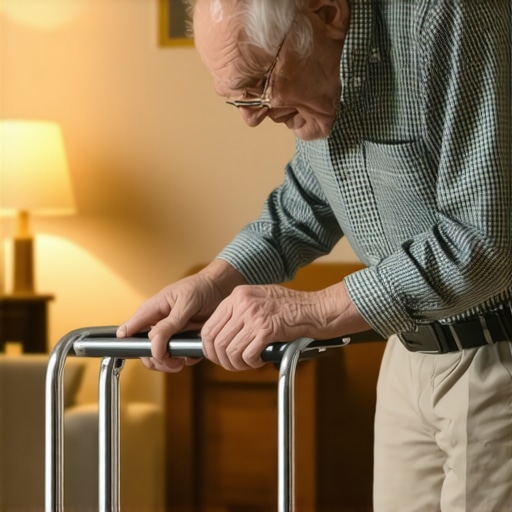
You bought the top-of-the-line model. It has the padded seat, the oversized wheels, and the reinforced brakes. Yet, there it sits in the hallway, gathering dust while your father white-knuckles his way across the kitchen, clutching the counter like a survivor on a sinking ship. You call it safety; he calls it a white flag. To you, it is a tool to prevent a broken hip. To him, it is a four-legged metal cage that signals the end of the man he used to be.
I argue that the primary reason aging parents refuse walkers is not stubbornness, or a lack of logic, or even a misunderstanding of their own frailty. It is a desperate, final stand for dignity. When we force these devices on our elders without acknowledging the psychological weight they carry, we are not just helping them walk—we are demanding they announce their expiration date to the world. We need to stop acting like equipment is the solution and start realizing that the problem is the loss of self.
Your Nagging Is Making the Problem Worse
Stop the lectures. Telling a seventy-year-old that they might fall if they do not use their ‘mobility aid’ is like telling a teenager they might crash if they speed. They know. They simply do not care as much about the risk as they do about the perceived shame. You think you are being helpful, but you are actually stripping away their agency. I have observed that the more a child-turned-caregiver pushes, the more the parent digs in. This is not about physics; it is about power.
Instead of playing safety officer, look for the underlying issues. Sometimes it is not pride, but physical discomfort or a failure to recognize evolving needs. For instance, I have seen families ignore the subtle physical shifts that happen long before the walker becomes necessary. You should be watching for 3 signs your aging parent needs a mobility assessment right now rather than waiting for a catastrophic fall to start the conversation.
The Aluminum Symbol of Defeat
To the aging mind, a walker is not a bicycle or a car; it is a piece of medical theater. It tells every neighbor and every stranger at the grocery store that the person behind it is ‘less than.’ It is a visual representation of decline. Why are we surprised when people reject that? We treat the refusal as a cognitive glitch when it is actually a very human response to a terrifying transition. If we want to help, we have to bridge the gap between clinical necessity and personal identity.
We also tend to focus on the device while ignoring the body it is supposed to support. A walker cannot fix a body that has stopped moving entirely. I believe we should be encouraging proactive physical maintenance, like the simple stretch that keeps aging hips from locking up, to keep that independence alive as long as possible. If the body stays fluid, the walker feels like an option, not a sentence. We also need to integrate chronic care management personalized telehealth strategies for better outcomes to ensure the transition to equipment is managed by professionals, not just panicked relatives.
So, why are we still treating this like a hardware issue? If your parent is skipping the walker, they might be masking other issues. Sometimes, what looks like a balance problem is actually a metabolic one. You should know how to tell if your aging parent is actually dehydrated, as something as simple as low fluids can mimic the dizziness that makes a walker necessary. Address the human being first, the mobility device second.
The Psychological Toll of Medical Hardware
The problem is not a lack of balance; the problem is the erosion of the ego. We treat the aging body like a car in need of a bumper replacement, ignoring the fact that the driver is still inside, screaming to be seen. When you bring that walker into the house, you are not just bringing in aluminum. You are bringing in the smell of bleach and the silence of the hospice ward. It is a rebranding of a person’s entire existence. One day they are the patriarch; the next, they are a patient. Everything about their social standing changes the moment those wheels touch the linoleum. They know that once they start using it, the world will never look at them the same way again. People will talk louder to them, as if mobility and hearing are the same. People will move out of their way with a pitying smile. That is not help. It is an eviction from the world of the capable.
When Longevity Becomes a Prison
We have reached a point where we prioritize the preservation of the pulse over the preservation of the person. The root cause of this conflict is our collective obsession with risk mitigation at the expense of human joy. We have decided that a fall is the worst possible outcome, but for many elders, the worst outcome is already here: the loss of their identity. ${PostImagePlaceholdersEnum.ImagePlaceholderB} When a parent refuses a walker, they are making a rational choice in an irrational situation. They are choosing the risk of a broken bone over the certainty of a broken spirit. The house stops being a home and starts being a facility. Every grab bar, every plastic chair in the shower, and every walker in the hallway is a reminder that their time is short. It is a constant, physical countdown. We expect them to be grateful for the technology, but gratitude is hard to find when you are being forced to inhabit a version of yourself that you despise.
The Statistics of Shame
The data we use to justify these devices is often stripped of its human context. Medical journals frequently cite that mobility aids can reduce fall-related injuries by roughly thirty percent. On paper, that is a success. In reality, it is a hollow victory. That thirty percent reduction in physical risk is a failure of logic if it leads to a hundred percent increase in social isolation. If a woman stays in her bedroom because she is too ashamed to use her walker in the living room during a party, she has not been saved. She has been imprisoned. We see the lack of bruises and call it safety, while ignoring the depression that sets in because she no longer feels like a participant in her own life. Research shows that a perceived loss of control is a stronger predictor of mortality than many chronic conditions. That is not a statistic; it is a death sentence for the ego. We are trading their mental health for a slightly lower chance of a hip fracture, and we have the audacity to call it ‘care.’
The Industry of Dependency
Who actually benefits from this push for equipment? The medical-industrial complex is designed to sell solutions that fit in a box. They do not sell dignity; they sell hardware. They have convinced us that the solution to aging is a series of purchases. If your parent is struggling, the industry says to buy a walker, buy a lift chair, buy a monitoring system. They have turned the natural process of decline into a retail opportunity. But these tools do nothing to address the actual problem, which is the narrowing of the world that happens as we age. We are so focused on the mechanics of walking that we have forgotten why people want to walk in the first place. They do not want to move just to avoid a fall. They want to move to remain human. When the walker becomes the only way to move, the movement itself loses its meaning. It is no longer a stroll; it is a chore. It is no longer independence; it is a managed activity.
The safety-first crowd will tell you that I am being reckless. They will point to the harrowing statistics of the emergency room, noting how many elderly patients enter after a fall and never truly leave. They argue that the prevention of a hip fracture is worth any price, including the loss of a little pride. This is the ultimate steel-man argument: that a dead or bedridden parent cannot enjoy their dignity anyway. From a purely biological perspective, they are right. If life is merely the absence of trauma, then the walker is a miraculous invention. But this clinical logic is a trap that ignores the fundamental difference between surviving and existing.
I used to believe this too, until I spent time in a facility where every resident was ‘safe’ yet half of them had given up on the world. I saw men who had led companies and fought in wars reduced to tears because they felt like children being led on a leash. The safety-first approach treats the human spirit as a secondary concern, a luxury we can only afford once the risks are neutralized. But for many, the risk is the life. The autonomy to move through one’s own home without a metal cage is the last remaining piece of who they are. When you take that away, you aren’t saving them from a fall; you are pushing them into a depression that is far more lethal than a bruised knee.
The Trap of Risk Management
We have become a society that prioritizes the avoidance of the urgent care clinic over the maintenance of the soul. We see a parent wobble and we immediately think of the liability, the paperwork, and the physical pain. We rarely think about the existential pain of being told your body is no longer yours to command. If your parent is struggling with balance, the answer isn’t always to buy a more expensive piece of hardware. Sometimes the answer lies in the data. Before you force the walker, consider what blood tests can tell you about your aging parents health. Are they dizzy because of a medication side effect? Is their muscle weakness a result of a metabolic shift that could be addressed through lab tests rather than aluminum legs?
The medical industry has conditioned us to reach for a product instead of a protocol. We are told that ‘chronic care’ means a slow march toward more equipment, when it should mean a sophisticated, proactive approach to health. With chronic care management personalized telehealth strategies for better outcomes, we can monitor strength, hydration, and neurological health from home, often preventing the need for a walker altogether. But that requires effort and nuance. It is much easier to just point at the walker and say, ‘use it or else.’
The wrong question is: ‘How do we stop them from falling?’ The right question is: ‘How do we keep them moving while they still feel like themselves?’ ${PostImagePlaceholdersEnum.ImagePlaceholderC} When we obsess over the safety of the floor, we forget to look at the person standing on it. We are so busy building a padded world that we have made it a world not worth walking in. If a parent chooses the risk, they are not being stubborn; they are being courageous. They are choosing to live in a way that makes sense to them, even if it terrifies you. We need to stop treating our elders like fragile liabilities and start treating them like adults who have the right to decide how they want to encounter the world, even if that encounter includes a stumble.
You bought the top-of-the-line model. It has the padded seat, the oversized wheels, and the reinforced brakes. Yet, there it sits in the hallway, gathering dust while your father white-knuckles his way across the kitchen, clutching the counter like a survivor on a sinking ship. You call it safety; he calls it a white flag. To you, it is a tool to prevent a broken hip. To him, it is a four-legged metal cage that signals the end of the man he used to be.
I argue that the primary reason aging parents refuse walkers is not stubbornness, or a lack of logic, or even a misunderstanding of their own frailty. It is a desperate, final stand for dignity. When we force these devices on our elders without acknowledging the psychological weight they carry, we are not just helping them walk—we are demanding they announce their expiration date to the world. We need to stop acting like equipment is the solution and start realizing that the problem is the loss of self.
Your Nagging Is Making the Problem Worse
Stop the lectures. Telling a seventy-year-old that they might fall if they do not use their ‘mobility aid’ is like telling a teenager they might crash if they speed. They know. They simply do not care as much about the risk as they do about the perceived shame. You think you are being helpful, but you are actually stripping away their agency. I have observed that the more a child-turned-caregiver pushes, the more the parent digs in. This is not about physics; it is about power.
Instead of playing safety officer, look for the underlying issues. Sometimes it is not pride, but physical discomfort or a failure to recognize evolving needs. For instance, I have seen families ignore the subtle physical shifts that happen long before the walker becomes necessary. You should be watching for 3 signs your aging parent needs a mobility assessment right now rather than waiting for a catastrophic fall to start the conversation.
The Aluminum Symbol of Defeat
To the aging mind, a walker is not a bicycle or a car; it is a piece of medical theater. It tells every neighbor and every stranger at the grocery store that the person behind it is ‘less than.’ It is a visual representation of decline. Why are we surprised when people reject that? We treat the refusal as a cognitive glitch when it is actually a very human response to a terrifying transition. If we want to help, we have to bridge the gap between clinical necessity and personal identity.
We also tend to focus on the device while ignoring the body it is supposed to support. A walker cannot fix a body that has stopped moving entirely. I believe we should be encouraging proactive physical maintenance, like the simple stretch that keeps aging hips from locking up, to keep that independence alive as long as possible. If the body stays fluid, the walker feels like an option, not a sentence. We also need to integrate chronic care management personalized telehealth strategies for better outcomes to ensure the transition to equipment is managed by professionals, not just panicked relatives.
So, why are we still treating this like a hardware issue? If your parent is skipping the walker, they might be masking other issues. Sometimes, what looks like a balance problem is actually a metabolic one. You should know how to tell if your aging parent is actually dehydrated, as something as simple as low fluids can mimic the dizziness that makes a walker necessary. Address the human being first, the mobility device second.
The Psychological Toll of Medical Hardware
The problem is not a lack of balance; the problem is the erosion of the ego. We treat the aging body like a car in need of a bumper replacement, ignoring the fact that the driver is still inside, screaming to be seen. When you bring that walker into the house, you are not just bringing in aluminum. You are bringing in the smell of bleach and the silence of the hospice ward. It is a rebranding of a person’s entire existence. One day they are the patriarch; the next, they are a patient. Everything about their social standing changes the moment those wheels touch the linoleum. They know that once they start using it, the world will never look at them the same way again. People will talk louder to them, as if mobility and hearing are the same. People will move out of their way with a pitying smile. That is not help. It is an eviction from the world of the capable.
When Longevity Becomes a Prison
We have reached a point where we prioritize the preservation of the pulse over the preservation of the person. The root cause of this conflict is our collective obsession with risk mitigation at the expense of human joy. We have decided that a fall is the worst possible outcome, but for many elders, the worst outcome is already here: the loss of their identity. When a parent refuses a walker, they are making a rational choice in an irrational situation. They are choosing the risk of a broken bone over the certainty of a broken spirit. The house stops being a home and starts being a facility. Every grab bar, every plastic chair in the shower, and every walker in the hallway is a reminder that their time is short. It is a constant, physical countdown. We expect them to be grateful for the technology, but gratitude is hard to find when you are being forced to inhabit a version of yourself that you despise.
The Statistics of Shame
The data we use to justify these devices is often stripped of its human context. Medical journals frequently cite that mobility aids can reduce fall-related injuries by roughly thirty percent. On paper, that is a success. In reality, it is a hollow victory. That thirty percent reduction in physical risk is a failure of logic if it leads to a hundred percent increase in social isolation. If a woman stays in her bedroom because she is too ashamed to use her walker in the living room during a party, she has not been saved. She has been imprisoned. We see the lack of bruises and call it safety, while ignoring the depression that sets in because she no longer feels like a participant in her own life. Research shows that a perceived loss of control is a stronger predictor of mortality than many chronic conditions. That is not a statistic; it is a death sentence for the ego. We are trading their mental health for a slightly lower chance of a hip fracture, and we have the audacity to call it ‘care.’
The Industry of Dependency
Who actually benefits from this push for equipment? The medical-industrial complex is designed to sell solutions that fit in a box. They do not sell dignity; they sell hardware. They have convinced us that the solution to aging is a series of purchases. If your parent is struggling, the industry says to buy a walker, buy a lift chair, buy a monitoring system. They have turned the natural process of decline into a retail opportunity. But these tools do nothing to address the actual problem, which is the narrowing of the world that happens as we age. We are so focused on the mechanics of walking that we have forgotten why people want to walk in the first place. They do not want to move just to avoid a fall. They want to move to remain human. When the walker becomes the only way to move, the movement itself loses its meaning. It is no longer a stroll; it is a chore. It is no longer independence; it is a managed activity.
The safety-first crowd will tell you that I am being reckless. They will point to the harrowing statistics of the emergency room, noting how many elderly patients enter after a fall and never truly leave. They argue that the prevention of a hip fracture is worth any price, including the loss of a little pride. This is the ultimate steel-man argument: that a dead or bedridden parent cannot enjoy their dignity anyway. From a purely biological perspective, they are right. If life is merely the absence of trauma, then the walker is a miraculous invention. But this clinical logic is a trap that ignores the fundamental difference between surviving and existing.
I used to believe this too, until I spent time in a facility where every resident was ‘safe’ yet half of them had given up on the world. I saw men who had led companies and fought in wars reduced to tears because they felt like children being led on a leash. The safety-first approach treats the human spirit as a secondary concern, a luxury we can only afford once the risks are neutralized. But for many, the risk is the life. The autonomy to move through one’s own home without a metal cage is the last remaining piece of who they are. When you take that away, you aren’t saving them from a fall; you are pushing them into a depression that is far more lethal than a bruised knee.
The Trap of Risk Management
We have become a society that prioritizes the avoidance of the urgent care clinic over the maintenance of the soul. We see a parent wobble and we immediately think of the liability, the paperwork, and the physical pain. We rarely think about the existential pain of being told your body is no longer yours to command. If your parent is struggling with balance, the answer isn’t always to buy a more expensive piece of hardware. Sometimes the answer lies in the data. Before you force the walker, consider what blood tests can tell you about your aging parents health. Are they dizzy because of a medication side effect? Is their muscle weakness a result of a metabolic shift that could be addressed through lab tests rather than aluminum legs?
The medical industry has conditioned us to reach for a product instead of a protocol. We are told that ‘chronic care’ means a slow march toward more equipment, when it should mean a sophisticated, proactive approach to health. With chronic care management personalized telehealth strategies for better outcomes, we can monitor strength, hydration, and neurological health from home, often preventing the need for a walker altogether. But that requires effort and nuance. It is much easier to just point at the walker and say, ‘use it or else.’
The wrong question is: ‘How do we stop them from falling?’ The right question is: ‘How do we keep them moving while they still feel like themselves?’ When we obsess over the safety of the floor, we forget to look at the person standing on it. We are so busy building a padded world that we have made it a world not worth walking in. If a parent chooses the risk, they are not being stubborn; they are being courageous. They are choosing to live in a way that makes sense to them, even if it terrifies you. We need to stop treating our elders like fragile liabilities and start treating them like adults who have the right to decide how they want to encounter the world, even if that encounter includes a stumble.
The Silence of the Gilded Cage
The stakes of this conflict are higher than a simple domestic disagreement. If we continue down this path, we are heading toward a future where the elderly are not citizens, but inventory. By prioritizing medical compliance over personal agency, we are building a society of gilded cages. In five years, we will see an entire generation of elders who have been successfully ‘protected’ into a state of total psychological surrender. We are essentially lobotomizing their sense of adventure and replacing it with a data point on a fall-risk chart. When we ignore the dignity of the individual, we don’t just lose a parent to old age; we lose them to a clinical void where their choices no longer matter. This is the ultimate warning: the more we focus on the safety of the body, the more we ensure the death of the person long before the heart stops beating.
Imagine a grand, ancient library where the books are so fragile that the curators decide to lock them in air-tight, darkened vaults to prevent the pages from yellowing. The books are safe. They will last for centuries. But they are no longer read. Their stories are never told, and their wisdom is never shared. The library ceases to be a place of life and becomes a morgue for paper. This is what we are doing to our elders. We are so afraid of a tear in the page that we are locking the books away in the dark. A safe life that is devoid of meaning is not a gift; it is a slow-motion tragedy. The world we are building is one where people are kept alive by machines and hardware, yet they have nothing to live for because we have stripped away every remnant of their autonomy.
The Point of No Return
${PostImagePlaceholdersEnum.ImagePlaceholderD} We are reaching a cultural tipping point where the fear of litigation and the convenience of medical hardware are erasing our capacity for empathy. If we do not stop viewing aging as a series of risks to be mitigated, we will find ourselves in a world where no one is allowed to be old—only managed. The future looks like a sterile, high-tech corridor where every movement is tracked by a sensor and every stumble is met with a mechanical intervention. It is a world where the messiness of being human is sanded down until there is nothing left to hold onto. We are trading the warmth of a hand for the cold grip of a grab bar, and we are doing it under the guise of love. This is not progress; it is a retreat from the very things that make life worth the risk of falling.
What Are We Waiting For?
We are waiting for a catastrophe to justify our control, yet the catastrophe is already happening in the quiet corners of our homes. The erosion of the spirit is not televised. It doesn’t show up on a lab report or an X-ray. It happens in the silence after you’ve forced the walker into the room and your parent stops looking you in the eye. If we wait until they are completely dependent to finally ask what they want, we have waited too long. We must act now to shift our focus from ‘how long can they last’ to ‘how well can they live.’ If we don’t, we will eventually find ourselves in that same hallway, staring at the same aluminum frame, wondering when we stopped being people and started being patients. The consequence of inaction is a future where the end of life is not a sunset, but a long, brightly lit stay in a waiting room that never ends.
The High Cost of Biological Safety
The ultimate truth is that we have prioritized a body that does not fall over a soul that wants to stand. We must stop measuring the quality of a life by the number of days we keep it safe and start measuring it by the depth of dignity we help it preserve.
The irony is that while we are busy buying hardware, we are ignoring the proactive care that keeps people on their own two feet longer. This connects to my argument that we should be looking at telehealth breakthroughs how virtual visits elevate chronic care in 2025 to address health before it becomes a crisis of aluminum and wheels. Often, the decline we fear is preventable if we focus on small, daily interventions like learning how to keep your senior parent hydrated without constant nagging, rather than waiting for the catastrophic moment that ‘requires’ a mobility device.
${PostImagePlaceholdersEnum.ImagePlaceholderE}
The twist is that the walker is not actually the problem; it is merely the symptom of our failure to treat our elders as adults. We focus so much on the nightstand item that predicts a senior fall before it happens that we forget to look at the person in the bed and ask if they are still happy. If we continue to treat aging as a liability to be managed, we are not just saving them from a fall—we are effectively evicting them from the human experience before they are actually gone.
Put down the catalog. Stop the lectures. If you want to help your parent walk, start by seeing the man or woman they still are, not the patient you are afraid they might become. A life lived with a little risk and a lot of pride is infinitely better than a life lived in a padded cell of medical compliance.