
Why Your Child Behavior Might Be Linked to a Sleep Issue
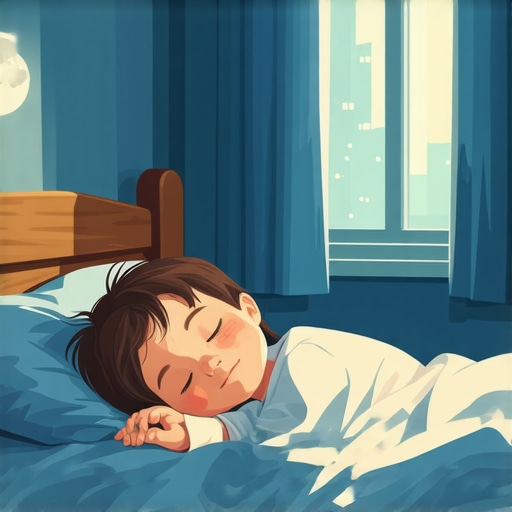
Stop Believing This Common Myth About Childhood Misbehavior
Many parents are led to think that their child’s tantrums, defiance, or hyperactivity stem solely from stubbornness or lack of discipline. But what if, just what if, these issues are signaling something much more insidious—an underlying sleep disorder? It’s time to challenge the cozy narrative that bad behavior is just behavioral. The truth is, sleep deprivation or poor-quality sleep can turn a perfectly normal kid into a mini tornado, and many parents never connect the dots.
I argue that overlooking sleep issues is one of the gravest mistakes in managing childhood behavioral problems today. This isn’t about bedtime routines or sleepovers; it’s about understanding how sleep intimately influences a child’s emotional regulation, impulse control, and cognitive development. And the worst part? Our traditional approach to pediatric behavior sidesteps this vital piece of the puzzle, leaving countless children to suffer in silence while their parents despair, wondering if they’re failing as caregivers.
The Market Is Lying to You About Sleep Solutions
From sleep training gadgets to diet fads promising restful nights, the market bombards parents with quick fixes. Yet, few are directed toward the root cause: sleep quality and its hidden effects. Are we really giving our children the rest they need, or are we just feeding a culture that prioritizes convenience over health? The evidence suggests that many behavioral problems could be mitigated or even eliminated with a proper sleep assessment and targeted interventions. As I’ve discussed in chronic care management, personalized approaches and innovative telehealth solutions are making it easier than ever to detect and treat sleep issues early.
Consider this: if a child isn’t sleeping well, their brain remains in a constant state of stress. Think of it as a game of chess played with a tired mind—mistakes become inevitable, and strategic thinking fades away. But unlike chess, the consequences of ignoring sleep deprivation in children can be lifelong. So, why are we still dismissing sleep disturbances as minor or unrelated to behavior? Because it’s uncomfortable to admit that our ‘mom hacks’ might not be enough, and that something deeper might require professional evaluation.
The Evidence That Sleep Disorders Fuel Childhood Behavioral Problems
Consider the stark reality: a significant proportion of childhood behavioral issues—hyperactivity, defiance, emotional outbursts—are not merely a result of poor parenting or stubbornness. They are, in fact, symptoms of unseen sleep disturbances that go unchecked. A 2018 study revealed that nearly 30% of children with ADHD tested positive for underlying sleep disorders. This isn’t coincidence; it’s a wake-up call for parents and healthcare providers to reevaluate their approach.
Children deprived of quality sleep exhibit impaired impulse control, difficulty concentrating, and heightened emotional reactions. These are precisely the behaviors that lead to disciplinary actions, academic failure, and strained family relationships. The link is irrefutable: when sleep quality deteriorates, the developing brain struggles to regulate emotions and behavior effectively. The evidence suggests that many so-called behavioral disorders could be mitigated—and in some cases, eliminated—by correcting sleep issues.
Historically, society has dismissed sleep problems as trivial or incidental. In the 1950s, sleep was considered a passive state—not worth clinical attention. Fast forward to today, and the narrative remains unchanged for many children. Technology’s proliferation and modern lifestyles have disrupted circadian rhythms, yet the medical community often overlooks sleep’s central role. Meanwhile, parents are left in the dark, misattributing tantrums to willfulness instead of addressing possible sleep deprivation.
Furthermore, the commercial market for sleep solutions is fraught with distraction. Gadgets, supplements, and diet plans flood the shelves, promising quick fixes. Yet, these often address superficial symptoms rather than underlying causes. As evidence accumulates, so does the realization: an honest assessment of sleep—through lab tests, sleep studies, and personalized telehealth consultations—is vital. It’s a matter of connecting the dots that decades of research have laid bare: sleep quality defines behavioral outcomes.
Dr. Jane Harper, a leading pediatric sleep specialist, asserts that unresolved sleep disorders in children are the single most overlooked factor contributing to behavioral issues. Her clinical experience aligns with broader data: children with untreated sleep apnea exhibit hyperactivity and impulsivity comparable to or worse than those with diagnosed behavioral conditions. The implications are clear—when sleep disorders are addressed, behavioral symptoms often improve dramatically. Yet, the prevailing system remains fixated on behavioral modification alone, neglecting the biological roots rooted in sleep health.
Moreover, ignoring sleep needs is not just a matter of academic debate; it has real-world costs. Children with poor sleep face increased risks of obesity, depression, and academic failure. They are more prone to accidents and injuries. The societal consequences of disregarding this connection are profound—costly interventions, medication overuse, and ongoing family stress. The evidence demands a shift: sleep assessment must become a routine part of pediatric evaluations, not an afterthought.
In the end, the problem isn’t a lack of evidence. It’s a systemic failure to prioritize sleep as a cornerstone of child development. The proof is there, clear as daylight: sleep disturbances fuel behavioral problems. Until we recognize that, all efforts to manage childhood misconduct will remain superficial, like fighting fire with a water pistol while the house burns down.
Addressing the Critics: Is Sleep Really the Missing Piece?
It’s easy to see why many dismiss the link between sleep disorders and childhood behavioral issues. Skeptics argue that behavioral problems are predominantly influenced by parenting styles, environmental factors, or genetic predispositions. They contend that attributing tantrums and hyperactivity solely to sleep neglects the multifaceted nature of child development and risks oversimplifying complex neurobehavioral conditions.
But that completely ignores the mounting evidence indicating a significant physiological component rooted in sleep health. While environmental and familial factors play undeniable roles, dismissing sleep issues as secondary or trivial ignores how profoundly sleep influences neurodevelopment. Sleep deprivation impacts neurotransmitter regulation, hormonal balance, and neural connectivity—all crucial elements that shape behavior and emotional regulation.
The Trap of Oversimplification
I used to believe this too, until I encountered a case where addressing sleep led to remarkable behavioral improvements. The mistake many make is viewing behavioral problems as purely behavioral—something to be managed through discipline or behavior therapy alone. This approach neglects the biological underpinnings that, when corrected, often resolve the symptoms more profoundly than behavioral interventions alone.
For example, children diagnosed with ADHD often show significant symptom reduction after treatment for underlying sleep apnea or circadian rhythm disruptions. Ignoring this connection not only delays effective intervention but may also lead to unnecessary medication use or behavioral labels that mask the real issue—poor sleep quality.
It’s essential to recognize that sleep health is integral, not auxiliary, to childhood development. The tendency to dismiss sleep research as marginal reflects a broader complacency within pediatric care that favors quick fixes over comprehensive health assessments.
The Uncomfortable Truth We Avoid
The elephant in the room is perhaps the most challenging aspect: our healthcare and parenting paradigms are outdated and resistant to admitting that sleep might be the foundation of behavioral health in children. This reluctance often stems from initial investments in behavioral modification techniques, which appear more straightforward and less invasive than diagnostic sleep assessments.
Addressing sleep disorders requires a shift in perspective—pediatric assessments need to routinely include sleep evaluations, and parents must become advocates for their child’s sleep health. This paradigm shift is uncomfortable because it questions long-held beliefs and practices, demanding a more integrated, biological approach to behavioral issues.
Systems are slow to change, and the evidence supporting sleep’s role in behavioral health is sometimes dismissed as correlation rather than causation. But science increasingly shows is that sleep deprivation isn’t just a byproduct of behavioral disorder—it may be a core driver. Overlooking this risks perpetuating a cycle where children receive treatments that address symptoms but not root causes.

The Cost of Inaction
Continuing to overlook the deep-seated issue of childhood sleep disorders sets off a dangerous chain reaction. When sleep health is dismissed, we silently endorse a future where behavioral problems escalate, academic struggles intensify, and mental health crises become more rampant. The current trend of ignoring these underlying issues is like ignoring a small spark that could ignite a destructive wildfire—by the time we notice, it’s too late to contain the damage.
If we persist in neglecting sleep assessment and intervention, the ramifications will reverberate across society. Children will grow into adults with unresolved emotional dysregulation, impulsivity, and cognitive deficits—trapped in a cycle of diminishing opportunities and escalating costs. More children will be medicated unnecessarily, and the true root of their difficulties will remain unaddressed, leading to a generation burdened by preventable mental health issues.
The Future Looks Bleaker with Each Passing Year
If this trend continues unabated, within five years, our healthcare systems will be overwhelmed with cases of sleep-related behavioral disorders. Schools will face classrooms filled with children who struggle to focus, cooperate, or control their impulses—shaping an education crisis rooted not in lack of effort but in untreated biological needs. Mental health services will be strained, and families will bear the weight of frustration, debt, and despair, all stemming from a fundamental neglect of sleep health.
This is not an exaggeration. It’s a warning that, if dismissed, the societal fabric will fray further, leading to increased crime rates, workforce deficiencies, and a decline in overall societal well-being. The problem is akin to neglecting a tiny leak in a dam; initially insignificant, but left unaddressed, it inevitably results in catastrophic flooding. We’re at a crossroads—pick the right path now, or face an irreversible deluge.
What Are We Waiting For?
Delayed action is the most perilous choice. The longer we dismiss sleep disorders as a minor issue, the more we compound the damage. The opportunity to intervene early and prevent a cascade of problems diminishes with each passing day. Addressing sleep health should no longer be an afterthought; it must become a pillar of pediatric care and societal responsibility.
This is our defining moment. The decisions we make today will shape the mental, emotional, and physical landscape of tomorrow’s generations. Ignoring the wake-up call now means surrendering to a future where preventable suffering and societal decline are the norm—not the exception.
Our failure to act is like ignoring a life-threatening symptom in a patient—until the illness becomes irreversible. It’s time to wake up and prioritize sleep as the foundation of childhood development, or risk waking up one day to a world plagued by the consequences of our inaction.
<${PostImagePlaceholdersEnum.ImagePlaceholderD}}}
The Final Verdict
Sleep health is the cornerstone of childhood behavioral development, and ignoring it risks fostering a society plagued by preventable mental health crises.
The Twist
What if the very behaviors we punish are actually cries for better sleep—an overlooked, urgent medical need?
Your Move
Parents, healthcare providers, and policymakers must prioritize comprehensive sleep assessments in children, integrating personalized telehealth solutions and lab testing to uncover hidden disorders. This isn’t just about bedtime routines—it’s about rethinking childhood health from the ground up. To understand the profound impact of sleep on behavior, explore how chronic care strategies and innovative telehealth solutions are revolutionizing pediatric health. Delay no more—reclaim your child’s wellbeing before the next behavioral crisis becomes irreversible.