
Why Your Senior Parent Is Suddenly Losing Their Appetite
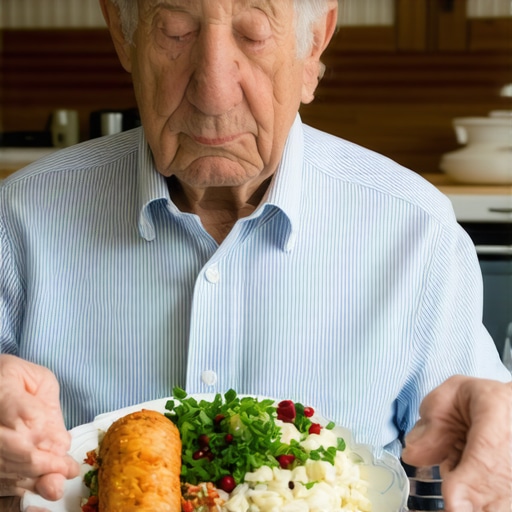
Stop telling yourself that your mother is just “getting smaller” as she gets older. Stop pretending that your father’s untouched Sunday roast is a natural byproduct of his seventies. I contend that the most dangerous lie we tell ourselves in the name of elder care is that a shrinking appetite is normal. It isn’t. It’s a red flare. It’s a silent alarm. When a senior stops eating, they aren’t just losing their taste for chicken; they are losing their grip on vitality, and we are letting it happen because we’re too afraid to confront the underlying decay.
The Dangerous Myth of the Shrinking Stomach
You might think a lighter plate is just part of the aging process, but you are wrong. I argue that we have become culturally complacent, accepting a slow-motion starvation as an inevitable phase of life. When an engine starts to sputter, you don’t say the car is just “tired of gasoline.” You recognize that a fundamental system is failing. Your parent’s body is that engine. A sudden refusal to eat is rarely about the food itself; it is the physical manifestation of a biological or psychological crisis. Why are we so quick to dismiss the very fuel that keeps them alive? We see the weight loss and call it “frailty,” when we should be calling it what it actually is: a clinical emergency hiding in plain sight.
Stop Waiting for the Empty Plate to Fix Itself
If you wait for their hunger to return on its own, you are essentially watching a sinking ship and hoping the water decides to stop coming in. I have seen too many families realize too late that the refusal to eat was the first domino in a catastrophic collapse. Often, the cause is far more insidious than simple pickiness. For instance, why your aging parents personality shift might be a UTI is a question every caregiver should be asking, as infections frequently mask themselves as a loss of interest in life’s basics, including food. Is it a silent infection? Is it a side effect of a cocktail of medications? Is it the beginning of a cognitive decline? You won’t know by staring at their leftovers. You need data, not hope.
The reality is blunt: a senior who doesn’t eat is a senior who is preparing to fail. This is where chronic care management and personalized telehealth strategies become the difference between a recovery and a steady decline. We have the tools to monitor these shifts in real-time, yet we treat medical intervention as a last resort rather than a first response. We need to stop the “wait and see” approach. If they aren’t eating, they aren’t drinking either, and you must know how to keep your senior parent hydrated before their kidneys pay the price for your hesitation. I believe the modern medical system gives us every opportunity to catch these dips early, but only if we stop treating our parents like they are made of glass and start treating their health like the high-stakes battle it is.
The problem is not a lack of interest; the problem is a physiological blockade. When we observe a senior turning away from a meal, we are witnessing the end-stage of a metabolic breakdown. It *is* a survival mechanism that has been tripped by an error in the system. We treat it as a personality quirk because the alternative—acknowledging that their body is actively shutting down—is too terrifying to bear. But our fear is killing them. We need to stop looking at the plate and start looking at the bloodwork. Lab tests don’t have emotions. They don’t try to ‘be brave’ for their children. They report the cold, hard truth of kidney function, vitamin deficiencies, and inflammatory markers that explain exactly why the steak tastes like ash.
The Bio-Chemical Betrayal
The pharmaceutical industry plays a starring role in this tragedy, yet we rarely cast them as the villain. Every new pill added to a senior’s daily regimen is another potential blow to their appetite. We treat the side effects of one drug with a second drug, and by the third, the patient has lost all desire to consume anything but water. This is the root cause that no one wants to discuss: we are over-medicating the elderly into an early grave by suppressing the very urges that keep them alive. It is a cycle of chemical suppression. We prioritize ‘managing’ blood pressure or ‘regulating’ mood over the fundamental necessity of caloric intake. If they are too sedated or too nauseated to eat, the medication isn’t working; it is killing them. This isn’t a side effect; it’s a systemic failure.
${PostImagePlaceholdersEnum.ImagePlaceholderB}
The Data of Disinterest
Consider the math of this neglect. Statistical data shows that roughly 35 percent of older adults living in the community are at risk of malnutrition. Frame that properly: one in three seniors you see at the grocery store is essentially one missed meal away from a clinical tailspin. That 35 percent isn’t a statistical variance; it is a massive, silent failure of our primary care infrastructure. It proves that we are failing to monitor the most basic metric of human survival. We wait for the hip to break or the stroke to hit, but the starvation was there months ago, hiding in the shadows of a ‘small appetite.’ We see a half-eaten meal. We see a tray pushed away, a head turned in defiance, and a caregiver’s frustration mounting like a summer storm, yet we fail to see the cellular starvation occurring beneath the surface. It *is* a choice we make to be blind.
A Failure of Clinical Imagination
The medical industry has conditioned us to look for the ‘big’ events—the falls, the heart attacks, the sudden slurs. This is a failure of clinical imagination. We ignore the slow erosion because it doesn’t look like an emergency. But it *is* an emergency. A senior who loses five percent of their body weight in a month is in the midst of a biological catastrophe. This isn’t a slow fade; it is a rapid descent. If we don’t utilize urgent care and specialized telehealth to bridge this gap, we are essentially signing their death warrants with our own passivity. We have the technology to see this coming. We have the diagnostic tools to stop it. To ignore them is not ‘respecting their wishes’; it is clinical negligence disguised as politeness.
The evidence is overwhelming: nutritional status is the single most accurate predictor of mortality in the elderly. Yet, how often is it the primary focus of a doctor’s visit? Rarely. We talk about ‘metrics’ and ‘stable levels,’ but we ignore the empty refrigerator. This is where the system breaks. We have separated the ‘medical’ from the ‘biological.’ We treat the disease but forget the animal. If the animal doesn’t eat, the disease wins every single time. It is a mathematical certainty. You cannot fight a battle without fuel, and you cannot expect a body to heal while it is consuming its own muscle mass for energy. This is the reality of the ‘shrinking’ parent. They aren’t getting smaller; they are being digested by their own bodies because we failed to provide the necessary intervention. The evidence is right there, sitting cold on the Sunday roast platter.
It is easy to see why the “dignity of choice” argument is so seductive. It allows you to feel like a compassionate advocate instead of a failing caregiver. You tell yourself that if your mother doesn’t want the soup, forcing the issue is an insult to her long life of independence. You believe that “listening to the body” is the ultimate wisdom. But this is the common trap that leads straight to the cemetery. I used to believe this too, until I realized that a body in shutdown doesn’t speak the truth; it speaks in malfunctions. When we talk about “autonomy” for a senior who is dropping pounds like dead leaves in autumn, we are usually just making excuses for our own discomfort. We are afraid of the conflict, so we call our surrender “respect.” This is not kindness. It is a psychological shield we use to protect ourselves from the grueling reality of medical intervention.
Stop Hiding Behind Autonomy
This isn’t about being a “food warden.” It’s about recognizing that the “choice” to stop eating is often a symptom of a fixable biological error. If your parent had a broken leg, you wouldn’t “respect their choice” to crawl across the floor. You would get them to a doctor. Why is a starving metabolism any different? When we rely on the senior’s self-reporting of hunger, we are relying on a compromised witness. We need objective metrics. This is why lab tests and chronic care management are not just options; they are requirements for survival. A blood panel doesn’t care about “dignity”; it cares about electrolyte imbalances and protein levels. It provides the cold, hard data that your parent’s pride—and your own guilt—is trying to obscure. We are failing to distinguish between a person who is finished with life and a person whose biology is currently being sabotaged by an undiagnosed ailment.
${PostImagePlaceholdersEnum.ImagePlaceholderC}
The critics will say that medicalizing the dinner table ruins the final years of life. They are wrong. What ruins the final years is the confusion, the falls, and the cognitive fog that arrive when the body starts eating its own heart muscle for fuel. We have access to urgent care and telehealth platforms that can diagnose a silent infection or a medication interaction in minutes. To ignore these tools in the name of “letting nature take its course” is a dereliction of duty. Nature’s “course” for a starving animal is a slow, painful organ failure. Is that the “dignity” we are trying to preserve? We have become so obsessed with the aesthetics of a “peaceful” home environment that we are willing to ignore the structural rot occurring in the patient’s cells. This is a failure of empathy disguised as its highest form.
The reality is that “autonomy” requires a functioning prefrontal cortex. A brain deprived of glucose and essential vitamins isn’t autonomous; it’s malfunctioning. When we step in with clinical intervention, we aren’t taking away their rights; we are restoring the biological foundation that allows them to have rights in the first place. You cannot have a voice if you do not have the breath to speak, and you cannot have a will if your neurons are misfiring due to malnutrition. Stop being fooled by the quiet. The quiet is the sound of the light going out. We must stop asking our parents what they want to eat and start asking what their bodies need to survive. The former is a social grace; the latter is a clinical necessity that we have ignored for far too long. If we don’t use the technology at our disposal to bridge this gap, we aren’t being respectful; we are being cowards.
The Catastrophic Cost of Silence
If we refuse to change our perspective on senior nutrition today, we are effectively choosing a future defined by a massive, preventable surge in disability. We are currently standing on a crumbling cliffside, watching the ground give way beneath our parents, and yet we remain paralyzed by a misguided sense of etiquette. This is not a theoretical debate for the medical journals. This is a ticking clock. Every day that a senior’s calorie count remains in the red is a day we are shortening their lives and ensuring their final years are spent in a fog of delirium and physical pain. I argue that our current path leads to a societal nightmare where millions of older adults are tethered to hospital beds not because of incurable diseases, but because we allowed their bodies to starve in plain sight. We are building a legacy of neglect that our children will eventually inherit, and the bill for this cowardice will be paid in human suffering and economic ruin. It is a choice to allow the biology of those we love to disintegrate while we maintain the polite fiction of ‘normal aging.’
Will We Watch Them Fade Away?
Consider the structural integrity of a suspension bridge. You can ignore the rust on the bolts for a few years. You can tell yourself the bridge is just ‘weathered’ or that it has ‘earned its character’ through decades of service. But the rust doesn’t care about your sentimentality. It continues to eat through the steel until the entire structure collapses into the river. Our parents’ metabolisms are those bolts. By the time the collapse happens—the broken hip, the massive stroke, the sudden organ failure—the rust has been at work for months. We have the diagnostic tools, the lab tests, and the telehealth infrastructure to spot the rust before it spreads, yet we choose to look at the sunset instead of the support beams. This is a failure of will, not a failure of technology. If we don’t act, the ‘natural course’ of aging will become synonymous with a slow, agonizing metabolic death that could have been stopped with a single blood panel and an honest conversation.
A Future of Preventable Frailty
In five years, if this cultural inertia persists, the healthcare system will be overwhelmed by ‘failure to thrive’ cases that should have been managed at the dinner table. We will see a world where the ‘dignity’ we claim to protect is replaced by the sterile hum of intensive care units. We are trading the proactive intervention of urgent care and chronic care management for the reactive chaos of the emergency room. This is the slippery slope we are sliding down. We are trading a week of difficult conversations for a decade of institutionalization. The reality is that the next generation of seniors is being set up for a catastrophic loss of independence. They aren’t just losing their weight; they are losing their dignity, their memories, and their autonomy—the very things we claim to be preserving by staying silent. We are creating a future where the elderly are not just older, but fundamentally more fragile than they ever needed to be.
${PostImagePlaceholdersEnum.ImagePlaceholderD}
The Moral Bankruptcy of Doing Nothing
The warning is clear: inaction is a choice, and it is a choice with a body count. We have reached a point where ‘watching and waiting’ is a form of clinical negligence. We cannot continue to hide behind the veil of ‘natural aging’ when the evidence of metabolic distress is screaming at us from every untouched meal. I believe that history will judge us harshly for our refusal to treat senior nutrition with the same urgency as a cardiac event. We are witnessing a silent famine in the land of plenty, and our polite refusal to intervene is the catalyst. We must stop pretending that we are being respectful and admit that we are being passive. The price of our passivity is the literal disintegration of the people who raised us. If we don’t start utilizing every medical asset at our disposal—from telehealth monitoring to aggressive nutritional intervention—we are not just failing as caregivers; we are failing as a civilization. This is the point of no return, and the ground is already beginning to shake under the weight of our own hesitation.
The Final Verdict
The empty plate is not a choice of the soul; it is a failure of the machine, and choosing to ignore it is a choice to let that machine break. My final verdict is this: if your aging parent isn’t eating, they are in a state of clinical crisis. There is no middle ground, no “wait and see” period, and no “polite” way to watch someone starve. We must bridge the gap between the dinner table and the clinic immediately. This is why telehealth breakthroughs are so vital; they allow us to intervene before the crisis becomes irreversible. We have the technology to stop the decline, yet we remain paralyzed by a fear of being “intrusive” while the biological clock runs out.
${PostImagePlaceholdersEnum.ImagePlaceholderE}
The Twist of Our Own Design
Here is the final twist you must accept: the dignity we think we are preserving by not forcing a medical conversation is actually the very thing we are destroying. True dignity is not found in the silence of a malnourished brain; it is found in the clarity of a well-fueled one. When we choose to ignore the signs of a failing metabolism, we are effectively choosing to let our parents lose their minds and their independence. This is why you must understand why seniors should never skip a mid-day protein boost and why you should proactively request a metabolic panel every 6 months. It is better to have an uncomfortable conversation today than a tragic one in the emergency room tomorrow.
Your Move
The era of the “shrinking appetite” must end now. We can no longer afford to be polite witnesses to our parents’ biological disintegration. Use the urgent care innovations available to you. Demand the bloodwork. Challenge the “normalcy” of weight loss. If you love them, you will fight for the fuel they need to stay themselves. Stop looking at the leftovers and start looking at the future you are choosing by staying silent. The clock is ticking, and the plate is still full. Your silence is their decline.