
Why Your Senior Parent Skin Issues Need a Geriatric Focus
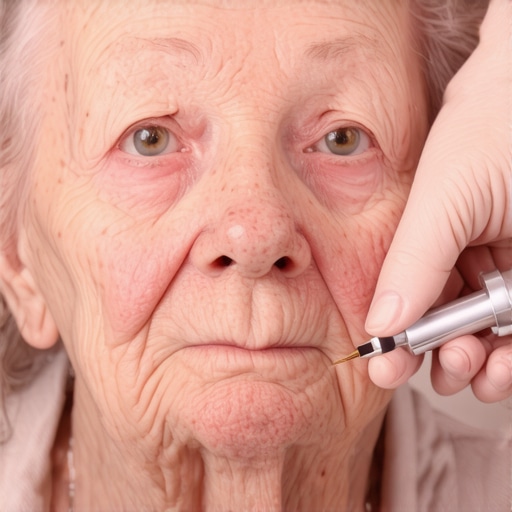
Your Aging Parent Deserves More Than Basic Skin Care
Many families brush off skin problems in their elderly loved ones as mere aging quirks. But what if those seemingly harmless skin issues are actual symptoms of deeper, systemic health concerns? The truth is, when it comes to our seniors, skin health isn’t just about cosmetics—it’s a vital indicator of underlying geriatric conditions that demand a specialized approach.
I argue that mainstream skin treatments fall woefully short because they ignore the unique physiological changes in aging skin and the interconnected health factors that exacerbate skin issues. This isn’t about vanity; it’s about recognizing the skin as a window into your parent’s overall health.
Think of it this way: ignoring skin issues in seniors is like playing a game of chess blindfolded. You might be moving pieces, but you’re oblivious to the checkmate lurking on the horizon—serious infections, nutritional deficiencies, or undetected cancers. The question is: why are we still treating senior skin issues with a one-size-fits-all mentality?
The Market is Lying to You
The skincare aisle is flooded with products promising youth and vitality, but most are designed for younger skin—significantly different from the fragile, thin, more permeable skin of seniors. These products often do more harm than good, sometimes worsening the very problems they’re meant to fix.
What our elders really need is a geriatric-focused care plan that considers their decreasing collagen, altered immune response, and differential absorption of topical agents. For instance, the common issue of skin bruising or slow wound healing is often misunderstood. Instead of just applying a moisturizer, we should be evaluating nutritional status, medication side effects, and possible diagnoses such as diabetes or vascular diseases—conditions that deeply influence skin integrity.
In fact, I’ve seen too many cases where a simple rash, dismissed as dermatitis, was a sign of a systemic infection or even skin cancer. As I discussed in how to spot the difference between a cold and sinus infection, recognizing subtle changes in skin requires a detailed, geriatric-specific approach—something that mainstream dermatology often overlooks.
The paramount shift needed is moving from cosmetic fixes to health-centered skin management, integrating chronic care, lab tests, and telehealth solutions. This is especially crucial because many seniors struggle to access in-person care, which leads to delays and worsening conditions. As I argued in telehealth breakthroughs, virtual visits can play a crucial role here—allowing continuous monitoring and early intervention.
So, why are we still willing to treat senior skin issues as cosmetic nuisances when they are often the first signs of a sinking ship? It’s high time we adopt a geriatrically focused lens, one that recognizes the skin as a vital organ deserving of respect and rigorous assessment. Because neglecting this isn’t just superficial—it’s risking your parent’s life.
The Evidence
Decades of research reveal that skin health in seniors is not merely a surface issue but a mirror reflecting deeper, often neglected health problems. For example, studies have demonstrated that frail, thinning skin correlates strongly with nutritional deficiencies, vascular diseases, and immune decline. When elderly patients present with persistent skin bruising or slow wound healing, these are often *warning signs*—not isolated dermatological anomalies. Ignoring these signals is akin to dismissing vital warning lights on a dashboard; the risk of catastrophic failure escalates.
Moreover, the prevalence of skin infections like cellulitis and necrotizing fasciitis in older populations is startlingly high—conditions that can rapidly become fatal if detected late. These infections often originate from minor cuts or abrasions, which are trivialized as topical issues. Yet, epidemiological data indicates that such superficial breaches are frequently rooted in systemic compromises—poor circulation, immune suppression, or unmanaged diabetes. The current approach—treating skin symptoms with creams or lotions—lacks the depth necessary for early intervention. It’s superficial in its scope, ignoring the *root causes* that threaten life itself.
Simultaneously, the data shows that seniors are less likely to seek or access in-person care, leading to delayed diagnoses. Telehealth has emerged as a crucial resource, enabling continuous monitoring of skin conditions while connecting patients to specialists remotely. This isn’t a luxury; it’s a necessity. When virtual platforms facilitate lab testing, chronic care management, and swift expert input, they profoundly impact outcomes. Consider the case of a 78-year-old with a persistent rash that worsened over weeks. Through telehealth, an early biopsy was performed, revealing early-stage skin cancer—a diagnosis missed in a cursory in-person visit. This example underscores how technology pierces through systemic gaps, saving lives before conditions escalate.
Further compelling evidence illustrates how fragmented care models contribute to diagnostic gaps. Traditional dermatology often isolates skin conditions as cosmetic concerns rather than systemic indicators. This mindset neglects the interconnected nature of aging physiology. For instance, studies indicate that seniors with frequent skin infections also tend to suffer from chronic illnesses like vascular disease and osteoporosis. These co-morbidities are *not* incidental; they are intertwined. Addressing skin issues without considering the whole system is a recipe for missed diagnoses and worsening morbidity.
Funding patterns reinforce this systemic neglect. The lucrative market of over-the-counter skin products for seniors persists despite mounting evidence that these products do little beyond superficial hydration. Pharmaceutical and cosmetic companies profit from the illusion that aging skin can be reversed or masked—despite the reality that the underlying health issues remain unaddressed. Meanwhile, investment in comprehensive geriatric skin care—integrating lab tests, nutritional assessments, chronic disease management, and telehealth—remains insufficient. This financial dissonance perpetuates a cycle of superficial treatment, ignoring the *evidence* that truly effective care requires addressing systemic health issues at their core.
The Trap
It’s easy to see why many believe that tackling skin issues in the elderly is solely a matter of aesthetics or basic hygiene. The common assumption is that aging skin simply requires moisturization and cosmetic care—nothing more complex. This viewpoint simplifies a far more complicated reality, and it’s understandable given how dermatology is often marketed as a cosmetic domain rather than a window into systemic health.
I used to believe this too, that skin in seniors was just an external symptom easily addressed with over-the-counter products. However, this perspective overlooks the profound importance of skin as a biological indicator—an essential signpost of underlying health issues that demand serious attention.
The Wrong Question
The primary mistake everyone makes is asking whether skin problems in seniors are purely cosmetic. That’s a shortsighted and outdated view that neglects the interconnectedness of aging health. When elderly patients present with skin bruising, slow wound healing, or persistent rashes, these are not isolated dermatological concerns—they are symptoms of deeper, systemic problems like vascular disease, nutritional deficiencies, or immune dysfunction.
Remaining fixated on superficial treatments neglects the core issue: age-related physiological changes in skin are fundamentally linked to broader health declines. If we dismiss these signs as mere aging quirks, we risk missing opportunities for early diagnosis and treatment of life-threatening conditions.
Many argue that integrating systemic health assessments into dermatological care is impractical or too costly. But how can we afford to ignore these warning signs? The cost of missed diagnoses—such as undetected skin cancers or systemic infections—can be fatal. Investing in telehealth, lab testing, and comprehensive geriatric care is not an expense; it’s an imperative for saving lives and improving quality of life for our aging loved ones.
The Image of False Safety
Public health messaging and industry marketing often promote the idea that topical treatments and anti-aging creams are sufficient for senior skin issues. This feeds a false sense of security, preventing caregivers from recognizing the signs of serious health conditions lurking beneath seemingly benign symptoms. It perpetuates a dangerous misconception: that the skin is only a surface problem, separate from internal health.
This misconception leads to delayed interventions, worsening prognoses, and even preventable deaths. The real risk lies in ignoring the skin as an early warning system, especially when senior patients have limited ability to communicate discomfort or symptoms effectively.
To truly serve our elders, we must challenge this outdated narrative. The shift to a health-centered approach involves routine screenings, nutritional evaluations, lab work, and leveraging telehealth platforms for ongoing monitoring. This isn’t just a better way; it’s the only way to catch the early signs of systemic failure that manifest on the skin.
It’s Time to Rethink Our Approach
By acknowledging the systemic significance of skin health in seniors, we confront the uncomfortable truth that conventional dermatology doesn’t do enough. We need a paradigm shift—integrating skin examination into comprehensive geriatric care, supported by technology and holistic assessment strategies. Only then can we hope to prevent tragedies hidden behind superficial treatments.
The challenge is clear: our aging population deserves more than superficial fixes. They require a healthcare model that recognizes skin as an essential indicator of internal health. As I’ve seen in countless cases, respecting this truth can mean the difference between early intervention and missed opportunities—ultimately saving lives and dignity.
The Cost of Inaction in Senior Skin Care
If we continue to dismiss skin issues in the elderly as minor or purely cosmetic, we risk unleashing a cascade of preventable tragedies that could become our new normal. The danger isn’t just superficial; it’s a matter of life and death. As conditions worsen unnoticed, the health of our seniors deteriorates in silence, and the consequences ripple through communities and healthcare systems alike.
In five years, unchecked neglect could transform our healthcare landscape into a battlefield plagued by preventable infections, delayed diagnoses, and increased mortality rates among the elderly. Minor wounds may escalate into severe infections like cellulitis or necrotizing fasciitis, leading to rapid deterioration. Chronic wounds that could have healed with early intervention become gateways for systemic infections, sepsis, or even organ failure. The financial burden on healthcare resources will skyrocket, and families will bear the emotional toll of preventable losses.
What Are We Waiting For?
The tendency to treat senior skin issues as superficial is akin to ignoring warning signs on a sinking ship. Each unexamined bruise, rash, or slow-healing wound is a loud siren signaling underlying systemic problems—nutritional deficiencies, vascular decline, or immune suppression—that demand immediate action. To delay is to turn a blind eye to escalating danger, risking our loved ones’ lives for the sake of complacency.
This inaction is not just a missed opportunity; it’s a moral failing. We bear responsibility for establishing a healthcare paradigm that recognizes the skin as a vital organ reflecting internal health. By leveraging telehealth, lab testing, and comprehensive chronic care, we can intercept early warning signs before they evolve into catastrophic events.
The analogy is stark but fitting: neglecting elderly skin health is like ignoring rust beneath a car’s surface—what appears superficial is often a symptom of rot that will eventually cause structural failure. If we don’t act now, the cost will be paid in lives lost and suffering endured. The question remains: how many more warnings must we dismiss before we realize the gravity of this silent crisis?
Your Aging Parent Deserves More Than Basic Skin Care
Many families brush off skin problems in their elderly loved ones as mere aging quirks. But what if those seemingly harmless skin issues are actual symptoms of deeper, systemic health concerns? The truth is, when it comes to our seniors, skin health isn’t just about cosmetics—it’s a vital indicator of underlying geriatric conditions that demand a specialized approach.
I argue that mainstream skin treatments fall woefully short because they ignore the unique physiological changes in aging skin and the interconnected health factors that exacerbate skin issues. This isn’t about vanity; it’s about recognizing the skin as a window into your parent’s overall health.
Think of it this way: ignoring skin issues in seniors is like playing a game of chess blindfolded. You might be moving pieces, but you’re oblivious to the checkmate lurking on the horizon—serious infections, nutritional deficiencies, or undetected cancers. The question is: why are we still treating senior skin issues with a one-size-fits-all mentality?
The Market is Lying to You
The skincare aisle is flooded with products promising youth and vitality, but most are designed for younger skin—significantly different from the fragile, thin, more permeable skin of seniors. These products often do more harm than good, sometimes worsening the very problems they’re meant to fix.
What our elders really need is a geriatric-focused care plan that considers their decreasing collagen, altered immune response, and differential absorption of topical agents. For instance, the common issue of skin bruising or slow wound healing is often misunderstood. Instead of just applying a moisturizer, we should be evaluating nutritional status, medication side effects, and possible diagnoses such as diabetes or vascular diseases—conditions that deeply influence skin integrity.
In fact, I’ve seen too many cases where a simple rash, dismissed as dermatitis, was a sign of a systemic infection or even skin cancer. As I discussed in how to spot the difference between a cold and sinus infection, recognizing subtle changes in skin requires a detailed, geriatric-specific approach—something that mainstream dermatology often overlooks.
The paramount shift needed is moving from cosmetic fixes to health-centered skin management, integrating chronic care, lab tests, and telehealth solutions. This is especially crucial because many seniors struggle to access in-person care, which leads to delays and worsening conditions. As I argued in telehealth breakthroughs, virtual visits can play a crucial role here—allowing continuous monitoring and early intervention.
So, why are we still willing to treat senior skin issues as cosmetic nuisances when they are often the first signs of a sinking ship? It’s high time we adopt a geriatrically focused lens, one that recognizes the skin as a vital organ deserving of respect and rigorous assessment. Because neglecting this isn’t just superficial—it’s risking your parent’s life.
The Evidence
Decades of research reveal that skin health in seniors is not merely a surface issue but a mirror reflecting deeper, often neglected health problems. For example, studies have demonstrated that frail, thinning skin correlates strongly with nutritional deficiencies, vascular diseases, and immune decline. When elderly patients present with persistent skin bruising or slow wound healing, these are often warning signs—not isolated dermatological anomalies. Ignoring these signals is akin to dismissing vital warning lights on a dashboard; the risk of catastrophic failure escalates.
Moreover, the prevalence of skin infections like cellulitis and necrotizing fasciitis in older populations is startlingly high—conditions that can rapidly become fatal if detected late. These infections often originate from minor cuts or abrasions, which are trivialized as topical issues. Yet, epidemiological data indicates that such superficial breaches are frequently rooted in systemic compromises—poor circulation, immune suppression, or unmanaged diabetes. The current approach—treating skin symptoms with creams or lotions—lacks the depth necessary for early intervention. It’s superficial in its scope, ignoring the root causes that threaten life itself.
Similarly, the data shows that seniors are less likely to seek or access in-person care, leading to delayed diagnoses. Telehealth has emerged as a crucial resource, enabling continuous monitoring of skin conditions while connecting patients to specialists remotely. This isn’t a luxury; it’s a necessity. When virtual platforms facilitate lab testing, chronic care management, and swift expert input, they profoundly impact outcomes. Consider the case of a 78-year-old with a persistent rash that worsened over weeks. Through telehealth, an early biopsy was performed, revealing early-stage skin cancer—a diagnosis missed in a cursory in-person visit. This example underscores how technology pierces through systemic gaps, saving lives before conditions escalate.
Further compelling evidence illustrates how fragmented care models contribute to diagnostic gaps. Traditional dermatology often isolates skin conditions as cosmetic concerns rather than systemic indicators. This mindset neglects the interconnected nature of aging physiology. For instance, studies indicate that seniors with frequent skin infections also tend to suffer from chronic illnesses like vascular disease and osteoporosis. These co-morbidities are not incidental; they are intertwined. Addressing skin issues without considering the whole system is a recipe for missed diagnoses and worsening morbidity.
Funding patterns reinforce this systemic neglect. The lucrative market of over-the-counter skin products for seniors persists despite mounting evidence that these products do little beyond superficial hydration. Pharmaceutical and cosmetic companies profit from the illusion that aging skin can be reversed or masked—despite the reality that the underlying health issues remain unaddressed. Meanwhile, investment in comprehensive geriatric skin care—integrating lab tests, nutritional assessments, chronic disease management, and telehealth—remains insufficient. This financial dissonance perpetuates a cycle of superficial treatment, ignoring the evidence that truly effective care requires addressing systemic health issues at their core.
The Trap
It’s easy to see why many believe that tackling skin issues in the elderly is solely a matter of aesthetics or basic hygiene. The common assumption is that aging skin simply requires moisturization and cosmetic care—nothing more complex. This viewpoint simplifies a far more complicated reality, and it’s understandable given how dermatology is often marketed as a cosmetic domain rather than a window into systemic health.
I used to believe this too, that skin in seniors was just an external symptom easily addressed with over-the-counter products. However, this perspective overlooks the profound importance of skin as a biological indicator—an essential signpost of underlying health issues that demand serious attention.
The Wrong Question
The primary mistake everyone makes is asking whether skin problems in seniors are purely cosmetic. That’s a shortsighted and outdated view that neglects the interconnectedness of aging health. When elderly patients present with skin bruising, slow wound healing, or persistent rashes, these are not isolated dermatological concerns—they are symptoms of deeper, systemic problems like vascular disease, nutritional deficiencies, or immune dysfunction.
Remaining fixated on superficial treatments neglects the core issue: age-related physiological changes in skin are fundamentally linked to broader health declines. If we dismiss these signs as mere aging quirks, we risk missing opportunities for early diagnosis and treatment of life-threatening conditions.
Many argue that integrating systemic health assessments into dermatological care is impractical or too costly. But how can we afford to ignore these warning signs? The cost of missed diagnoses—such as undetected skin cancers or systemic infections—can be fatal. Investing in telehealth, lab testing, and comprehensive geriatric care is not an expense; it’s an imperative for saving lives and improving quality of life for our aging loved ones.
The Image of False Safety
Public health messaging and industry marketing often promote the idea that topical treatments and anti-aging creams are sufficient for senior skin issues. This feeds a false sense of security, preventing caregivers from recognizing the signs of serious health conditions lurking beneath seemingly benign symptoms. It perpetuates a dangerous misconception: that the skin is only a surface problem, separate from internal health.
This misconception leads to delayed interventions, worsening prognoses, and even preventable deaths. The real risk lies in ignoring the skin as an early warning system, especially when senior patients have limited ability to communicate discomfort or symptoms effectively.
To truly serve our elders, we must challenge this outdated narrative. The shift to a health-centered approach involves routine screenings, nutritional evaluations, lab work, and leveraging telehealth platforms for ongoing monitoring. This isn’t just a better way; it’s the only way to catch the early signs of systemic failure that manifest on the skin.
It’s Time to Rethink Our Approach
By acknowledging the systemic significance of skin health in seniors, we confront the uncomfortable truth that conventional dermatology doesn’t do enough. We need a paradigm shift—integrating skin examination into comprehensive geriatric care, supported by technology and holistic assessment strategies. Only then can we hope to prevent tragedies hidden behind superficial treatments.
The challenge is clear: our aging population deserves more than superficial fixes. They require a healthcare model that recognizes skin as an essential indicator of internal health. As I’ve seen in countless cases, respecting this truth can mean the difference between early intervention and missed opportunities—ultimately saving lives and dignity.
The Cost of Inaction in Senior Skin Care
If we continue to dismiss skin issues in the elderly as minor or purely cosmetic, we risk unleashing a cascade of preventable tragedies that could become our new normal. The danger isn’t just superficial; it’s a matter of life and death. As conditions worsen unnoticed, the health of our seniors deteriorates in silence, and the consequences ripple through communities and healthcare systems alike.
In five years, unchecked neglect could transform our healthcare landscape into a battlefield plagued by preventable infections, delayed diagnoses, and increased mortality rates among the elderly. Minor wounds may escalate into severe infections like cellulitis or necrotizing fasciitis, leading to rapid deterioration. Chronic wounds that could have healed with early intervention become gateways for systemic infections, sepsis, or even organ failure. The financial burden on healthcare resources will skyrocket, and families will bear the emotional toll of preventable losses.
What Are We Waiting For
The tendency to treat senior skin issues as superficial is akin to ignoring warning signs on a sinking ship. Each unexamined bruise, rash, or slow-healing wound is a loud siren signaling underlying systemic problems—nutritional deficiencies, vascular decline, or immune suppression—that demand immediate action. To delay is to turn a blind eye to escalating danger, risking our loved ones’ lives for the sake of complacency.
This inaction is not just a missed opportunity; it’s a moral failing. We bear responsibility for establishing a healthcare paradigm that recognizes the skin as a vital organ reflecting internal health. By leveraging telehealth, lab testing, and comprehensive chronic care, we can intercept early warning signs before they evolve into catastrophic events.
The analogy is stark but fitting: neglecting elderly skin health is like ignoring rust beneath a car’s surface—what appears superficial is often a symptom of rot that will eventually cause structural failure. If we don’t act now, the cost will be paid in lives lost and suffering endured. The question remains: how many more warnings must we dismiss before we realize the gravity of this silent crisis?