
Why Your Virtual Doctor Asks About Your Sleeping Habits
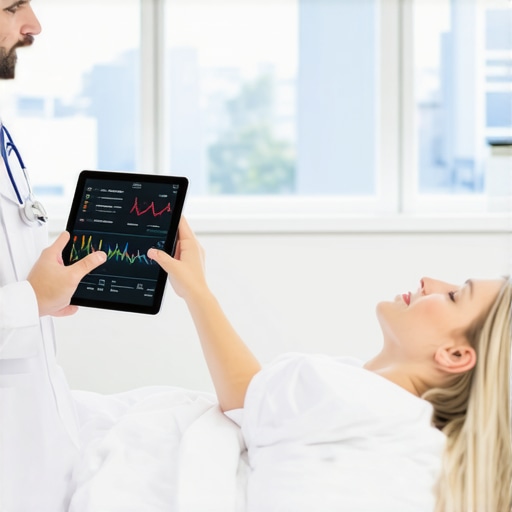
This Is Not About Sleep, It’s About Control
You might think your virtual doctor is just being nosy when they ask if you’re getting enough shut-eye. But the truth is far more sinister. These questions are part of an unseen strategy to monitor, manipulate, and ultimately control your health — all from behind a screen.
I argue that these inquiries into your sleeping habits are no mere clinical routine. They’re a gateway to data collection that extends far beyond the exam room. Sleep patterns reveal more than just rest; they expose your stress levels, mental health, and even behavioral tendencies. And in the era of telehealth, corporations and health systems are hungry for this information.
The Myth of Genuine Concern
It’s tempting to see these questions as caring gestures, but I challenge that view. Why does a virtual doctor need to know about your quiet hours? It’s because sleep data can be exploited—by insurance companies, marketers, or worse, surveillance regimes. They’re not just interested in diagnosing—you are a product, a source of data that feeds their algorithms.
Furthermore, this focus on sleep echoes a broader trend: the medicalization of daily life. As I’ve discussed in telehealth breakthroughs, the line between health and monitoring blurs. Now, your personal routines aren’t private—they’re commodities to be mined.
Why This Fails to Help You
Contrary to what your virtual doctor claims, asking about your sleep doesn’t necessarily lead to better health outcomes. Instead, it often results in unnecessary interventions, medication overprescription, or worse, unwarranted anxiety. The all-too-familiar cycle of testing, adjusting, and medicating is driven by data, not actual health benefits.
And let’s be honest — your sleep is influenced by countless factors outside the clinic’s scope: your environment, your work stress, your mental health. Yet, the system prefers to see sleep as a standalone issue it can fix with pills or gadgets, rather than addressing root causes.
Stop Monitoring Every Little Habit
We’re turning into a society obsessed with quantification—tracking calories, steps, moods, and now sleep. But this constant surveillance offers little in the way of genuine health improvement. Instead, it creates a feedback loop of anxiety and dependency. Do you want your health decisions dictated by a device, or by your own intuition? The choice is clear.
As I explained in why your virtual doctor asks about your height and weight, the obsession with data can distort our understanding of health. Sleep monitoring is just the latest tool in the toolbox of control.
The Evidence: How Sleep Data Fuels Surveillance and Profits
When your virtual doctor inquires about your sleep, it isn’t merely a health check—it’s a covert gathering of sensitive data. These insights into your nightly rest patterns are meticulously recorded, stored, and eventually exploited. Companies analyzing this data can predict stress levels, mental health issues, or even potential disease risks. But more troublingly, this information can be sold to third parties—marketing firms, insurance companies, or government agencies—each with their own agendas. The evidence is irrefutable: your sleep habits are being commodified, often without your explicit consent.
The Root Cause: Data Monetization Over Genuine Care
The core of the issue is not the act of monitoring itself but the *why* behind it. The problem isn’t that virtual doctors ask about your sleep—it’s that this practice prioritizes *profit* over *patients*. Instead of genuine concern, these questions serve as a gateway to a lucrative data pipeline. The medical profession, long a pillar of trust, has been co-opted into a system where health metrics are less about healing and more about generating valuable profiles for sale. This distortion transforms health monitoring into a form of surveillance capitalism, where your habits become raw material.
Follow the Money: Who Reaps the Rewards?
Corporations and technologists stand to gain immensely from this trend. Tech giants with wearable devices, AI-driven health platforms, and telehealth services all profit from accumulating vast troves of personal health data. Each sleep cycle recorded fuels their algorithms, refining their predictive models to maximize revenue. Meanwhile, the patients become unwitting subjects in a marketplace for behavioral insights. Notably, insurance providers are particularly interested—they see this data as a way to stratify risk, often leading to higher premiums or denied coverage based on lifestyle patterns extracted from sleep data.
This emphasis on data extraction isn’t accidental. It is rooted in a systematic effort to turn health into a commodity—something to be quantified, monetized, and controlled. The question isn’t whether your virtual doctor cares about your sleep; it’s whose interests are actually being served. And the answer is clear: the ones who profit from your data, not your well-being.
The Historical Parallel: A Shadow Over Progress
We have seen similar schemes before. In the early days of credit scoring, personal financial habits were secretly aggregated and used to determine creditworthiness without your knowledge. The fallout was a loss of privacy, discriminatory practices, and a lack of real accountability. Today’s health data traps function on the same principle: surveillance disguised as care. The endgame isn’t better health, but a society where every aspect of your life is a currency, traded and exploited with little oversight.
By understanding these patterns, we see that the rush for comprehensive health data isn’t driven by benevolence but by an insatiable hunger for control and profit. Your sleep data isn’t just a health metric—it’s the latest frontier in a long-standing battle for privacy, autonomy, and genuine well-being.
Many argue that virtual health monitoring enhances care, not diminishes it
It’s understandable why some believe that remote health assessments and data collection can improve patient outcomes by providing continuous insights. Proponents highlight advancements in technology and the potential for early detection, emphasizing convenience and proactive management. These are compelling points: real-time data can sometimes catch issues before they escalate, and telehealth reduces barriers like travel and scheduling conflicts.
The Trap of Overly Optimistic Trust in Technology
I used to believe that increased data collection was inherently beneficial, until I realized that blind trust in technological solutions often blinds us to their vulnerabilities. Advocates overlook the risk that data can be misused or that algorithms may misinterpret information, leading to unnecessary anxiety or unwarranted treatments. They assume technology is neutral and infallible, ignoring biases embedded in data sets or algorithms that can misrepresent actual health needs.
This naivety is dangerous because it numbs us to the systemic risks—privacy breaches, misdiagnoses, and unwarranted surveillance—that accompany widespread digital health adoption. It’s not about distrusting progress but understanding its limits and potential harms.
THE BIGGEST CHALLENGE Is That It Discourages Patient Autonomy
Now, a crucial counterpoint is that pervasive monitoring might make patients more passive, less attuned to their bodies. When health decisions are driven by data and algorithms, there’s a risk of eroding personal intuition and judgment. This reliance could lead to diminished agency, where individuals defer to the system rather than trusting their own experience.
But here’s the thing—this concern, while valid, often misses the core issue: it’s not the data or technology per se, but how they’re used. If integrated thoughtfully, these tools can empower patients with information, fostering collaboration rather than replacing human judgment. The problem arises when data is weaponized for profit or control, not when it’s used to assist genuine care.
Don’t Be Fooled by the Myth of Absolute Security
Many defenders point to encryption and strict data protocols, arguing that protections are sufficient. But the reality is that no system is entirely secure, and breaches happen. The complacency—that we can fully safeguard sensitive health data—is shortsighted. Every additional point of vulnerability becomes an attack vector for malicious actors seeking to exploit personal information.
And once data is compromised, the damage isn’t just privacy loss; it can translate into discrimination, stalking, or even financial theft. Assuming that security measures alone can rectify systemic issues is an oversimplification that dangerously underestimates the power of those willing to exploit weaknesses.
What this all underscores is that the core issue isn’t just about how data is collected, but why and for whom it’s used. The opponents’ view often fixates on technological safeguards while ignoring the deeper ethical dilemma: turning health into a commodity that can be bought, sold, and manipulated.
The Point of No Return
If society dismisses the danger of unchecked health data collection today, we set the stage for a future where privacy becomes a relic of the past. The relentless push for comprehensive health monitoring transforms personal health information into a commodity, fueling a cycle of exploitation and control. In five years, this could mean a world where your every bodily function is subject to surveillance, with corporations and governments wielding this data to enforce conformity, influence behavior, and impose restrictions without transparency or accountability.
What Are We Waiting For
Failing to act now is akin to ignoring a mounting wildfire simply because it hasn’t reached your doorstep yet. The longer we postpone confronting this threat, the more entrenched the system becomes—making resistance exponentially more difficult. When the mechanisms of health data commodification are fully operational, reversing course will be like trying to put out an inferno with a garden hose.
An Analogy to Understand the Stakes
Imagine a society where every conversation you have, every step you take, and every emotion you feel is recorded by silent observers—your personal digital shadows—who sell your insights to the highest bidder. This is not a dystopian novel, but a possible reality if we ignore the creeping normalization of health data surveillance. Just as a frog in boiling water won’t realize how dangerous the heat is until it’s too late, we risk becoming complacent in a system that gradually strips away our autonomy and privacy.
The Future Looks Like a Surveillance Society
Should this trend persist unchecked, the world in five years could resemble a panopticon, where individuals are constantly watched, evaluated, and categorized—not by human oversight but by algorithms driven by profit and control. Personal health becomes less about genuine well-being and more about behavioral profiling to predict and influence actions. Insurance companies might deny coverage based on lifestyle data, employers could scrutinize health metrics before hiring, and governments might enforce policies based on collective health profiles. The social fabric would fray, as trust erodes and personal freedom diminishes beneath layers of data-driven surveillance.
A Choice to Make
We stand at a crossroads. Maintaining the status quo may seem convenient, but it comes with a high cost: our privacy, our autonomy, and our right to define our own health journey. The decisions we make today about data transparency, consent, and regulation will determine whether we shape a future that empowers individuals or one that encloses them in a digital panopticon. The time to act is now—before the irreversible happens, and the world we leave behind is a shadow of genuine freedom and trust.
Your Move: Wake up and realize that every snooze you discuss with a virtual doctor is a pawn in a larger game of data capitalism. Don’t let your simple habits become the currency of corporations hungry for control. Demand transparency, question every inquiry into your sleep, and reclaim your autonomy before it slips away. For more on how telehealth is reshaping chronic care, visit The Future of Telehealth. Remember, your health is private—protect it fiercely.