
3 Signs Your Aging Parent Needs a Mobility Assessment Right Now
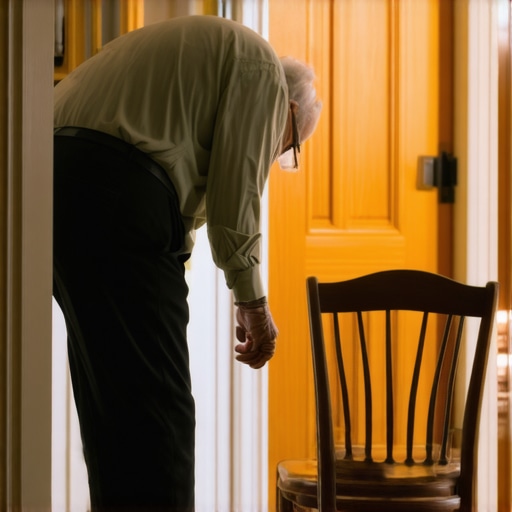
Waiting for the Fall is a Death Sentence
Stop pretending that ‘slowing down’ is just a natural, harmless part of getting older. It isn’t. When we watch our parents struggle to stand or wobble through a doorway, we often choose the path of least resistance: silence. We don’t want to offend them. We don’t want to take away their ‘independence.’ But I argue that this polite silence is actually a form of neglect. We are essentially watching a car with a bent axle continue to drive at highway speeds and hoping the wheels don’t fly off. Why are we so afraid to speak up? Is an uncomfortable conversation really worse than a shattered hip? A mobility assessment isn’t a punishment; it is a tactical survival tool.
The reality is blunt: mobility is the foundation of senior health. Once it goes, everything else follows. We see it in the data and we see it in the clinics. If you are waiting for your parent to actually fall before you call a professional, you have already failed. By then, the damage is done, the confidence is gone, and the road back is twice as long. You need to act while they are still upright. You might think you’re being a ‘good child’ by letting them ‘manage,’ but you are just being an ostrich with your head in the sand. Real care requires intervention before the emergency room does it for you.
Politeness is a Form of Neglect
We need to stop using euphemisms. Your father isn’t ‘careful’; he is terrified of the floor. Your mother isn’t ‘taking her time’; her nervous system is failing to coordinate her gait. I believe the first sign of trouble is often found in the home environment. Are they ‘furniture surfing’? If you see them touching the backs of chairs and the edges of tables as they move across a room, that is a glaring red flag. They are using their home as a giant walker because they are too proud to use a real one. This is a house of cards waiting for a breeze. You should be looking at the nightstand item that predicts a senior fall before it happens to understand how close they are to the edge.
Mobility isn’t just about muscles; it’s about the whole system. Sometimes the stagger isn’t even about legs. For instance, how to tell if your aging parent is actually dehydrated is a skill you need, because low fluids lead to low blood pressure and sudden dizziness. Other times, the brain is the culprit. I have seen countless families shocked to learn that why your aging parents personality shift might be a uti can also manifest as sudden physical instability. These aren’t just ‘old age’ issues; they are medical red flags that require a professional eye. A mobility assessment through chronic care management can identify these leaks in the dam before the whole structure collapses.
So, what are you waiting for? Are you waiting for a call at 3 AM from an urgent care nurse? Are you waiting for the surgery? I urge you to look at the way they move today. If they can’t perform the simple stretch that keeps aging hips from locking up, they are already in the danger zone. Demand an assessment. Use telehealth breakthroughs to get a specialist’s eyes on their movement from the comfort of their living room. Don’t let your desire to be ‘nice’ lead them straight to a hospital bed. Action is the only true respect you can show them now.
The Biological Tax of Inactivity
We need to stop treating sarcopenia—the age-related loss of muscle mass—as a footnote in a medical chart. It is the primary engine of physical decline. The problem isn’t just that muscles get smaller; it is that the neuromuscular connection begins to fray. When your parent hesitates at the edge of a rug, their brain is sending a signal that the body is too slow to execute. This isn’t a personality trait. It is a system failure. We tell ourselves that they are just ‘getting slower,’ but what is actually happening is a systemic collapse of the reflexive responses that keep a human being upright. If you aren’t intervening, you are effectively watching a bridge rust and hoping the cars keep crossing.
The Statistical Cliff
Let’s look at the numbers, but not through the sterile lens of a laboratory. Consider the one-year mortality rate after a hip fracture in seniors. In many clinical studies, that number sits stubbornly around 25%. That isn’t a ‘risk factor’; it is a death sentence for one out of every four people who hit the floor. The fall itself is rarely the thing that kills; it is the cascade of pneumonia, blood clots, and rapid cognitive decline that follows the sudden, forced immobility. When you refuse to get a mobility assessment for your parent because you don’t want to ‘upset them,’ you are gambling with a one-in-four chance of their immediate demise. Those are not odds any rational person would accept in any other context. The floor is patient. It does not care about your ego or your father’s pride. It wins every time.
${PostImagePlaceholdersEnum.ImagePlaceholderB}
A Broken Definition of Independence
The greatest lie we tell ourselves is that a cane or a walker is the beginning of the end. We see these tools as symbols of frailty, when they are actually the only things keeping the door to the outside world open. By ‘protecting’ a senior’s dignity and allowing them to struggle unassisted, we are actually trapping them in an ever-shrinking world of four walls and a television. Real independence is the ability to move through space safely. If they require the assistance of every piece of furniture in the room to make it to the kitchen, they aren’t independent. They are hostages to their own environment. The ‘furniture surfing’ I mentioned earlier isn’t a clever adaptation; it is a desperate, failing strategy. Using modern tools like telehealth to monitor gait and balance isn’t an intrusion. It is the only way to restore the autonomy they are so terrified of losing.
The Mechanics of the Stumble
Gravity is a constant force, yet we act as if its effects are a surprise. A senior’s gait changes for specific, diagnosable reasons. Sometimes it is the feet—peripheral neuropathy that turns the floor into a numb, distant memory. Sometimes it is the inner ear. Often, it is a simple lack of core stability. When we bypass professional assessments, we are ignoring the root cause in favor of a comfortable silence. A professional eye can see the difference between a weakness in the hip and a failure in the vestibular system. You cannot fix what you refuse to name. By the time they are ‘ready’ to talk about a walker, their bones are likely already brittle enough to shatter on impact. The conversation must happen while the bones are still whole and the muscles are still capable of being reclaimed.
It is easy to sympathize with the argument for absolute autonomy. Critics will say that by forcing a medical lens onto a parent’s every step, we are stripping away the very essence of their adulthood. They argue that a person has the right to choose their risks, and that a ‘safe’ life is not necessarily a life worth living. I understand the pull of that logic. It feels noble. It feels like you are being the ultimate ally to your parent’s independence. But this perspective is built on a fundamental misunderstanding of what independence actually looks like in a failing body. It confuses the right to be left alone with the right to be neglected.
The Cruel Illusion of Autonomy
I used to believe this too, until I watched a patient refuse a walker for six months out of ‘pride’ only to spend those six months entirely confined to a single recliner because the hallway felt like a gauntlet. His ‘autonomy’ was a cage. When we finally performed a gait analysis and integrated chronic care solutions, his world expanded. He wasn’t less of a man; he was finally a man who could get to the mailbox. The most sophisticated version of the counter-argument is that we are over-medicalizing the human experience. Why can’t we just let people age on their own terms? This ‘dignity of risk’ sounds compassionate in a philosophy seminar, but it is a hollow concept in the face of modern medicine. When a fall happens, it isn’t just a personal choice; it becomes a public health crisis involving urgent care teams and surgeons. The ‘choice’ to ignore mobility issues is rarely an informed one; it is usually a choice made in a state of denial. We don’t let people drive without eyesight tests; why do we let seniors navigate the physical world without balance checks? To claim that a mobility assessment is an ‘intrusion’ is to ignore the biological reality. We aren’t talking about a lifestyle choice like what color to paint the kitchen. We are talking about the integrity of the musculoskeletal system. When you ignore the need for lab tests that could identify Vitamin D deficiencies or anemia—both of which contribute to dizziness—you aren’t ‘respecting’ them. You are facilitating their decline. ${PostImagePlaceholdersEnum.ImagePlaceholderC} Real respect means providing the tools to maintain the highest possible function. The opposition often frames the discussion as a choice between safety and freedom. They suggest that by inviting a professional to evaluate a parent’s movement, we are turning the home into a hospital annex. But this is a false binary. The medicalization isn’t coming from the assessment; it’s coming from the untreated pathology. A gait that has become a shuffle isn’t a ‘natural’ state; it is often the result of manageable conditions that, if left unaddressed, will lead to a truly medicalized existence: a hospital bed. By the time someone ends up in a clinic with a broken femur, the opportunity for a ‘natural’ aging process has vanished. True advocacy means identifying the biological hurdles before they become catastrophic. If we can adjust a medication that causes orthostatic hypotension or identify a strength deficit through monitoring, we aren’t infringing on their life. We are extending the period in which they can actually live it. We must stop pretending that silence is a gift. It is a debt that the senior will eventually have to pay with their own body.
The Looming Systemic Collapse
The trajectory we are on is unsustainable. If we continue to treat mobility as an optional luxury rather than a vital sign, we are essentially building a future on sand. In the next five years, the demographic shift will meet the reality of our reactive healthcare habits, and the result will be a tidal wave of avoidable trauma. We are not just talking about individual tragedies here; we are talking about a systemic failure where the final years of a generation are defined by the sterile walls of an urgent care facility rather than the warmth of their own homes. This is the consequence of our collective hesitation. Every time we choose to stay silent about a parent’s staggering gait, we are signing off on their future institutionalization. The debt of our current denial will be paid in the currency of human suffering and the total erosion of the autonomy we claim to be protecting.
What Are We Waiting For?
Waiting for a crisis is not a strategy; it is a surrender. Ignoring the visible signs of physical decline is like watching a pilot ignore a flickering fuel light because they do not want to alarm the passengers. You are maintaining a false sense of peace while the engines are beginning to seize. The crash isn’t just a possibility; it is a mathematical certainty. If you do not act while the bones are whole, you are effectively choosing the moment they break. This isn’t an exaggeration for effect; it is the biological reality of the aging human frame. The gravity of the situation demands more than just casual observation; it requires a radical shift in how we intervene in the lives of those we love. We have the technology to monitor these shifts before they become disasters.
${PostImagePlaceholdersEnum.ImagePlaceholderD}
The Point of No Return
There is a threshold where the damage becomes irreversible. Once the neuromuscular connection has sufficiently withered and the bone density has dropped past a certain point, no amount of physical therapy can fully restore what was lost. We are currently allowing thousands of seniors to walk right up to that edge without a single warning. By the time we start talking about chronic care or gait stabilization, we are often just managing the decline rather than preventing it. This is a massive waste of human potential. A person who could have had another decade of vibrant movement is instead relegated to a wheelchair because we were too ‘polite’ to suggest a mobility assessment. We are sacrificing their years on the altar of our own social comfort. It is a moral failure masked as respect.
A Choice to Make
We stand at a crossroads. We can continue down the path of reactive medicine, where we wait for the ambulance to arrive before we acknowledge the problem, or we can embrace a future of proactive intervention. The tools are already in our hands. Through telehealth breakthroughs, we can bring specialized eyes into the living room to catch the stumble before it happens. We can use lab tests to find the underlying chemical imbalances that lead to dizziness and instability. The choice to ignore these resources is a choice to let the floor win. In five years, we will look back and realize that the ‘independence’ we thought we were preserving was actually just a slow-motion catastrophe. The warning signs are flashing right now. To look away is not an act of love; it is an act of abandonment.
The Final Verdict
Politeness in the face of physical decline is not love; it is an endorsement of the eventual fall.
The Hard Choice
We need to stop treating a mobility assessment like an insult and start treating it like the lifeline it is. Every day you watch your parent struggle without saying a word, you are essentially gambling with their life. You might feel like you are preserving their dignity, but true dignity is found in the ability to walk through your own front door without fear. This is why chronic care management is so vital—it transitions the focus from crisis response to proactive preservation. We have already seen how urgent care innovations are making it easier to get help, but that help is only effective if you reach for it before the bones break.
The Twist
The irony of our hesitation is that by trying to keep things “normal,” we accelerate the arrival of the most abnormal circumstances imaginable: the intensive care unit. We worry about “the move” or the transition to a cane, yet we ignore the move that helps seniors manage their own meds safely, which could prevent the dizziness that leads to the floor in the first place. If you are waiting for them to ask for help, you are waiting for a person in denial to admit defeat. That isn’t how pride works, and it isn’t how biology works. If a fall does happen, remember that why seniors should always request a medication review after a fall is a critical step in stopping the next one from being fatal.
The Challenge
Stop being the “nice” child and start being the advocate they actually need. Look at the data, look at their gait, and look at the tools available through telehealth breakthroughs. You have the power to stop the clock on their decline, but you have to be willing to break the silence first. The floor is ready for them. Are you ready to keep them off it? Choose the awkward conversation today so you don’t have to choose a hospital room tomorrow.