
How to Stop a Minor Cut From Turning Into an Infection
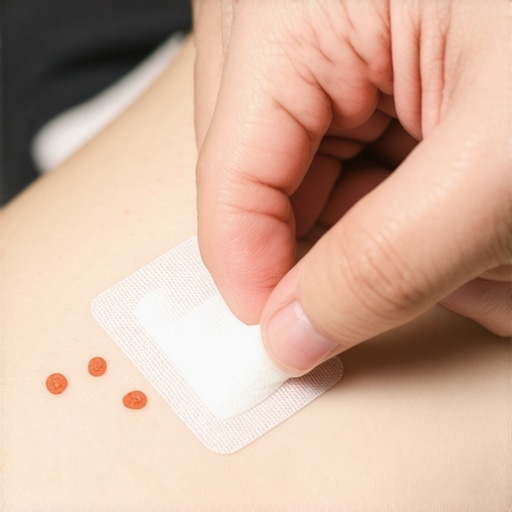
Stop Treating Your Skin Like a Disposable Wrapper
Stop pretending that a quick rinse under lukewarm water is enough. You slice a finger on a bagel and think a lick of the wound and a dusty Band-Aid will suffice. I argue that our collective laziness regarding minor trauma is the primary reason why "minor" incidents end up as multi-thousand-dollar urgent care bills. You might think you’re "toughing it out," but you’re actually just inviting a staph infection to dinner. Why do we treat our body’s primary defense system with less respect than a cracked phone screen? Your skin is the only wall standing between your internal organs and a world crawling with opportunistic pathogens. When you treat a breach in that wall as a mere inconvenience, you aren’t being brave; you’re being arrogant.
A minor cut is not a neutral event; it is a spark in a dry forest. You can stomp it out in ten seconds, or you can watch the entire hillside burn while you "wait and see." Most of us choose the latter because we have been conditioned to believe that if it isn’t gushing blood, it isn’t an emergency. This is a dangerous lie. The real threat isn’t the cut itself; it’s the invisible army of bacteria that treats every breach in your skin like an open invitation to a buffet. If you want to know how to triage a kitchen knife slip without the ER hassle, you need to start by accepting that your "clean" kitchen is actually a biohazard zone. Every second you spend debating whether or not you need a bandage is another second those pathogens spend colonizing your bloodstream.
The Rubbing Alcohol Obsession is Backfiring
I believe we have forgotten the basics of biological defense. People either ignore the wound entirely or they reach for the harshest chemicals they can find, effectively nuking their own healthy tissue along with the germs. This isn’t surgery; it’s basic maintenance. You wouldn’t fix a scratch on your car by dumping acid on it, so why are you doing that to your arm? I have seen too many people turn a simple scratch into a week-long ordeal because they didn’t understand the difference between cleaning and cauterizing. When you are looking for the urgent care fix for a deep cut that does not need stitches, you are often already fighting a battle that should have ended at the sink ten minutes after the accident. The arrogance of the "it’s just a scratch" mentality is exactly what keeps clinic waiting rooms full on a Monday morning.
So, why are we still doing this? Why do we wait for the red streaks and the heat before we take action? Perhaps it’s because we’ve become too reliant on the idea that medicine can always bail us out. We assume that telehealth breakthroughs mean we can just show a doctor a blurry photo of a swollen thumb and get a magic pill. But here is the cold, hard truth: the best doctor in the world can’t undo the damage of three days of neglect. You are the first responder in your own life. If you can’t be bothered to perform the bare minimum of hygiene on yourself, don’t be surprised when your body stops performing the bare minimum of health for you. Infection isn’t a freak accident; it’s the logical conclusion of laziness.
The problem is not the availability of bandages; the problem is a fundamental rot in our perception of biology. We have been lulled into a false sense of security by the very antibiotics that are now failing us. The root cause of our current epidemic of preventable infections is not a lack of access to care, but a reckless devaluation of the body’s first line of defense. We treat our skin like a piece of plastic wrapping rather than a living, breathing organ that requires constant surveillance. This isn’t an accident. It is a choice. You choose to ignore the red rim around that papercut because you believe your immune system is a superhero, but in reality, your immune system is an overworked janitor trying to mop up a flood with a damp sponge while you keep the front door wide open.
The Data of Denial
Let’s look at the numbers, though they are often obscured by clinical jargon designed to protect our feelings. Estimates suggest that nearly 30% of emergency room visits for skin and soft tissue infections are entirely preventable through basic wound care. That number isn’t a mere statistic; it is a confession of systemic ignorance. When billions of dollars are funneled into treating abscesses that started as simple abrasions, we aren’t seeing a failure of medicine. We are seeing a failure of the individual. The math is clear. A five-minute cleaning ritual costs pennies, while a late-stage intervention costs thousands and potentially a limb. The gap between those two numbers is the price you pay for your own hubris. We have reached a point where we would rather spend three hours in a plastic-chaired waiting room than thirty seconds at the bathroom sink. It is a bizarre, self-destructive trade-off that only a society disconnected from the reality of its own flesh could make.
${PostImagePlaceholdersEnum.ImagePlaceholderB}
A Broken System of Biological Trust
The issue isn’t just that we are lazy; it is that we have outsourced our common sense to the pharmacy. We assume that if things go south, there is always a pill to fix it. This reliance on the "magic bullet" has turned us into biological gamblers. You aren’t just skipping a bandage; you are betting against millions of years of microbial evolution. Bacteria do not care about your busy schedule. They do not care that you have a meeting at nine or that you "never get sick." They see a breach, and they colonize. The arrogance of assuming your "clean" office environment is safe is exactly why urgent care for workplace injuries remains a booming business. We have sanitized our surfaces but neglected our self-awareness. We live in a world where we track our steps and our sleep but ignore the literal hole in our arm.
Furthermore, the way we perceive "seriousness" is fundamentally flawed. We define an injury by how much it bleeds, not by its potential for disaster. A deep puncture from a rusty nail gets attention because it looks like a scene from a movie, but a slow-brewing infection from a cat scratch is ignored until the red lines start climbing the arm. This is a cognitive bias that kills. We are conditioned to respond to trauma but indifferent to the slow creep of decay. It is a lethal misunderstanding. If you wait for the fever to start, the battle is already half-lost. You are no longer preventing an infection; you are managing a crisis. The refusal to acknowledge this reality is why our clinics are overflowing with people who "thought it would be fine." It was never going to be fine. It was always going to be a biological inevitability. We have traded our survival instincts for a false sense of technological invincibility, and the bill is coming due.
Critics will argue that this level of scrutiny is precisely what’s wrong with modern life. They’ll tell you that we have become a germaphobic society, obsessed with sterilization to the point of weakening our own innate defenses. The “dirt is good for you” crowd loves to point out that our ancestors survived far worse without a bottle of antiseptic in their pockets. They claim that by obsessing over every scrape, we are creating a generation of fragile bodies that can’t handle a single rogue bacterium. It’s an attractive argument because it rewards our natural tendency to do nothing. It frames laziness as a form of rugged, biological wisdom.
The Natural Immunity Delusion
I used to believe this too, until I realized that this perspective is built on a massive foundation of survivor bias. We remember the grandfather who worked in the dirt for eighty years and never had an infection, but we forget the millions of people who died of sepsis before the age of thirty because a blister went south. Relying on your immune system to handle a preventable breach is like relying on your car’s airbags instead of using the brakes. Yes, the airbags might save you, but why on earth would you intentionally test them? The world has changed since the days of “rugged” survival. We aren’t fighting the same microbes our ancestors fought. We are living in an era of antibiotic-resistant strains and highly evolved pathogens that have learned to thrive in the very environments we think are safe.
The argument for “natural exposure” completely misses the scale of the threat. There is a fundamental difference between exposing a child to a variety of environmental allergens and leaving an open wound to fester. One trains the immune system; the other invites a hostile takeover. When you ignore a cut, you aren’t “training” your white blood cells; you are giving an enemy a head start. The hubris of thinking your body is “tougher” than a billion years of bacterial evolution is the kind of mistake you only get to make once or twice. If you’re looking for essential lab tests at urgent care to figure out why your arm is purple, you’ve already lost the argument. You aren’t being a naturalist; you’re being a victim of your own ego.
${PostImagePlaceholdersEnum.ImagePlaceholderC}
The common trap here is the belief that because nothing bad happened last time, nothing bad will happen this time. This is the gambler’s fallacy applied to biology. You might have ignored a dozen cuts in the past and come away unscathed, but that doesn’t mean your immune system is a fortress. It means you got lucky. In a world where telehealth for minor illnesses is readily available, there is no longer a logistical excuse for this kind of negligence. We have the tools to be smart, yet we choose to be “tough.” But “tough” is just another word for “unprepared” when you’re dealing with a microscopic predator that doesn’t feel pain or fear.
We need to stop asking if the wound is “serious enough” to clean and start asking why we are so eager to gamble with our health in the first place. The real elephant in the room is our collective fear of being seen as “weak” for taking care of ourselves. We have stigmatized basic hygiene as a form of neurosis. This cultural pressure to shrug off minor trauma is a relic of a time when we didn’t know better. Now that we do, continuing this behavior isn’t bravery—it’s a rejection of science. The cost of a bandage is nothing compared to the cost of a week on an IV drip. If you can’t see the logic in that, you aren’t thinking like a survivor; you’re thinking like a casualty.
We are currently walking a tightrope over a pit of our own making. If we continue to treat our biological integrity as an afterthought, we are essentially signing a blank check for a future of systemic failure. In five years, the "minor" cut you ignore today will not be met with a simple prescription, but with a shrug of helplessness from a medical community that has run out of options. We are rapidly approaching the horizon of the post-antibiotic era, a time when the simple defenses we currently mock will be the only things standing between us and the graveyard. This is not hyperbole; it is the mathematical reality of a population that has forgotten how to bleed safely. Every time you skip the sink and head straight for the couch, you are adding to a collective biological debt that we cannot afford to pay back. The stakes have never been higher because our margin for error has never been thinner. We live in a world of high-density living and global travel, where a single localized infection can become a communal threat in a matter of hours.
Is it too late to reclaim our instincts?
The answer depends entirely on our willingness to stop lying to ourselves. We have spent decades building a world where we believe technology can override biology, but biology always wins. It is like trying to outrun a tsunami in a golf cart; you might feel fast for a moment, but the ocean doesn’t care about your speed. If we don’t shift our focus back to the foundational basics of self-care and immediate intervention, our high-tech medical system will become nothing more than a very expensive museum of things we used to be able to cure. We are trading our survival for convenience, and the exchange rate is becoming lethal. The arrogance of the individual becomes the burden of the collective. When you end up in a bed because you couldn’t be bothered to use a drop of soap, you are taking space and time from someone whose crisis was actually unavoidable. This is the moral failure of our current era. We demand the most advanced care while refusing to perform the most basic duties of a living organism.
${PostImagePlaceholdersEnum.ImagePlaceholderD}
The warning is clear. We are entering a phase where "waiting and seeing" is no longer a passive choice, but an act of aggression against your own future. If the trend of medical apathy continues, we will see a surge in chronic complications that will overwhelm the very systems designed to protect us. The drain on resources will be catastrophic, and the human cost will be measured in lost potential and shortened lives. This is the slippery slope of the "minor" injury. It starts with a scratch, moves to an abscess, and ends in a systemic collapse. We have been warned, but we are too busy looking at our phones to notice the red streaks on our skin. If we do not change this trajectory, the next five years will be a harsh lesson in the limits of human intervention. We are not just losing our health; we are losing our fundamental ability to exist as self-sustaining biological entities. The choice is yours, but the consequences will belong to all of us.
The Choice is Yours
Your skin isn’t a passive barrier; it’s a living contract you renew every time you pick up a bar of soap. If you think you’re "too busy" for basic hygiene, you’re essentially telling the world you’re ready for a much longer, much more expensive break in a hospital bed. This connects to the broader shift I’ve observed in the future of telehealth transforming chronic disease monitoring today, where even the most advanced technology is useless if the patient ignores the foundational symptoms. You shouldn’t have to wait for a crisis to realize that your body isn’t an invincible machine, yet that is exactly the gamble millions of people make every single day.
We have reached a point where our collective ego is more dangerous than any pathogen. We would rather pretend we are made of steel than admit we are vulnerable to a splinter. This is why you should never wait for Monday to visit urgent care if that "minor" scratch starts to throb. The window between a quick fix and a systemic catastrophe is narrower than you think, and your arrogance is the only thing standing in the way of a safe recovery. It is time to stop viewing basic self-care as a nuisance and start seeing it as the ultimate form of self-respect.
The Bottom Line
The skin you neglect today is the medical debt you will struggle to pay tomorrow.
The ultimate irony is that we spend thousands on skin care products to look younger, yet we won’t spend ten cents on a bandage to stay alive. We treat our appearance like a temple and our biological integrity like a trash heap. If we continue to devalue our body’s primary defense, no amount of medical innovation will be able to save us from ourselves. Stop playing God with your own immunity and start acting like a partner in your own survival.