
The Simple Tactic to Lower Your White Coat Hypertension Instantly
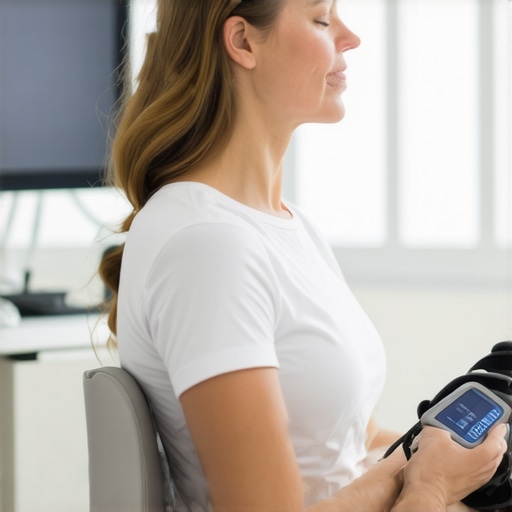
Stop trusting the blood pressure reading you get after sitting in a drafty waiting room for forty minutes while a television blares pharmaceutical advertisements. You walk into a room that smells like industrial floor wax and old magazines. You are already behind schedule. Your heart is doing a frantic tap-dance against your ribs. Then, a person you barely know wraps a cold cuff around your arm and expects a normal reading. It is a farce. Why are we still pretending that this environment provides an accurate map of your health?
I argue that white coat hypertension is not a medical mystery but a structural failure of how we measure the human body. We are measuring your panic, not your cardiovascular baseline. When your blood pressure spikes at the sight of a lab coat, you are not failing a health test; you are reacting to a stressful environment. If you want the truth about your heart, you have to find it where you actually live, not in a sterile cube designed to make you feel like a patient. As I have discussed when exploring the hidden reason your blood pressure spikes at the clinic only, the clinical setting acts as a distortion pedal on your actual vitals.
The Clinical Environment is an Interrogation Room
The medical office is less of a sanctuary and more of a police interrogation room. You are put under the bright lights, stripped of your clothes, and asked to justify your existence through data points. Is it any wonder the numbers are skewed? To fight this, you need a tactic that works faster than the nurse can find your pulse. The simple tactic to lower your white coat hypertension instantly is the “Silent Five” paired with box breathing. Before the cuff inflates, you must demand five minutes of total silence—no talking, no questions about your insurance, and no checking your phone. During these five minutes, use a four-second inhale, four-second hold, and four-second exhale. This is not some mystical ritual; it is a physical override of your sympathetic nervous system. It forces the body to stop seeing the doctor as a predator and the clinic as a trap.
[image_placeholder]
If the clinic refuses you these five minutes, they are not practicing medicine; they are processing cargo. This is why I believe the shift toward virtual care is the only logical path forward for those of us with reactive nervous systems. When you look at the future of telehealth, you see a world where the white coat is removed from the equation entirely. You can find more advice on how to lower your blood pressure before your doctor walks in, but the real victory is avoiding the walk-in altogether. Why subject yourself to a rigged game? You should stop checking your blood pressure 10 times a day and instead focus on one high-quality, relaxed measurement in your own living room. The data gathered while you are sitting on your own sofa, perhaps with a dog at your feet, is the only data that actually matters for your chronic care management goals. Let us stop letting the stethoscope be a source of stress and start reclaiming the narrative of our own health.
The medical establishment loves its rituals. They want to believe that a single point of data, captured in a sterile box, defines your entire cardiovascular reality. It is a lie. This obsession with the “office reading” ignores the 1,430 minutes of the day you are not sitting in their plastic chairs. When we see a massive discrepancy between home readings and clinic results, we should not call it a medical quirk. It is a systemic failure of measurement. The problem is not your heart; the problem is the context. The human body is not a machine that performs the same way in every environment. It is a reactive biological system. By forcing patients into a high-stress environment and then demanding “normal” data, doctors are essentially trying to measure the speed of a car while slamming on the brakes. It makes no sense.
The Tyranny of the Snapshot
We have been conditioned to accept that the doctor’s office is the gold standard, but the data suggests it is more like a lead weight. That 25% margin of error found in clinic-only readings is not just a minor statistic; it is a catastrophe of over-prescription. It represents millions of people taking medication they do not need because we value the convenience of the clinic over the reality of the patient’s life. The system is broken. We have spent decades building cathedrals of medicine that are fundamentally incompatible with the way the human nervous system actually functions, prioritizing the convenience of the practitioner over the physiological reality of the person being treated. If your blood pressure is normal at your kitchen table but high in a gown, the gown is the problem. Period.
${PostImagePlaceholdersEnum.ImagePlaceholderB}
The Biofeedback Betrayal
The clinical environment creates a feedback loop of anxiety that the current medical model is completely unequipped to handle. You walk in, your pressure is high, the nurse looks concerned, and suddenly your pressure is even higher. This is the biofeedback betrayal: your body is telling the truth about the environment, while the doctor is looking for the truth about your arteries. They are looking for a baseline, but they are creating a storm. This is why the shift to home-based monitoring is not just a technological upgrade; it is a moral necessity. We must stop pretending that a measurement taken under duress has any clinical value. When researchers point to the fact that nearly one in four patients presents with numbers that do not reflect their daily life, they aren’t describing a medical condition. They are describing a failure of the diagnostic process itself. We are treating a ghost in the machine, chasing numbers that vanish the moment you step out of the office and into the fresh air. The medical industry benefits from this ambiguity, filling prescriptions for a stress response rather than a chronic condition.
Critics of this perspective—and they are many—will argue that I am advocating for a dangerous DIY approach to medicine. They contend that the clinical environment is necessary for quality control and that only a trained professional can truly interpret the nuances of a cardiovascular reading. They worry that by shifting the burden of monitoring to the patient, we invite a flood of bad data, faulty equipment, and missed diagnoses. It is easy to see why people think this; it feels safer to trust a person in a white coat than a machine purchased on the internet. We have been raised to believe that the clinic is the only place where the truth is told. I used to believe this too, until I began looking at the yawning gap between office data and the reality of long-term health outcomes.
This defense of the clinical setting is a classic case of valuing the process over the outcome. The argument for professional oversight assumes that a person in a lab coat is inherently more accurate than a patient in their living room. But this ignores the Observer Effect: the very act of observing a system changes its state. In physics, this is a curiosity; in medicine, it is a diagnostic disaster. A professional reading of a stressed heart is not a professional reading; it is a measurement of a person in a state of fight-or-flight. The quality of the equipment is irrelevant if the subject being measured is in a state of physiological distortion. When we prioritize the setting over the patient’s actual baseline, we are choosing a clean ritual over a messy truth.
The Accuracy Illusion
The medical establishment’s obsession with office-based data creates a false sense of security. They call it a gold standard, but it is often more like fool’s gold. While a doctor might argue that home monitors are prone to user error, they conveniently ignore the systemic errors built into the clinical experience. In a busy urgent care or a high-volume outpatient center, the procedural shortcuts are rampant. Nurses are often forced to take readings while the patient is still talking, or before they have had a chance to sit still for even sixty seconds. This is not precision; it is a checkbox exercise. The assumption that a certificate on the wall magically prevents environmental interference is pure hubris.
${PostImagePlaceholdersEnum.ImagePlaceholderC}
Modern technology has largely neutralized the equipment argument. Most digital monitors today are highly sophisticated and clinically validated. When used as part of a structured chronic care management plan, these devices provide a rolling average that is statistically superior to any single point-in-time measurement. A doctor making a decision based on one office visit is like a film critic reviewing a movie based on a single frame. It’s an incomplete narrative. By embracing telehealth for seniors and other vulnerable populations, we aren’t lowering the bar; we are widening the lens to see the whole picture.
The real discomfort for the medical establishment isn’t about accuracy; it’s about control. Moving the primary site of data collection from the exam room to the kitchen table shifts the power dynamic. It forces the physician to become a partner rather than a dictator. This transition is essential for modern diagnostics. Just as we have moved toward accessing blood test results online to empower patient literacy, we must move toward home-based vitals to ensure diagnostic integrity. The clinical environment is a tool, not a temple. When that tool starts producing more noise than signal, it is time to put it back in the bag and look elsewhere for the truth.
The consequences of maintaining this clinical charade go far beyond a few skewed charts. We are currently presiding over a silent epidemic of over-prescription. When we treat a stress response as a chronic condition, we aren’t just making a mistake; we are fundamentally altering the biological trajectory of the patient. Every time a doctor doubles a dosage because of a three-minute interaction in a sterile room, they risk inducing real hypotension, chronic fatigue, and long-term organ strain in someone who was perfectly healthy at their own dinner table. This is the danger of the “medicated healthy” population—a group of people whose bodies are being forced to adapt to chemicals they do not need to counteract a problem they do not have. This systemic inertia is a form of medical gaslighting. We tell patients their anxiety doesn’t matter, then we use the physiological results of that anxiety to justify a lifelong drug regimen. It’s a feedback loop of failure.
The Cost of Our Diagnostic Blindness
Treating a patient based on a single office reading is like calling the fire department because you see steam rising from a hot bowl of soup. You are responding to a visible signal without understanding the temperature or the context, and the result is a kitchen flooded with unnecessary water. If we don’t demand a change in how data is collected, the next five years will see a healthcare system so bloated by pharmaceutical interventions that we will lose the ability to distinguish between a side effect and a symptom. We are building a future where the human experience is paved over by “validated” data points that have no grounding in the way we actually live. The stakes are nothing less than our physiological autonomy. We are sacrificing the long-term vitality of the public on the altar of administrative convenience.
What Are We Waiting For
${PostImagePlaceholdersEnum.ImagePlaceholderD}
The window to reclaim diagnostic integrity is closing as we become more reliant on automated billing cycles and high-volume patient turnover. If we allow the medical establishment to continue prioritizing the efficiency of the clinic over the accuracy of the home, we are essentially surrendering our health to a rigged system. This is a moral imperative. We must stop pretending that a person in a state of fight-or-flight is providing a baseline. The future of medicine must be decentralized, or it will continue to be distorted. We are standing at a crossroads where we can either continue to treat the “white coat” ghost, or we can finally start treating the human being. The data gathered in silence, in comfort, and in truth is the only path toward a sustainable health model. If we fail to make this shift now, we aren’t just practicing bad medicine; we are institutionalizing a lie that will haunt our collective health for decades to come.
We can no longer afford to be polite about a system that ignores biological reality for the sake of administrative efficiency. If you find yourself staring at a blood pressure reading that looks like a typographical error while sitting in an exam room, do not accept it. Challenge the metric. Demand a rethink of the environment. We are entering an era where you must become the primary guardian of your own data, using the strategy for managing your seniors heart health at home as a blueprint for accuracy over artifice. The clinic is a tool for crisis, but your living room is the sanctuary for chronic health.
Your New Mandate
The burden of proof has shifted. It is now up to the medical establishment to prove why we should trust a sixty-second snapshot over a month of consistent, relaxed data points. As we witness telehealth breakthroughs how virtual visits elevate chronic care in 2025, the excuse for the “office-only” standard is evaporating. You deserve a practitioner who values the context of your life. You need to know how to tell if your telehealth doctor is actually listening to your concerns about environmental stress or if they are simply checking boxes. If the diagnosis doesn’t match your lived experience, the diagnosis is likely the thing that is broken, not you.
The Final Verdict
The only blood pressure reading that matters is the one taken when your body is actually at rest, not when it is performing for a professional in a white coat.
The Twist
While we fight for better measurement, remember that the goal isn’t just a lower number—it’s a deeper understanding of your own vitality. Learning how to measure your own metabolic health without a clinic visit is the ultimate act of rebellion against a medical model that thrives on your confusion. Be wary, though, because why most heart health apps give you false peace of mind is a reminder that even at home, quality of equipment and methodology still matters. Don’t trade one false god for another; trade the ritual for the reality.
Take your health back to where it belongs: your own living room. Stop being a patient, and start being a person again.