
The Skin Screening You are Not Doing But Should Be
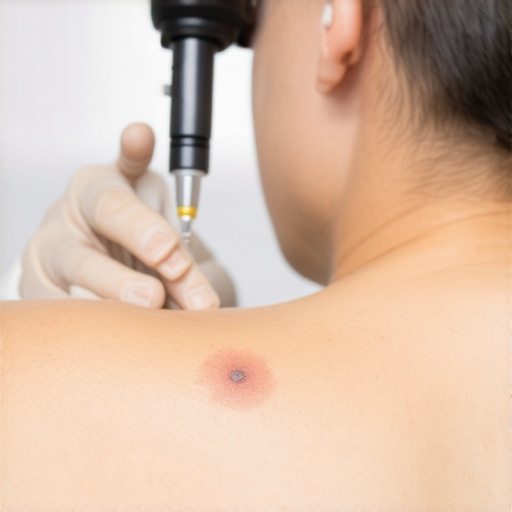
Stop Pretending Your Standard Physical Actually Protects You
Stop pretending that a fifteen-minute chat with a doctor who barely looks up from their clipboard counts as a full checkup. It doesn’t. We live in an era where we track our sleep cycles and our glucose spikes with religious fervor, yet we remain willfully blind to the most obvious map of our health: our skin. Most of you are walking around with a lethal mystery written in plain sight, and you’re too busy checking your Apple Watch to read the fine print.
I argue that we’ve built a medical culture that prioritizes what’s invisible over what’s staring us in the face. We’ve been trained to fear what we can’t see—clogged arteries, failing kidneys, or the silent creep of hypertension. But skin cancer doesn’t wait for a blood draw to show its teeth. It hides in the ‘just a freckle’ or the ‘spot I’ve always had.’ By the time you notice a change, you might already be behind the curve. So, why are we still doing this? Why are we so comfortable gambling with the only organ that is literally asking for our attention?
Modern Medicine Ignores the Most Obvious Warning Sign
Think of your body as a high-performance vehicle. You’d never ignore a hairline crack in the windshield while obsessing over the oil pressure, yet that is exactly what you do when you skip a professional skin screening. That crack doesn’t just stay a crack; eventually, the whole structure shatters under the right pressure. When you walk into a clinic, they want your arm for a cuff and your vein for a needle. While those are important, why your standard physical is missing these 3 critical health markers is a question more patients should be screaming at their providers. We are obsessed with the internal while the external warns us of impending disaster.
You might think you’re safe because you wear SPF 15 on beach days, but you’re wrong. You might think your primary care doctor would have ‘seen something’ if it were serious, but they didn’t look. They checked your throat, they listened to your heart, and they moved on to the next billing code. They missed the small, irregular border on your back because they weren’t looking for it. This is a systemic failure of preventive care, and you’re the one who pays the price.
Technology is Giving You a False Sense of Security
We’ve embraced the convenience of the screen, but we’ve lost the nuance of the lens. Telehealth is a miracle for many things, but unless you know how to get a clearer telehealth diagnosis for your skin rash or suspicious lesion, you’re just sending low-resolution photos into a digital void. A real screening requires a trained eye and a dermatoscope, not a ‘looks okay’ from a generalist over a shaky WiFi connection. The reality is that the hidden costs of skipping your annual skin cancer screen go far beyond a co-pay; they are measured in years of life lost and aggressive treatments that could have been avoided with a simple, thorough visual inspection.
Stop treating your skin like a wrapper and start treating it like the diagnostic powerhouse it actually is. If you aren’t getting naked in front of a dermatologist once a year, you aren’t doing preventive medicine; you’re just doing paperwork. Your skin is trying to tell you something. It’s time you actually listened.
The Incentive Structure of Ignorance
The problem isn’t that your primary care physician is a bad person; the problem is that the system rewards efficiency over observation. In the current medical industrial complex, doctors are tethered to the Relative Value Unit (RVU). This is a metric that essentially treats a patient encounter like an assembly line. When you are squeezed into a fifteen-minute slot, the doctor has a checklist of ‘must-haves’ to satisfy insurance billing: blood pressure, heart rate, maybe a quick peek at the back of your throat. A full-body skin check? That takes time. It requires you to undress. It requires the clinician to actually look at you instead of their monitor. Because a skin check doesn’t fit into the high-speed rhythm of the modern clinic, it simply doesn’t happen. We are sacrificing the early detection of the most common cancer in the world on the altar of administrative productivity.
They don’t see the lesion because they aren’t paid to see it. It is that simple. The system is designed to catch what shows up on a lab report, not what shows up on your shoulder blade. We have outsourced our health to a series of blood draws and chemical assays, forgetting that the most sophisticated diagnostic tool ever created is the human eye assisted by a dermatoscope. By the time a skin malignancy shows up in your ‘routine’ blood work, the battle is already being lost. You are being lulled into a sense of security by a series of ‘normal’ lab results while the real threat is proliferating in plain sight.
Survival is a Metric of Access, Not Luck
Consider the cold, hard numbers of oncology. The five-year survival rate for melanoma that is detected early—meaning it is localized to the skin—is roughly 99 percent. But if that same ‘freckle’ is ignored until it reaches distant organs, that survival rate plummets to 35 percent. That 64-point gap isn’t just a statistical variance; it’s a catastrophe of timing. This isn’t about the aggressiveness of the disease; it’s about the failure of the gatekeepers. When you skip a dedicated skin screen, you aren’t just missing a checkup; you are voluntarily opting into the lower-percentage bracket. We treat cancer like a lightning strike—an unpredictable act of God. It isn’t. In the case of skin cancer, it is a predictable, visible progression that we choose to ignore until it becomes an internal emergency.
${PostImagePlaceholdersEnum.ImagePlaceholderB}
The Digital Screen is a Barrier, Not a Bridge
We have been told that telehealth is the future, a way to democratize care and save us from the commute. But for skin health, the screen is often a mask. You cannot palpate a lesion through a MacBook camera. You cannot see the subtle architectural shifts of a mole through a compressed JPEG sent via a patient portal. The push toward ‘digital first’ care in the realm of chronic care and urgent care is creating a massive blind spot. When we rely on a grainy photo, we are guessing. And in medicine, a guess is just a polite word for a gamble. You cannot digitize a physical examination. The shift toward remote medicine means fewer bodies are actually being touched, fewer backs are being looked at, and more early-stage cancers are being allowed to mature into terminal diagnoses. The convenience of the couch is being traded for the precision of the clinic, and it is a trade that will eventually cost lives. The screen doesn’t offer clarity; it offers a false sense of completion.
It is easy to see why the medical establishment pushes back against the demand for universal, comprehensive skin screenings. The most sophisticated argument they offer is one of resource allocation. They claim that in an era of physician burnout and systemic strain, we cannot afford to turn every general checkup into a meticulous head-to-toe dermatological exam. They argue that our focus should remain on chronic care management—the diabetes, the heart disease, the obesity—that consumes the majority of our national health budget. From a purely actuarial perspective, it looks like a win: save the time, save the money, and let the patient bring up a spot only if it bothers them. But this logic is a trap that mistakes fiscal conservatism for clinical wisdom.
We are told that our lab tests provide a complete picture, yet no blood panel can detect a basal cell carcinoma before it invades local tissue. I used to believe this too, until I saw how the cost-saving measure of skipping a visual exam inevitably leads to a million-dollar oncology bill three years later. We aren’t saving resources; we are just shifting the debt to a more expensive creditor. The reality is that the medical system prefers the predictable revenue of chronic care over the one-off success of early prevention. If they cure you on day one with a simple biopsy, they lose the decades of treatment that follow a late-stage diagnosis. It sounds cynical because it is. We are operating within a framework that views your skin as a secondary concern compared to the internal metrics that are easier to code and bill.
The Fiscal Trap of Late Detection
${PostImagePlaceholdersEnum.ImagePlaceholderC}
When you visit urgent care for a minor ailment, no one is looking at your forearms. When you engage in telehealth for a prescription refill, the camera never pans to your back. This isn’t just an oversight; it is a calculated choice to prioritize the high-volume throughput of modern medicine over the slow, methodical work of actual observation. We have been conditioned to accept a lower standard of care under the guise of efficiency. We are told that a skin check is a luxury, an add-on, or something only for the sun-obsessed. This is a lie designed to keep the assembly line moving. The truth is that skin cancer does not care about your doctor’s schedule or your insurance company’s bottom line. It thrives in the gaps created by efficient medicine. By the time your physician notices a change in your health through routine lab tests, the window for a simple, life-saving intervention has often slammed shut. We must stop asking if we have the time for skin screenings and start asking why we are wasting so much time on everything else while ignoring the most obvious threat to our longevity. The opposition will tell you that specialized screenings are an unnecessary burden on an already fragile system, but they are really saying that your life is worth less than the administrative friction of a ten-minute examination. They want you to believe that the blood pressure cuff and the stethoscope are enough. They are wrong. A system that ignores the largest organ in the body is not a healthcare system; it is a management system for the slowly dying. We have traded the keen eye of the clinician for the sterile data of the laboratory, and we are losing the war because of it.
The consequences of this systemic apathy are not just theoretical; they are rapidly becoming our lived reality. We are currently building a future where your health is managed by a dashboard of metrics that completely ignores your physical form. If we do not demand a return to thorough, visual examinations, the ‘physical’ will eventually lose its meaning entirely. In five years, the standard checkup will likely be a purely administrative event—a series of automated blood draws and AI-generated risk scores that never once require you to take off your shirt. This isn’t progress; it’s a retreat from the front lines of clinical medicine. We are treating our bodies like a house where we’ve disconnected all the smoke detectors because the chirping was inconvenient. We tell ourselves the house is safe because the foundation is solid and the plumbing works, while the roof is quietly smoldering. By the time the smoke starts coming from under the door—by the time the cancer reaches your lymph nodes or your lungs—the damage is already irreversible.
Is it Too Late to Save Preventive Care?
We are trading the ‘annoyance’ of a ten-minute skin check for the catastrophic reality of a terminal diagnosis. This is the ultimate failure of our current health philosophy: we have become so focused on managing the internal decline that we’ve forgotten how to spot the external warning. When we prioritize the high-volume throughput of urgent care or the low-resolution convenience of telehealth, we are effectively telling the medical establishment that we don’t value our own lives enough to demand a real exam. The system will continue to provide the bare minimum as long as we continue to accept it. We are entering an era where healthcare is becoming a commodity rather than a practice, and in that transition, the nuance of the human touch is being discarded as an inefficiency.
${PostImagePlaceholdersEnum.ImagePlaceholderD}
The Point of No Return
The stakes could not be higher. If we continue to allow the medical-industrial complex to prioritize billing codes over biopsies, we are essentially signing a death warrant for thousands of people who could have been saved by a simple glance. The lab tests might look perfect on paper, but paper doesn’t catch melanoma. The moral imperative is clear: we must stop accepting a version of medicine that treats the largest organ in the body as an optional extra. Once we fully digitize the doctor-patient relationship, the skill of the visual exam will wither away, leaving us vulnerable to the very threats that are currently staring us in the face. We are sacrificing our longevity for the sake of a smoother administrative experience, and the cost of that trade is one we cannot afford to pay. If we do not act now to reintegrate dermatological vigilance into the core of chronic care, we will be left with a healthcare system that is remarkably efficient at managing our arrival at the end of life, but completely incapable of extending it.
The Bottom Line
A healthcare system that refuses to look at the largest organ in your body is not practicing medicine; it is merely managing an inventory of data points. We have reached a point where telehealth breakthroughs how virtual visits elevate chronic care in 2025 are celebrated as the peak of innovation, yet they simultaneously excuse the lack of a thorough physical presence. The uncomfortable truth is that while we obsess over internal metrics, why routine blood work often misses chronic inflammation signs and early-stage malignancies is not a mystery—it is a choice. We are choosing the efficiency of the lab result over the accuracy of the human eye. The twist is that we aren’t just victims of this system; we are its architects every time we choose the convenience of a screen over the necessity of a screening. Stop being a passive participant in your own diagnostic erasure. The next time you are told your physical is complete after a blood draw and a heart check, stay in the room, demand the light be turned up, and insist on a full-body inspection. Your survival depends on a clinician who is brave enough to look at you, not just your chart. If you aren’t being seen, you aren’t being saved.