
The Error in Relying on Home Pulse Oximeters for Safety
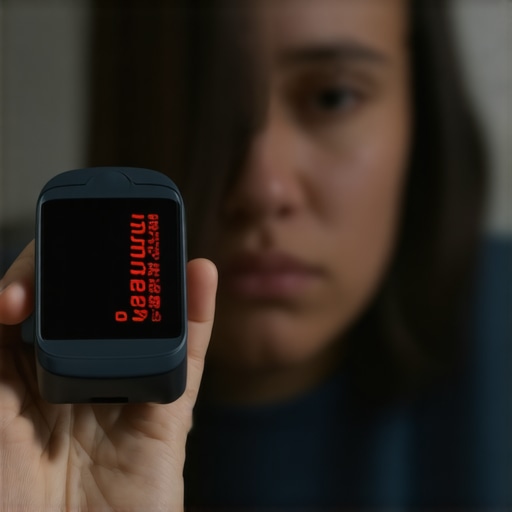
Your Home Pulse Oximeter is a Toy That Could Kill You
We have become a society of amateur clinicians, clutching cheap plastic sensors like talismans against the unknown. You think that glowing red number on your finger is a shield. It isn’t. I argue that the explosion of home pulse oximeters has done more to confuse the public than to protect it. It is a classic case of having just enough information to be dangerous. Much like why your home blood pressure cuff might be lying to you, these devices offer a seductive, digital certainty that rarely matches biological reality. You are betting your life on a twenty-dollar gadget that was never designed to hold the weight of your survival.
The market sold us a lie: that we can manage clinical-grade crises from our sofas. I believe this obsession with self-monitoring is actually a retreat from real healthcare. We trade legitimate chronic care management for a battery-operated clip. The device cannot see the nuance. It cannot see the pallor of your skin or the cold sweat on your brow. Relying on a consumer oximeter when you are truly sick is like checking the gas gauge while the engine is smoking. The tank might look full, but you are still not going anywhere, and the car is still on fire.
Your Sensor Does Not Know You
Why are we so quick to trust a plastic toy over our own respiratory distress? If you are struggling for breath, a reading of 98% should not convince you that you are fine. It is a digital gaslighting of the highest order. I have seen too many people commit the triage error that keeps you in the waiting room longer by waiting for their ‘numbers’ to look bad before seeking help. By the time that cheap sensor finally drops to a level that scares you, you might already be in a state of profound physiological collapse. These devices are blunt instruments. They measure oxygen saturation, sure, but they do not measure effort, carbon dioxide levels, or the structural integrity of your lungs. They give you a single data point while ignoring the entire story of your health.
Furthermore, these gadgets are notoriously biased. It is a well-documented medical failure that pulse oximetry is less accurate for people with darker skin tones—a flaw that the tech industry is in no rush to fix while they cash your checks. So, why are we still doing this? Why are we treating our health like a DIY project? If you feel off, you need urgent care innovations streamlining same-day lab tests, not a flickering screen. Do not make the mistake of ignoring mild post-exercise shortness of breath just because a sensor says you are ‘normal.’ Real safety comes from professional eyes, not from a mass-produced piece of hardware. You would not try to diagnose heart issues without the vital screening that predicts heart issues, so stop pretending your finger-clip is a substitute for a doctor.
The Lethal Cost of Digital Confidence
I argue that we need to stop worshipping the data and start respecting the symptoms. The illusion of safety is often more dangerous than the threat itself. When we rely on these devices, we stop listening to our bodies. We ignore the cough, the fatigue, and the chest tightness because the machine says we are okay. This is not progress; it is a dangerous step backward in how we handle medical urgency. You might think you are being proactive, but you are actually just delaying the inevitable. True health requires more than a battery and a sensor; it requires clinical expertise that a plastic box can never provide.
The Biological Betrayal of Light
The fundamental problem is not just that these gadgets are cheap; it is that they are fundamentally incapable of performing the task we have assigned them. We are asking a twenty-dollar sensor to do the work of a trained respiratory therapist. It cannot. The physics of pulse oximetry is fragile. These devices rely on red and infrared light passing through your tissue to calculate a ratio. If anything interferes with that light—ambient brightness, a layer of nail polish, or the natural pigment of your skin—the data is trash. It is clinical fiction masquerading as fact.
Consider the documented failure of these sensors in patients with darker skin tones. Research indicates these devices frequently overestimate oxygen saturation in non-white patients by as much as 4%. That 4% is not a minor deviation; it is the difference between a doctor admitting you to the ICU and a doctor sending you home to suffocate. When the device reads 94% but your actual arterial saturation is 90%, the machine is actively lying to you. It is a biological betrayal that disproportionately affects those already marginalized by the healthcare system. The tech industry ignores this because fixing it would require expensive, high-grade components that would eat into their profit margins on ‘wellness’ accessories.
The Lagging Indicator of a Dying Body
We have been conditioned to believe that numbers are objective truths. However, a pulse oximeter is a lagging indicator. By the time your peripheral oxygen—the blood at the very tip of your finger—shows a significant drop, your core systems have likely been struggling for hours. You are watching the tail end of a disaster, not the beginning. This delay creates what I call a buffer of death. You sit on your couch, gasping for air, but you look at the glowing screen and see a 96%. ‘I am fine,’ you tell yourself. You are not fine. Your heart is racing, your accessory muscles are straining, but you are choosing to trust a battery-powered toy over your own survival instincts.
${PostImagePlaceholdersEnum.ImagePlaceholderB}
This digital gaslighting is the direct result of a ‘wellness’ culture that prioritizes data points over clinical assessment. When you are truly ill, your body compensates. It diverts blood from the extremities to protect the brain and heart. This very mechanism makes the finger-clip sensor even less reliable when you need it most. If your hands are cold or your circulation is poor due to shock, the sensor will either give a false low or, more dangerously, a false ‘normal’ by locking onto a weak pulse signal. It is a circular logic of failure: the sicker you are, the less accurate the device becomes.
Profiting from the Illusion of Safety
The tech companies behind these devices know exactly what they are doing. They hide behind ‘wellness device’ disclaimers that absolve them of any clinical responsibility. They are not selling health; they are selling the feeling of being in control. They know that a terrified public will buy anything that promises a digital shield against the invisible. But this is a hollow promise. By the time a consumer-grade oximeter consistently shows a reading below 90%, you are already deep into a physiological crisis that should have been addressed hours earlier.
We are trading human intuition and professional expertise for the convenience of a plastic clip. This is the root cause of the modern triage nightmare. People arrive at the hospital late because their sensor told them they were stable. They ignore the air hunger. They ignore the confusion. They wait for the number. In the world of acute medicine, waiting for the number is a strategy that leads straight to the morgue. The machine does not care about your survival; it only cares about the light ratio it sees through your fingernail. You are more than a ratio, and it is time you started acting like it.
Critics will tell you that I am being too harsh. They will argue that during the height of the pandemic, these little plastic clips were the only thing standing between thousands of people and a silent death from ‘happy hypoxia.’ The argument is seductive: even an imperfect tool is better than no tool at all when your lungs are under siege. They claim that for patients managing long-term issues, these devices provide a necessary peace of mind. It is easy to see why people think this. In a world where the healthcare system feels increasingly inaccessible, a twenty-dollar solution that fits in your pocket feels like a revolutionary act of self-empowerment.
The Myth of the Early Warning
I used to believe this too, until I saw the wreckage caused by the ‘wellness’ industry’s race to the bottom. The ‘something is better than nothing’ logic is a fallacy when that ‘something’ is a source of systematic misinformation. If a compass is broken and points south when you need to go north, you are better off navigating by the stars. The reality is that for every person who caught a genuine drop in oxygen early, dozens more were either falsely reassured while their condition worsened or driven into a state of clinical anxiety by a sensor that couldn’t handle a bit of hand movement or a drafty room.
The defense of these gadgets relies on the idea of the ‘informed consumer.’ But we are not talking about checking a weather app; we are talking about complex physiological monitoring. When we encourage people to use these toys, we are asking them to play a high-stakes game of interpretation without any of the necessary context. This is the common trap of modern health tech: it provides the data but strips away the expertise required to make it meaningful. Relying on a consumer sensor instead of seeking urgent care innovations streamlining same-day lab tests is a gamble where the house always wins.
${PostImagePlaceholdersEnum.ImagePlaceholderC}
The uncomfortable truth is that we have replaced clinical vigilance with a digital pacifier. If you are managing a serious condition, you need legitimate chronic care management, not a device that was manufactured with the same quality control as a television remote. These sensors are not designed for medical precision; they are designed for the ‘wellness’ market, which is a polite way of saying they are designed for people who are already healthy. The moment you actually get sick, the device’s margin of error expands until the reading becomes useless. We are essentially telling the public to trust a device that is most likely to fail at the exact moment it is most needed.
We have to stop pretending that accessibility is the same thing as quality. Yes, you can buy a pulse oximeter at a gas station, but that doesn’t mean you should use it to decide whether or not you need an emergency room. This reliance on cheap hardware is a distraction from the real issue: our increasing disconnection from professional medical guidance. We trade the nuance of a physical exam for the flickering light of a diode. If we want to save lives, we need to stop selling the illusion of safety and start pointing people toward real clinical resources before they find themselves in a crisis that a plastic toy can’t fix.
The stakes of this digital obsession extend far beyond a few inaccurate readings; we are currently witnessing the systematic dismantling of medical common sense in favor of the ‘quantified self.’ This is a dangerous trajectory. By treating these gadgets as definitive authorities, we are training ourselves to ignore the very survival instincts that have kept the human race alive for millennia. We are entering an era where the data point is king and the patient’s actual experience is a mere footnote. If this trend continues, the next five years will see a catastrophic surge in ‘at-home’ deaths—not because treatments weren’t available, but because people stayed home, staring at a green light on a plastic box, waiting for a number to tell them they were allowed to be sick.
Are we waiting for a tragedy to wake us up?
This is the slippery slope of the consumer-grade medical revolution. Today it is a pulse oximeter; tomorrow it is a DIY home-test for every conceivable ailment, each one promising a certainty it cannot deliver. We are trading the nuanced, high-fidelity care of clinical environments for a fragmented, low-resolution mimicry of health. Navigating a medical crisis with a consumer oximeter is like trying to cross a minefield with a map drawn by someone who has never seen a mine. You might get lucky and miss the danger once or twice, but the map itself is an invitation to disaster. The more we rely on these shortcuts, the more we atrophy our ability to recognize when we are truly in trouble.
${PostImagePlaceholdersEnum.ImagePlaceholderD}
The warning is clear: we are nearing the point of no return. We are building a society where medical intervention is delayed until the damage is irreversible. When you choose to trust that twenty-dollar sensor over your own laboring breath, you aren’t just making a personal choice; you are participating in a culture of clinical neglect. We are losing the window of opportunity for early intervention that modern medicine worked so hard to create. If we do not stop worshipping these digital talismans, we will find ourselves in a future where the emergency room is no longer a place of rescue, but a place of record-keeping for those who arrived too late.
The Point of No Return
This is a moral imperative for anyone who cares about the future of public health. We must reject the lie that health can be managed through a series of disconnected, unvetted data points. True safety requires the integration of professional judgment, high-grade diagnostics, and the human element that no algorithm can replicate. Every time you skip a necessary visit because a screen told you everything was ‘normal,’ you are betting your life on the quality control of a factory half a world away. It is time to put down the plastic toys and return to a reality where health is managed by humans, for humans. The cost of our digital confidence is being paid in lives, and the bill is coming due.
The Digital Deception
The wellness industry wants you to believe that health is a solo sport. It isn’t. By clutching these sensors, we have essentially handed over our intuition to a circuit board. This isn’t just about a bad reading; it’s about a fundamental shift in how we value clinical reality. If we want to survive the next healthcare crisis, we must demand more than a flickering number on a plastic clip. We need to reintegrate the human element into our self-care routines. Instead of staring at a finger-clip, we should be looking at the future of telehealth transforming chronic disease monitoring today where professional oversight remains the priority. Real safety is found in partnerships with clinicians, not in the isolated data of a smart toy. This is why chronic care management personalized telehealth strategies for better outcomes matter more than any gadget you can find in a bargain bin.
The Bottom Line
The plastic toy in your drawer is a placebo of the digital age, and it is time we treated it as such. The irony is that the more we try to quantify our health with cheap sensors, the less we actually understand about our well-being. We are becoming data-rich but wisdom-poor. When you feel the weight of illness, don’t ask a battery-powered device for permission to seek help. Master the one question that speeds up your urgent care triage and get yourself into a clinical setting where the equipment actually works. Your life is too valuable to be left to the mercy of a twenty-dollar diode; throw away the toy and trust the professional.