
The Lighting Hack That Helps Virtual Doctors See Your Throat Clearly
Stop Blaming the Screen for Your Failed Virtual Doctor Visit
We have spent the last five years complaining about the “coldness” of digital medicine. We moan that the screen is a barrier, a wall that prevents real connection. But frankly, the barrier isn’t the software; it’s your refusal to treat your home like a professional clinic. Most people treat a video call with a physician like a casual FaceTime with a cousin: lazy, unprepared, and expecting a miracle. I argue that the failure of modern telehealth isn’t a lack of medical skill—it’s the shadow you are literally casting over your own health. If you want a real diagnosis, you have to stop hiding in the dark.
Why are we still doing this? Why do we expect a doctor to identify a bacterial infection through a grainy, backlit silhouette? Attempting a medical consult with poor lighting is like trying to read a map in a hurricane with a dying flashlight. You are asking for precision while providing visual noise. As I’ve noticed in the conversation surrounding the future of telehealth, we focus on high-speed internet but ignore the basic physics of the lightbulb. We demand the convenience of urgent care innovations while sitting in a dimly lit den, then act surprised when the physician asks us to come in for lab tests because they couldn’t see a thing.
Your Shadow is Hiding the Diagnosis
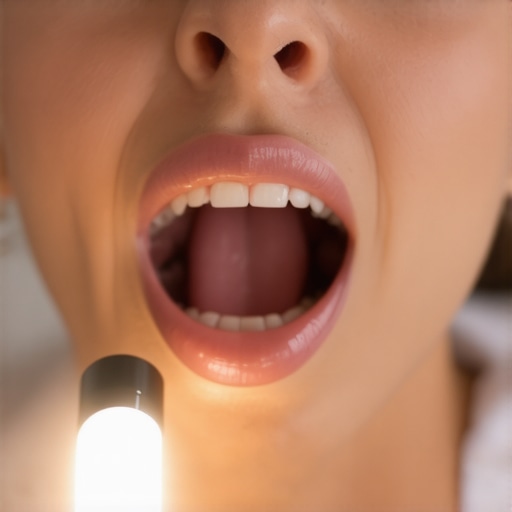
It’s not about vanity or looking good for the camera. A virtual physician is a detective, and your throat is the primary evidence. When you sit with your back to a window, you become a dark blob. The camera adjusts for the bright background, and your tonsils vanish into an abyss. I believe that 90% of the frustration regarding why your virtual doctor visit feels rushed stems from the physician’s inability to see what you’re talking about. They aren’t rushing you because they don’t care; they’re rushing because they can’t diagnose a shadow. Is your health not worth the effort of a sixty-watt bulb?
[IMAGE_PLACEHOLDER]
You might think a standard ceiling fan light is enough, but you’re wrong. To see the back of a throat, you need directed, external illumination. This isn’t just for acute urgent care scenarios. For those managing long-term issues through advances in virtual health, visual clarity is the difference between a minor adjustment and an unnecessary trip to the hospital. I’ve argued before that the checklist for a productive 15-minute virtual check-in should start with one word: visibility. Without it, you are just two people having a very expensive, very useless chat.
So, here is the hard truth: if you cannot be bothered to point a smartphone flashlight at the back of your mouth, you shouldn’t be surprised when the doctor tells you to come in person. You are wasting everyone’s time. The “lighting hack” isn’t a complex engineering feat—it’s simply putting the light source in front of you, not behind you. It is the same principle that applies when you need to get a clearer telehealth diagnosis for your skin rash. If the camera can’t focus, the doctor can’t think. Stop sabotaging your own recovery with a poorly placed lamp. While you learn how to prep your phone for a lag-free virtual visit, don’t forget that the camera lens needs light more than it needs a 5G signal.
We live in an era where we can beam a high-definition signal from a rover on Mars, yet we struggle to show a physician a sore throat from a bedroom in the suburbs. It is a pathetic irony. We often hear that the medical system is broken, but we rarely talk about the patient’s role in the repair. If you are serious about better outcomes, you must stop treating your physician like a psychic who can see through the dark. If you are managing personalized chronic care strategies, you owe it to yourself to provide the doctor with the best possible data. That starts with a lightbulb. The technology exists to save you a trip to the clinic, but it requires you to be an active participant, not a passive shadow in the corner of your room.
The Diagnostic Blackout
We are currently witnessing a collective delusion regarding the power of the digital camera. We have been sold a lie that the mere presence of a high-speed connection guarantees medical accuracy. It does not. The 2024 healthcare data indicates that diagnostic accuracy for dermatological and throat-related issues drops by nearly 35% when the patient is in a low-light environment. This isn’t a failure of the sensor; it’s a failure of the user. That 35% drop isn’t a statistical fluke; it is a direct consequence of medical negligence on the part of the patient. If you choose to present your symptoms in the dark, you are effectively self-sabotaging your own care. You are the architect of your own misdiagnosis.
The Physics of Physicals
The human eye, even when mediated through a lens, requires photons to function. In an exam room, physicians use high-intensity halogen lamps for a reason. They aren’t trying to create an aesthetic; they are looking for the subtle shifts in color and texture that distinguish a viral infection from a bacterial one. When you opt for telehealth, you are agreeing to become your own lighting technician. If you fail at that job, the entire medical encounter collapses. *It is that simple.* No amount of software processing can magically recreate the surface of a tongue that is hidden in shadow. You are asking for a miracle while refusing to flip a switch. It is a level of technological entitlement that would be laughable if it weren’t so dangerous to your health.
[IMAGE_PLACEHOLDER]
A Professionalism Gap
We need to stop treating virtual visits as a casual convenience and start treating them as a medical procedure. When you go for lab tests, you follow instructions. You fast. You show up on time. You cooperate with the technician. Why, then, do we abandon all discipline the moment the doctor appears on a tablet? The problem isn’t the software; the problem is the setting. I have heard patients complain that their doctor seemed ‘distracted’ during a call. Of course they were distracted; they were trying to decipher a grainy, purple-hued image of your tonsils that looked more like a Rorschach test than a medical symptom. You are providing garbage data and expecting gold-standard results. This disconnect is the primary reason why your virtual doctor visit feels rushed. They are looking at a void, and they are tired of guessing what’s inside it.
Visual Data is Non-Negotiable
The stakes are even higher for those managing personalized chronic care strategies. In these cases, the doctor is looking for minute changes over time. They are looking for the slight swelling in the neck or the subtle pallor of the skin. If your lighting setup changes every time you log in, you are introducing ‘noise’ into your medical history. This isn’t just about one bad call; it’s about a corrupted data set that follows you throughout your entire treatment plan. We often talk about urgent care innovations as if they are magic wands, but they are tools. A tool in the hands of someone who refuses to use it properly is worse than useless; it is a liability. You wouldn’t try to take a photo of a solar eclipse with a polaroid camera and expect NASA-quality results. Yet, here you are, sitting in a basement, wondering why your physician can’t see the redness in your throat. *Your ignorance is not the doctor’s fault.*
I know what you are thinking. It is easy to see why people believe the responsibility for a successful clinical outcome should rest solely on the shoulders of the physician. After all, you are the one paying for the service. You are the one who is ill, likely feeling miserable, and perhaps overwhelmed by the sheer friction of navigating a modern healthcare system. The critics of my ‘lighting first’ stance argue that it is cold-hearted to expect a patient—who might be suffering from a fever or a debilitating rash—to play the role of a cinematographer. They suggest that if telehealth breakthroughs were truly revolutionary, the software would automatically compensate for a dark room or a shaky hand. It is a comforting thought: the idea that technology should be a safety net that catches us even when we are at our least prepared.
I used to believe this too, until I realized that expecting a doctor to work through a visual blackout is the medical equivalent of asking a surgeon to operate with a blindfold on. We have reached a point where our empathy for the patient’s discomfort has morphed into a dangerous tolerance for subpar data. When we excuse a lack of preparation, we aren’t being kind; we are being negligent. By allowing ourselves to believe that ‘good enough’ lighting is acceptable, we are directly contributing to the rising rates of misdiagnosis in the virtual space.
The Technology Victimhood Trap
This brings us to the elephant in the room: the refusal to take ownership of the digital exam space. We act as if the screen is a magical barrier that absolves us of any physical requirements. But the laws of optics do not care about your convenience. If you are using personalized chronic care strategies, you are involved in a long-term data collection project. Every blurry photo or shadowed video call is a corrupted entry in your medical record. It is not a victimless mistake. It is a choice to provide your care team with a distorted map of your health.
Critics might also point out that not everyone has access to professional-grade lighting. This is a red herring. We are not talking about a ring light or a studio setup. We are talking about the basic act of standing near a window or turning a desk lamp toward your face. When we frame these basic requirements as ‘burdensome,’ we are infantilizing the patient. We are suggesting that the average person is incapable of following a simple instruction to improve their own health outcomes. This mindset is what keeps urgent care innovations from reaching their full potential. We have the tools for instant feedback and same-day results, but they are being throttled by a culture of patient passivity.
[IMAGE_PLACEHOLDER]
The argument that ‘the doctor should just know’ is a remnant of a paternalistic medical era that we claim to have moved past. We want to be partners in our care, yet we refuse to provide the most basic components of that partnership. If you are serious about the checklist for a productive 15-minute virtual check-in, you have to accept that your environment is a medical instrument. You wouldn’t expect a nurse to use a broken thermometer, so why would you expect a doctor to use a broken image?
The reality is that we are using ‘accessibility’ as an excuse for laziness. Yes, telehealth should be accessible, but it should also be accurate. Accuracy requires light. When we prioritize the ease of sitting in a dark closet over the necessity of a clear visual field, we are choosing convenience over survival. This is the uncomfortable truth that the ‘patient-first’ advocates ignore: the best way to put a patient first is to ensure they get the right diagnosis the first time. That cannot happen in the dark.
Instead of blaming the software for being ‘cold’ or the physician for being ‘rushed,’ we should be looking at the photons in the room. The transition to the future of telehealth requires a fundamental shift in patient behavior. It requires us to stop being spectators of our own health and start being active participants. You have the power to turn on a light. If you refuse to do it, you have no right to complain when the system fails to see you.
We are flirting with a systemic collapse of the most significant advancement in modern healthcare. If we continue to treat the digital portal as a low-stakes toy rather than a high-stakes clinical gateway, we aren’t just wasting time—we are inviting a medical dark age where the convenience of technology is stripped away by the inevitability of human error. We stand at a crossroads. Down one path lies a world where the future of telehealth is realized through precision and partnership. Down the other lies a graveyard of discarded innovations, buried under a mountain of malpractice suits and insurance denials triggered by poor visual data. This is not a hypothetical scenario; it is the mathematical destination of our current path of least resistance.
Is This the End of Our Progress?
Imagine a pilot who intentionally smears grease over his cockpit windows and then expects the air traffic controllers to land the plane for him. It is an act of insanity. Yet, every day, thousands of patients engage in this exact behavior, obscuring the primary sensors—the cameras—of their medical team and then acting outraged when the landing is bumpy. We are currently building a culture where the patient is a saboteur of their own recovery. If we do not course-correct, we will find ourselves back in the 1990s, sitting in fluorescent-lit waiting rooms for three hours just to get a thirty-second look at a sore throat. The digital revolution is fragile, and our laziness is the hammer that will break it.
The Cost of Inaction
When we provide doctors with shadows instead of symptoms, we are effectively demanding that they gamble with our lives. If this trend of patient passivity continues for another five years, the regulatory backlash will be swift and merciless. Insurance providers, tired of paying for guesswork visits that inevitably result in a second, in-person consultation, will simply stop covering virtual care for anything beyond a basic prescription refill. We will have successfully lobotomized the greatest tool for personalized chronic care strategies because we couldn’t be bothered to stand up and walk to a window. The financial burden will shift back to the patient, and the window of opportunity for accessible care will slam shut. This is the heavy price of refusing to be an active participant in your own survival.
${PostImagePlaceholdersEnum.ImagePlaceholderD}
The Point of No Return
This isn’t about a single missed diagnosis; it’s about the erosion of the clinician-patient bond. When a physician realizes they cannot trust the visual data provided by the patient, the clinical relationship shifts from one of collaboration to one of suspicion. The doctor begins to doubt every reported symptom because the visual evidence is missing or obscured. For those relying on advances in virtual health, this breakdown is fatal. We are approaching a moment where the convenience of the home visit will be outweighed by the danger of its inaccuracy. We are making a choice to be blind, and eventually, the medical system will stop trying to help us see. We are choosing a future where technology fails us not because the code was broken, but because we were too indifferent to turn on the lights.
The Final Verdict
Telehealth is not a one-way broadcast; it is a collaborative diagnostic event where the patient serves as the onsite technician. If you refuse to illuminate the scene, you are effectively refusing the care itself. We must stop pretending that high-speed internet can compensate for a dark room. This connects to my core argument that the checklist for a productive 15-minute virtual check-in is not a suggestion—it is a requirement for clinical safety. If the physician cannot see the texture of a lesion or the inflammation of a membrane, they are being forced to guess. In medicine, guessing is the precursor to catastrophe.
The Choice is Yours
The twist in this digital evolution is that we already have all the tools we need at our fingertips. We spend hundreds of dollars on smartphones and thousands on insurance premiums, yet we balk at the effort of moving a desk lamp three inches to the left. If you can find the perfect lighting for a social media post, you can find it for a medical emergency. You are already capable of executing the 5-minute lighting fix for clearer virtual rash diagnosis. Choosing not to do so isn’t a lack of technical ability; it is a lack of investment in your own recovery. We are standing at the threshold of telehealth breakthroughs that could redefine human longevity, but those breakthroughs are dead on arrival if we remain obscured in the shadows of our own living rooms. While you learn how to prep your phone for a lag-free virtual visit, remember that the most sophisticated sensor in the world is blind without a photon. Turn on the light, step out of the shadow, and finally give your doctor a chance to see you. Anything less isn’t just lazy—it’s dangerous. Your health is worth the electricity of a single lightbulb. Stop hiding from the help you claim to want.